
Sumo rules explained: two ways to lose, 82 ways to win — and two techniques that decide half of all bouts
You lose a sumo bout the moment any part of you other than the soles of your feet touches the clay — or any part of you touches down outside the straw ring. That is the whole rule. The eighty-two named techniques, the ranks and the salt all sit on top of those two sentences.
The Japan Sumo Association's own English handbook says it plainly: a bout is won "by forcing one's opponent out of the inner circle or throwing him in the dohyo", and a wrestler who "touches the ground with any part of his body, such as his knee or even the tip of his finger or his topknot, loses the match". A single toe or heel over the straw bales is enough. There are no rounds and no points.
The ring is part of the rulebook
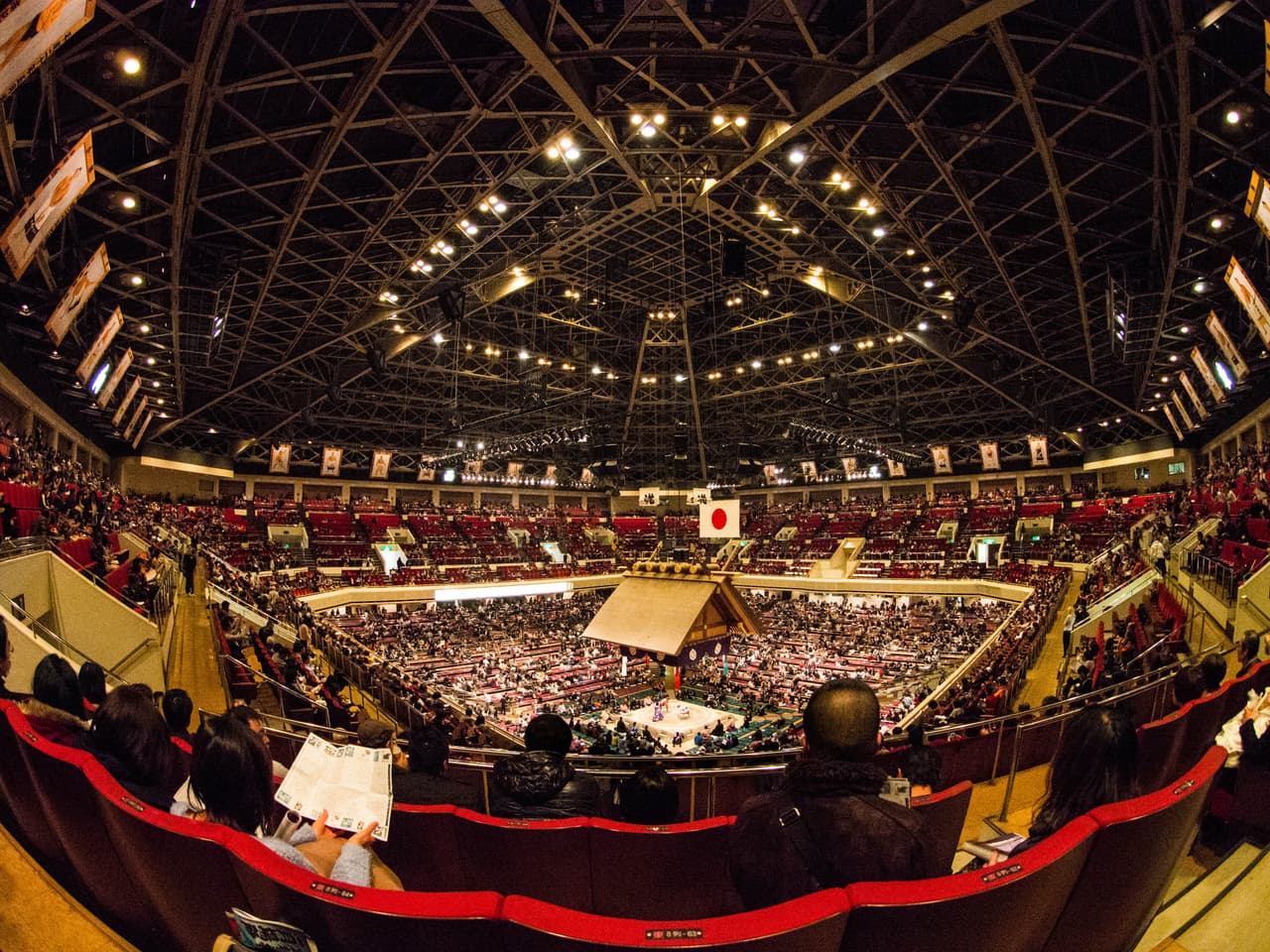
The dohyō is not a stage. Its dimensions are the boundary condition of the sport, and the association gives them precisely: 6.7 metres square and 60 centimetres high, built from a special clay and covered with a thin layer of sand, with the fighting confined to an inner circle "a little over 4.55 m in diameter".
Above it hangs a roof modelled on a Shinto shrine, four giant tassels at its corners standing for the four seasons. The clay is rebuilt for every tournament: 20 centimetres of soil is taken off the top, new soil is added, and the surface is levelled again.
What is actually forbidden
The foul list is shorter than most first-time spectators expect. Per the association: striking with fists, hair pulling, eye gouging, choking, and kicking in the stomach or chest. It is also against the rules to seize the part of the belt covering the groin.
Everything else you are about to see is legal — open-handed slaps to the face and throat, thrusting, tripping, lifting, throwing, and pulling a man down by the back of the head.
And there are no weight classes. The association's own phrasing is that "a rikishi can find himself pitted against an opponent twice his weight". Boxing and Olympic wrestling abolished that state of affairs more than a century ago. Sumo never has.
The belt is the reason the sport looks like this
The mawashi is not a costume. It is heavy silk roughly 9 metres long and 80 centimetres wide, folded in six and wound round the waist four to seven times depending on the man. The association is blunt about its significance: "It may be said to have determined the whole form of sumo. There are 82 winning techniques, many of which are achieved by maneuvering the opponent with a grip on the mawashi."
The 82 techniques, ranked by how often they actually happen
Every bout is assigned an official kimarite, the deciding technique, and the association's list runs to 82. Most English explanations stop there, which makes sumo sound like a catalogue of exotic throws.
It isn't. The association also publishes how often each technique has really decided a bout, and the distribution is violently lopsided. Across 190,450 bouts — every tournament from January 2013 to the final day of the July 2026 tournament — it looks like this:
| # | Kimarite | What it is | Bouts | Share |
|---|---|---|---|---|
| 1 | oshidashi 押し出し | Push out, hands on the body, no belt grip | 47,936 | 25.2% |
| 2 | yorikiri 寄り切り | Force out while gripping the belt | 47,473 | 24.9% |
| 3 | hatakikomi 叩き込み | Slap down as the opponent comes forward | 15,677 | 8.2% |
| 4 | tsukiotoshi 突き落とし | Thrust down at an angle | 10,348 | 5.4% |
| 5 | yoritaoshi 寄り倒し | Force out and down together | 9,163 | 4.8% |
| 6 | uwatenage 上手投げ | Overarm throw | 8,802 | 4.6% |
| 7 | hikiotoshi 引き落とし | Pull down | 6,614 | 3.5% |
| 8 | oshitaoshi 押し倒し | Push down | 6,553 | 3.4% |
| 9 | okuridashi 送り出し | Push out from behind | 6,262 | 3.3% |
| 10 | shitatenage 下手投げ | Underarm throw | 4,323 | 2.3% |
| 11 | tsukidashi 突き出し | Thrust out | 4,283 | 2.2% |
| 12 | sukuinage 掬い投げ | Scoop throw, no belt grip | 3,976 | 2.1% |
Two techniques decide 50.1% of all professional sumo. Twelve decide 90% (as of 31 August 2026, from the association's published counts).
The remaining seventy share the last tenth, and some are close to theoretical. Yaguranage and tsukaminage — both lifting throws — have each been recorded once in those 190,450 bouts. Ōmata has been recorded three times.
That is the single most useful thing to know before your first tournament. You are going to watch a pushing contest and a belt contest, over and over, and then once in a very long while something will happen that the commentators themselves have to look up. The rarity is the drama.
Why the bout is shorter than the staring
New spectators are often puzzled that the preliminaries take longer than the fight. That is by design, and the clock is on the preliminaries, not the fight.
After entering the ring each wrestler rinses his mouth with water, wipes his body with a paper towel and scatters salt. Then both crouch, fists on the clay — the shikiri — stand up, return to their corners for more salt, and repeat. Top-division wrestlers may keep doing this for four minutes; jūryō wrestlers get three; the lowest ranks must begin almost immediately.
That four-minute allowance is recent by sumo's standards. A limit was only introduced in 1928, at ten minutes, then cut to seven, then five, and finally four. Before that a bout could be delayed indefinitely. The association's own comment on it is the best summary anyone has written: "The bout itself is usually over quite quickly, in less time than it took for warming up."
Who decides, and who can overrule them
The gyōji, the referee in the elaborate kimono, gives the signal with his fan and must point it at a winner — there is no drawn bout on the card.
But he is not the final word. *Five shimpan, judges in black kimono, sit around the ring for every match*, all of them former wrestlers. If they doubt the call they climb into the ring and settle it among themselves, and they may "overrule the referee's decision or order a rematch". Treat the fan as a first draft.
How a tournament is won
There are six Grand Tournaments a year — three in Tokyo, one each in Osaka, Nagoya and Fukuoka — and each runs 15 days. Wrestlers in the top two divisions fight once a day against a different opponent, and the best win-loss record takes the Emperor's Cup on the final day.
Three further prizes go to individuals: the shukunsho for upsetting the most yokozuna and ozeki, the kantosho for fighting spirit, and the ginosho for technique. To be eligible for any of them a wrestler must also have won at least eight of his fifteen bouts — the same threshold that divides a winning tournament from a losing one.
Then go and watch one
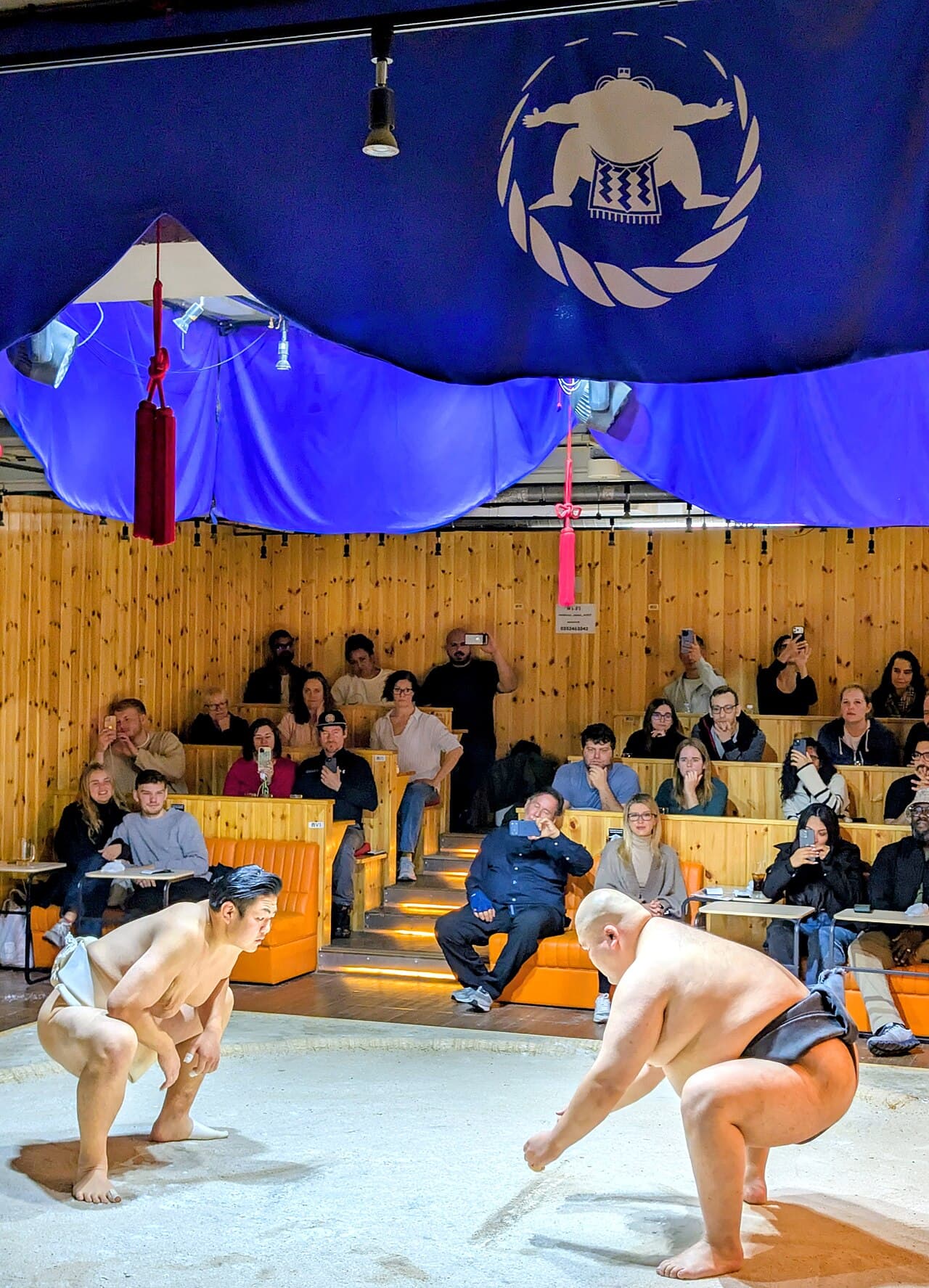
Rules read differently once the floor has moved under you. Tokyo is the easiest place to arrange it: sumo experiences in Tokyo sets out what is actually bookable — shows, chanko lunches, and a real stable visit — with honest prices.
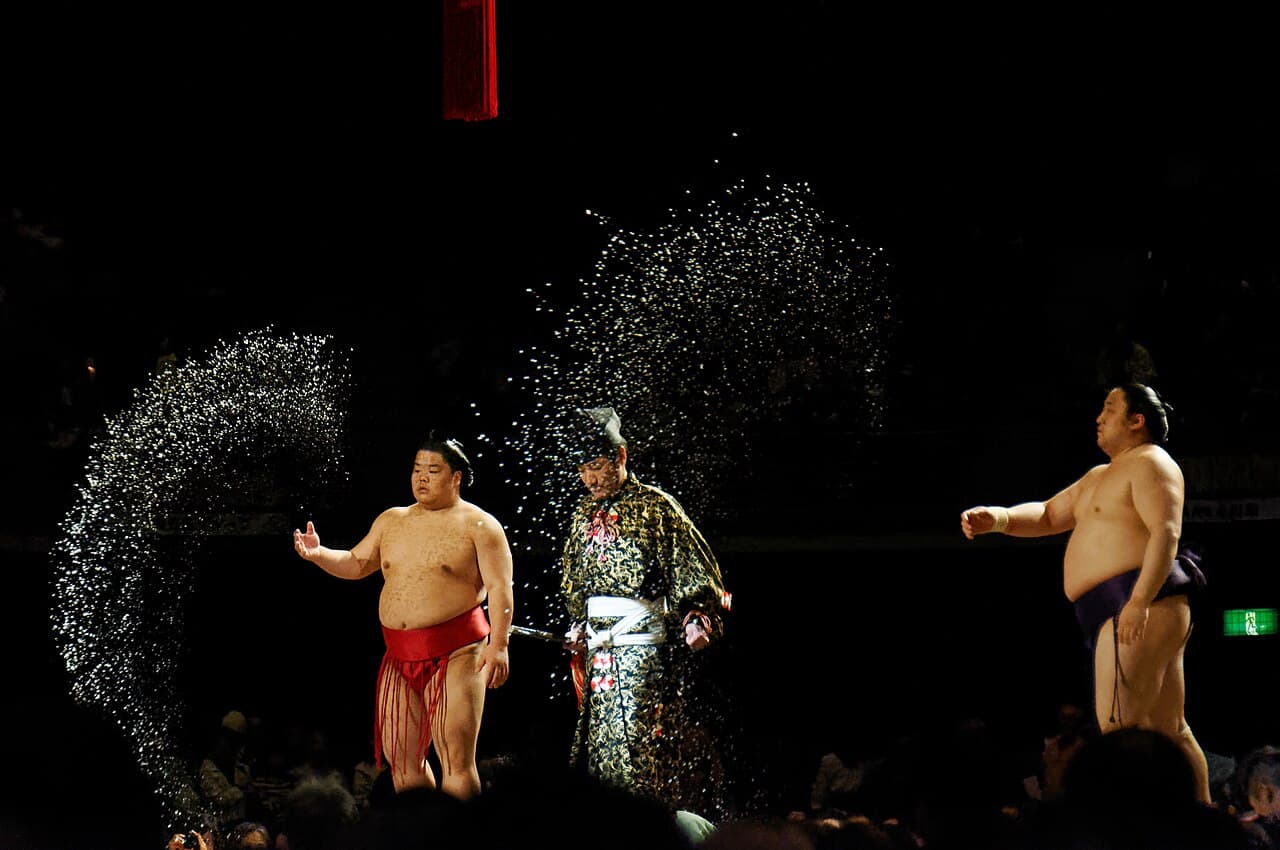
If it was the ritual rather than the fighting that caught you, the salt has its own answer: why sumo wrestlers throw salt is about purification, not luck. For the warrior code the sport grew up alongside, see what bushidō means.
Sumo is usually one part of a wider day; cultural experiences in Tokyo and the best cultural experiences in Japan cover the rest.
FAQ
- What are the rules of sumo?
- A wrestler loses the moment any part of his body other than the soles of his feet touches the clay, or any part of him touches down outside the straw ring. Fists, hair-pulling, eye-gouging, choking and kicking to the stomach or chest are fouls; open-handed strikes, thrusts, trips, lifts and throws are all legal. There are no weight classes and no rounds.
- How many winning techniques does sumo have?
- Eighty-two. The Japan Sumo Association assigns one official kimarite to every bout and publishes how often each has been used. Two of the 82 — oshidashi and yorikiri — account for 50.1% of all bouts, and twelve account for 90%.
- How big is the sumo ring?
- The clay platform is 6.7 metres square and 60 centimetres high, and the fighting area is an inner circle a little over 4.55 metres in diameter marked by half-buried rice-straw bales. It is rebuilt for every tournament: 20 centimetres of soil is removed, new soil added and the surface levelled.
- Why do sumo wrestlers take so long to start?
- The staring, crouching and salt-throwing is the shikiri, and the time limit applies to it rather than to the bout. Top-division wrestlers may repeat it for four minutes, juryo wrestlers for three, and the lowest ranks must begin almost at once. The limit was introduced in 1928 at ten minutes and cut to four; the fight itself is usually shorter than the warm-up.
- Are there weight classes in sumo?
- No. The Japan Sumo Association's own handbook notes that a rikishi can find himself pitted against an opponent twice his weight. There are no divisions by size at all — only by rank.
- Can the referee's decision be reversed?
- Yes. Five shimpan judges, all former wrestlers, sit around the ring for every match. If they doubt the gyoji's call they climb into the ring, confer, and may either overrule him or order the bout re-fought.
- How long is a sumo tournament?
- Fifteen days. There are six Grand Tournaments a year — three in Tokyo and one each in Osaka, Nagoya and Fukuoka — and wrestlers in the top two divisions fight once a day against a different opponent. Eight wins from fifteen is the threshold for a winning record.
Try it yourself
Martial artsTokyo
Sumo Experience in Tokyo — the Best English-Friendly Shows & Stable Visits (and How to Book)
Where to actually see or try sumo in Tokyo — Ryogoku, Asakusa, Ginza and Shinjuku dinner/lunch shows plus a real stable visit — with honest prices, reviews and direct booking links.
Related
Why Do Sumo Wrestlers Throw Salt? The Meaning Behind the Ring-Purification Ritual
Sumo wrestlers throw salt to purify the ring, not for luck. Only the top two divisions do it, and how many times depends on the pre-match time limit — here's the Shinto ritual behind shiomaki, explained.
What Is Bushido? The Samurai Code, Explained
Bushido means "way of the warrior" — a code of seven virtues popularized in 1900, built from real samurai-era ethics but shaped into its modern form for a Western audience.
Tokyo
The Best Traditional Cultural Experiences in Tokyo (and How to Book Them)
The best traditional experiences in Tokyo let you wear a kimono in Asakusa, whisk matcha in a tea ceremony, make Edomae sushi, try samurai or ninja arts, or practise calligraphy, ikebana, kintsugi and taiko. Here's what each one is, and where to book.