
The short answer
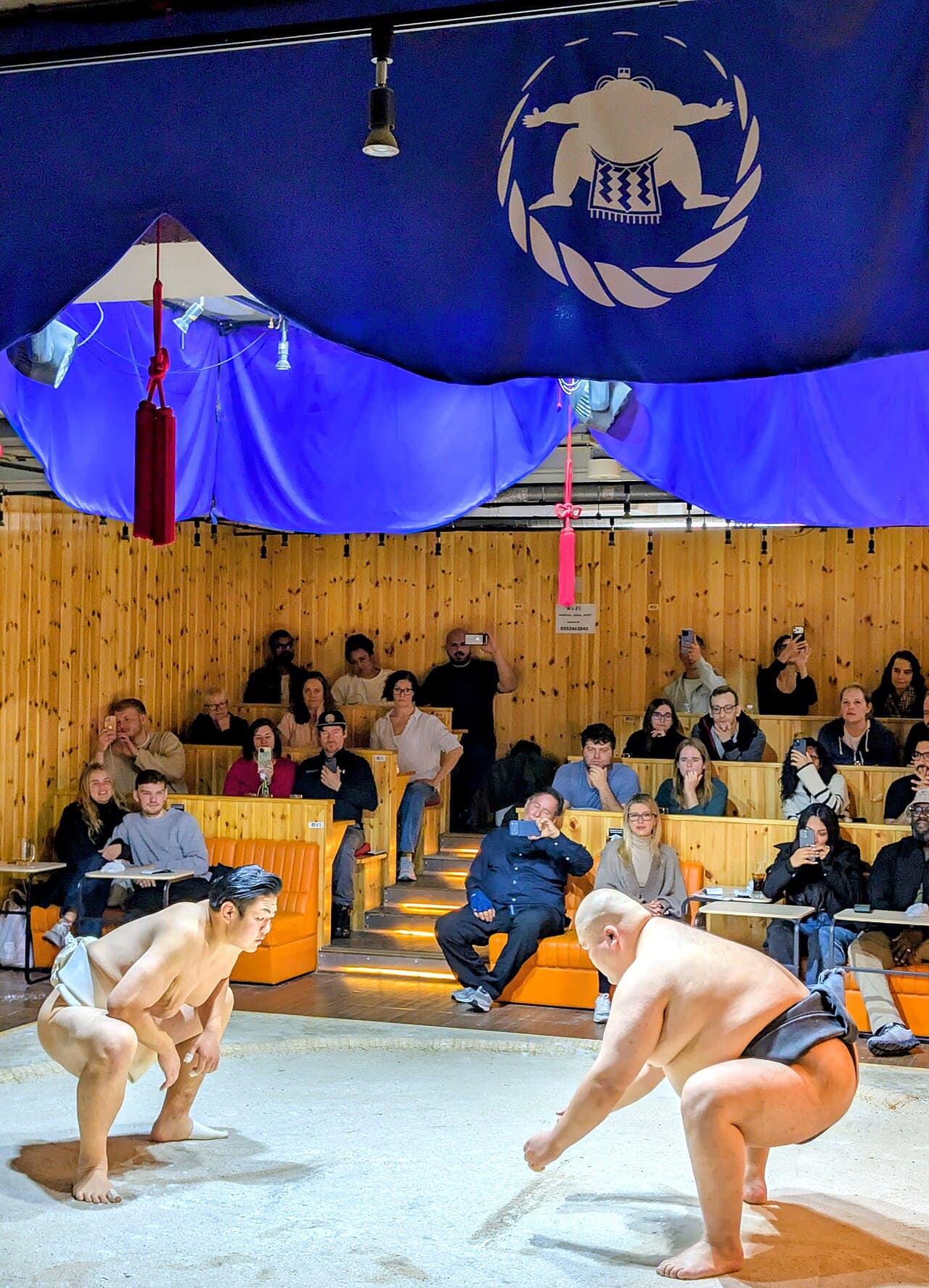
You don't have to catch a Grand Tournament to see sumo in Tokyo. Several English-friendly venues run bookable shows with former professional wrestlers, real chanko nabe, and a chance to step into the ring yourself: an ¥11,000 lunch show in Ryogoku (tonkatsu + chanko + a challenge match), a ¥16,000 dinner show in Asakusa, a dressier ¥17,000+ kaiseki night in Ginza, or a fast 90-minute show in Shinjuku (about $75). If you want the unscripted real thing, a private company can arrange a visit to an actual training stable to watch morning practice. All of the options below take reservations online and confirm English support — book ahead, since good slots fill up.
Compare the main sumo experiences in Tokyo
| Where | Style | Price per person | Duration | English | Reviews |
|---|---|---|---|---|---|
| Ryogoku/Sumida — Yokozuna Tonkatsu Dosukoi Tanaka | Lunch show: tonkatsu + chanko, demo, challenge match | From ¥11,000 | ~2 hrs incl. meal | Yes, run in English for visitors | 4.6★ (Tripadvisor, Travelers' Choice) |
| Asakusa Sumo Club | Dinner show + chanko nabe, 1 drink, photo | ¥16,000 adult / ¥12,000 child | ~2 hrs | Bilingual EN/JP commentary | 4.9★, 178 reviews (Tripadvisor) |
| Ginza — HIRAKUZA | Dinner show + kaiseki course | From ¥17,000 (+¥700 fee) | 2 hrs | Yes | — |
| Shinjuku Sumo Show & Experience | Compact show, live EN host, photo | From about $75 | 90 min | Yes, live English host | 5.0★, 3,127 reviews (Tripadvisor) |
| TOKI (private stable visit) | Real morning practice at a working stable | Price on request | 2–3 hrs | Confirm when booking | — |
Prices move with season, seat tier and booking platform, so treat these as a starting point and confirm on the operator's page before you pay.
Ryogoku: a lunch show with tonkatsu and chanko
Yokozuna Tonkatsu Dosukoi Tanaka, at 3-1-11 Tatekawa in Sumida-ku (5 minutes from Kikukawa Station, Toei Shinjuku Line, exit A1), is a working tonkatsu restaurant built around a real dohyo. Lunch shows have historically run around three days a week near midday — confirm the current schedule when you book, since operating days can change. For ¥11,000 per person you get a tonkatsu-and-chanko-nabe lunch, a sumo history talk, live demonstration matches by former wrestlers, and the chance to put on a sumo costume and challenge one yourself, followed by photos. It's rated 4.6 out of 5 on Tripadvisor with a Travelers' Choice award. Book directly through sumoexperience.com, via Rakuten Travel Experiences (¥11,380), or on Viator.
Asakusa: an evening show with a full chanko nabe dinner
Asakusa Sumo Club sits inside Asakusa's old-town core, about 8 minutes on foot from Tsukuba Express Asakusa Station. The standard course is ¥16,000 for adults, ¥12,000 for children under 12, and includes the show, a former-wrestler challenge match, a chanko nabe dinner, one drink and a photo/souvenir set; VIP and V-VIP tables run higher for smaller, closer seating. Commentary runs bilingual English/Japanese. It's the best-reviewed of the group — 4.9 out of 5 from 178 Tripadvisor reviews, ranked #2 of 14 theater/concert experiences in Asakusa — though a few reviewers note it leans more "tourist show" than authentic sumo, which is fair: treat it as dinner theater with a genuine sport at its core, not a substitute for watching real rikishi compete. Book on the official site or via Klook.
Ginza: a dressier kaiseki dinner and show
THE SUMO LIVE RESTAURANT HIRAKUZA, at 1-9-13 Ginza (1 minute from Ginza-itchome Station, 4 minutes from Ginza Station), pairs the sumo show with an actual kaiseki course over a 2-hour sitting. Standard seats run ¥17,000 for adults / ¥9,500 for children, Premium ¥21,000 / ¥12,000, and VIP ringside ¥27,000 — all plus a ¥700 per-ticket service fee. It's the most upscale of the group, aimed at a dinner-and-a-show evening rather than a quick tourist stop. Book through the official site or by emailing the restaurant directly for same-day availability.
Shinjuku: a fast, well-reviewed 90-minute show
If you're short on time, the Shinjuku Sumo Show & Experience with Photo is a 90-minute format with a live English-speaking host, a welcome drink, a demonstration of the shiko stomp and salt-throwing ritual, live bouts, and a lottery chance to step into the ring. It's the single best-reviewed option here — 5.0 out of 5 from over 3,100 Tripadvisor reviews — and runs from about $75 per person on GetYourGuide and Viator (confirm the current rate, as OTA pricing shifts with demand). It's a good fit if you're staying in Shinjuku and don't want to cross town to Ryogoku or Asakusa.
Want the unscripted real thing? Book a private stable visit
All of the above are staged shows — fun, legitimate sumo demonstrations, but performed for an audience. If you'd rather watch an actual asageiko (morning practice) at a working stable, TOKI arranges private visits to a Tokyo sumo stable: a 2-hour visit-only option, or a 3-hour version that includes an authentic chanko nabe lunch cooked and eaten with the wrestlers, for groups of up to 20. Pricing isn't published online — contact TOKI directly for a quote — and optional add-ons include transport, professional photography and kimono rental. A similar format exists just outside central Tokyo near Shin-Kawasaki Station (about a 4-hour tour with an English guide and lunch), for travelers happy to go slightly further for a deeper, more hands-on stable experience.
FAQ
How much does a sumo experience cost in Tokyo?
From about ¥11,000 per person for a lunch show in Ryogoku, up to ¥27,000+ for premium dinner seats in Ginza or Asakusa. The Shinjuku show runs from about $75. Private stable visits (TOKI) are quote-only.
Is there a sumo experience in Asakusa?
Yes — Asakusa Sumo Club runs a dinner show with a chanko nabe meal, about 8 minutes from Tsukuba Express Asakusa Station, from ¥16,000 for adults and ¥12,000 for children.
Is there a sumo show in Shinjuku?
Yes, the Shinjuku Sumo Show & Experience is a 90-minute format with a live English host, from about $75 per person — the most-reviewed option in this guide.
What about a sumo experience in Ginza?
HIRAKUZA in Ginza pairs a sumo show with a full kaiseki dinner from ¥17,000, aimed at a smarter evening out rather than a quick show.
Are these experiences good for kids?
Yes — Asakusa Sumo Club and HIRAKUZA both publish child pricing, and children are welcome (and sometimes invited into the ring) at all of the show-format venues. A working stable visit is fine for older, quieter kids who can sit still and stay silent during real practice.
Do these include a chanko nabe lunch or dinner?
The Ryogoku option is a lunch show with tonkatsu and chanko nabe; Asakusa and Ginza are dinner shows with a chanko nabe or kaiseki meal included; the Shinjuku show includes only a welcome drink, not a full meal. A private TOKI stable visit can include a chanko lunch cooked by the wrestlers themselves.
Where can I book — Klook, Viator, or direct?
All of the above. Asakusa Sumo Club is on Klook and its own site; the Ryogoku restaurant is on its own site, Rakuten Travel Experiences and Viator; Ginza's HIRAKUZA takes direct bookings; Shinjuku is bookable through GetYourGuide and Viator. Prices can differ slightly by platform, so compare before you pay.
Are the reviews any good — is it worth it?
Yes, broadly: Asakusa Sumo Club sits at 4.9/5 (178 reviews) and the Shinjuku show at 5.0/5 (over 3,100 reviews) on Tripadvisor. A few reviewers note the dinner shows feel more like tourist theater than a real match, which is accurate — they're a fun, legitimate introduction to the sport, not a substitute for the Grand Tournament.
Can women step into the ring?
At these commercial experience shows, yes — anyone selected or drawn in the lottery can try the challenge match. That's a deliberate contrast with the professional dohyo at an official Grand Sumo tournament, which by long-standing Shinto-rooted tradition is closed to women.
I'd rather watch a real match — when is Grand Sumo in Tokyo?
Tokyo hosts official Grand Sumo tournaments (honbasho) at Ryogoku Kokugikan in January, May and September each year — a ticketed, unstaged event completely separate from the experiences above. Check exact dates and tickets on the Japan Sumo Association's official site.
Pair it with the rest of your trip
Sumo's warrior-adjacent discipline pairs naturally with Tokyo's other martial traditions — if the etiquette and history interest you, our samurai experience in Tokyo and what is bushido guide go deeper into the code of conduct sumo still echoes today. For the wider spread of things to try in the city, see our Tokyo cultural experiences pillar. Timing your trip around a Grand Tournament or a festival? Check japan-event.info's Tokyo guide, and for more on chanko nabe and Japan's food culture, our sister site umami-hunt.info.
- Watch former professional wrestlers demonstrate the shiko stomp, salt-throwing ritual and live bouts up close, then get picked (or win the lottery) to step into the ring yourself
- Eat real chanko nabe — the protein-heavy hot pot wrestlers eat daily — usually alongside tonkatsu, sukiyaki or a full kaiseki course
- Pick your format: an ¥11,000 lunch show in Ryogoku, a family dinner show in Asakusa, a dressier kaiseki night in Ginza, or a fast 90-minute show in Shinjuku
- Go deeper with a private visit to a working stable and watch unscripted asageiko (morning practice) instead of a staged show
These are entertainment shows, not the Japan Sumo Association's official tournament — so the strict Kokugikan spectator rules don't apply, but arrive on time (seating is often assigned by course), don't touch or address the wrestlers until invited, and ask before using flash photography during a bout. One genuine cultural nuance worth knowing: the professional dohyo (ring) is traditionally closed to women under long-standing Shinto-rooted custom, but at these commercial experience shows, women are welcomed into the ring for the friendly challenge match — a deliberate difference from an official tournament. If you book a real stable visit, you're a guest at someone's workplace: stay quiet and follow the guide's instructions exactly until practice ends.