
Why Do Sumo Wrestlers Throw Salt? The Meaning Behind the Ring-Purification Ritual
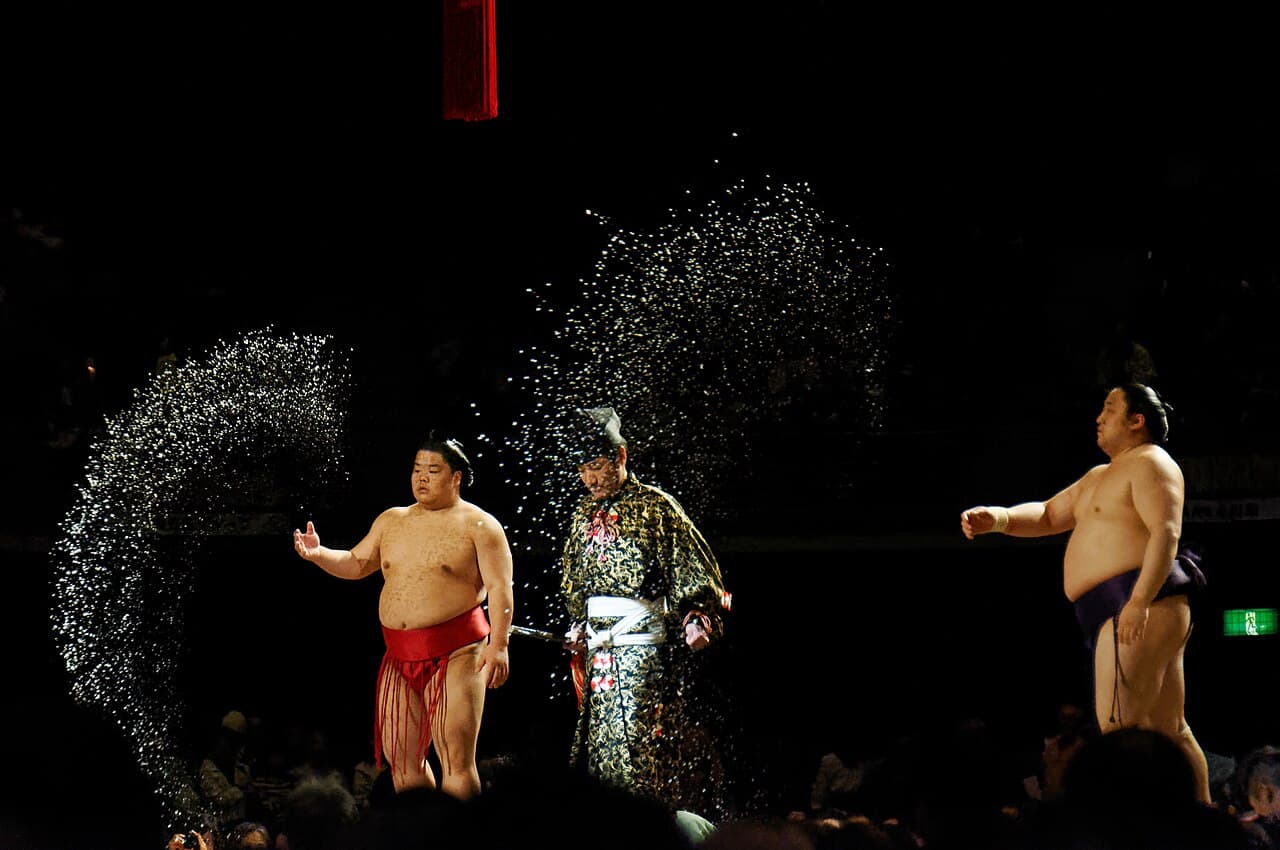
Sumo wrestlers throw salt into the ring to purify it — a Shinto act, not a gesture for personal luck. Each handful is meant to cleanse the dohyō (ring) of kegare, or ritual impurity, that may have built up since the previous bout, and to purify the wrestler's own body before he steps onto ground that's treated as sacred.
Purification, not luck
It's a common assumption for first-time spectators that shiomaki (塩まき, "salt-throwing") is a good-luck charm, like a coin toss before kickoff. It isn't. The salt is a cleansing agent in the Shinto sense — clearing away spiritual pollution from the ring itself and from the wrestler about to enter it. The ring isn't just a stage; under Shinto belief it's consecrated ground, and every bout that's fought there is treated as something closer to a small ritual than a plain athletic contest.
The ring is blessed before a single match is fought
The purification doesn't start with individual wrestlers. Before each 15-day honbasho (tournament) even begins, the dohyō itself is ritually consecrated in a ceremony called dohyō-matsuri (ring-blessing ceremony). Gyōji — the referees, who in this context act closer to Shinto priests than sports officials — bury salt along with kelp, dried squid, and chestnuts at the center of the ring to sanctify it for the tournament ahead. Every wrestler's salt-throw before a bout is a small, repeated echo of that larger consecration.
Roots that go back to myth and the 7th century
Sumo's connection to Shinto runs deep into its origin stories. The Kojiki (712 CE) describes a wrestling match between the gods Takemikazuchi and Takeminakata to decide possession of the Japanese islands, and the Nihon Shoki (720 CE) places the first sumo match between mortals — Nomi no Sukune against Taima no Kuehaya — in a legendary 23 BCE. The first sumo matches that historians can actually date were held in 642 CE, at the court of Empress Kōgyoku, to entertain a visiting Korean delegation; these were later formalized into annual court rituals during the Heian period. More broadly, sumo's link to Shinto traces back to ancient harvest rites honoring the kami, predating its existence as a spectator sport. Many of today's ceremonial elements, including the salt-throwing itself, were consolidated into the form we recognize now as sumo professionalized during the Edo period, after street sumo was banned and then permitted from 1684 for shrine-ground charity tournaments — but no source pins an exact date for when the salt gesture specifically began.
Only wrestlers in the top two divisions throw salt
This is the detail that trips up a lot of first-time spectators: not every wrestler you see at a tournament throws salt. Sumo has six divisions, and shiomaki is restricted to the top two — makuuchi and jūryō. Wrestlers in the four lower divisions (makushita, sandanme, jonidan, jonokuchi) skip it entirely. If you're watching an early-morning session and don't see any salt, that's why — you're watching the lower ranks, and the ritual simply hasn't started yet.
Why a wrestler throws salt more than once before one match
Top-division bouts come with a pre-match time allowance called shikiri: four minutes for makuuchi, three for jūryō. During that window, a wrestler repeatedly returns to his starting line, crouches (sonkyo), stares down his opponent, stands, throws another handful of salt, stomps, and crouches again — cycling through the sequence until time runs out and the gyōji signals the charge (tachi-ai). There's no fixed ritual count; how many times a wrestler throws salt is simply a byproduct of how many times he chooses to re-approach the line within his time limit. Veteran wrestlers and top-ranked yokozuna and ōzeki, who tend to take the full allowance, are the ones you'll usually see throwing salt several times in a single bout.
How much salt, and what kind
The salt used is coarse, minimally processed sea salt (ara-jio). Commonly cited (though unofficial) estimates put the total at roughly 45 kg thrown per day of a 15-day honbasho — around 700 kg over a single tournament, and more than 4 tons across the six honbasho held each year — though these numbers are widely repeated by sumo fan and travel sites rather than traceable to a single primary document or an official Japan Sumo Association tally, so treat them as an unverified estimate rather than an official figure.
The other rituals happening around the salt-throw
Salt isn't the only purification step in a sumo wrestler's pre-bout routine. Chikara-mizu ("power water") comes first: a wrestler rinses his mouth with water handed to him by the winner of the previous bout — or, in the rare case no such winner is available (chiefly the final bout of the day), by his own attendant (tsukebito) — then blots his mouth with chikara-gami ("power paper"). Shiko — the wide, deliberate leg stomps you'll see wrestlers perform — is said to drive evil spirits out of the ring while also warming up the hips; hand-clapping is said to draw the kami's attention; and sonkyo, the formal crouch, is the wrestler's acknowledgment of his opponent. Salt-throwing is one movement in this larger sequence, not an isolated flourish.
If you want to see shiomaki happen live rather than just read about it, a Tokyo sumo experience puts you close enough to watch the full pre-bout sequence — salt, chikara-mizu, shiko, and all — in person.
FAQ
- Do all sumo wrestlers throw salt?
- No. Salt-throwing (shiomaki) is restricted to wrestlers in sumo's top two divisions, makuuchi and jūryō. Wrestlers in the four lower divisions — makushita, sandanme, jonidan, and jonokuchi — don't perform it at all.
- Why do sumo wrestlers throw salt more than once before a match?
- There's no fixed number. Top-division bouts have a pre-match time allowance (shikiri) of four minutes for makuuchi and three for jūryō, and wrestlers repeatedly return to the starting line, throw salt, and stomp within that window. How many times a wrestler throws salt just depends on how many times he re-approaches the line before time runs out.
- Is throwing salt a good-luck ritual?
- No — it's a Shinto purification act, not a luck charm. The salt is meant to cleanse the ring of ritual impurity (kegare) left from the previous bout and to purify the wrestler's own body before he enters what's treated as sacred ground.
- What is chikara-mizu, and is it different from the salt-throwing?
- Chikara-mizu ("power water") is a separate purification step: a wrestler rinses his mouth with water handed to him by the winner of the previous bout (or, in exceptional cases such as the day's final bout, by his own attendant), then blots his mouth with paper called chikara-gami. It happens alongside salt-throwing but is a distinct ritual.
- How much salt do sumo wrestlers use?
- Commonly cited (but unofficial) estimates suggest around 45 kg is thrown per day of a 15-day tournament, close to 700 kg over a full tournament, and more than 4 tons across the six tournaments held each year — though these figures come from secondary sumo-fan and travel sources rather than an official Japan Sumo Association tally or a single traceable primary document.
Try it yourself
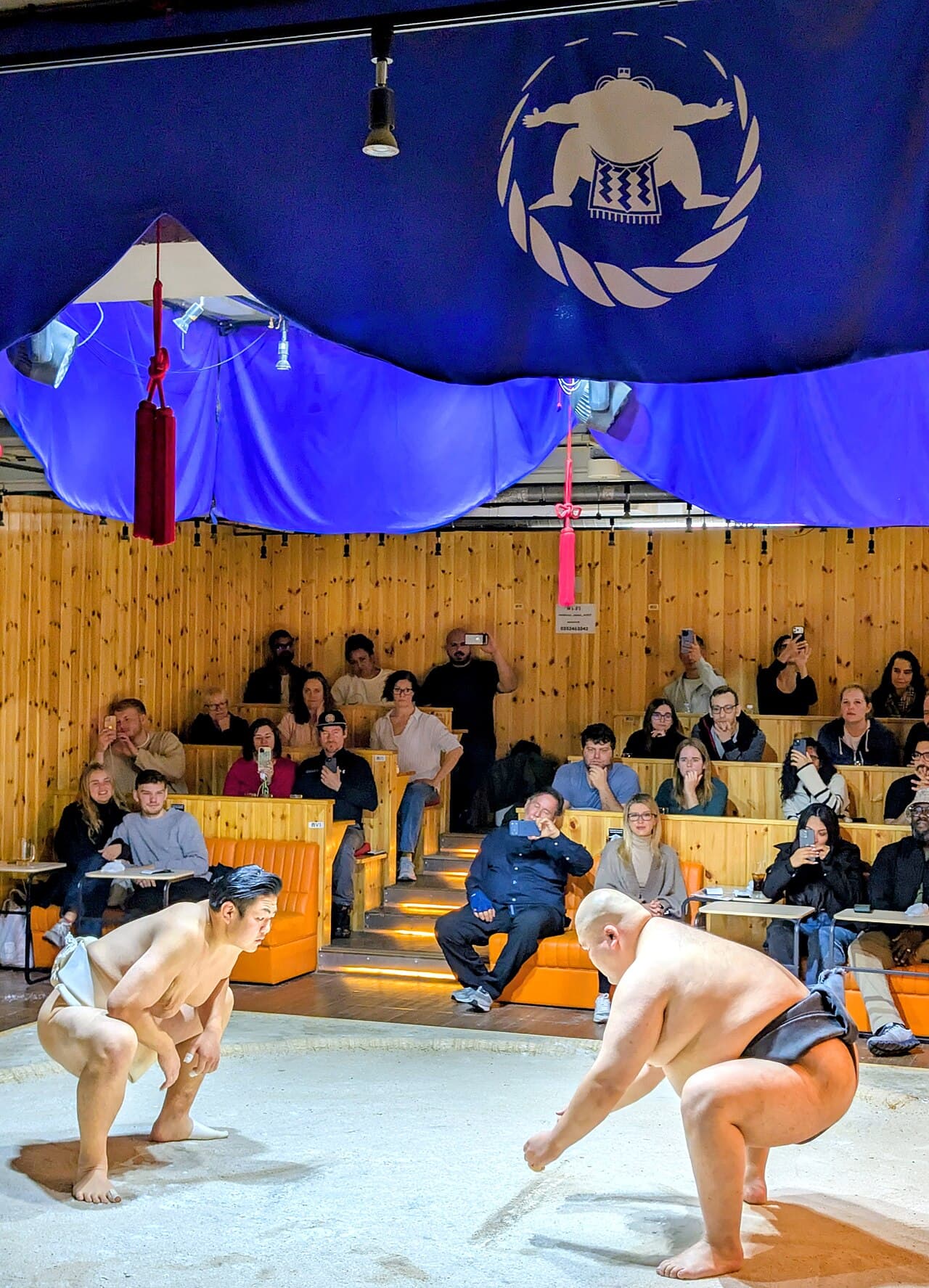
Martial artsTokyo
Sumo Experience in Tokyo — the Best English-Friendly Shows & Stable Visits (and How to Book)
Where to actually see or try sumo in Tokyo — Ryogoku, Asakusa, Ginza and Shinjuku dinner/lunch shows plus a real stable visit — with honest prices, reviews and direct booking links.
Related

How to Pray at a Japanese Shrine: Etiquette, Step by Step
How to pray at a Japanese shrine, step by step: bow at the torii, purify at the temizuya, then two bows, two claps, one bow — plus coins, omamori and omikuji.
Across Japan
Temple vs Shrine in Japan: How to Tell Them Apart & How to Pray at Each
The quickest way to tell them apart: a **shrine (Shinto)** has a **torii gate** and you pray by **bowing twice, clapping twice, bowing once**; a **temple (Buddhist)** has a large **sanmon gate**, incense, and often a pagoda, and you pray **silently, palms together — no clapping.**