
What Is Omikoshi? Japan's Portable Shrines, Explained
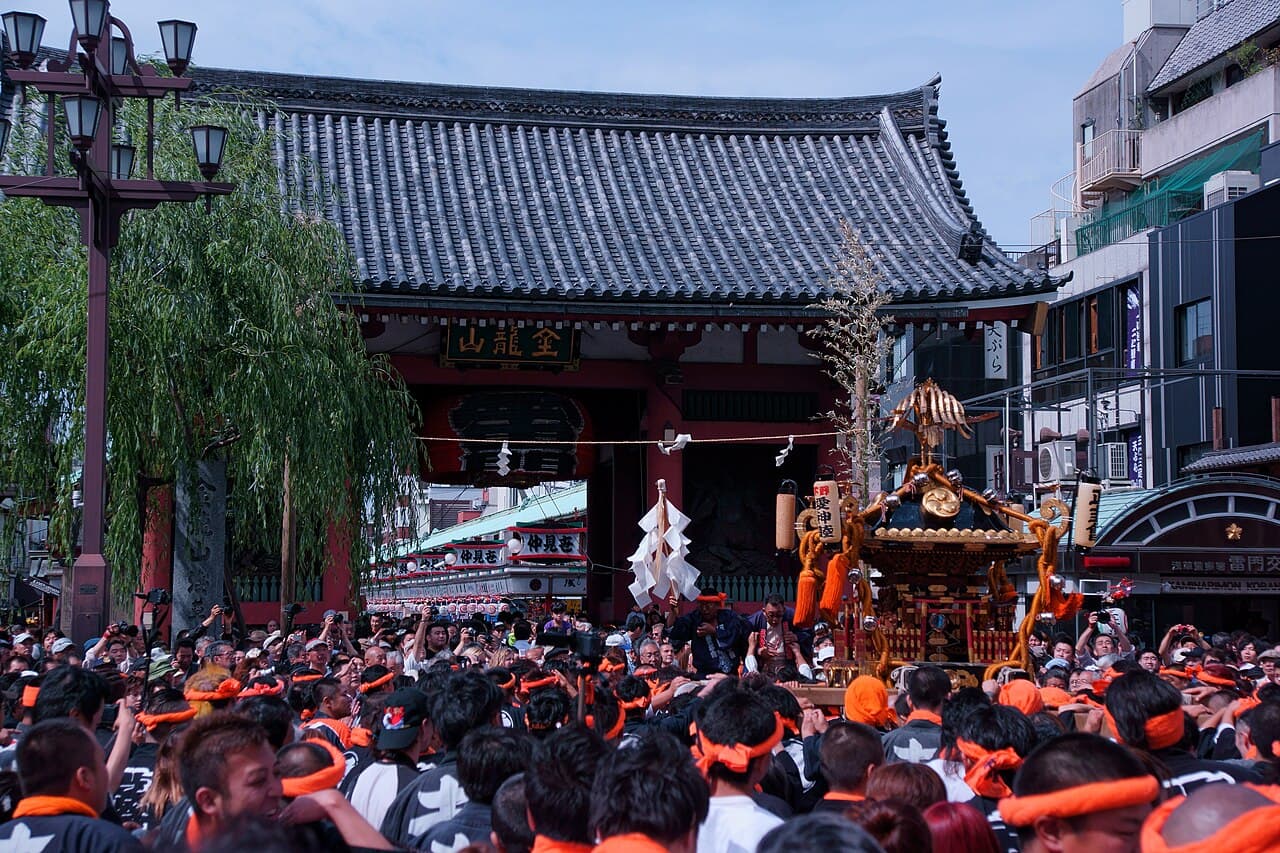
An omikoshi (お神輿), or mikoshi, is a portable Shinto shrine — built to resemble a miniature version of a shrine's main hall, with pillars, a railing, and a roof — that is carried on poles through the streets during a matsuri (festival) so the deity (kami) it houses can travel out among the community it protects.
Where the word comes from
The word breaks into two parts: 神, read here as "mi," a sacred/honorific reading pointing to the divine spirit inside, and 輿, "koshi," the word for a palanquin or litter once used to carry nobles. The "o-" prefix is simply an added honorific — "mikoshi" and "omikoshi" are the same object, with the latter being the more polite form. You may also see the word written "shin'yo," an alternate reading of the same two characters; it isn't a different kind of shrine, just another name for it. One theory, not settled fact, traces "koshi" further back to the verb kosu, "to cross over" or "move."
A practice with a recorded start date
Mikoshi have a documented first appearance: in 749 CE, the classical chronicle Shoku Nihongi records the kami Hachiman being ceremonially carried from Usa Jingū, in present-day Ōita Prefecture on Kyushu, all the way to Nara to lend divine support to the construction of Tōdai-ji's Great Buddha — which was still being built at the time (the statue wasn't finished until 751, with a dedication "eye-opening" ceremony in 752). Usa Jingū, the head shrine of Hachiman worship nationwide, is regarded as the birthplace of the mikoshi tradition. Before this practice existed, communities carried a sacred mirror wrapped in a sakaki branch, or another symbolic stand-in, to represent the kami's presence — the mikoshi is the more elaborate descendant of that older custom. The distinct regional carrying styles seen today are a later development; sources trace their emergence to the Edo period (1603–1868), when mikoshi processions became a centerpiece of major urban festivals, rather than to the Heian period.
What's actually inside
A mikoshi isn't understood to contain the deity itself in a literal sense. Instead it holds a goshintai — a physical object the kami is believed to temporarily reside in for the journey, most commonly described as a sacred mirror (shinkyō). This object functions as a yorishiro, a vessel a spirit can attach to. The shrine box itself is typically rectangular, hexagonal, or octagonal, topped with a gilded phoenix (hōō) or an onion-shaped finial called sōka, and mounted on two, four, or occasionally six carrying poles.
How it moves — and why people shout
Teams of bearers, usually members of the local parish association (ujiko), lift the poles onto their shoulders — a mikoshi is carried, never ridden. Different regions have their own carrying style and chant: hira-katsugi, the most common form, uses the call "wasshoi"; Tokyo's Asakusa district carries in the faster-swaying Edomae style, shouting "say ya, soi ya"; Shonan's dokkoi style adds a rhythmic up-down bounce to the chant "dokkoi dokkoi dokkoi sorya"; and near Hakone, the Odawara style has multiple mikoshi race and meet at speed with no swaying at all, in what's sometimes called a "Holy Dash." At many festivals, bearers deliberately shake and sway the mikoshi hard — a practice sometimes called tamafuri, or "soul-shaking" — believed to energize the kami inside rather than to cause disorder. The procession periodically rests on wooden stands called uma, often at a fixed stopping point known as an otabisho, before returning to the main shrine; some festivals carry the mikoshi directly into the sea or a river, called o-hamaori.
Mikoshi vs. dashi/yatai
It's easy to confuse a mikoshi with the large wheeled floats also seen at festivals, but they serve different purposes. A mikoshi is shoulder-carried, relatively compact, shaped like a miniature shrine, and exists purely to transport the deity. A dashi or yatai, by contrast, is wheeled and pulled rather than carried, much larger, historically styled to evoke a mountain, and can carry riders or musicians — its traditional role is to entertain and attract the kami, not physically move it.
Can visitors carry one?
At some festivals, yes — but it isn't a walk-up activity. Carrying a mikoshi typically requires signing up in advance through the local shrine's ujiko parish association, and bearers are expected to wear the matching happi or hanten coat the association provides; people without one generally aren't permitted to join. Organizers usually give a short briefing on carrying technique and safety beforehand, since a mikoshi is heavy and moves with a crowd. A growing number of festivals and organizers now specifically open slots to foreign or short-term visitors, so it's worth asking at the shrine office if you'd like to try.
Notable mikoshi include the one at Nikkō's Tōshō-gū, said to enshrine Tokugawa Ieyasu; Tomioka Hachiman Shrine in Tokyo, reputed to house Japan's largest mikoshi; and the Nada no Kenka Matsuri near Himeji, famous for deliberately crashing mikoshi together in ritual "combat."
FAQ
- What is inside a mikoshi?
- Not the deity itself in a literal sense, but a goshintai — usually described as a sacred mirror (shinkyō) — that the kami is believed to reside in during the journey.
- Why do bearers shake the mikoshi so violently?
- The shaking, sometimes called tamafuri or "soul-shaking," is believed to energize the kami riding inside — it's ritual practice, not disorder.
- Can foreign visitors carry a mikoshi?
- At some festivals, yes, but it typically requires advance registration through the local ujiko parish association and wearing the matching happi coat they provide — it isn't a walk-up activity.
- What's the difference between a mikoshi and a dashi (float)?
- A mikoshi is shoulder-carried and exists solely to transport the deity; a dashi or yatai is wheeled, much larger, and traditionally serves to entertain the kami rather than move it.
- When was the first mikoshi used?
- The earliest recorded use dates to 749 CE, when the chronicle Shoku Nihongi describes the kami Hachiman being carried from Usa Jingū in Kyushu to Nara to lend divine support to the still-unfinished Great Buddha of Tōdai-ji.
Related

How to Pray at a Japanese Shrine: Etiquette, Step by Step
How to pray at a Japanese shrine, step by step: bow at the torii, purify at the temizuya, then two bows, two claps, one bow — plus coins, omamori and omikuji.
Across Japan
Temple vs Shrine in Japan: How to Tell Them Apart & How to Pray at Each
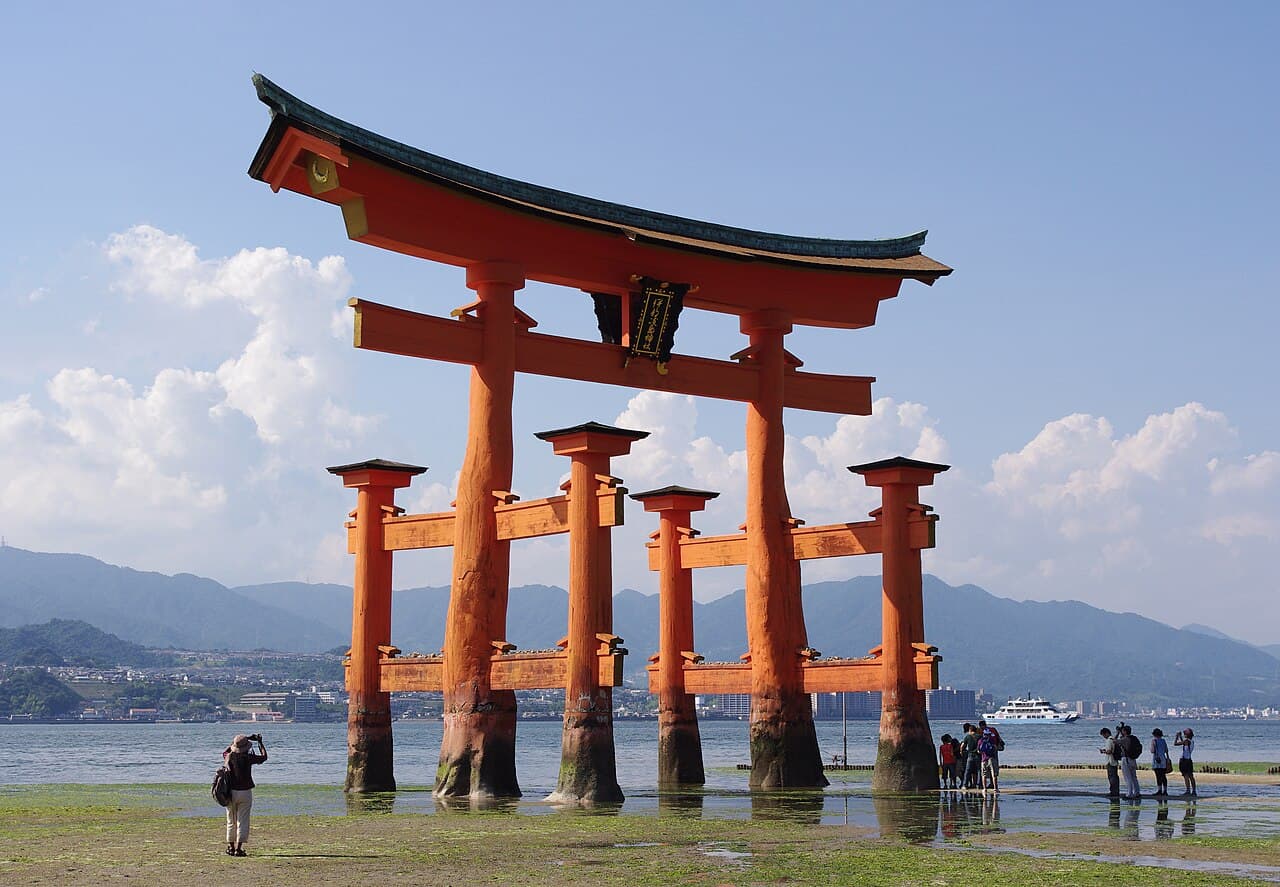
The quickest way to tell them apart: a **shrine (Shinto)** has a **torii gate** and you pray by **bowing twice, clapping twice, bowing once**; a **temple (Buddhist)** has a large **sanmon gate**, incense, and often a pagoda, and you pray **silently, palms together — no clapping.**