
What Does Maneki-Neko Mean? The Lucky Cat's Paws, Colors, and Origin Explained
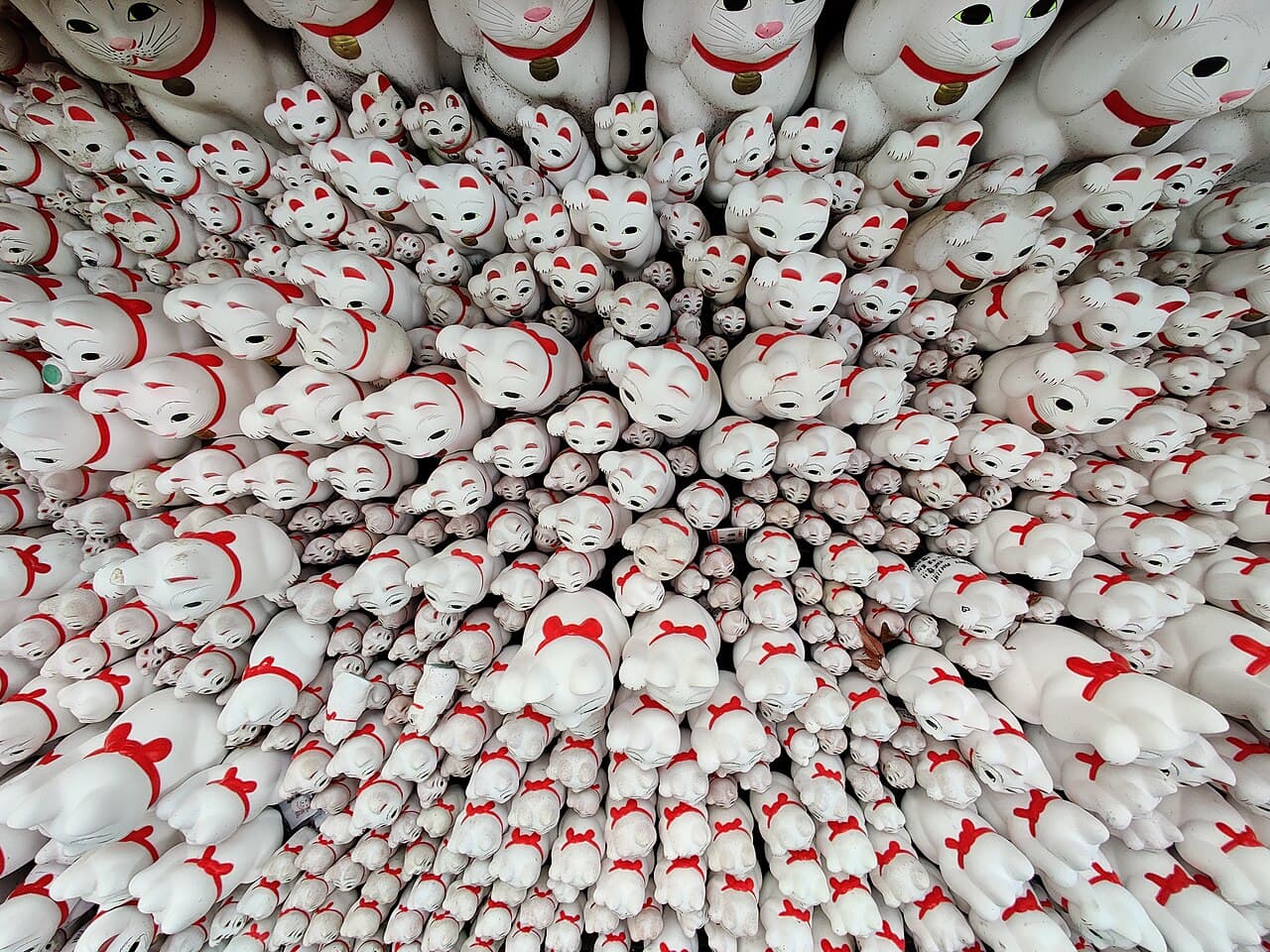
Maneki-neko literally means "beckoning cat" — the raised paw, palm forward with the fingers folding down and back, is the traditional Japanese gesture for "come here," which is exactly why many Westerners misread it as a goodbye wave.
Left paw or right paw?
It's supposed to matter which paw is up. A left paw raised is said to beckon people and customers, which is why it's the paw you'll usually see on a cat sitting at a shop or restaurant entrance. A right paw raised is said to beckon money and good fortune instead, so that version is more often kept at home or next to a cash register. Figurines with both paws raised are sold as "double luck" — money and relationships together — though the pose also resembles a raised-arms surrender gesture, so some regard it as the less auspicious option; which reading wins out really depends on the maker and the shop selling it.
Does the height of the paw matter?
There's also a common folk convention that the higher the paw is raised, the farther-reaching the luck is supposed to be — a paw lifted above ear height is commonly said to call in long-term or far-off fortune, while a lower paw is said to bring quicker, nearer-term luck. This isn't written into any single authoritative text; it's a widely repeated convention rather than a fixed rule.
What do the colors mean?
- White — the original and most common color; general good luck and purity.
- Gold or yellow — wealth and business prosperity, the color you'll see most in shops.
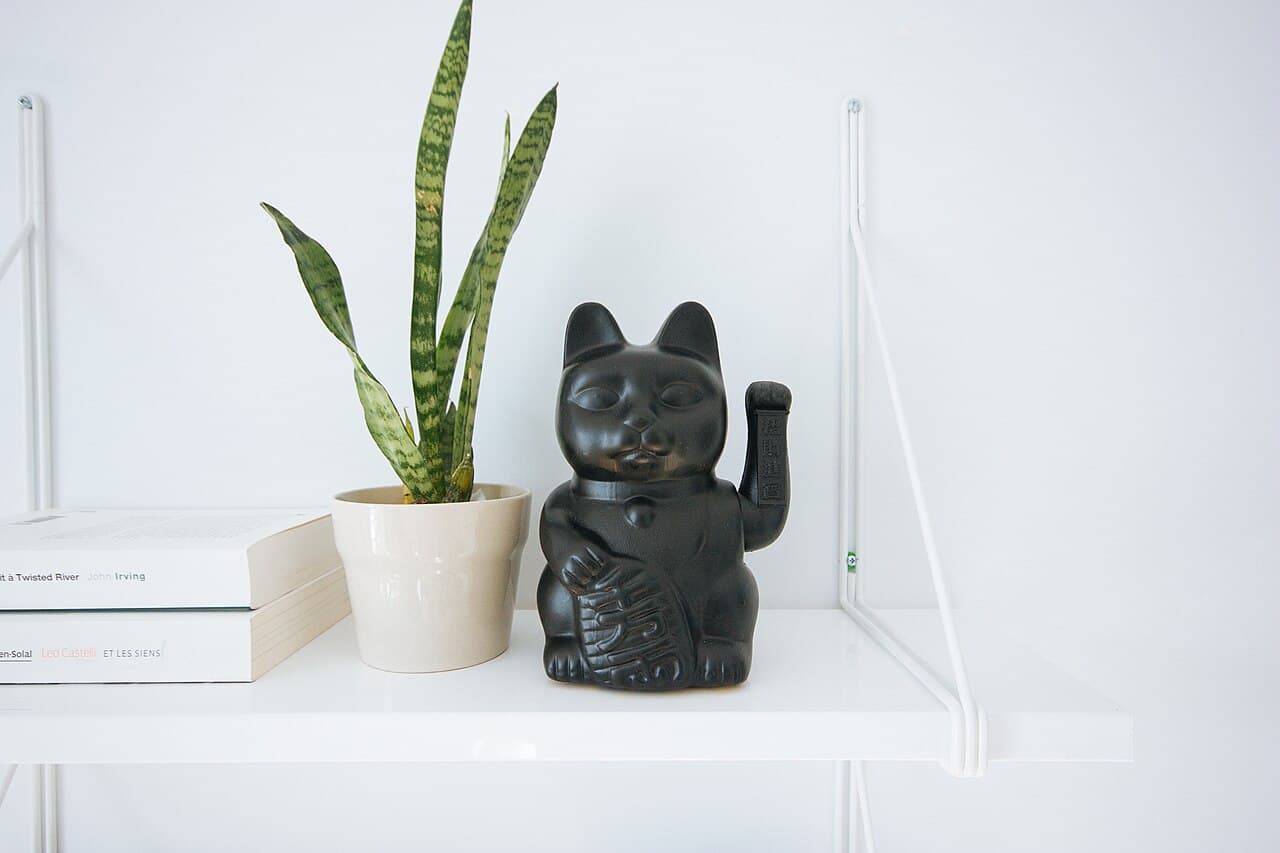
- Black — protection, warding off evil and bad luck.
- Red — associated with either health or romantic fortune, depending on who you ask; both meanings circulate.
- Pink — romance and love specifically.
- Calico (three-colored fur, mikeneko) — considered the luckiest and most traditional pattern, tied to the Japanese Bobtail breed. Japanese sailors reportedly brought calico cats aboard ships in the belief they warded off storms and evil spirits, which is one reason calico became the "classic" maneki-neko coloring.
Why does it hold a coin?
Most maneki-neko hold a koban (小判), the oval gold coin used in the Edo period and historically valued at one ryō — a straightforward symbol of wealth. Interestingly, the cat enshrined at Gōtoku-ji Temple in Tokyo, one of the figures most closely tied to the whole tradition, holds nothing at all in its raised paw — the temple's own explanation is that summoning fortune is itself the gift, not the money.
Where does maneki-neko actually come from?
There's no single confirmed inventor — several competing legends from different eras claim the honor, and none has been proven over the others. The most widely cited is the Gōtoku-ji story: during the Kan'ei era (1622–1624), the lord Ii Naotaka was sheltering near the temple gate when a cat appeared and beckoned him inside; moments after he followed it, lightning struck the spot where he'd been standing. Grateful, the Ii clan became patrons of the temple, which later built a hall to enshrine the cat. Other temples tell different stories — Jishō-in credits a cat that led a lost warlord, the 15th-century commander Ōta Dōkan, to safety before a battle (this version actually predates the Edo period, unlike the other legends here), and Imado Shrine's version involves a poor woman who dreamed her late cat told her to sculpt its likeness in clay, which she then sold at Asakusa. The earliest written record of a maneki-neko is a diary entry in the Edo chronology Bukō nenpyō, dated 1852 — the same year Utagawa Hiroshige made a woodblock print showing a similar cat figure being sold outside Sensō-ji Temple in Asakusa.
Is maneki-neko Japanese or Chinese?
It's unambiguously Japanese in origin, but the figure is extremely common in Chinese communities and Chinatowns worldwide, and is frequently mistaken for a Chinese object as a result — it's sometimes even called the "golden cat" in Chinese contexts. The confusion is common enough that it's worth clearing up: whatever legend you believe, every version of the origin story is set in Japan.
FAQ
- What does the maneki-neko's raised paw mean?
- The raised, palm-forward paw is the traditional Japanese beckoning gesture for "come here" — it's asking for good fortune (or customers) to come toward the cat, not waving goodbye.
- Does the left or right paw mean something different?
- Yes. A raised left paw is said to beckon people and customers, which is why it's common at shop entrances. A raised right paw is said to beckon money and fortune, and is more often kept at home or by a register. Both paws raised is sold as double luck, though some see it as less auspicious.
- What do the different maneki-neko colors mean?
- White is the original, general-luck color. Gold/yellow means wealth and business success. Black wards off evil. Red is linked to either health or love depending on the source. Pink means romance. Calico (three-colored) is considered the luckiest, traditional pattern.
- Why do maneki-neko hold a coin?
- Most hold a koban, an Edo-period gold coin historically worth one ryō, symbolizing wealth. The cat enshrined at Gōtoku-ji Temple, one of the tradition's most cited sources, notably holds nothing at all.
- Where did the maneki-neko originate?
- There's no single confirmed origin. Several competing temple legends, spanning different eras, claim it — most famously Gōtoku-ji Temple's Edo-period story of a cat that beckoned Lord Ii Naotaka out of the path of a lightning strike. The earliest written record dates to 1852.
- Is maneki-neko Chinese or Japanese?
- It's Japanese in origin, but it's so common in Chinese communities and Chinatowns worldwide that it's frequently misidentified as Chinese — sometimes called the "golden cat" in Chinese contexts.
Related
Japanese Superstitions Every Visitor Should Know
From the unlucky number 4 to why nobody whistles at night — the small beliefs that quietly shape everyday life in Japan.
What Is Kintsugi? The Real Meaning Behind Japan's Art of Golden Repair
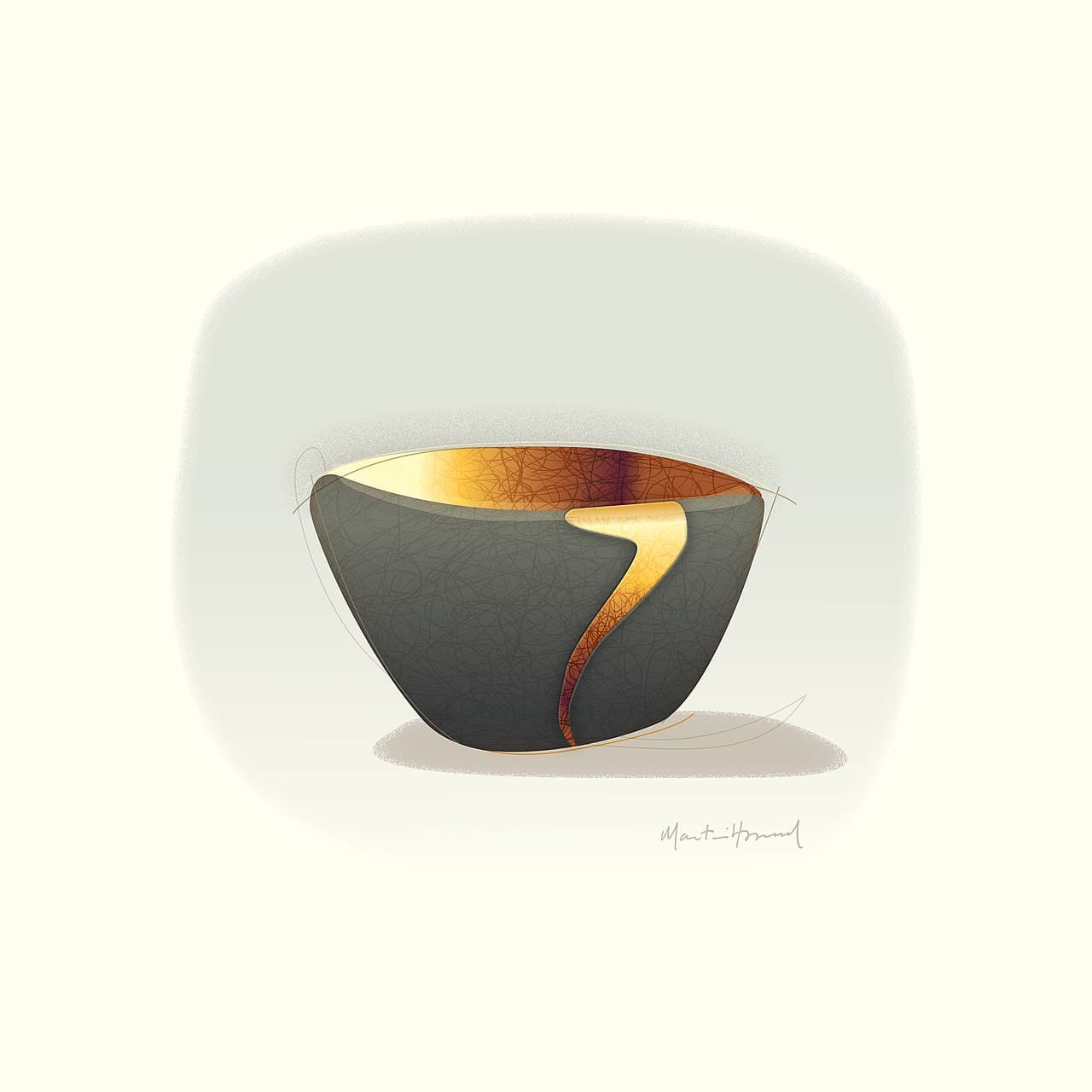
Kintsugi (金継ぎ, "golden joinery") is the Japanese craft of mending broken pottery with urushi lacquer dusted with gold, silver, or platinum powder, so the fracture lines become visible rather than hidden. It is not simply "gluing pottery with gold" — it is a slow, multi-step lacquer process, and it is a practice, not identical to the broader wabi-sabi philosophy it is often confused with.