
Japan Tax-Free Refund 2026: What Changes on November 1, and the Airport Customs Check That Gets You Your Refund, Step by Step
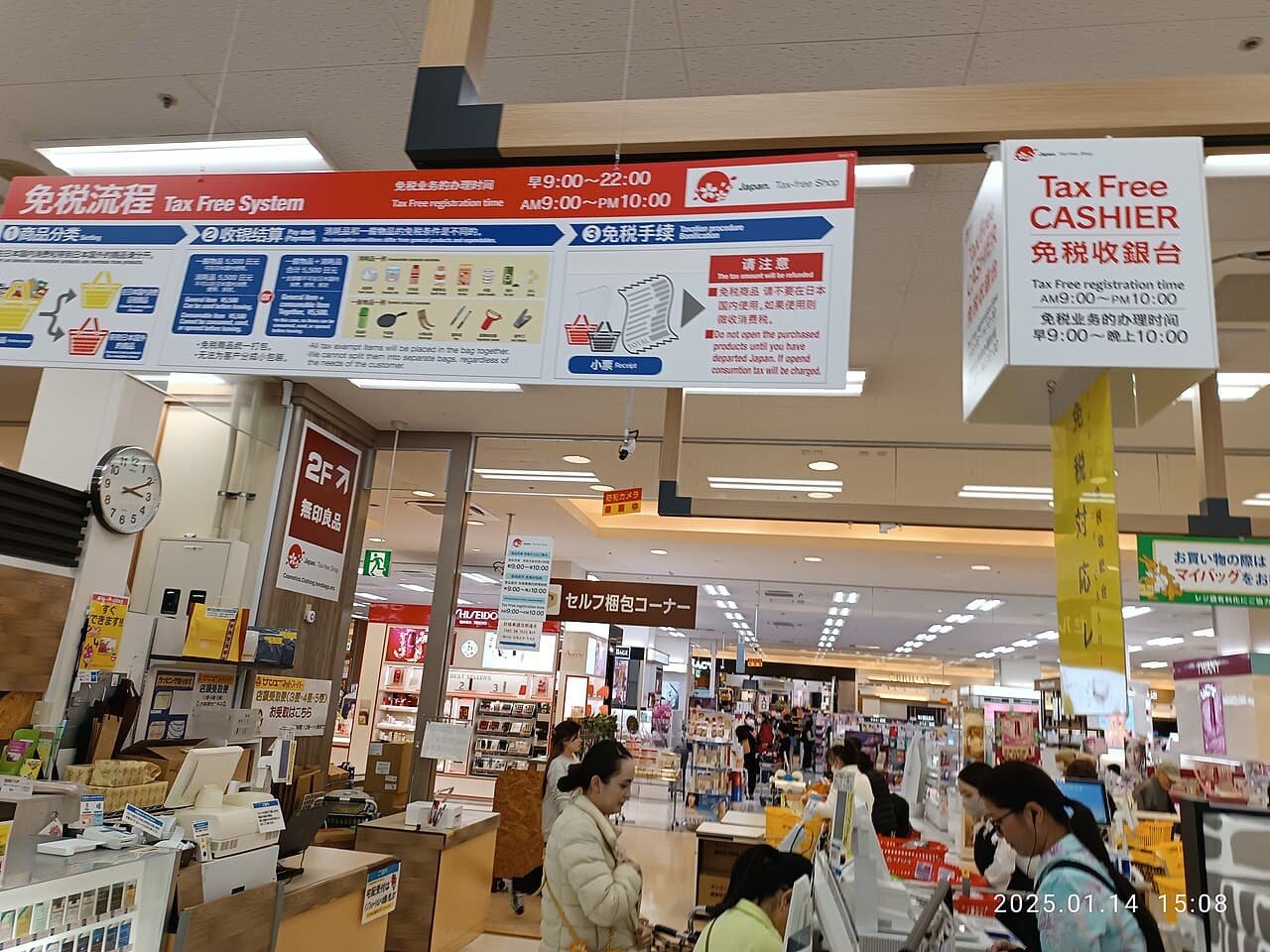
From purchases made on 1 November 2026, tax-free shopping in Japan becomes a refund system: you pay the price including consumption tax at the till, then show your passport at a tax-free terminal at the airport or seaport when you leave — within 90 days of purchase and before you check in any bags — and the tax is refunded by the shop or its refund provider once customs has confirmed you are taking the goods out. Anything you buy up to 31 October 2026 is still sold tax-free at the till under the current rules. This page is the traveller's side of the change, built from the Japan Tourism Agency (JTA) and National Tax Agency (NTA) documents.
Checked 2026-10-14. Official traveller page (English): https://www.mlit.go.jp/kankocho/tax-free/page01_000001_00028.html
What changes on 1 November 2026
The switch is decided by the date you buy, not the date you fly. The NTA's Q&A says the refund method applies to sales made at tax-free shops from 1 November 2026, "not from the purchaser's departure date", and that there is no transition period in which the old and new systems run side by side. A trip that spans the change can therefore leave Japan with two kinds of purchase: older ones bought tax-free, and newer ones waiting for a refund.
| Bought up to 31 Oct 2026 | Bought from 1 Nov 2026 | |
|---|---|---|
| Price you pay at the shop | Tax-free (tax-exclusive) | Tax-inclusive |
| Minimum spend | ¥5,000 before tax, per shop per day | ¥5,000 before tax, per shop per day (unchanged) |
| Food, drink, cosmetics | Separate "consumables" category, ¥500,000 cap, sealed special packaging | No separate category, no cap, no special packaging — but anything consumed in Japan cannot be refunded |
| When you leave | No refund step — but show your passport to customs and carry the goods out, consumables still in their sealed special packaging; if you do not have the goods with you, the exempted tax is collected | Customs confirmation at a terminal within 90 days of purchase |
| Refund | — | Paid by the shop or its refund provider after customs confirmation |
Sources for the table: JTA comparison table (https://www.mlit.go.jp/kankocho/tax-free/content/001977883.pdf) and the NTA English leaflet (https://www.nta.go.jp/publication/pamph/shohi/menzei/202506/pdf/0025006-106.pdf), checked 2026-10-14.
Who can shop tax-free
Eligibility itself does not change. The NTA's Q&A lists the eligible purchasers as non-residents of foreign nationality staying with short-term stay, diplomatic or official status, or on certain landing permits such as those for cruise passengers and crew; and Japanese nationals who have lived outside Japan continuously for two years or more. Japanese nationals show a passport plus proof of residence abroad — from November that proof can also be a My Number Card that records the move abroad, according to the JTA FAQ. The JTA publishes the full list as a PDF: https://www.mlit.go.jp/kankocho/tax-free/content/001981481.pdf
Step by step: from the till to your refund
- At the shop. Spend at least ¥5,000 (before tax) in one tax-free shop on one day, show your passport and pay the tax-inclusive price. The JTA FAQ says the shop explains how to register your refund method at the time of purchase — this is the moment to ask how and when the money will come back to you. Keep the receipt.
- Pack so you can show everything. Every tax-free item must be with you when you scan your passport, and you must be able to show it to customs on request. You may only buy as much as you can personally carry out of Japan when you leave.
- Arrive early at your departure airport or port. The terminals (kiosk or electronic terminals) and the customs inspection area are in the international departure lobby, before baggage check-in.
- Scan your passport. The terminal shows a Green result (no inspection — the customs procedure is finished) or a Red result (take the goods to the customs inspection area and show them).
- Only then check in your bags.
- Receive the refund. After customs has confirmed the export, the shop or the refund provider it uses returns the consumption-tax amount by the method you registered.
The bag-drop rule — the step you cannot undo
- No procedure after check-in. The JTA says you cannot use a terminal after checking your luggage at the airport or seaport, and a checked bag cannot be pulled back from the airline for the tax-free procedure. If your purchases are in your suitcase, scan before the bag-drop counter.
- Finish before boarding procedures. If you stop an inspection part-way because you are running out of time, it does not count as customs confirmation (JTA, NTA). Budget extra time on top of your airline's usual check-in advice.
- Connecting from a domestic flight? Do the procedure at the airport from which you finally leave Japan. If you fly Fukuoka → Haneda on a domestic ticket and leave Japan from Haneda, you scan at Haneda, not Fukuoka.
- Online at seven airports. At Narita, Haneda, Kansai, Chubu, Fukuoka, New Chitose and Naha you can complete the procedure online through Visit Japan Web instead of using a terminal, while connected to the dedicated Wi-Fi in the international departure lobby (up to the security checkpoint). It is still a before-check-in step.
- Expensive items. For an item costing ¥1 million or more before tax, customs may ask to see an appraisal certificate or warranty with it, so keep those papers in your hand luggage.
The receipt rule, and food, drink and cosmetics
Customs confirmation is done receipt by receipt. If even one item on a receipt is missing when you leave, none of the items on that receipt can be confirmed, and the tax on the whole receipt is not refunded. In practice:
- Don't put snacks you plan to eat during the trip on a tax-free receipt — buy them separately at the normal price.
- Gifts you hand over in Japan break the receipt in the same way, because you no longer have them.
- Food, drink and cosmetics no longer need sealed bags, but if you consume any of them in Japan you cannot get the refund for that receipt. If you have consumed all or part of a purchase, don't use the terminal for it — tell a customs officer at the counter instead.
- Gold and platinum bullion, gold and platinum coins, and goods that are exempt from consumption tax are not tax-free goods.
- Goods that customs has confirmed must leave Japan without delay. If they don't, the exempted tax is collected and penalties apply.
How much comes back, and how it is paid
Japan's consumption tax is 10% at the standard rate and 8% at the reduced rate, which covers food and non-alcoholic drink but not alcohol or eating out (NTA Tax Answer No.6303; Ministry of Finance). So the consumption-tax part of an ¥11,000 item at 10% is ¥1,000, and of a ¥5,400 box of sweets at 8% it is ¥400. Ask at the till how and when it will be returned to you.
The JTA FAQ lists possible refund methods — bank transfer, credit-card refund, transfer through an app, or cash inside the airport or seaport after customs confirmation — and states that the method differs from shop to shop. The NTA adds that tax law sets no rule on how the refund is carried out. In other words, the shop or its refund provider decides; the timing is "basically" after customs confirmation, per the JTA. Some shops can also ship goods abroad directly from the store at the time of purchase; the NTA says those goods are handled under a different export rule, and whether a shop offers it is up to the shop.
Before you fly: a short checklist
- Purchases from 1 November: are they all within 90 days? The count starts the day after purchase — the NTA's example is that goods bought on 1 November must be confirmed by 30 January of the following year.
- Are all tax-free items reachable, not packed deep in a bag you are about to check in?
- Is every receipt complete — nothing eaten, used up or given away?
- Bought anything tax-free up to 31 October? Have it with you (consumables still sealed) and be ready to show your passport to customs — goods you do not have with you are charged the exempted tax.
- Do you know how each shop will pay you back (card, bank, app or airport cash)?
- Leaving from Narita, Haneda, Kansai, Chubu, Fukuoka, New Chitose or Naha? Set up Visit Japan Web to do the step online.
Plan the rest of your trip
If tax-free shopping is the last stop of a longer trip, spend the earlier days on something you cannot carry home in a bag: our guide to the best cultural experiences in Japan compares what is worth booking, and there are city guides for Tokyo — handy if you fly out of Narita or Haneda — and Kyoto, the usual base before a Kansai departure.
Sources
- Japan Tourism Agency, What is the Refund Method? (travellers, English) — https://www.mlit.go.jp/kankocho/tax-free/page01_000001_00028.html; Japanese page — https://www.mlit.go.jp/kankocho/tax-free/page01_000001_00021.html (checked 2026-10-14)
- Japan Tourism Agency, FAQ for travellers (refund method) — https://www.mlit.go.jp/kankocho/tax-free/page01_000001_00023.html (checked 2026-10-14)
- Japan Tourism Agency, comparison table — https://www.mlit.go.jp/kankocho/tax-free/content/001977883.pdf; list of eligible purchasers — https://www.mlit.go.jp/kankocho/tax-free/content/001981481.pdf; traveller leaflet (English) — https://www.mlit.go.jp/kankocho/tax-free/content/001991247.pdf (checked 2026-10-14)
- National Tax Agency, refund-method page — https://www.nta.go.jp/publication/pamph/shohi/menzei/201805/format/002.htm; Q&A (overview, revised April 2026) — https://www.nta.go.jp/publication/pamph/shohi/menzei/201805/pdf/0025012-025_02.pdf; English leaflet — https://www.nta.go.jp/publication/pamph/shohi/menzei/202506/pdf/0025006-106.pdf; notice to foreign travellers — https://www.nta.go.jp/publication/pamph/shohi/menzei/201805/pdf/caution_en.pdf (checked 2026-10-14)
- National Tax Agency, Tax Answer No.6303 (tax rates) — https://www.nta.go.jp/taxes/shiraberu/taxanswer/shohi/6303.htm; Ministry of Finance, consumption tax — https://www.mof.go.jp/tax_policy/summary/consumption/consumption_tax/index.html (checked 2026-10-14)
- National Tax Agency, notes on tax-free sales under the current system — https://www.nta.go.jp/publication/pamph/shohi/menzei/201805/0523_04.htm; japan-guide.com, news on the November 2026 change (independent) — https://www.japan-guide.com/news/tax-free-shopping.html (checked 2026-10-14)
- Japan National Tourism Organization, blog post of 2026-07-20 (independent summary) — https://www.japan.travel/en/us/blog/everything-you-need-to-know-japans-new-tax-free-shopping-system/ (checked 2026-10-14)
Rules, dates and airport names on this page were checked on the official JTA and NTA pages on 2026-10-14. Refund methods, fees and timing are set by each shop or refund provider — confirm at the till. The page will be updated when the system starts on 1 November 2026.
2026-10-14: first published from the Japan Tourism Agency and National Tax Agency documents.
FAQ
- When does the new tax-free refund system start in Japan?
- It applies to purchases made from 1 November 2026. The NTA says the date of purchase decides, not the date you leave Japan, and there is no transition period: goods bought up to 31 October 2026 are sold tax-free at the till under the current rules, while goods bought from 1 November are sold at the tax-inclusive price and refunded after customs confirmation.
- How long do I have to get the tax refund?
- You must present your passport for customs confirmation when you depart Japan within 90 days of the date of purchase. The NTA counts from the day after purchase to the 90th day; its example is that goods bought on 1 November must be confirmed by 30 January of the following year. Without customs confirmation there is no refund.
- Can I do the tax-free procedure after checking in my luggage?
- No. The terminals are in the international departure lobby before baggage check-in, you must have every tax-free item with you, and a checked bag cannot be retrieved from the airline for the procedure. At Narita, Haneda, Kansai, Chubu, Fukuoka, New Chitose and Naha you can do it online through Visit Japan Web instead, but still before check-in (up to the security checkpoint).
- How will I receive the refund — can I get cash?
- The refund is paid by the tax-free shop or a refund provider the shop uses. The JTA lists bank transfer, credit-card refund, app transfer and cash at the airport or seaport after customs confirmation as possible methods, but says the method differs by shop. You are told how to register your refund method when you buy, so ask at the till.
- What happens if I eat or give away something I bought tax-free?
- Customs confirmation is per receipt: if even one item on a receipt is missing, nothing on that receipt is refunded. Food, drink and cosmetics consumed in Japan cannot be refunded. If you consumed all or part of a purchase, do not use the terminal for it — tell a customs officer at the counter. Buy things you plan to eat during the trip separately.
Related
Across Japan
The Best Cultural Experiences in Japan (and How to Book Them)
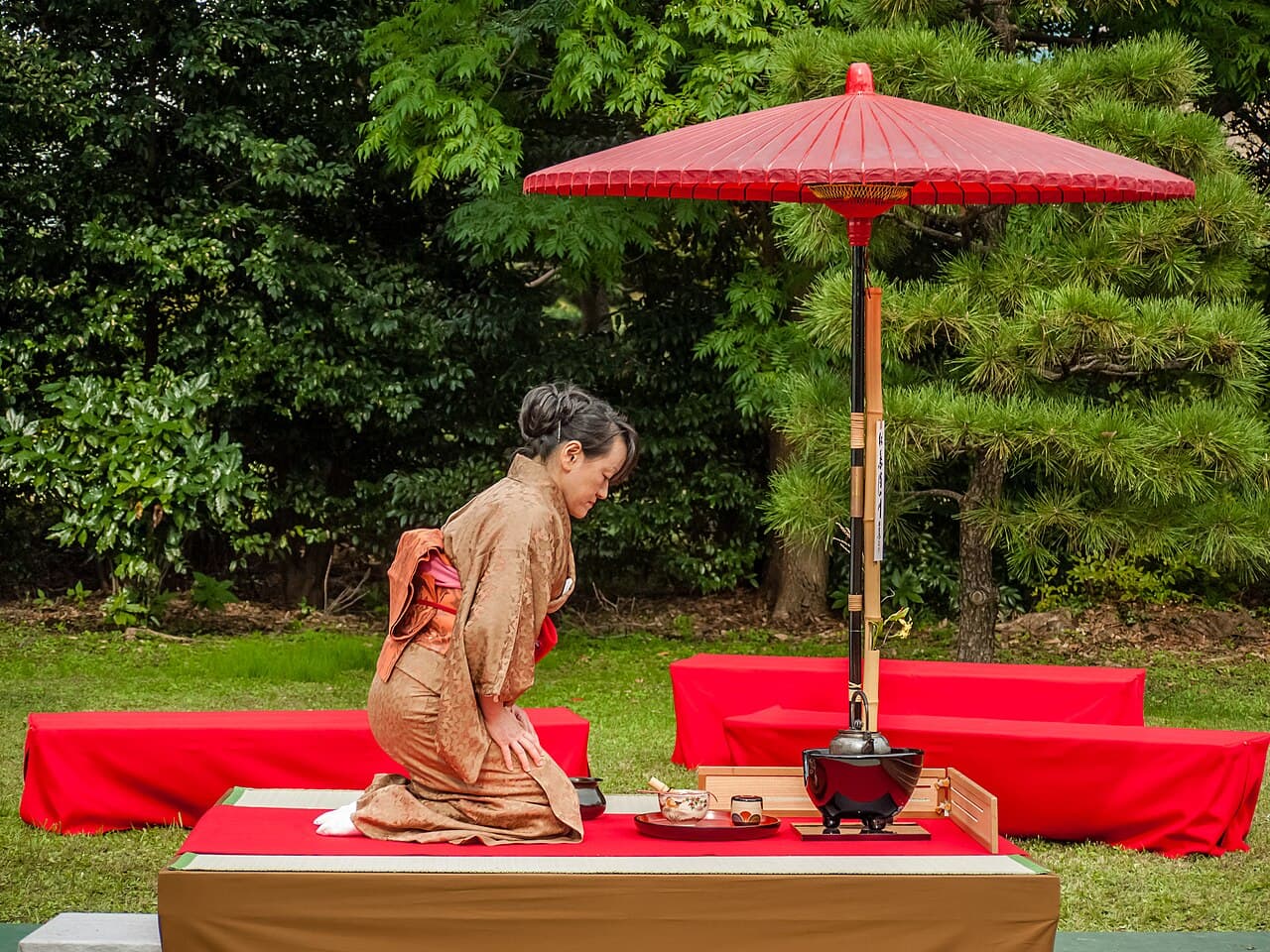
The best traditional cultural experiences in Japan are the **tea ceremony, zazen meditation, kimono wearing, samurai and ninja training, calligraphy, pottery, taiko drumming, sushi-making, and geisha and sake culture** — almost all offered as English-friendly 1–2 hour drop-in workshops needing no prior experience. Kyoto leans refined and traditional; Tokyo leans hands-on. As of 2026.