
What Is Noh Theatre? Japan's 600-Year-Old Masked Drama, Explained
Noh is a masked, music-driven Japanese stage drama that Kan'ami and his son Zeami shaped into the form we still watch today, between the 14th and 16th centuries — more than 600 years ago. It shares a stage with Kyogen, a spoken comic theatre, and the two together are called Nohgaku. UNESCO inscribed Nohgaku on its Representative List of the Intangible Cultural Heritage of Humanity in 2008.
If you are picturing a slower kabuki, reset. Noh is built on stillness, chant and a mask — not on spectacle. Knowing what it is trying to do is the difference between a long evening and a genuinely strange, beautiful one.
Noh and Kyogen are one art, not two
The Japan Arts Council, which runs the National Noh Theatre, states it plainly: "Noh and Kyogen are Japanese traditional performing arts that have a long history. They are performed on the same stage and are collectively referred to as 'Nohgaku.'"
| Noh | Kyogen | |
|---|---|---|
| What drives it | Song and dance, set to flute and percussion | Conversation between characters |
| Tone | Solemn, often supernatural | Satire and comedy |
| Masks | Central — the art is known for them | Used far less |
| Who it is about | Ghosts, women, children, old people | Ordinary people, drawn as exaggerated types |
This is why a noh programme rarely feels monotonous: the comedy is built into the bill. The National Noh Theatre's September 2026 programmes are each billed as a pair — 隠狸/三井寺, 箕被/融, 月見座頭/小督, 靱猿/姨捨 — a Kyogen and a Noh on one ticket.
It did not begin in the 14th century
The usual shorthand ("14th-century theatre") is only half right. UNESCO's entry is more precise: Nohgaku "had its heyday in the fourteenth and fifteenth centuries, but actually originated in the eighth century when the Sangaku was transmitted from China to Japan."
So the lineage is roughly 1,200 years old; the form Kan'ami and Zeami perfected is roughly 600. Kyogen, for its part, descends from the humorous side of that same Sangaku root.
The mask is the point
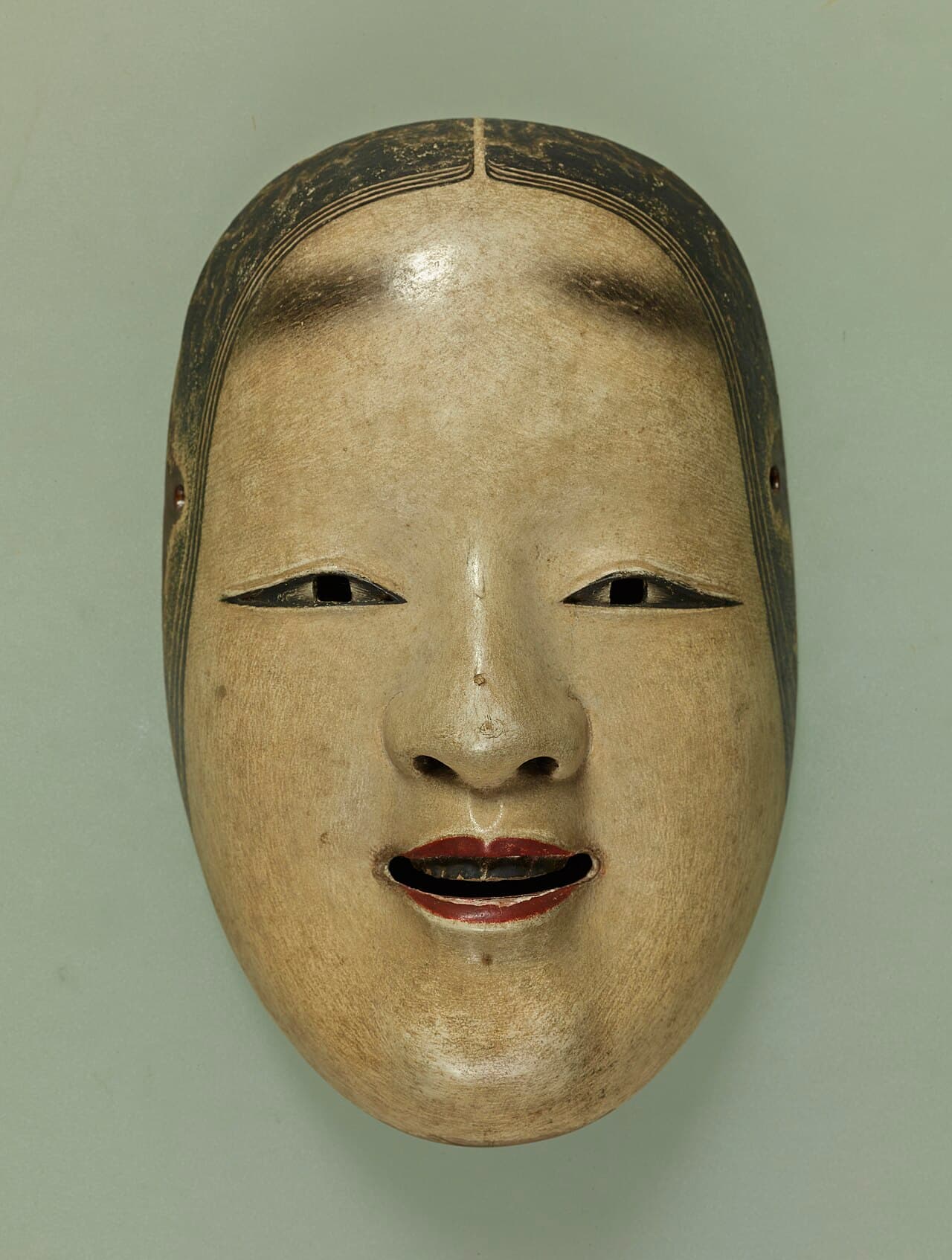
Noh masks (nōmen) are not costume decoration — they are the mechanism. Per UNESCO, the "distinctive masks for which Noh is renowned are used for the roles of ghosts, women, children and old people," and on that fixed face "emotions are represented by stylised conventional gestures."
Read that twice, because it inverts everything a Western theatregoer expects. The face does not change; the body carries the feeling. A lowered head reads as grief. A tilt toward the light reads as joy. Once you know to watch the angle of the mask rather than the expression on it, noh stops being opaque.
A stage with no curtain
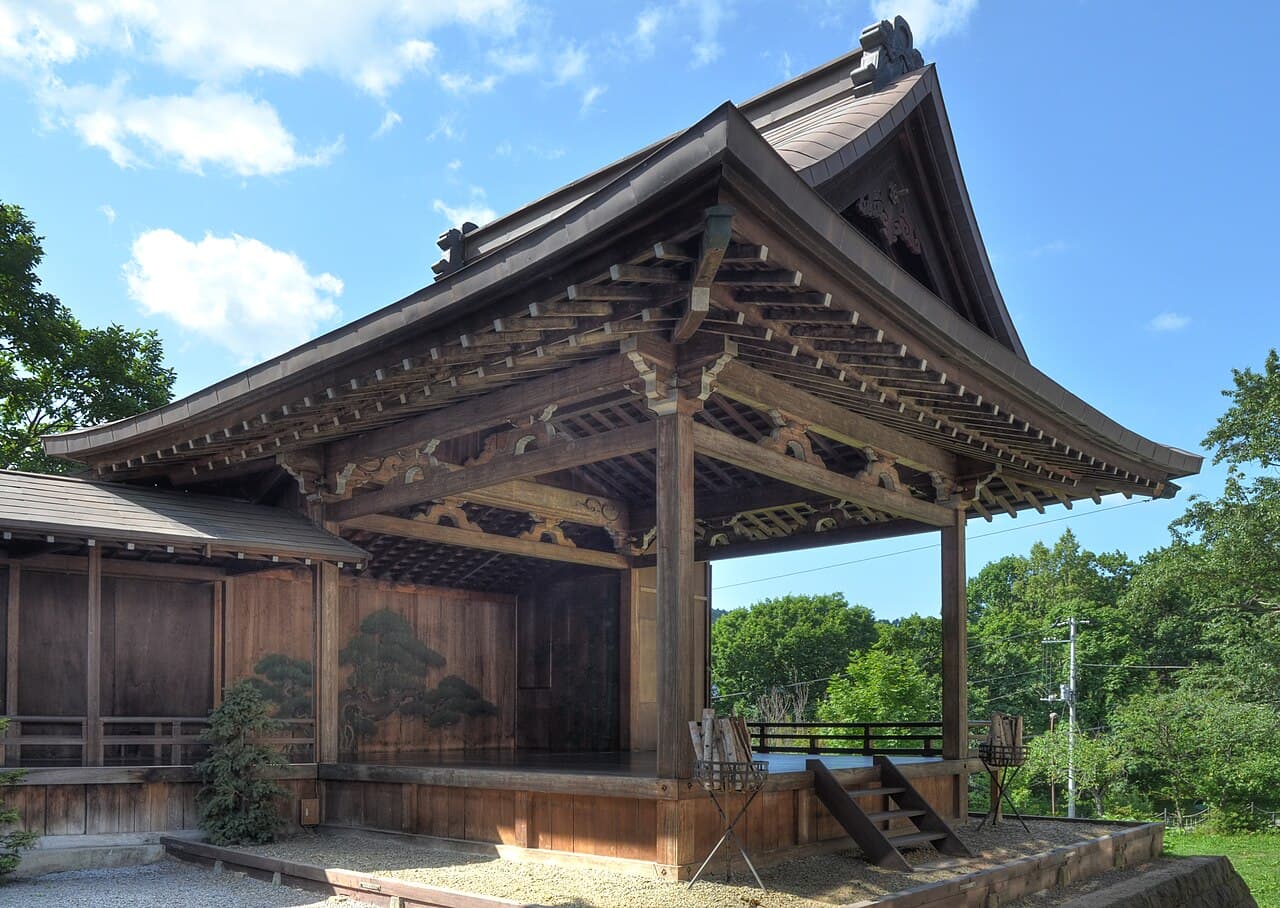
The noh stage is fixed, and every noh stage is essentially the same stage. The Japan Arts Council describes it as "a planked stage which protrudes out into the audience has a roof supported by pillars, with neither walls nor a curtain separating the stage from the audience." UNESCO adds that the stage "projects into the audience and is linked by a walkway to a 'hall of mirrors' backstage."
That walkway (the hashigakari) and the mirror room matter: there is no blackout and no wing to hide in, so an actor's entrance is part of the play. You watch a ghost arrive from a very long way off.
Protected, and still working
Japan designated Nohgaku an Important Intangible Cultural Property in 1957, and the National Noh Theatre opened in 1983 to train performers and stage the repertoire. It is a working theatre with 627 seats, not a museum.
Where to see it
- National Noh Theatre (Tokyo) — 4-18-1 Sendagaya, Shibuya-ku, Tokyo 151-0051 (tel. +81-3-3423-1331). Five minutes' walk from Sendagaya Station on the JR Chuo-Sobu Line, five from Kokuritsu-kyogijo Station Exit A4 on the Toei Oedo Line, seven from Kita-sando Station on the Fukutoshin Line. Its programme runs to categories including regular performances (teirei kōen), introductory performances with commentary (fukyū kōen), showcases, family programmes and special performances. Tickets are sold through the Japan Arts Council's official ticket service.
- Kanze Noh Theatre (Ginza) — in the basement of GINZA SIX, Ginza 6-chome. Its own schedule names three recurring series: Kanzekai Teiki Noh ten times a year on the first Sunday of the month, Araiso GINZA Noh four times a year (March, June, August and November), and Kanzekai Bekkai twice a year (April and October).
On prices, an honest note: we are not quoting a ticket figure here. Kanze's own site says the programme, cast, seat class and seating block — and therefore the price — change with every performance, and neither theatre publishes a fixed price on a page we could verify directly. Check the specific performance you want. (Verified 2026-08-13.)
If you would rather start with the louder, more spectacular of Japan's two UNESCO-listed classical theatres, our guide to seeing kabuki in Tokyo covers single-act tickets and the English subtitle tablet — and Noh vs Kabuki explains which one to choose first.
Sources
FAQ
- What is the difference between Noh and Kyogen?
- They are two halves of one art called Nohgaku, performed on the same stage. Noh is a solemn drama of song and dance with masks; Kyogen is a spoken comedy about ordinary people that uses masks far less.
- Do Noh actors always wear masks?
- No — UNESCO notes the masks are used for the roles of ghosts, women, children and old people, so not every role on stage is masked.
- How old is Noh theatre?
- The form we watch today was perfected by Kan'ami and his son Zeami between the 14th and 16th centuries, over 600 years ago, but UNESCO traces its origin to the 8th century, when Sangaku was transmitted from China to Japan.
- Where can I see Noh in Tokyo?
- At the National Noh Theatre, 4-18-1 Sendagaya, Shibuya-ku — five minutes' walk from Sendagaya Station on the JR Chuo-Sobu Line — or at the Kanze Noh Theatre in the basement of GINZA SIX in Ginza.
- Is Nohgaku a UNESCO heritage?
- Yes. Nohgaku was inscribed on UNESCO's Representative List of the Intangible Cultural Heritage of Humanity in 2008, and Japan had already designated it an Important Intangible Cultural Property in 1957.
Related
Noh vs Kabuki: The Real Differences — and Which to See First
See kabuki first: it is faster, louder and far easier to follow without preparation. Noh is masked, chanted and slow, and rewards context. Both were inscribed by UNESCO in 2008, but kabuki began in the early 17th century for townspeople while Noh's lineage runs back to the 8th — which is why one paints the face and the other hides it.
Tokyo
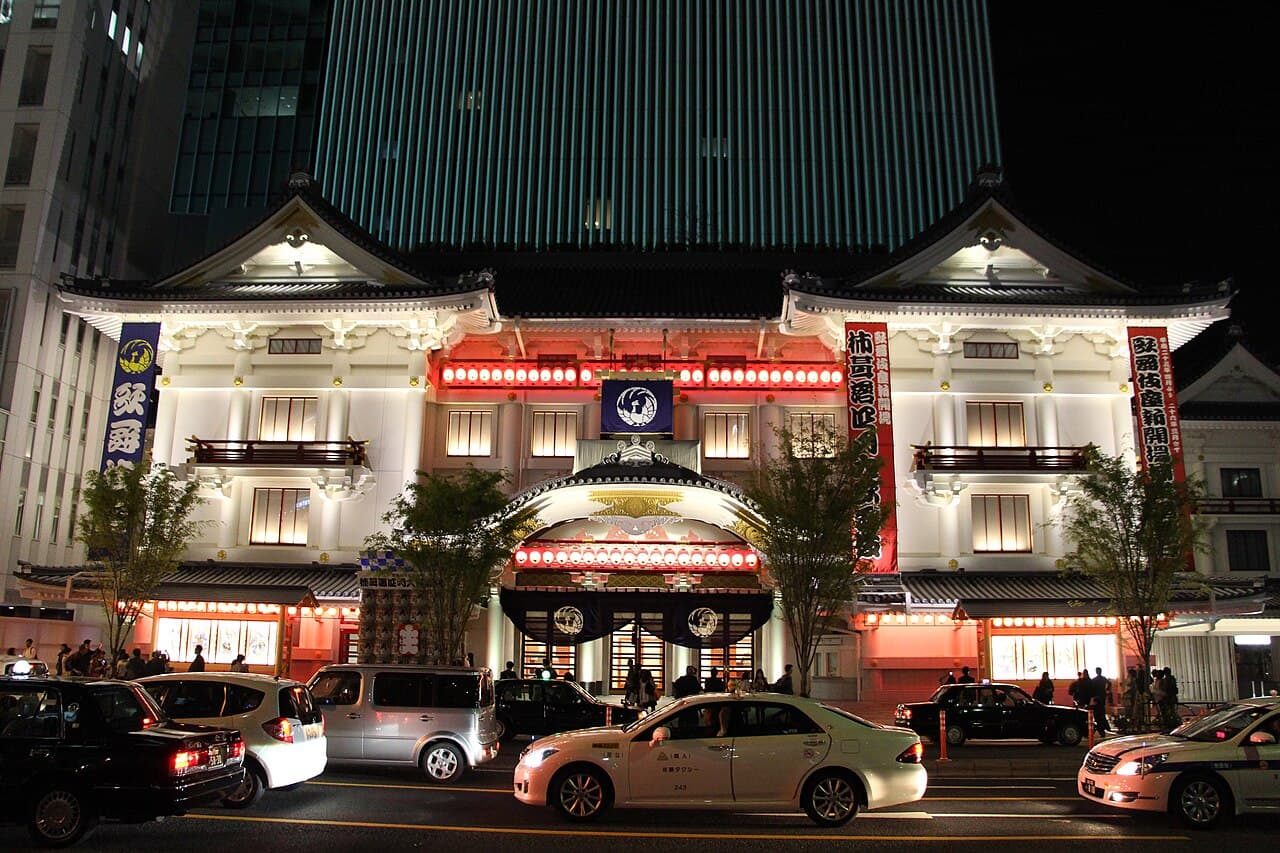
How to See Kabuki in Tokyo — Single-Act Tickets, Prices & the English Guide (Kabuki-za)
The cheapest, easiest way to see real kabuki in Tokyo is a single-act ticket (hitomakumi-seki) at Kabuki-za in Ginza, roughly ¥500–2,500 for one act. Since a 2023 renewal, about 70 seats are reservable online the day before by credit card, and about 20 more are sold same-day for cash. English support comes from a ¥1,000 subtitle tablet, not the Japanese-only earphone guide.
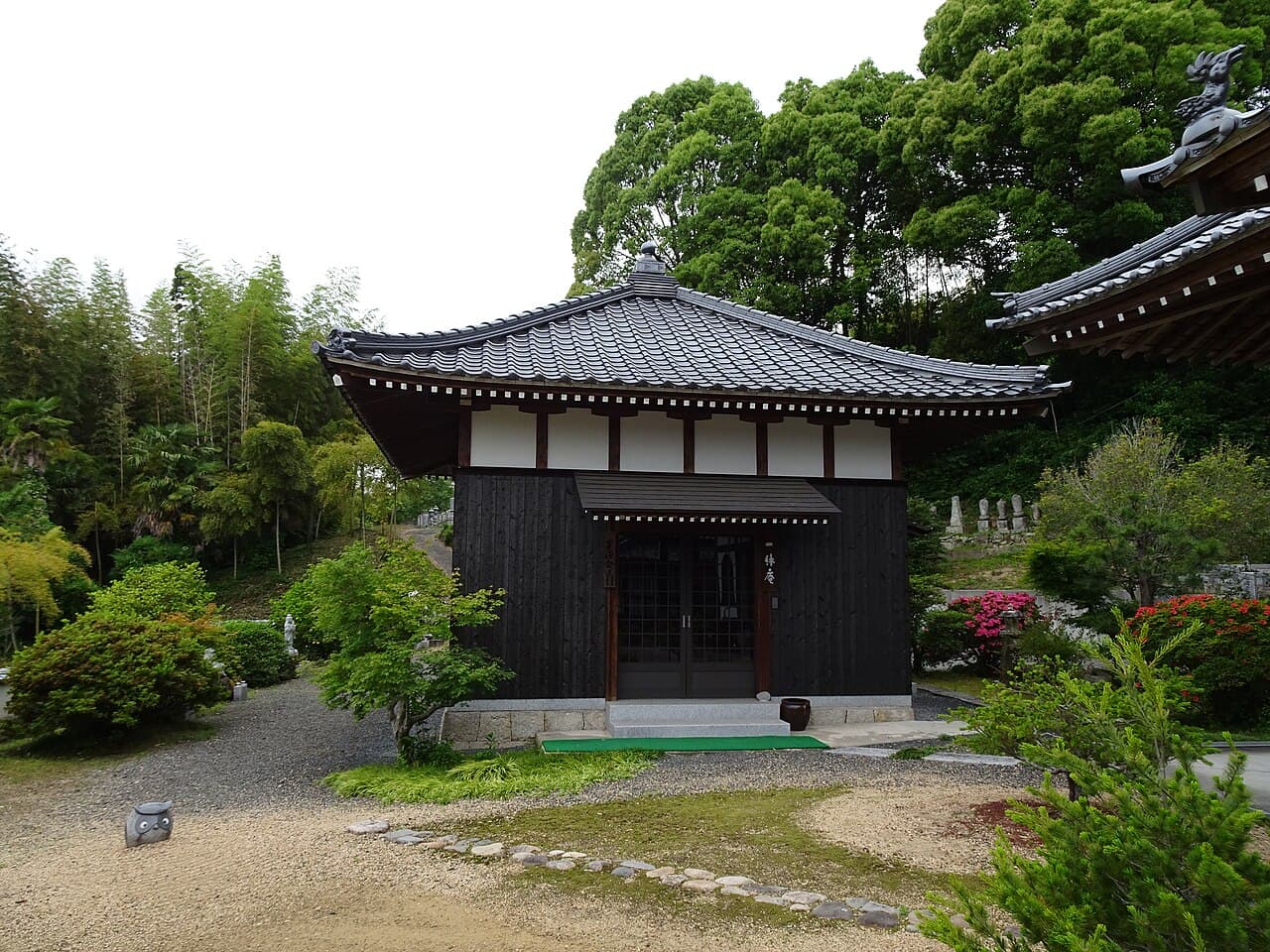
What Is Zen? The Buddhist School Behind Japan's Tea Ceremony and Zen Gardens
Zen is a Mahayana Buddhist school born as Chan in China, rooted in Japan as Rinzai and Sōtō — it still shapes zazen, tea ceremony, and Zen gardens today.