
Noh vs Kabuki: The Real Differences — and Which to See First
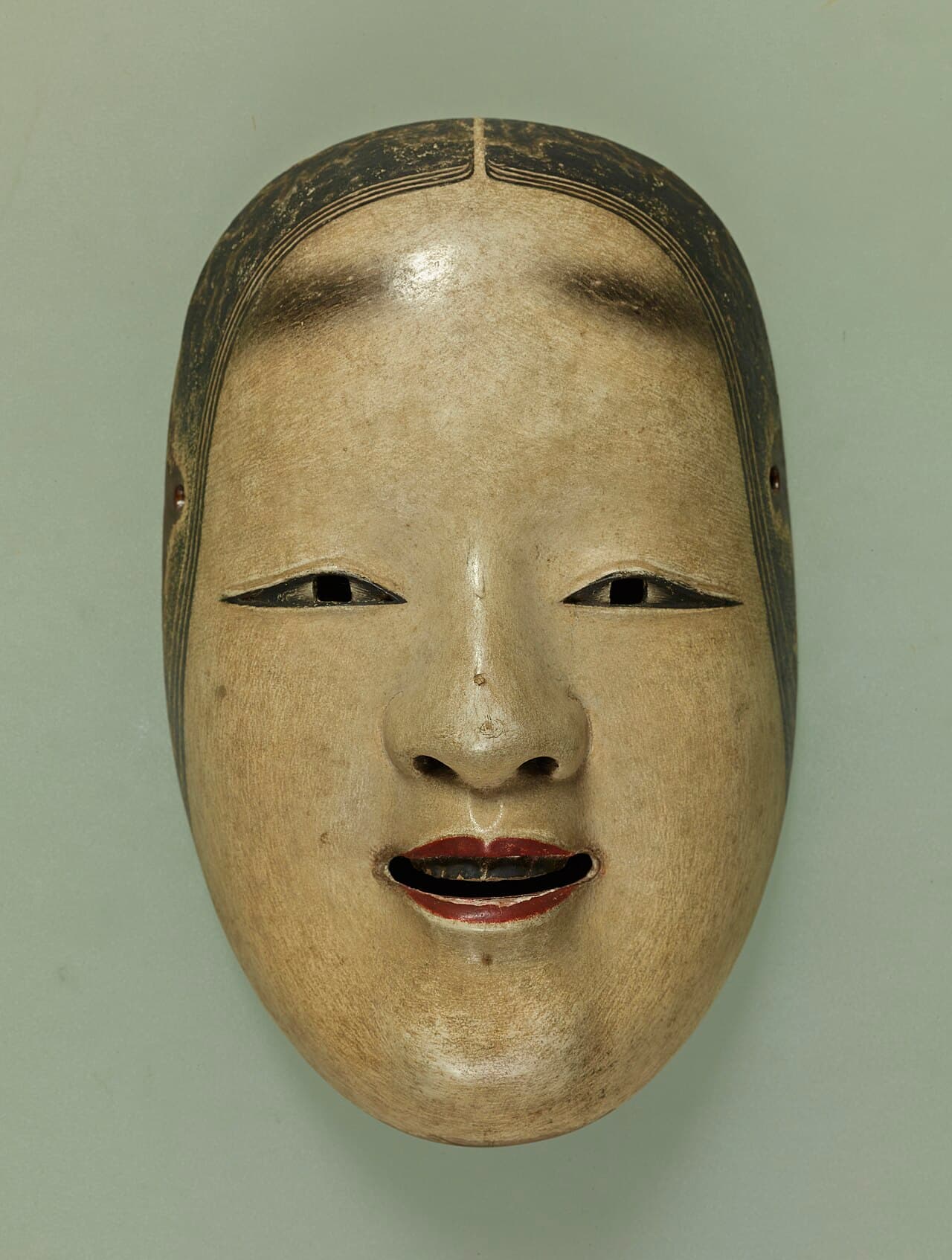
If you only have one evening: see kabuki first. It is louder, faster, visually spectacular and far easier to follow without preparation. Noh rewards a second visit, or a first visit made deliberately — it is slow, chanted and masked, and it is not trying to entertain you in the way kabuki is.
Both are Japanese classical theatre. Both were inscribed by UNESCO on the Representative List of the Intangible Cultural Heritage of Humanity in 2008. They are separated by roughly three centuries and by almost every artistic choice.
The difference in one table
| Noh (能) | Kabuki (歌舞伎) | |
|---|---|---|
| Origin | Lineage from Sangaku, transmitted from China in the 8th century; heyday in the 14th–15th centuries | Edo period, beginning of the 17th century |
| Original audience | Aristocratic and warrior patronage | "Particularly popular among townspeople" |
| The face | Carved masks for ghosts, women, children and old people | Painted make-up (keshō), no mask |
| How emotion is shown | "Stylised conventional gestures" on a fixed mask | Broad playing, plus the mie pose |
| The stage | Fixed, roofed, projecting into the audience; no curtain, no walls; a walkway to a "hall of mirrors" | Equipped with machinery — revolving stages and trapdoors |
| Casting | Male performers | Male performers only; onnagata specialise in female roles |
| Comic relief | Kyogen, on the same bill | Built into the plays |
| First-timer difficulty | High | Low |
Where each one came from
UNESCO dates kabuki precisely: it "originated in the Edo period at the beginning of the seventeenth century and was particularly popular among townspeople." Noh's roots run much deeper — the same body describes Nohgaku as having "originated in the eighth century when the Sangaku was transmitted from China to Japan," with its heyday in the fourteenth and fifteenth centuries.
That gap explains the tone. Noh matured under aristocratic and warrior patronage as a refined, ritual art. Kabuki grew up in the city, for the city — and it shows in the machinery.
Mask versus make-up
This is the single clearest tell. Noh uses carved masks; UNESCO notes they are used "for the roles of ghosts, women, children and old people," and that on them "emotions are represented by stylised conventional gestures."
Kabuki instead paints the face. UNESCO calls the make-up, keshō, "an element of style easily recognizable even by those unfamiliar with the art form." Kabuki also has the mie, a held pose "in which the actor holds a characteristic pose to establish his character" — the moment audiences shout the actor's house name.
One art hides the face to abstract the character. The other paints it to amplify him.
Two very different stages
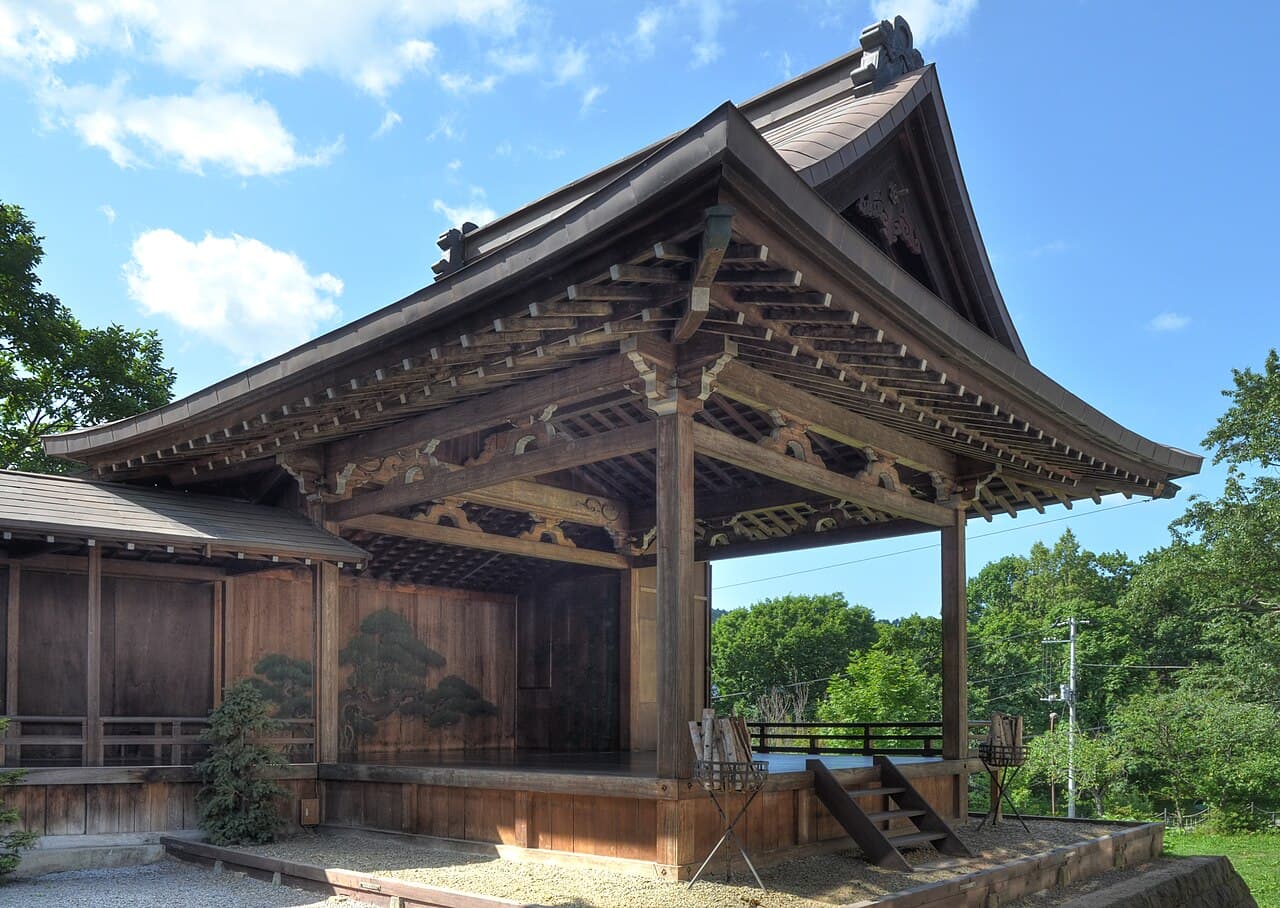
A noh stage has no curtain and no walls: a planked, roofed platform projecting into the audience, joined by a walkway to a mirror room backstage. Nothing is concealed, and entrances are slow and visible by design.
A kabuki stage is a machine. UNESCO: "The Kabuki stage is equipped with several gadgets, such as revolving stages and trapdoors through which the actors can appear and disappear." Scenery turns, actors vanish through the floor.
Who is on stage
Kabuki is performed by men only. UNESCO records that "originally, both men and women acted in Kabuki plays, but eventually only male actors performed the plays: a tradition that has remained to the present day," with onnagata specialising in female roles.
Noh is likewise performed by male actors, and its supernatural cast — ghosts, gods, women, the old — is realised through the mask rather than through casting.
So which should you book?
- First time in Japan, one theatre night, no preparation → kabuki. Start with our guide to seeing kabuki in Tokyo: a single-act ticket is short and cheap, and the subtitle tablet means you actually follow the plot.
- You already saw kabuki, or you like slow, ritual, formal art → noh. Read what noh theatre is first — twenty minutes of context changes the experience completely — then check a programme at the National Noh Theatre in Sendagaya or the Kanze Noh Theatre in Ginza.
- You want to laugh → either. Noh programmes are billed with a Kyogen comedy alongside the Noh; kabuki carries its comedy inside the plays.
We are not quoting ticket prices for noh here: the two Tokyo theatres price per performance and do not publish a fixed figure we could verify at source. Kabuki single-act pricing is covered in the kabuki guide. (Verified 2026-08-13.)
Sources
FAQ
- Should I see Noh or Kabuki first?
- Kabuki, if you have one evening and no preparation — it is faster, more spectacular and easier to follow. Choose Noh when you want a slow, ritual, formal art and are willing to read a little context first.
- What is the main difference between Noh and Kabuki?
- Noh uses carved masks and stylised gestures on a bare, curtainless stage; kabuki uses painted make-up, the held mie pose, and a stage fitted with revolving platforms and trapdoors.
- Which is older, Noh or Kabuki?
- Noh. UNESCO traces Nohgaku's origin to the 8th century with its heyday in the 14th–15th centuries, while kabuki originated in the Edo period at the beginning of the 17th century.
- Are women allowed to perform in Kabuki?
- Not today. UNESCO records that both men and women originally acted in kabuki, but eventually only male actors performed it — a tradition that continues, with onnagata specialising in female roles.
- Are Noh and Kabuki both UNESCO heritage?
- Yes — Nôgaku theatre and Kabuki theatre were both inscribed on UNESCO's Representative List of the Intangible Cultural Heritage of Humanity in 2008.
Related
What Is Noh Theatre? Japan's 600-Year-Old Masked Drama, Explained
Noh is a masked, chanted Japanese stage drama perfected by Kan'ami and Zeami between the 14th and 16th centuries, and performed on the same stage as the comic theatre Kyogen — together called Nohgaku, inscribed by UNESCO in 2008. Its lineage actually starts in the 8th century, the mask carries the character while the body carries the emotion, and you can see it in Tokyo at the 627-seat National Noh Theatre.
Tokyo
How to See Kabuki in Tokyo — Single-Act Tickets, Prices & the English Guide (Kabuki-za)
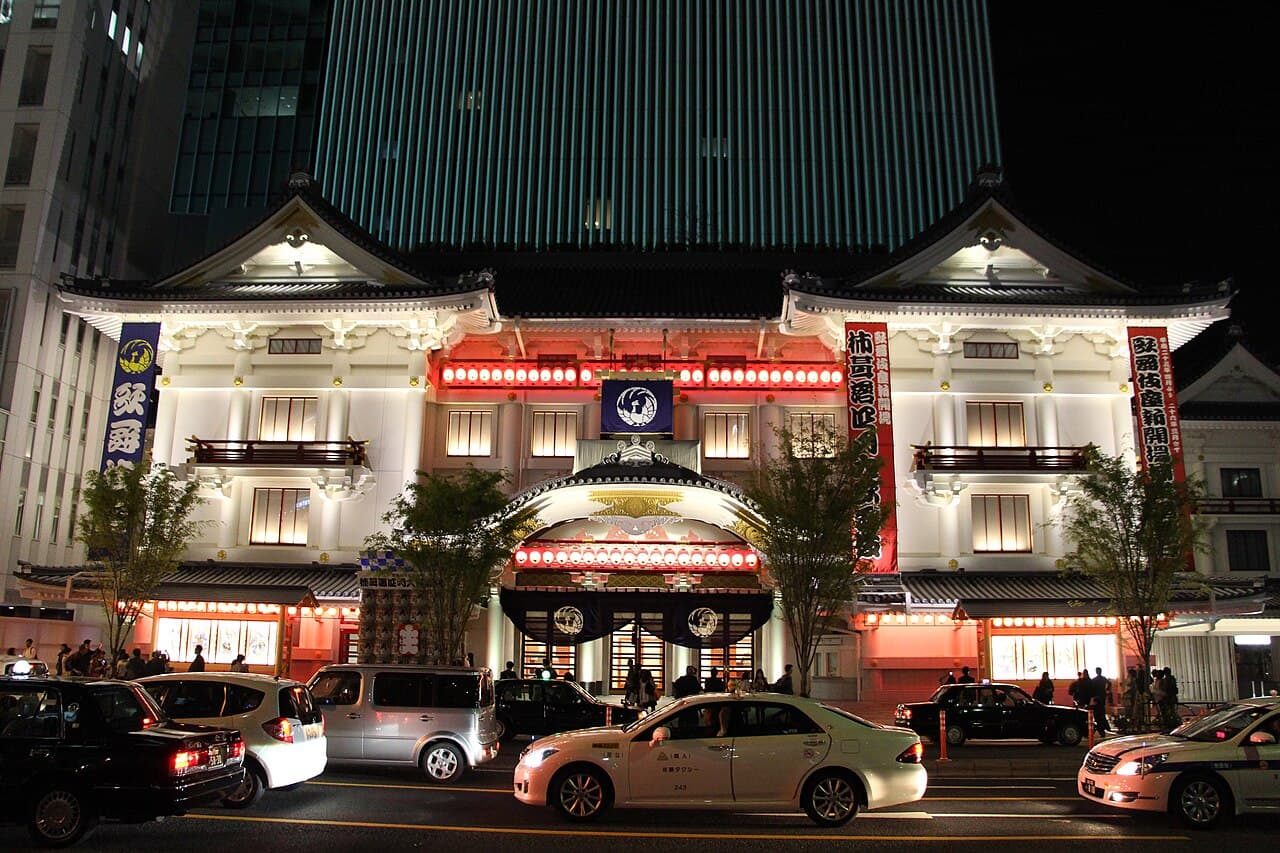
The cheapest, easiest way to see real kabuki in Tokyo is a single-act ticket (hitomakumi-seki) at Kabuki-za in Ginza, roughly ¥500–2,500 for one act. Since a 2023 renewal, about 70 seats are reservable online the day before by credit card, and about 20 more are sold same-day for cash. English support comes from a ¥1,000 subtitle tablet, not the Japanese-only earphone guide.
Tokyo
The Best Traditional Cultural Experiences in Tokyo (and How to Book Them)
The best traditional experiences in Tokyo let you wear a kimono in Asakusa, whisk matcha in a tea ceremony, make Edomae sushi, try samurai or ninja arts, or practise calligraphy, ikebana, kintsugi and taiko. Here's what each one is, and where to book.