
How to See Kabuki in Tokyo — Single-Act Tickets, Prices & the English Guide (Kabuki-za)
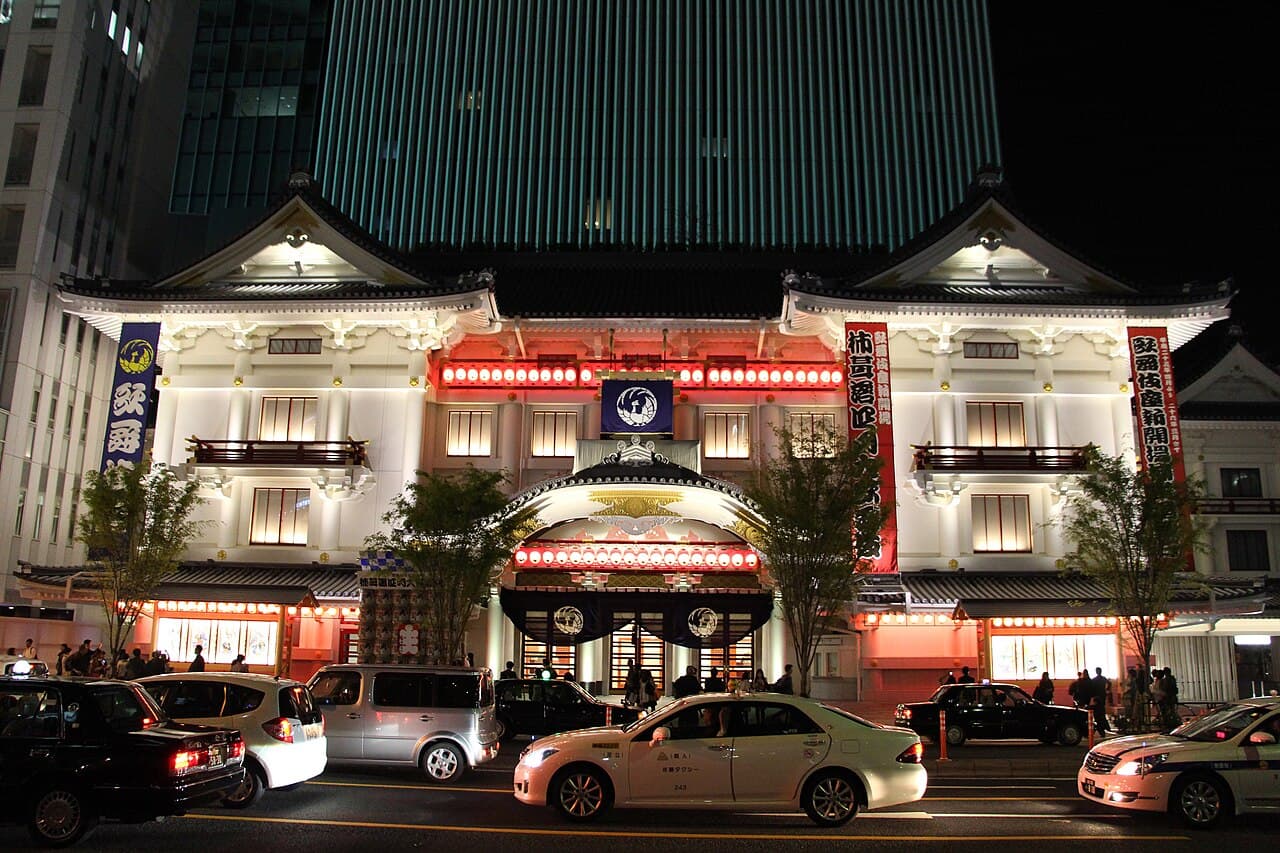
The honest answer: don't buy a full multi-act Kabuki-za ticket for your first time — buy a single act (hitomakumi-seki, "one-act viewing seat") for roughly ¥500–2,500, and rent the ¥1,000 English subtitle tablet so you actually follow the story. Since a June 2023 renewal, Kabuki-za sells these single-act seats through two separate pools — one online, one cash-only at the window — and most English-language blogs online still describe the older, pre-2023 system. Here is the current one, plus the English-support detail most guides get wrong.
What "hitomakumi-seki" actually is
A full Kabuki-za program runs three or four acts across a matinee and an evening performance, each lasting several hours in total. The hitomakumi-seki lets you buy a ticket for just one act, watch that single scene, and leave — the cheapest and shortest way to see real kabuki at the actual Kabuki-za theatre in Ginza, Tokyo. The seats are on the 4th floor only — the highest and least expensive tier — and since the 2023 renewal that floor has no shop or restaurant of its own, so eat beforehand.
Hitomakumi seats aren't guaranteed for every single program — they run for most Kabuki-za shows but occasionally aren't offered, so confirm they're on sale for the specific play and month you want before you plan around them.
The two ways to buy — this changed in 2023
The theatre reopened single-act seats on 3 June 2023 after a pandemic-era suspension, and reorganised them into two pools instead of one:
| Reserved seats (指定席, ~70 seats) | Unreserved seats (自由席, ~20 seats) | |
|---|---|---|
| On sale from | 12:00 noon the day before the performance | 10:00am, same day only |
| Where | Online only — Shochiku's multilingual hitomakumi ticket site | In person, cash window to the left of Kabuki-za's main entrance |
| Payment | Credit card (Visa / Mastercard / JCB / Amex — card must support 3-D Secure 2) | Cash only |
| Limit | 4 tickets per person | 1 ticket per person |
| Catch | +¥110 system fee per ticket; no changes or refunds after purchase | First-come, first-served — can sell out |
Both pools feed the same 4th-floor seats and both are entered by scanning a QR code (on your phone or a printout) at the hitomakumi entrance. As of 2026 — reconfirm on the official sites before you go, since the system has already changed once.
How much it costs
Each act is priced separately, by length, at roughly ¥500–2,500 — sum every act in a full day and it lands close to a regular 3rd-floor seat's price, by design. As one concrete past example, a July 2023 program priced matinee acts around ¥1,300–1,400 and evening acts around ¥900–1,900. The exact yen figure for each act of the current month's program is posted only a few days ahead on the official single-act ticket listing — check it before committing to a date.
English support — the part most guides get wrong
Kabuki-za's audio "earphone guide" (running commentary that explains the plot and stage conventions as you watch) is Japanese only, even at its discounted hitomakumi price of ¥500. If you don't read or speak Japanese, what you actually want is the English subtitle tablet — a separate small screen that shows a running English translation and explanation synced to the stage, priced at ¥1,000 for a single act (Chinese-language subtitles are offered too, at the same price). Both devices are cash-only and rented on the spot once you're inside — you cannot reserve either in advance, so budget a few extra minutes after you take your seat.
Getting in the door
Arrive at the 4th-floor hitomakumi entrance well before the act's start time — your ticket carries an entry number, and you're seated in that order, so latecomers go to the back of the queue. Photography and video recording are strictly banned once the performance begins (the famous facade outside is fair game beforehand). There is no dress code — casual clothing is completely fine.
Where it is
Kabuki-za is at 4-12-15 Ginza, Chuo-ku, Tokyo. The fastest route is Higashi-Ginza Station (Hibiya Line / Toei Asakusa Line), Exit 3, which connects directly into the building; Ginza Station (Ginza / Marunouchi / Hibiya lines), Exit A6, is a five-minute walk.
One thing to know before you sit down
If it's your first time, ask which play is being performed that act — a dramatic piece (a family feud, a ghost story) reads very differently from a pure dance piece, and the subtitle tablet helps most with the former. And if the smell of boxed lunches drifts up from the lower floors and makes you hungry: the makunouchi bento sold at Japanese theatres and train stations gets its name from kabuki itself — "maku no uchi" (幕の内, literally "inside/between the curtains") — eaten between the acts since the Edo period.
Make it a Ginza day
Kabuki-za sits inside Ginza, so it pairs naturally with an English-friendly tea ceremony in Ginza the same afternoon, or a sushi-making class booked ahead of an evening act — both let you build a full culture day around the same few blocks. For more ways to spend a day on culture in the capital, see our Tokyo cultural experiences guide.
For the full spread of what else to book in the city, see our Tokyo cultural experiences guide.
FAQ
What is hitomakumi-seki at Kabuki-za?
A single-act ticket — you pay for and watch just one act of the day's kabuki program, then leave, instead of buying a ticket for the whole multi-hour show. Seats are on the 4th floor of Kabuki-za in Ginza, Tokyo.
How much does a single-act ticket cost?
Roughly ¥500–2,500 depending on the act's length, set separately for each program. As of 2026, check the current month's exact per-act prices on the official listing before you go.
Can I book single-act tickets in advance, or online?
Yes for about 70 of the seats: they go on sale online, by credit card, from 12:00 noon the day before the performance, via Shochiku's multilingual hitomakumi ticket site (max 4 per person, +¥110 fee per ticket, no changes or refunds). The remaining ~20 seats are unreserved and sold same-day only, for cash, from 10:00am at the window to the left of Kabuki-za's main entrance.
Is there an English guide for the single-act seats?
The Japanese-language audio earphone guide (¥500) has no English option. English speakers should instead rent the English subtitle tablet (¥1,000 per act), which shows a running English translation and explanation synced to the stage. Both are cash-only and rented on the spot — no advance reservation.
Do I need to arrive early?
Yes — get to the 4th-floor hitomakumi entrance well before the act starts. Entry is in ticket-number order, so arriving late pushes you to the back of the queue.
Can I take photos during the performance?
No. Photography and video recording are strictly prohibited once the act begins. You can photograph the theatre's exterior before or after.
Where is Kabuki-za and how do I get there?
4-12-15 Ginza, Chuo-ku, Tokyo. Higashi-Ginza Station (Hibiya Line / Toei Asakusa Line), Exit 3, connects directly into the building; Ginza Station, Exit A6, is a five-minute walk.
FAQ
- What is hitomakumi-seki at Kabuki-za?
- A single-act ticket — you pay for and watch just one act of the day's kabuki program, then leave, instead of buying a ticket for the whole multi-hour show. Seats are on the 4th floor of Kabuki-za in Ginza, Tokyo.
- How much does a single-act ticket cost?
- Roughly ¥500–2,500 depending on the act's length, set separately for each program. As of 2026, check the current month's exact per-act prices on the official single-act ticket listing (kabukiweb.net) before you go.
- Can I book single-act tickets in advance, or online?
- Yes for about 70 of the seats: they go on sale online, by credit card, from 12:00 noon the day before the performance, via Shochiku's multilingual hitomakumi ticket site (max 4 per person, +¥110 fee per ticket, no changes or refunds). The remaining ~20 seats are unreserved and sold same-day only, for cash, from 10:00am at the window to the left of Kabuki-za's main entrance.
- Is there an English guide for the single-act seats?
- The Japanese-language audio earphone guide (¥500) has no English option. English speakers should instead rent the English subtitle tablet (¥1,000 per act), which shows a running English translation and explanation synced to the stage. Both are cash-only and rented on the spot — no advance reservation.
- Do I need to arrive early?
- Yes — get to the 4th-floor hitomakumi entrance well before the act starts. Entry is in ticket-number order, so arriving late pushes you to the back of the queue.
- Can I take photos during the performance?
- No. Photography and video recording are strictly prohibited once the act begins. You can photograph the theatre's exterior before or after.
- Where is Kabuki-za and how do I get there?
- 4-12-15 Ginza, Chuo-ku, Tokyo. Higashi-Ginza Station (Hibiya Line / Toei Asakusa Line), Exit 3, connects directly into the building; Ginza Station, Exit A6, is a five-minute walk.
Try it yourself
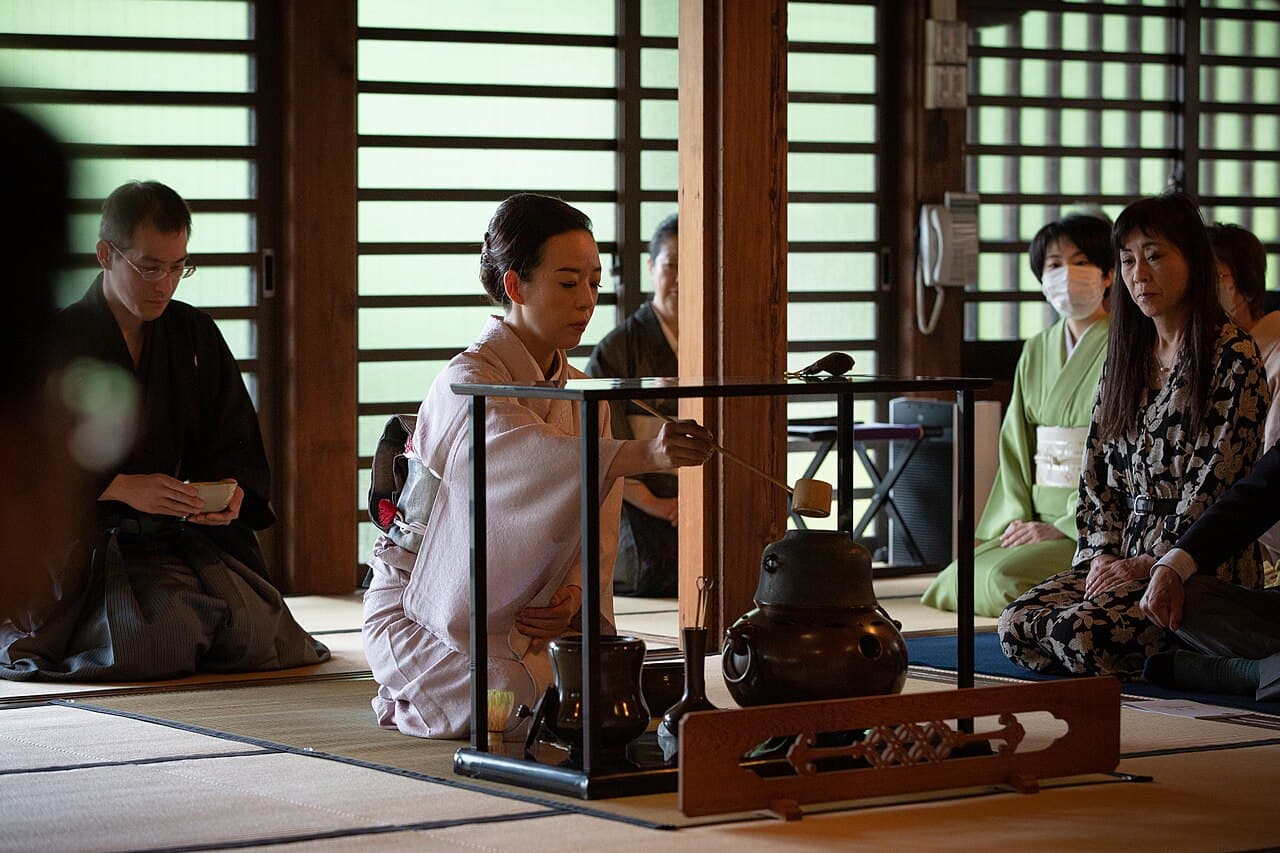
Tea ceremonyTokyo
Tea ceremony in Tokyo — English-friendly tea rooms in Ginza, Shibuya & Asakusa (and how to book)
Where to experience a tea ceremony in Tokyo with English guidance — honest prices (from about ¥3,500), how long it takes, what actually happens, kimono options, and real booking links for Ginza, Shibuya and Asakusa.
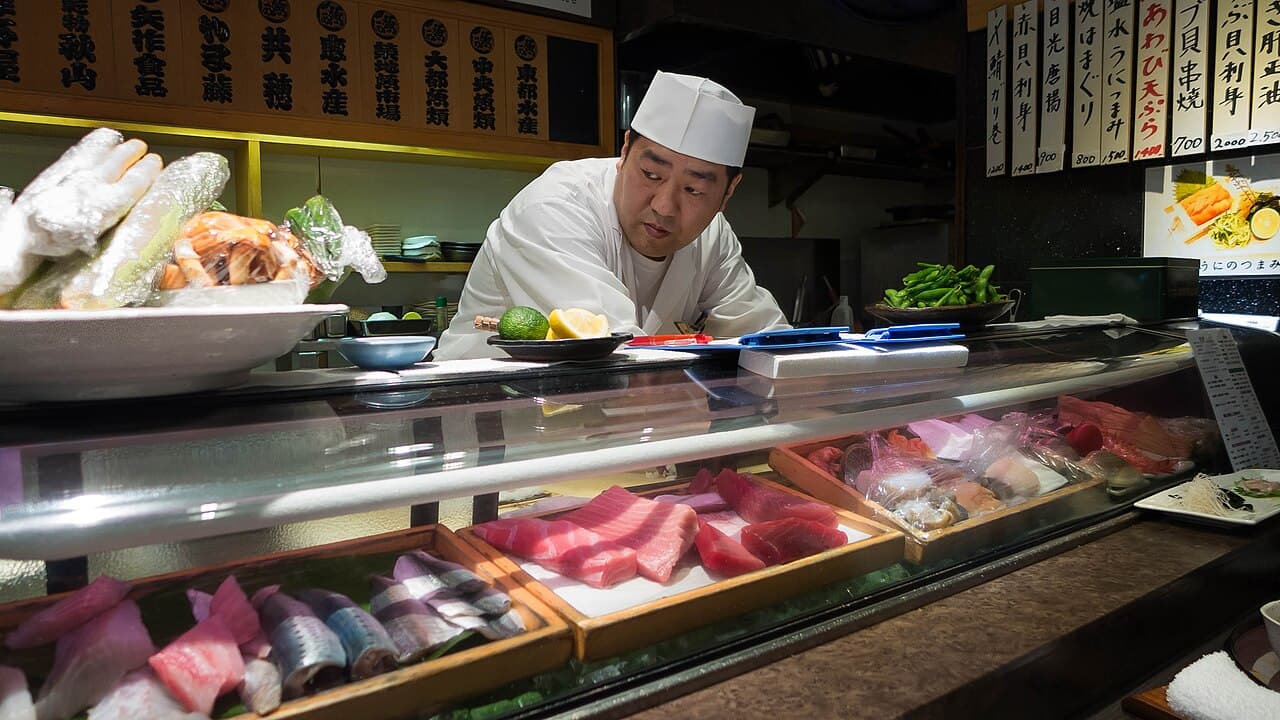
Sushi makingTokyo
Sushi making class in Tokyo — press nigiri with a chef, English-friendly (and how to book)
Where to take a sushi making class in Tokyo, English-guided — hands-on nigiri with a chef vs Tsukiji market-tour combos, honest prices, what you'll actually make, and direct ways to book.