
Kimono Rental in Asakusa: Where to Rent, What's Included & How to Book (2026)
Rent your kimono in Asakusa. Tokyo's Senso-ji temple district is the city's easiest and most photogenic place to do it: shops cluster steps from the Kaminarimon gate and Nakamise shopping street, you can walk in without Japanese or a days-ahead booking, and a base plan — kimono (or a summer yukata), obi, accessories, bag, geta sandals and professional dressing — starts from a few thousand yen (as of 2026). You change at the shop and walk straight out into the old-town streets, then return the outfit the same day.
Our companion page, Kimono rental in Asakusa — prices, where to book, and how it works, is the booking-verified hub with live shop links. This guide is the map around it: why Asakusa, how to choose, and where to shoot.
Why Asakusa is Tokyo's #1 kimono spot
Asakusa is the historic low-city (shitamachi) built around Senso-ji, Tokyo's oldest temple. The lantern-hung Kaminarimon gate, the souvenir-lined Nakamise street, and the Sumida riverside with a Tokyo Skytree backdrop all sit within a short walk — so a rented kimono actually belongs here, unlike in the glass-tower districts. Getting there is simple: Asakusa Station is served by the Ginza, Toei Asakusa, Tobu and (nearby) Tsukuba Express lines.
Rental shops are dense, walk-in-friendly and used to international visitors, so English support is common and the whole process is designed for tourists. If you're weighing whether it's worth the money or the faff, read the honest take in Is kimono rental worth it? first.
What a standard rental includes
A base plan generally covers everything you need to walk out fully dressed:
- Kimono (or yukata in summer)
- Obi (the sash) and accessories
- Bag and geta sandals
- Professional dressing by staff (you can't self-tie the obi properly the first time)
- Same-day return
Plan on ~30–60 minutes for dressing. Most shops want the outfit back by early evening (~17:30–18:00, varies by shop); some offer next-day return for a small extra fee (around ¥1,100 at some shops — confirm on the plan). Hair styling is often a paid add-on (roughly ¥1,000–¥2,500), though some set plans include it — check what your chosen plan covers before you pay.
How to choose a plan and shop
Two well-known, English-friendly options anchor the area. Here's the honest short-list:
| Shop | Best for | Trade-offs / notes |
|---|---|---|
| Kimono Rental Wargo (Asakusa store) | First-timers who want scale and simplicity — Japan's largest chain, 20,000+ kimono, ~5-min walk to Senso-ji, same-day or 24h online booking, free cancellation up to 2 days before | Big, busy, efficient rather than boutique; lead price moves with plan and season |
| VASARA (Asakusa) | Those wanting graded plans (Standard up to premium "3-star" outfits) at a range of price points | Premium patterns cost more; the fanciest sets are a step up from the base plan |
| Any local walk-in shop | Spontaneous visits with no reservation | Popular time slots and patterns can be gone in peak weeks |
How to decide: if you just want a good outfit with zero hassle, Wargo's scale is hard to beat. If you care about picking a standout pattern or a higher-grade set, look at VASARA's tiers. In cherry-blossom (late March–early April) and autumn-foliage weeks, the best slots and patterns sell out — reserve a few days ahead. Prices vary by plan, season and shop, so treat any figure as typically from a few thousand yen, as of 2026 and confirm on the shop's own page before you book.
The best photo spots in Asakusa
Once you're dressed, these are the three shots worth walking to:
- Kaminarimon & Nakamise — the giant red lantern and the temple approach; go early (before ~9:00) to beat crowds.
- Senso-ji main hall & five-story pagoda — classic temple framing.
- Sumida riverside — cross toward the river for a kimono-plus-Skytree composition, the shot that says "Tokyo."
One etiquette rule you must not get wrong
A kimono is always wrapped left-over-right (your left panel on top). Right-over-left is reserved for dressing the deceased — so if you re-adjust after a break, keep left on top. Staff will dress you correctly; this only matters if you fiddle with it yourself. For more on wearing and moving in one, see how to wear a yukata.
Practical notes
- When to go: spring and autumn are prettiest but busiest; summer means lighter yukata; book ahead in peak weeks.
- What to expect: you change at the shop and return the same day; dressing takes 30–60 min.
- What to wear underneath: simple, thin base layers; geta sandals can rub, so plan for lots of gentle walking.
How to book
Start at our Asakusa kimono rental hub for the current shops and working booking links (available in en/ja/zh/ko/es/fr). You can reserve online in advance or walk in on the day — no Japanese needed. Make it a full day out with our Tokyo cultural experiences pillar, and check what's on around your dates on Japan-Event's Tokyo page so your kimono day lines up with a festival or seasonal event.
FAQ
Where is the best place to rent a kimono in Tokyo? Asakusa, around Senso-ji temple. It's the easiest, most photogenic, most tourist-ready district, with many walk-in, English-friendly shops steps from the Kaminarimon gate.
How much does kimono rental in Asakusa cost? Typically from a few thousand yen for a base plan (as of 2026); premium patterns and add-ons cost more. Prices move with plan, season and shop, so confirm on the shop's own page before you pay.
What's included in a standard rental? The kimono (or a summer yukata), obi, accessories, a bag, geta sandals and professional dressing by staff, with same-day return. Hair styling is often a paid add-on.
Do I need to book in advance? No — walk-ins are common. But in cherry-blossom and autumn weeks the best time slots and patterns sell out, so reserving a few days ahead is smart.
Do I need to speak Japanese? No. Asakusa's rental shops are used to international visitors and English support is common; you can also reserve online in advance.
How long can I wear the kimono? Usually until an early-evening return (around 17:30–18:00, varies by shop). Some shops offer next-day return for a small extra fee — check the plan.
Is hair styling included? Often it's a paid add-on (roughly ¥1,000–¥2,500), though some set plans include it. Confirm what your plan covers before booking.
What's the one kimono rule I should know? Always wrap it left-over-right (left panel on top). Right-over-left is only used for the deceased, so keep left on top if you re-adjust it yourself.
FAQ
- Where is the best place to rent a kimono in Tokyo?
- Asakusa, around Senso-ji temple. It's the easiest, most photogenic, most tourist-ready district, with many walk-in, English-friendly shops steps from the Kaminarimon gate.
- How much does kimono rental in Asakusa cost?
- Typically from a few thousand yen for a base plan (as of 2026); premium patterns and add-ons cost more. Prices move with plan, season and shop, so confirm on the shop's own page before you pay.
- What's included in a standard rental?
- The kimono (or a summer yukata), obi, accessories, a bag, geta sandals and professional dressing by staff, with same-day return. Hair styling is often a paid add-on.
- Do I need to book in advance?
- No — walk-ins are common. But in cherry-blossom and autumn weeks the best time slots and patterns sell out, so reserving a few days ahead is smart.
- Do I need to speak Japanese?
- No. Asakusa's rental shops are used to international visitors and English support is common; you can also reserve online in advance.
- How long can I wear the kimono?
- Usually until an early-evening return (around 17:30–18:00, varies by shop). Some shops offer next-day return for a small extra fee — check the plan.
- Is hair styling included?
- Often it's a paid add-on (roughly ¥1,000–¥2,500), though some set plans include it. Confirm what your plan covers before booking.
- What's the one kimono rule I should know?
- Always wrap it left-over-right (left panel on top). Right-over-left is only used for the deceased, so keep left on top if you re-adjust it yourself.
Try it yourself
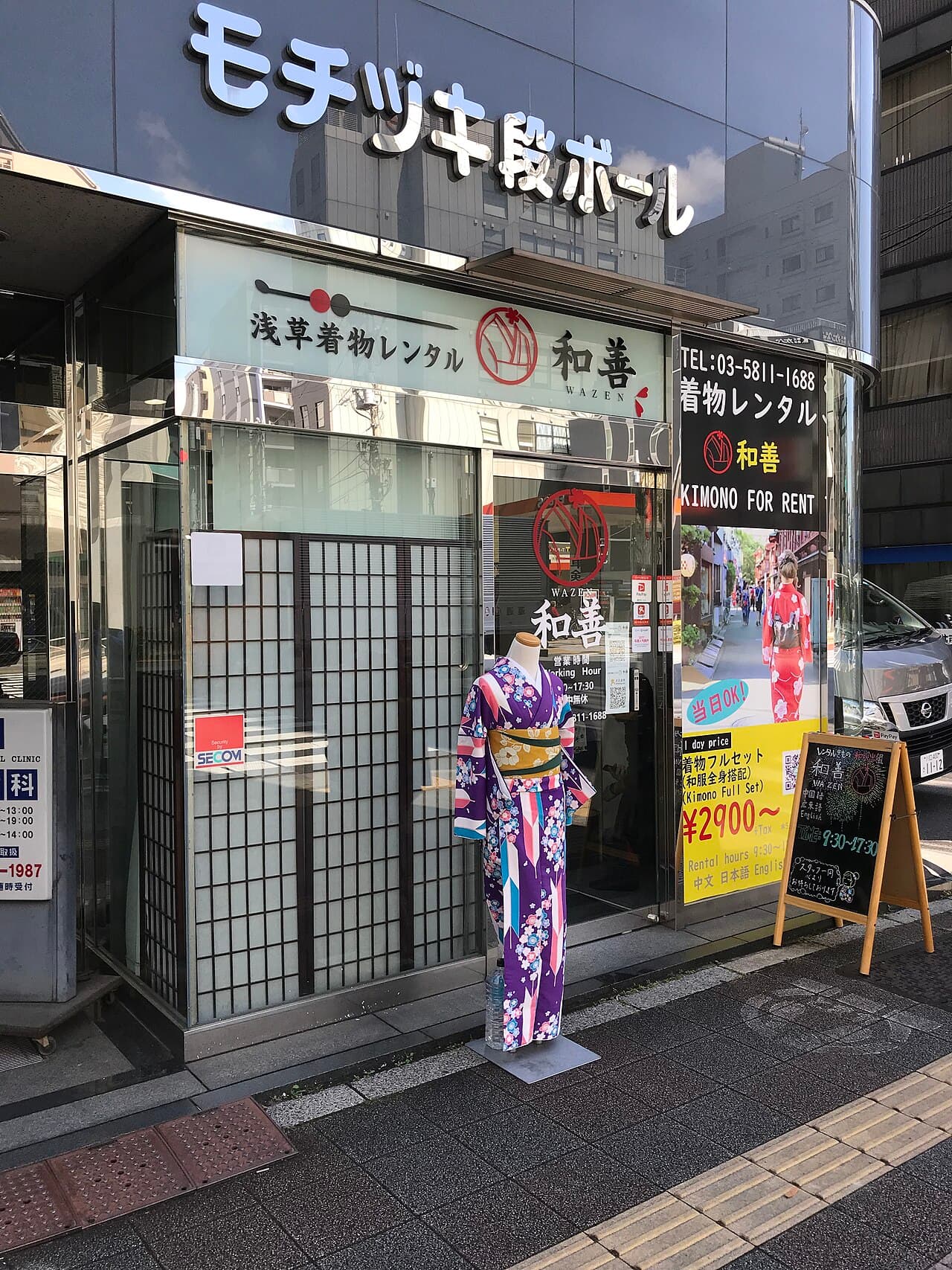
Kimono rentalTokyo
Kimono rental in Asakusa — prices, where to book, and how it works
Where to rent a kimono in Asakusa, English-friendly, with honest prices, what's included, the one rule for wearing it — and a direct way to book.