
The short answer
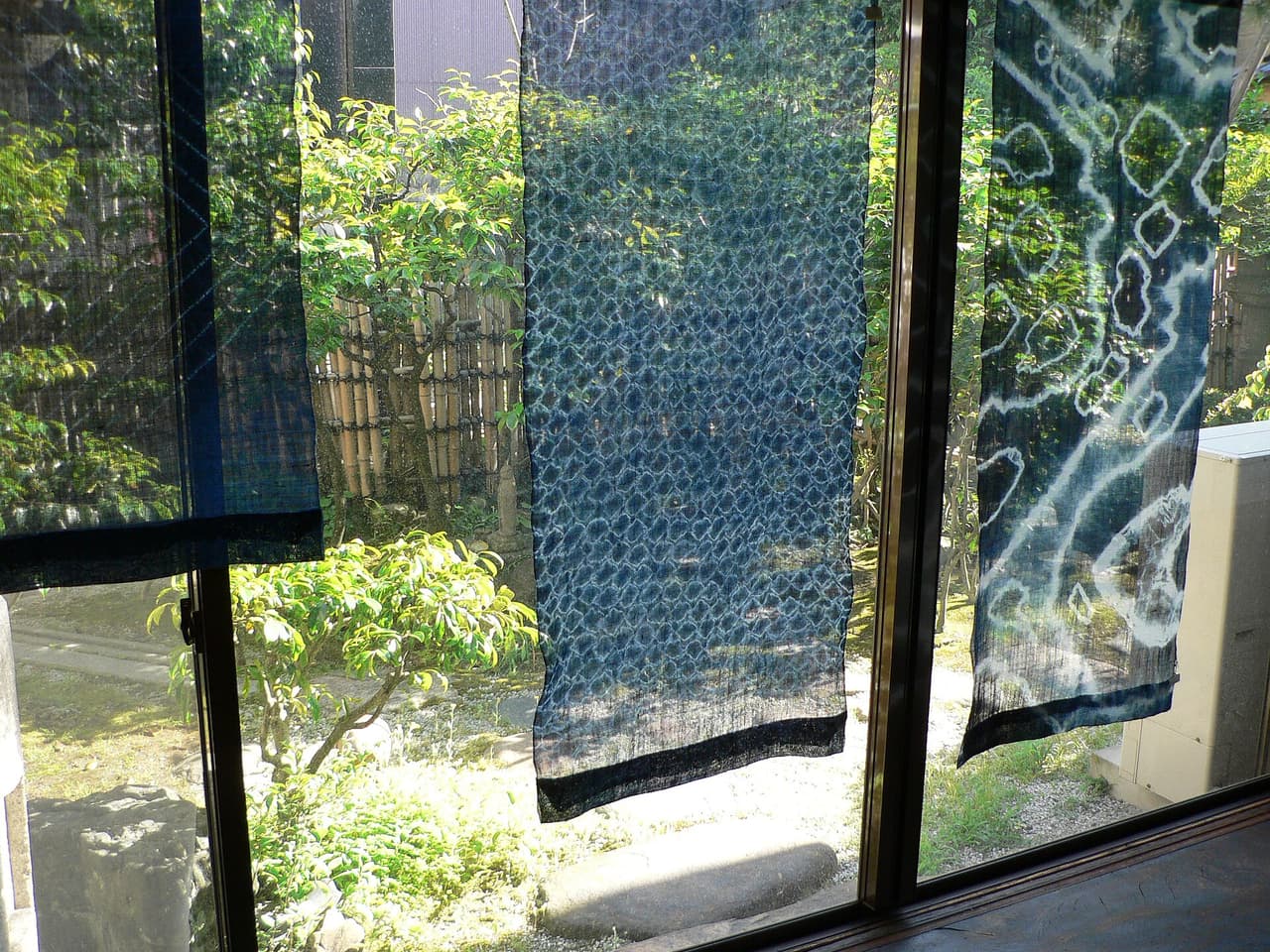
If you searched "indigo dyeing Kyoto", the honest answer has a wrinkle in it. *Indigo (aizome) is a dye. Shibori, rōketsu and yūzen are techniques. Kyoto's accessible hands-on workshops are mostly rōketsu — wax-resist dyeing* — which may use indigo among other colours, rather than the deep vat-dipping you may be picturing.
That workshop is worth doing anyway. ROKETSU Dyeing Studio Yamamoto in Nishikyōgoku runs 90–120 minute sessions from ¥2,900, teaches the complete process including wax removal, and lets you take home a dyed tote bag, tenugui, t-shirt, noren or furoshiki.
The techniques, untangled
| Term | What it is |
|---|---|
| Aizome (藍染) | Indigo dyeing — names the dye, not the method |
| Shibori (絞り) | Tie-resist — bind, fold, clamp or stitch the cloth so dye cannot reach parts of it |
| Rōketsu (ろうけつ) | Wax-resist — draw in hot wax, dye, melt the wax away; the waxed lines stay white |
| Yūzen (友禅) | Kyoto's painted-resist silk technique, the basis of high-end kimono |
Any of the first three can be done in indigo. Confusing dye with technique is why people book expecting one thing and get another.
The workshop
ROKETSU Dyeing Studio Yamamoto, 73 Umazuka-chō, Nishikyōgoku, Ukyō-ku, Kyoto 615-0885.
| Course | Price |
|---|---|
| Easy | ¥2,900 |
| S (most popular) | ¥3,900 |
| M | ¥5,500 |
| L | ¥6,500 |
| LL | ¥7,000 |
90–120 minutes, open 10:00–18:00 with last entry at 16:00, closed Wednesdays, reservations online or by phone on +81 75 313 1871. Prices scale with the size of the piece: a small square at the bottom, a noren curtain or furoshiki at the top. The studio's own claim is that it is the only place in Japan where a visitor can experience the entire rōketsu process, wax removal included — most workshops elsewhere stop at the dyeing.
The process itself: you draw your design in hot wax with a brush or tool; the waxed areas will resist the dye. Then the cloth goes into the dye. Then the wax is melted out, and your drawing appears in white — or in the undyed colour of the ground — against the dyed field. The mechanic is immediately legible, which is why it works as a first textile craft in a way that weaving or yūzen painting does not.
What makes it a good choice practically: it is indoors, weather-proof, forgiving (a wobbly wax line reads as texture, not failure), and it ends in something you will actually use.
If you specifically want an indigo vat
Book elsewhere and be happy about it. Genuine hon-aizome — fermented natural indigo, dipped repeatedly, oxidising from green to blue in the air each time you lift the cloth — is the experience worth travelling for, and its heartland is Tokushima on Shikoku, where the awa-ai indigo trade was based. In the Kanto region, Tokyo's Kuramae district has working indigo studios running shibori sessions on caps, shirts and children's clothes. There are also guided hon-aizome stole workshops in the countryside outside Kyoto sold through premium booking platforms.
The rule of thumb: rōketsu for Kyoto and for design freedom; a vat workshop for the colour itself.
Fitting it into a Kyoto day
Nishikyōgoku is west of the city centre, roughly 20 minutes by taxi, which makes this a deliberate half-day rather than a gap-filler between temples. Pair it with the western side of Kyoto — Arashiyama is on the same axis — rather than trying to bolt it onto a Higashiyama day.
For other Kyoto crafts that end with an object in your bag, see pottery in Kyoto, washi paper making and wagashi making. The full list is in cultural experiences in Kyoto.
---
Prices, schedules and booking links on this page were verified as of 2026-08-09. Operators change them without notice — confirm on the booking page before you travel, and tell us if you find something out of date.
- You do the whole rōketsu process — drawing in hot wax, dyeing, and removing the wax — which the studio says is not available as a complete hands-on process anywhere else in Japan
- The item range is unusually wide: squares, place mats, tote bags, tenugui hand towels, noren doorway curtains, wall hangings, t-shirts and furoshiki wrapping cloths
- Wax-resist is forgiving in a way that ceramics are not — an imperfect line reads as texture, not as a mistake
- The studio runs an English website and English booking, which is rarer among Kyoto's working craft ateliers than you would expect
- Open 10:00–18:00 with last entry at 16:00, closed Wednesdays — one of the more flexible craft schedules in the city
This is a working atelier, not a visitor centre, and the dye vats and wax pots are the studio's livelihood — do not touch or photograph equipment without asking, and keep bags away from the dyeing tables. Wax is applied hot; follow the instructions on handling the tools exactly rather than improvising, and tell staff immediately if you splash yourself rather than trying to wipe it off with cloth.
常见问题
- Where can you try indigo dyeing in Kyoto?
- The most accessible hands-on option is ROKETSU Dyeing Studio Yamamoto in Nishikyōgoku, western Kyoto, which teaches wax-resist dyeing from ¥2,900 for a 90–120 minute session. Note the distinction: rōketsu is a resist technique that may use indigo among other dyes, rather than a pure indigo-vat workshop.
- How much does a Kyoto dyeing workshop cost?
- ¥2,900 for the Easy course, ¥3,900 for the popular S course, and ¥5,500, ¥6,500 or ¥7,000 for M, L and LL. The price tracks the size of the item you dye, from a small square up to a noren curtain or furoshiki.
- What's the difference between shibori, rōketsu and aizome?
- Aizome means indigo dyeing — it names the dye. Shibori is tie-resist: you bind, fold or stitch the cloth so the dye cannot reach parts of it. Rōketsu is wax-resist: you draw in hot wax, dye the cloth, and melt the wax away to reveal white lines. Shibori and rōketsu are techniques; indigo is one of the dyes they can be done in.
- Do you need to book a dyeing workshop in Kyoto in advance?
- Yes. The studio runs an online reservation system, sessions take 90–120 minutes with last entry at 16:00, and it is closed on Wednesdays. Turning up unannounced is not reliable.
- Can you take the finished piece home the same day?
- Yes — the workshop runs through to removing the wax, so you leave with a finished, dyed item. Give it time to dry fully before packing it against other clothes.