
The short answer
Kyoto is the best city in Japan to try the potter's wheel. The city's own ceramic tradition — Kiyomizu ware (Kiyomizu-yaki, part of the Kyo-yaki family) — grew up on the kiln-lined slopes below Kiyomizu-dera, and studios in that same neighbourhood now run beginner-friendly wheel-throwing classes with English support. A short session starts from about ¥2,900 (as of July 2026), a relaxed 55-minute plan is about ¥6,900, and a private 90-minute lesson with one of Kyoto's famous pottery families runs about ¥53,525. Book online in advance — the Kiyomizu studios are on every sightseeing route.
The one thing nobody tells you before you go: you can't carry your pot home the same day. After you leave, it still has to be trimmed, glazed and fired — but the studios below handle all of that and ship finished pieces overseas, so your bowl lands on your doorstep about 1.5–2.5 months after your holiday. A souvenir that arrives just as the post-trip blues set in is a genuinely good system.
What actually happens, step by step
- Reserve a plan online. Wheel classes near Kiyomizu-dera get busy in cherry-blossom and autumn seasons, so book at least a few days ahead — Asahiyaki in Uji recommends about a month.
- A short demonstration. The instructor centres a lump of clay on the spinning wheel and shows you the three moves: steady the clay, open the middle, lift the wall.
- You throw. With wet clay under your palms and the wheel humming, the instructor guides your hands — at the English-supported studios, in English. Most beginners get a respectable bowl or cup within minutes, and several plans let you make more than one piece and pick your favourite for firing.
- Choose the finish. You pick the glaze colour from samples, decide which piece to fire, and write down your delivery address.
- The studio takes over. Over the following weeks the artisans trim the foot, glaze and fire your piece, then pack it and send it off.
The feeling itself is the point: clay is alive, the wheel is quick, and the difference between a bowl and a collapsed pancake is about three seconds of overconfidence. The instructors are used to this — nobody leaves without something worth firing.
Which studio? An honest comparison
| Studio | English | Price | Duration | Area | Vibe |
|---|---|---|---|---|---|
| Zuikou — Kiyomizu studio | English lessons at the Kiyomizu-dera studio | Light ¥2,900 / Standard ¥3,900 / Zuikou plan ¥6,900 | 25–55 min | Beside Yasaka Pagoda, Higashiyama | Polished, efficient, built for travellers |
| Kawai Kobo (private, via Wabunka) | English-speaking guide included | From ¥53,525 | 90 min | Gojozaka, Higashiyama | Intimate masterclass in a mingei-lineage workshop |
| Asahiyaki Pottery Class | English pamphlets & signage | Electric wheel ¥5,500 | 1–1.5 hours | Uji, ~7 min from Keihan Uji Station | Calm tea-ware kiln, working since 1600 |
Zuikou (瑞光窯) is the easy first choice for most travellers. Its Kiyomizu studio sits beside the Yasaka Pagoda, a few minutes from Kiyomizu-dera (bus 100/206/207 to Kiyomizu-michi), and it's the location that offers lessons in English — the separate Higashiyama workshop teaches in Japanese only, so pick the right one when booking. Plans scale neatly: a 25-minute Light session from ¥2,900, a Standard at ¥3,900, and the 55-minute Zuikou plan at ¥6,900 for more time at the wheel. Reserve on the official site.
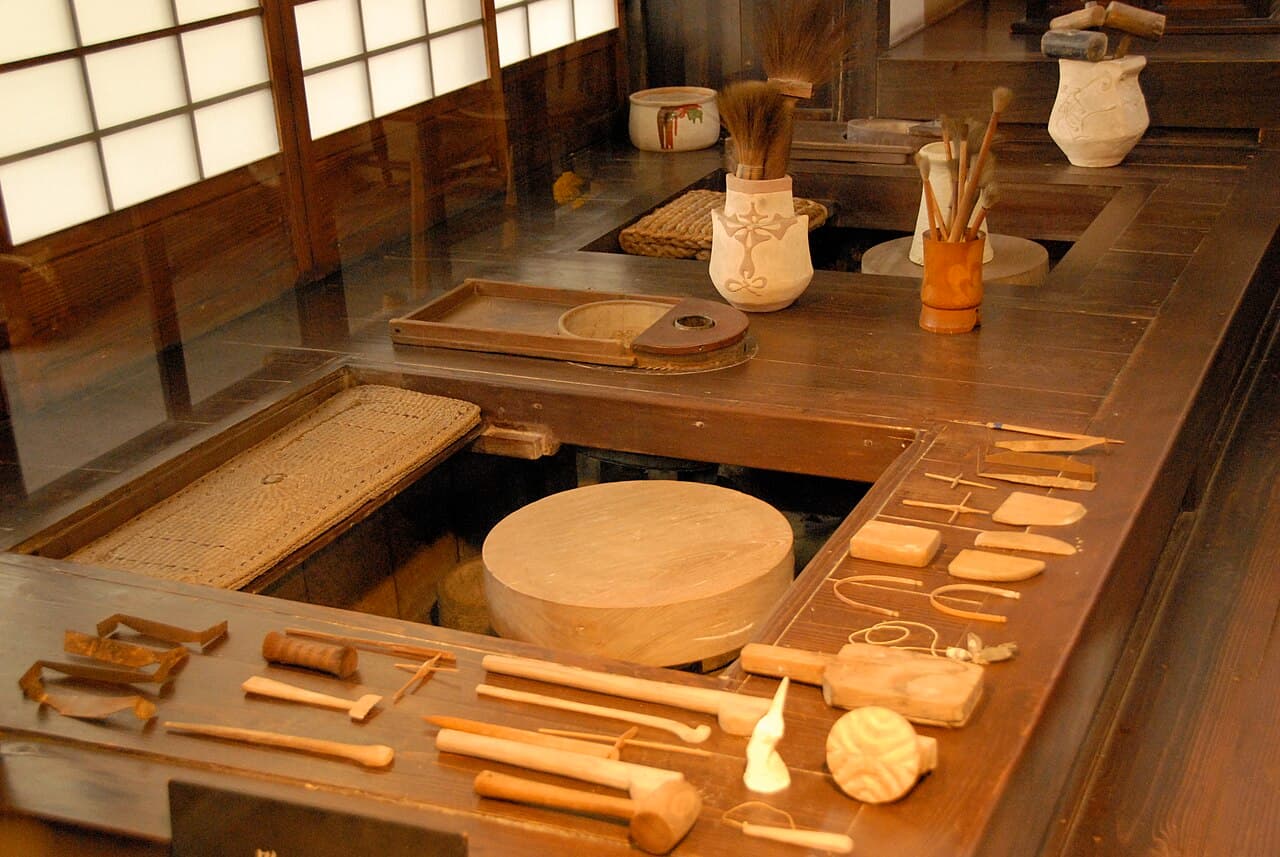
Kawai Kobo is the opposite end of the scale: a private 90-minute session in a Gojozaka workshop founded by Takeichi Kawai, nephew of Kanjirō Kawai — one of the towering figures of Japan's mingei folk-craft movement — and now led by third-generation head Akiteru Kawai. It costs from about ¥53,525 per person with an English-speaking guide included, booked through Wabunka. If you want craft heritage rather than a quick souvenir stop, this is the one. (Kanjirō's own house, wheels and climbing kiln survive nearby as a small museum — the photo above shows his workshop.)
Asahiyaki is the quiet connoisseur's option, out in Uji — about 7 minutes on foot from Keihan Uji Station. The kiln has made tea ware by the Uji River since 1600, and its pottery class offers an electric wheel experience from ¥5,500 (1–1.5 hours), plus hand-building (¥4,950) and painting (¥4,400) courses. English pamphlets and signage are available; it's closed Mondays, and reservations are recommended about a month ahead on the official page.
Shipping your fired piece overseas — how it really works
This is the question travellers ask most, so here it is plainly:
- Zuikou ships internationally, with delivery in about 7–10 weeks. Fees depend on region and number of pieces — roughly ¥3,900–¥7,900 to Asia, ¥3,900–¥9,900 to Europe/Oceania, ¥4,900–¥12,000 to North America — and customs duties may apply on arrival.
- Asahiyaki finishes and fires your piece in about two months, with overseas shipping available via EMS.
- Kawai Kobo glazes and fires your work after the session and ships it to you afterwards; confirm international delivery for your country when booking through Wabunka.
Two practical tips: give an address that will still be yours in three months (moving soon? use a friend's), and factor the shipping fee into your comparison — a ¥2,900 class plus overseas postage is still cheaper than most things you could buy on the souvenir streets below Kiyomizu-dera.
Etiquette and what to wear
A pottery class is one of Kyoto's most relaxed cultural experiences, but a few habits help. Arrive a few minutes early; the wheel time is tightly scheduled. Wear clothes you don't mind getting clay on, roll your sleeves above the elbow, and take off rings and watches — short nails make everything easier. Most importantly, follow the instructor's hands rather than pushing your own ideas into the clay: the wheel rewards a light, patient touch, and 'perfect' isn't the goal. A slightly wonky bowl you made yourself is exactly the kind of imperfect beauty Japan celebrates — if that idea appeals, read what wabi-sabi means.
Who it's good for
First-timers, couples and families (studios run short, forgiving plans), and anyone who wants a souvenir with a story instead of another shopping bag. It pairs naturally with the quieter side of Kyoto: a tea ceremony uses exactly the kind of bowls you just made, and our guide to Kyoto's best cultural experiences helps you build the rest of the day. And if your bowl ever breaks years from now, there's a Japanese answer for that too — a kintsugi class teaches you to mend it with gold.
Choosing Asahiyaki? Uji is Japan's green-tea heartland — make a half-day of it with a matcha lunch; our sister food site UMAMI HUNT covers where to eat.
- Throw a bowl or cup on the potter's wheel in the home of Kiyomizu ware
- English-supported lessons a short walk from Kiyomizu-dera
- Your piece is glazed, fired and shipped — overseas delivery available
- Short plans from about ¥2,900 fit between sightseeing stops
You shape, the artisans finish — trimming, glazing and firing are done by the studio afterwards, so the final colour can differ slightly from the sample; that is part of the craft, not a mistake. You cannot take the piece home the same day (firing takes weeks), so plan on shipping. Arrive a few minutes early, keep nails short, and follow the instructor's hands — the wheel rewards a light touch, not force.
FAQ
- How much is a pottery class in Kyoto?
- From about ¥2,900 (as of July 2026) for a 25-minute wheel session; longer plans run ¥5,500–¥6,900. Firing and overseas shipping cost extra.
- How long until my pottery arrives?
- About 1.5–2.5 months after the class. You cannot take the piece home the same day, because the studio trims, glazes and fires it afterwards, so plan on shipping.
- Do I need to speak Japanese for a Kyoto pottery class?
- No — the Kiyomizu studio runs English-supported lessons, a short walk from Kiyomizu-dera (Kiyomizu-michi bus stop, City Bus 100/206/207).
- What should I wear to a pottery class?
- Clothes you don't mind getting clay on, with sleeves rolled above the elbow and rings and watches off. Short nails make the wheel far easier; ask about aprons when you book.