
How to Use a Japanese Toilet: The Buttons, the Squat Type, and the Slippers
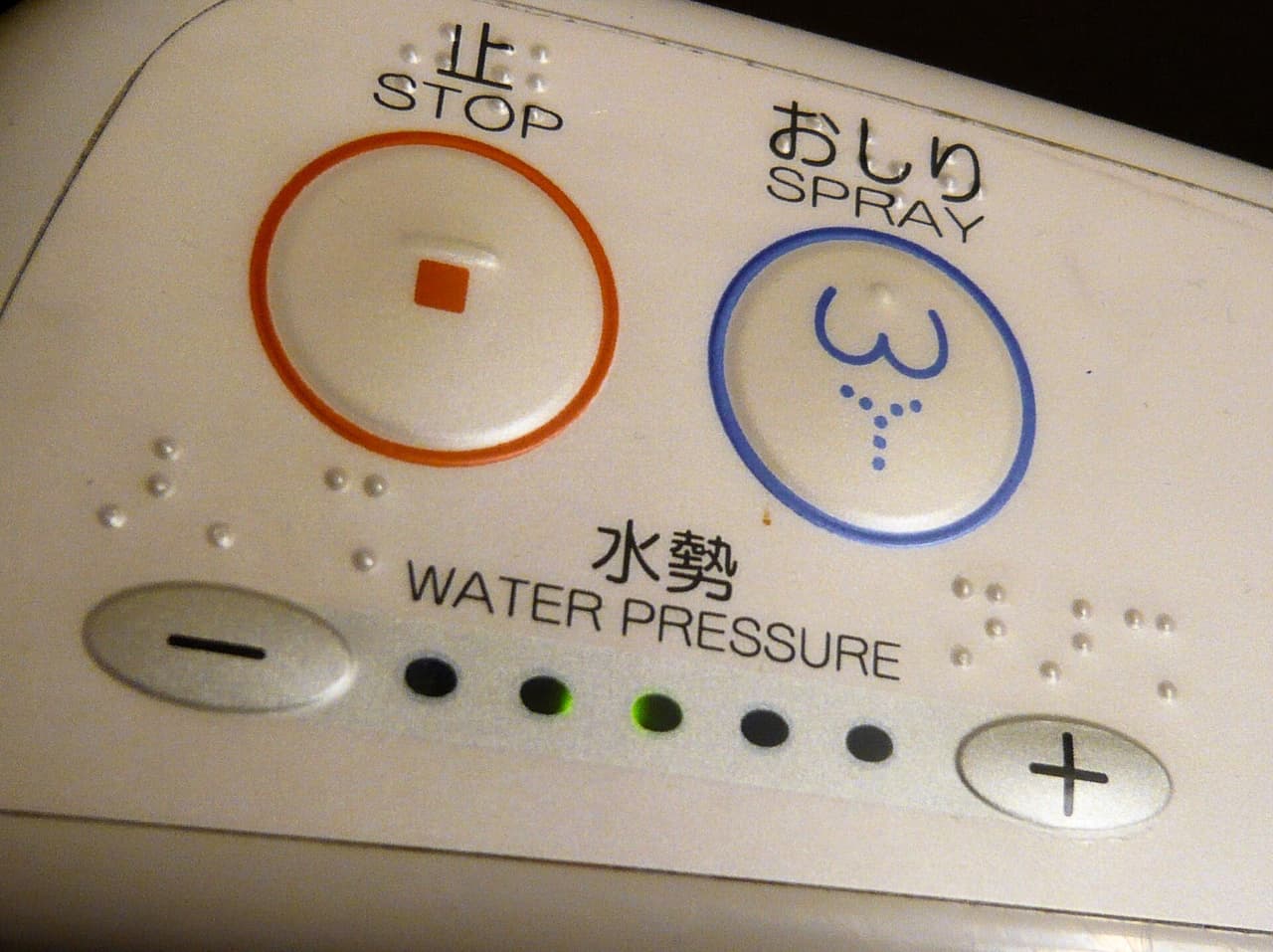
The single most useful thing to know about a Japanese toilet is that the button that flushes it is usually not on the panel covered in buttons. The illuminated side panel controls the washing functions. Flushing is typically a separate lever on the cistern, a plate on the wall, or a sensor you wave a hand at. Travellers who press every button on the panel looking for the flush are pressing the spray controls.
Since January 2017, the washing-function symbols have been standardised. The Japan Sanitary Equipment Industry Association published a set of eight standard pictograms for toilet operation panels, with the stated goal of "a toilet environment that anyone can use with confidence." Learn those eight and modern panels read the same everywhere.
Information as of 2026-08-18. Standardisation is voluntary and applies to newer units — older toilets, and some hotel and restaurant models, still use their own layouts.
The eight standard symbols
The association's set covers:
| Symbol | Function |
|---|---|
| Lid icon | Raise the toilet lid |
| Seat icon | Raise the toilet seat |
| Large flush | Full flush |
| Small flush | Reduced flush |
| Rear spray (oshiri / おしり) | Rear washing |
| Bidet (bide / ビデ) | Front washing, intended for women |
| Dry | Warm-air drying |
| Stop (止) | Stops the spray |
Find the stop button before you press anything else. It is the one control you will actually need in a hurry, and it is often the largest or a different colour. On Japanese-only panels it is marked 止 or 止水.
Other common buttons that sit outside the standard set: water pressure (水勢) and nozzle position adjustment, a seat-temperature control, a deodoriser, and on public toilets in Japan a sound button — 音姫 (otohime, "sound princess") — which plays a flushing noise to mask other sounds. It saves water that people would otherwise use by flushing repeatedly for privacy.
Finding the flush
In rough order of how often you'll meet them:
- A lever on the side of the cistern. Turn or push it. Two directions or two markings: 大 (dai) = large flush, 小 (shō) = small flush.
- A large plate or two buttons on the wall behind or beside the toilet, again marked 大 and 小.
- A sensor — a small panel with a hand icon. Hold your palm 5–10 cm in front of it. Do not touch it.
- On the control panel itself, on newer integrated units, marked with the large/small flush pictograms.
If you genuinely cannot find it, the sensor is the usual culprit — look for a small dark square at hand height on the wall.
The squat toilet (washiki)
Still common at older stations, parks, temples and rural facilities. Usage:
- Face the hooded end, the raised semicircular dome. This is the part most visitors get backwards — you face toward the hood, not away from it.
- Squat down fully, feet flat on the ridged platforms either side.
- Flush with the lever or handle, usually at the back or on the wall.
Where both types exist, signs on the cubicle doors distinguish them: 洋式 (yōshiki) is Western-style, 和式 (washiki) is squat.
Paper, and what not to flush
- Toilet paper goes in the bowl and is flushed. Japanese toilet paper is designed to dissolve. This differs from much of Asia — do not put paper in the bin.
- The small bin in the cubicle is for sanitary products, not paper.
- Nothing else goes in: wet wipes, even ones labelled flushable, cause problems.
- Some public toilets have no paper at all, and some have no hand towels or dryers. Carrying a small packet of tissues and a handkerchief is standard practice in Japan for exactly this reason — the free tissue packets handed out on city streets exist because of it.
Toilet slippers: the mistake everyone makes
In any place where you have removed your shoes at the entrance — a ryokan, a temple lodging, a traditional restaurant, a home, some clinics and schools — there will be a separate pair of slippers waiting just inside the toilet door.
Change into them. Then, crucially, change back out of them when you leave and leave them pointing into the toilet for the next person.
Walking back into the tatami room wearing the toilet slippers is the classic visitor error, and unlike most etiquette slips it is genuinely noticed, because the whole point of the separate pair is that the toilet floor is treated as a different cleanliness zone from the rest of the building. If you are already learning when to take your shoes off, this is the corollary rule.
Accessible and multi-purpose cubicles
Larger stations and department stores have a multi-purpose toilet (多目的トイレ), roomier and fitted with a baby seat, a fold-down changing board and grab rails. They are for anyone who needs the space — wheelchair users, parents with small children, people with ostomies or luggage. There is also usually an emergency call button on the wall, marked 呼出 and typically red. It is not the flush. Pressing it summons staff.
Quick summary
- Sit down. The seat may be heated; that is normal.
- Ignore the side panel unless you want the spray. If you use it, find 止 / stop first.
- Flush with the lever, wall plate or sensor — not usually the panel.
- Paper in the bowl, sanitary items in the bin, nothing else.
- If you changed into toilet slippers, change back out of them.
Sources: Japan Sanitary Equipment Industry Association, "Standard pictogram" (Toilet Navigation); Japan Sanitary Equipment Industry Association guidelines for bidet-toilet operation pictograms, in force from April 2017.
FAQ
- How do you flush a Japanese toilet?
- Usually not from the button panel. Look for a lever on the side of the cistern, a large plate or two buttons on the wall marked 大 (large) and 小 (small), or a sensor with a hand icon that you hold your palm in front of. Newer integrated units do put the flush on the panel.
- What do the buttons on a Japanese toilet mean?
- Since January 2017 the Japan Sanitary Equipment Industry Association has defined eight standard pictograms: raise lid, raise seat, large flush, small flush, rear spray (おしり), bidet (ビデ), dry, and stop (止). Find the stop button before pressing anything else.
- Which way do you face on a Japanese squat toilet?
- Face toward the raised hooded end, not away from it. Squat fully with your feet flat on the ridged platforms either side, then flush using the lever or handle, usually at the back or on the wall.
- Can you flush toilet paper in Japan?
- Yes. Japanese toilet paper is made to dissolve and goes in the bowl. The small bin in the cubicle is for sanitary products, not paper. Do not flush wet wipes, even ones labelled flushable.
- What are toilet slippers and do I have to use them?
- In any building where you removed your shoes at the entrance, a separate pair of slippers waits inside the toilet door. Change into them, and change back out when you leave. Wearing them back into the main room is the most commonly noticed visitor mistake.
- What is the sound button in Japanese public toilets?
- It is the otohime (音姫, "sound princess"), which plays a flushing sound to mask other noises. It exists to stop people flushing repeatedly for privacy, so it saves water.
Related
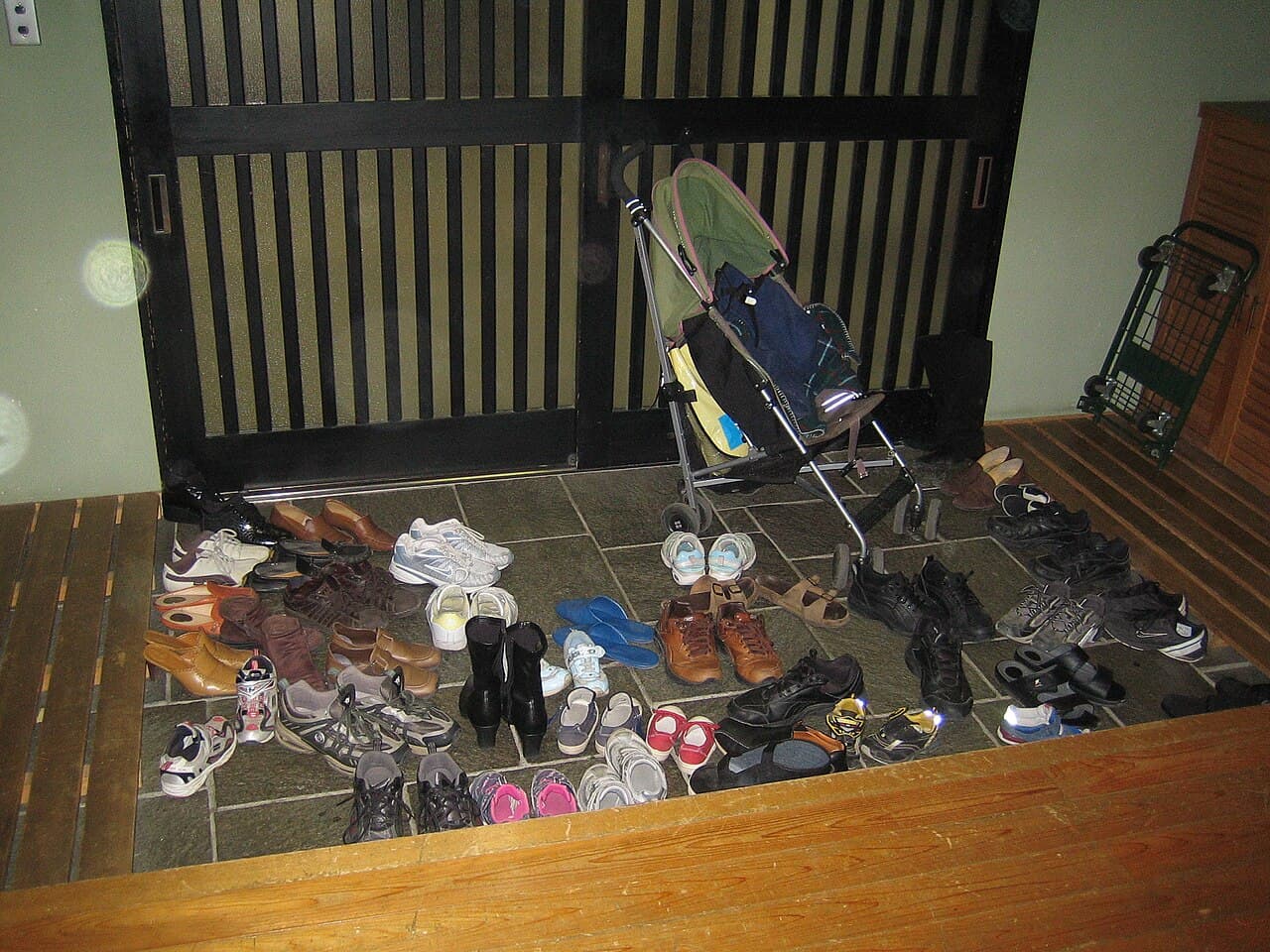
Do You Have to Take Your Shoes Off in Japan? The Genkan Rules Explained
Yes — in homes, ryokan, many temples and any tatami room. The entryway (genkan) marks a firm line between outside and in.
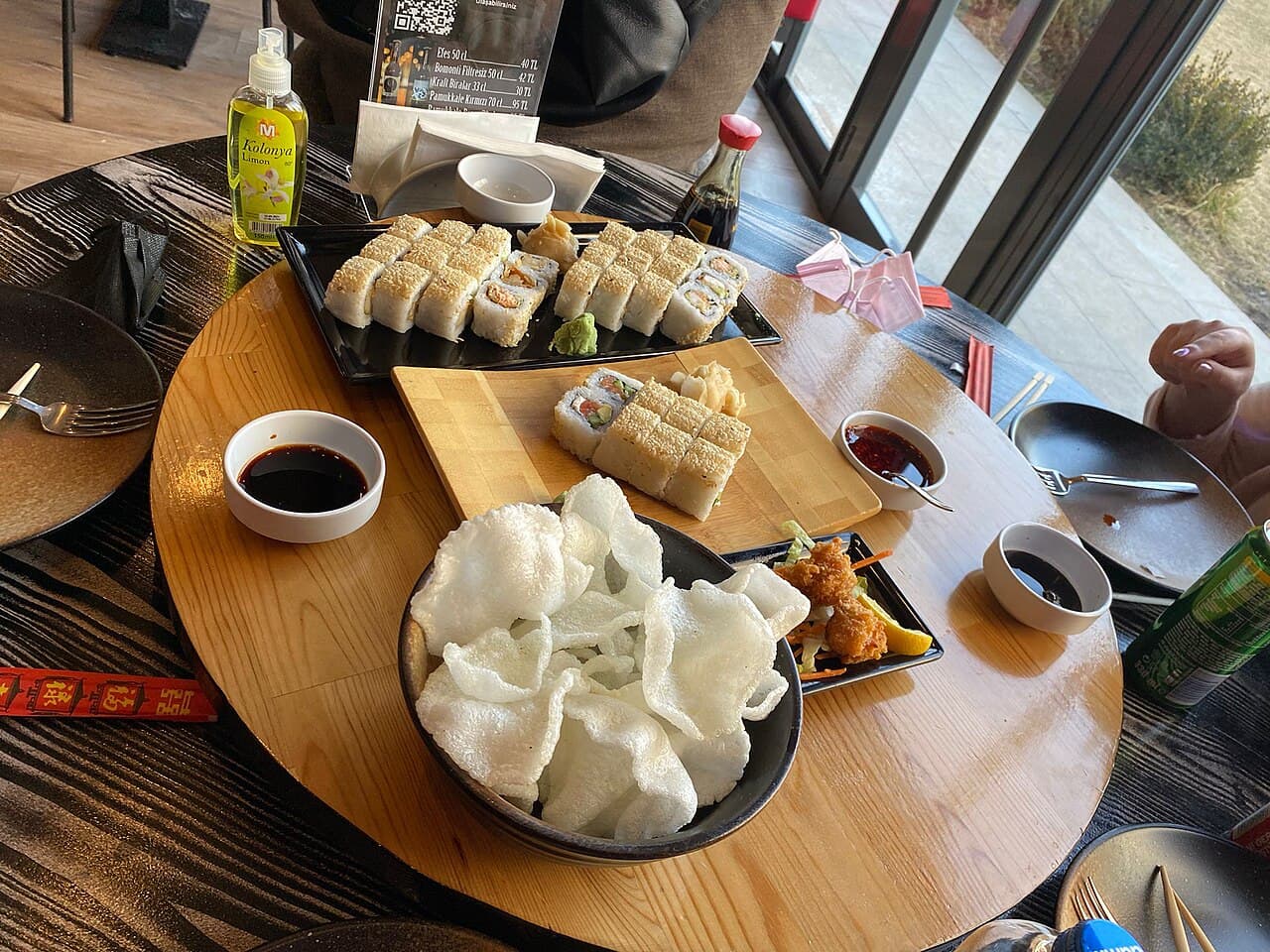
Japanese Table Manners Beyond Chopsticks: What First-Time Visitors Get Wrong
Japanese dining etiquette is less about strict rules and more about consideration: thanking the meal itself (itadakimasu, gochisosama), pouring for others before yourself, and sharing izakaya plates with the reverse end of your chopsticks. At a sushi counter, different norms apply again — fingers are fine, but following the chef's lead, not customizing your order, is the unspoken code.
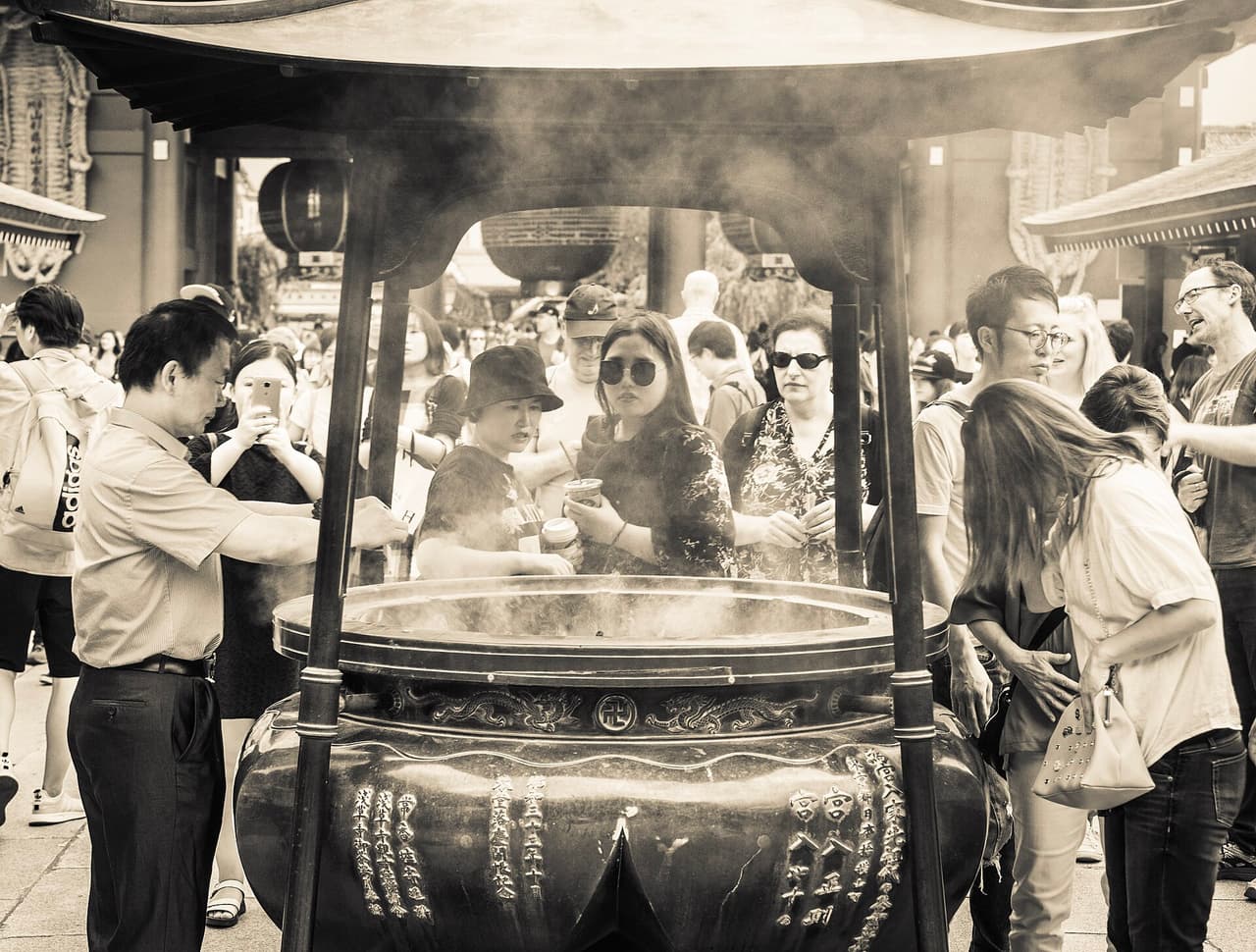
Temple Etiquette in Japan: The One Rule That Differs From Shrines (Don't Clap)
At a Buddhist temple you do not clap. Put your palms together silently instead — clapping belongs to Shinto shrines. Here is the full sequence, from the sanmon gate to the incense burner, as Japan's national and city tourism bodies describe it.