
Japanese Table Manners Beyond Chopsticks: What First-Time Visitors Get Wrong
Quick answer
Japanese table manners extend well past chopstick rules: say itadakimasu before eating and gochisosama after, pour drinks for others rather than yourself, share izakaya dishes using the opposite end of your chopsticks (or provided serving utensils), and at a sushi counter, follow the itamae's pace rather than customizing your order. None of this is about rigid formality — it's about visible consideration for the people who made and are sharing the meal with you.
"Itadakimasu" and "gochisosama" aren't just "bon appétit"
Most visitors learn itadakimasu as a pre-meal greeting and leave it there. The phrase actually derives from itadaku, an old verb meaning to receive something by lifting it respectfully above one's head — so itadakimasu literally frames the meal as something humbly received, not just eaten. It's said to be thanking everyone and everything in the chain that produced the food: the farmer, the fisherman, the cook, and — in a Buddhist-influenced reading tied to the word's roots roughly 1,500 years ago — the plants and animals themselves.
Gochisosama, said after the meal, comes from gochisou (馳走), which literally means "running about." It refers to the effort of someone rushing to gather ingredients and prepare a meal for a guest, so gochisosama deshita is closer to "thank you for the trouble you went to" than a simple "that was delicious." You'll hear both phrases used at home, in restaurants (often said quietly to staff on the way out), and even alone. Using them isn't required of visitors, but doing so is consistently read as a warm, well-informed gesture rather than empty politeness.
Pouring — for others, not yourself
A detail that surprises many first-timers: at a shared table, you generally don't pour your own drink. Instead, everyone keeps an eye on each other's glasses, and it's polite to pour for others — starting with the most senior or honored person present — before topping up your own. When receiving a pour, it's common to lift your glass slightly or hold it with both hands rather than leaving it on the table. If you're pouring, use both hands on the bottle. The group typically waits until everyone's glass is filled before the first "kanpai" (cheers) — drinking before that toast, even a small sip, reads as impatient.
Izakaya sharing: the flipped-chopstick habit
Izakaya dining is built around small shared plates, which creates its own etiquette layer on top of basic chopstick manners. When taking food from a communal dish, the custom is to turn your chopsticks around and use the clean, wide end rather than the end that's been in your mouth — unless the restaurant has provided separate serving chopsticks (toribashi) or communal spoons, which is now common and preferable when available. This isn't followed as strictly among close friends or family, but with colleagues or new acquaintances it's a small, easily-missed courtesy that locals notice.
The sushi counter runs on different rules
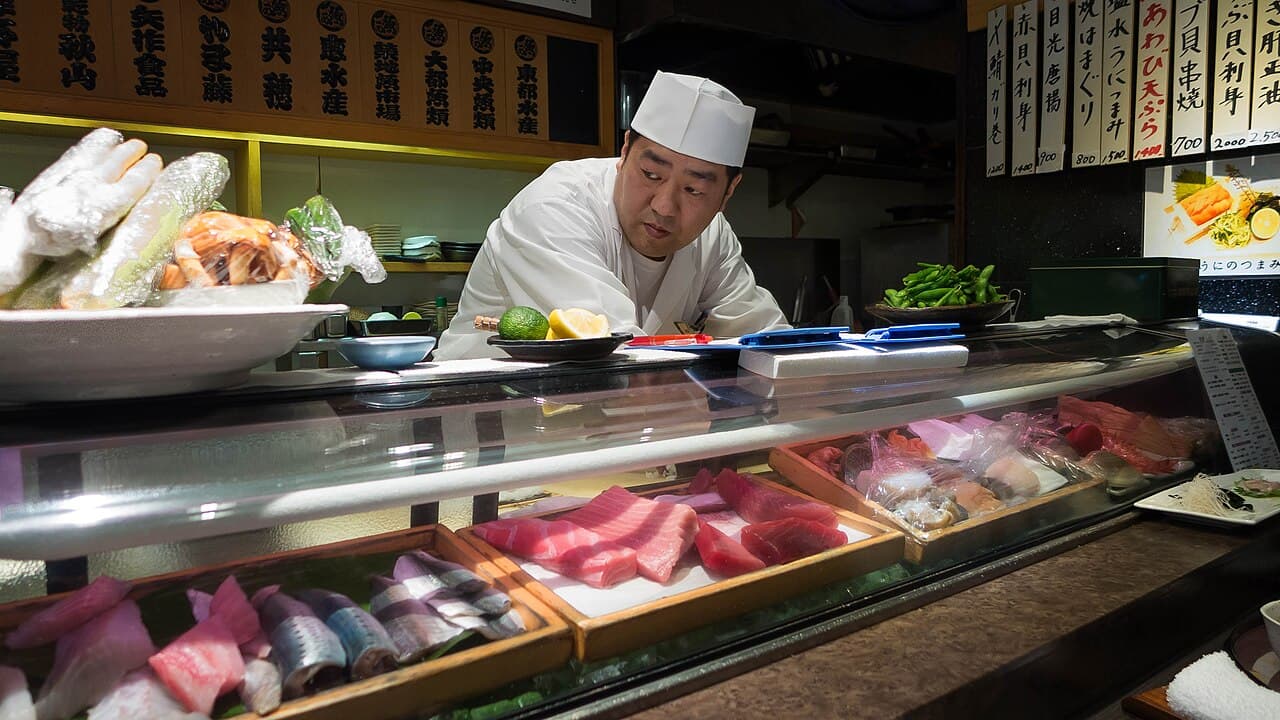
Sit down at a sushi-only counter (as opposed to a general izakaya or kaiten-zushi belt) and a slightly different code applies. Unlike at a standard table, it's considered acceptable — even traditional — to eat nigiri with your fingers rather than chopsticks. When dipping in soy sauce, tip the piece so the topping (not the rice) touches the sauce; dipping rice-side down oversaturates it and is generally seen as a rookie move. Many counters are built from valuable wood and treated almost as a shared workspace with the chef, so it's common courtesy to keep bags, phones, and sharp accessories off the counter surface itself. Strong perfume or cologne is discouraged, as it competes with the delicate scent of the fish. And while asking the itamae (chef) about the fish's origin or the season is welcome, requesting substitutions or comparing the restaurant to others is not — omakase means trusting the chef's choices, not customizing them.
How you'll actually encounter this as a first-timer
You won't be corrected for getting any of this wrong — Japanese hosts are typically forgiving of visitors — but noticing these cues will change how a meal feels. At an izakaya, watch what the table does with the shared plates before diving in. At a sushi counter, let the chef set the pace and eat each piece shortly after it's placed rather than letting it sit. And whenever a meal starts or ends, a quiet itadakimasu or gochisosama — even mispronounced — tends to land well. If you want a guided, hands-on way to absorb these habits rather than just reading about them, a sushi-making class in Tokyo or Osaka puts you across the counter from a chef who will walk you through the etiquette in context, and pairs naturally with the chopstick basics covered separately.
FAQ
- Do I have to say itadakimasu and gochisosama as a foreign visitor?
- No, it's not required or expected of tourists, but using these phrases — even simply and a little mispronounced — is consistently appreciated as a sign of genuine interest in the culture, not just politeness for its own sake.
- Is it rude to pour your own drink in Japan?
- At a shared table it's considered more polite to pour for others and let others pour for you, rather than serving yourself. It's not a hard rule, but noticing and reciprocating pours is a widely recognized courtesy, especially in group settings.
- Can you eat sushi with your hands at a sushi restaurant?
- Yes — at a dedicated sushi counter, eating nigiri with your fingers is traditional and acceptable, unlike at most other Japanese meals where chopsticks are the norm throughout.
- What's the etiquette for sharing food at an izakaya?
- Use the opposite end of your chopsticks (or provided serving chopsticks/spoons if available) to take food from communal plates, rather than the end that has touched your mouth.
Try it yourself
Sushi makingTokyo
Sushi making class in Tokyo — press nigiri with a chef, English-friendly (and how to book)
Where to take a sushi making class in Tokyo, English-guided — hands-on nigiri with a chef vs Tsukiji market-tour combos, honest prices, what you'll actually make, and direct ways to book.
Sushi makingOsaka
Where Can You Take a Sushi Making Class in Osaka? — English Options, Prices & How to Book
Three English-friendly sushi classes in Osaka, from about ¥9,500–¥12,000/person. Compare times, locations and how to book each one direct.
Related

Chopstick Etiquette in Japan: The Rules That Actually Matter
Chopstick etiquette in Japan, honestly explained: the funeral taboos that matter, what's overstated, how to hold them, and the hashioki habit.