
What Is Kintsugi? The Real Meaning Behind Japan's Art of Golden Repair
Quick answer
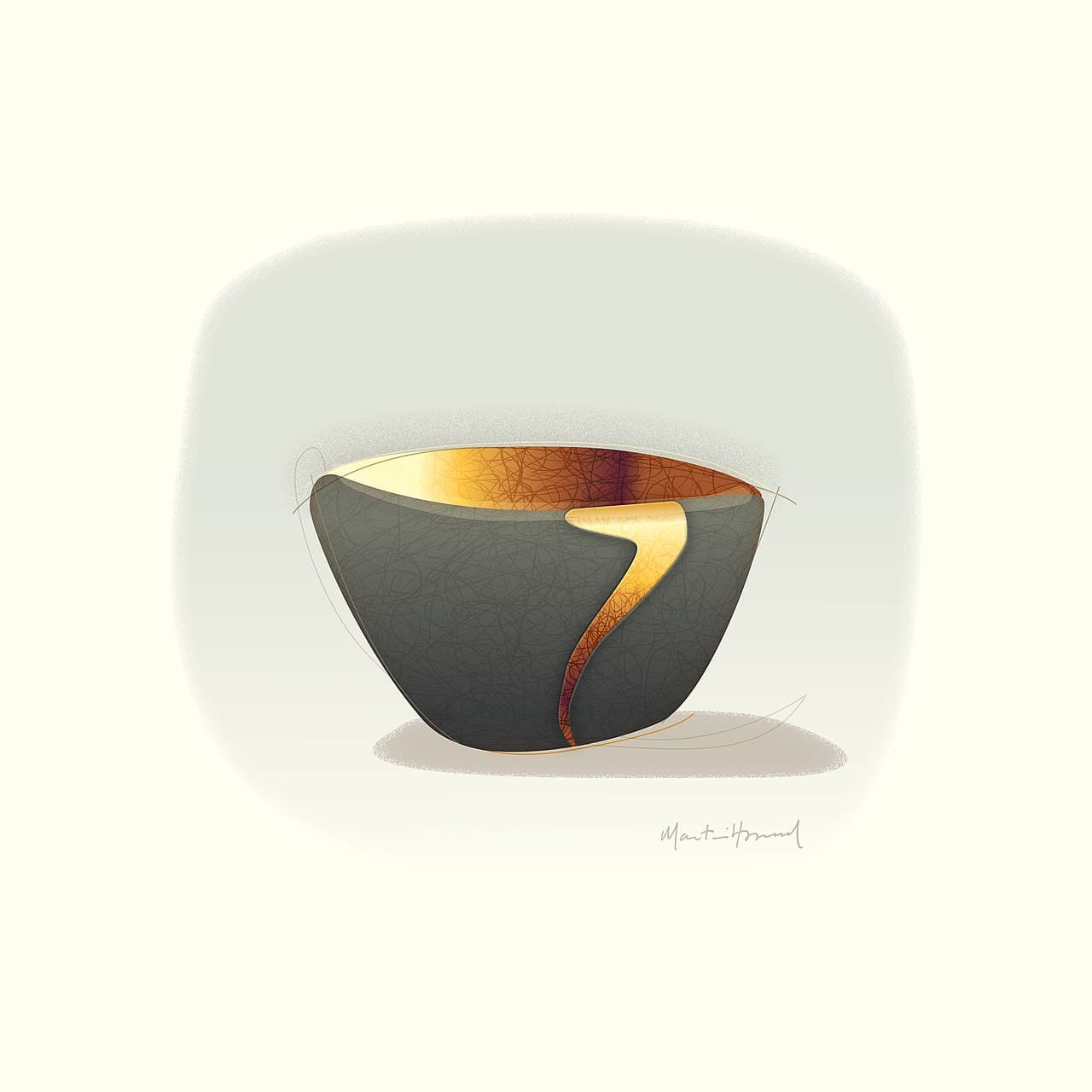
Kintsugi (金継ぎ, literally "golden joinery," also called kintsukuroi, "golden repair") is the Japanese art of mending broken ceramics with urushi lacquer that is dusted or mixed with powdered gold, silver, or platinum. Rather than disguising the break, the repair is made visible — the crack becomes a gold seam running across the surface. It is a physical craft applied to a specific broken object, and it is closely related to, but not the same as, the broader wabi-sabi philosophy of finding beauty in imperfection.
What kintsugi actually is
At its core, kintsugi is a repair technique, not a decorative style applied for its own sake. A craftsperson uses urushi — a natural lacquer tapped from the urushi tree — mixed with rice or flour paste to glue the broken pieces of a bowl, cup, or plate back together. Where fragments are missing entirely, the gap is filled with a paste of urushi and fine clay powder. The mended piece then rests for anywhere from two days to several weeks in a humid box (called a muro or furo) so the lacquer can cure properly, because urushi hardens through humidity, not by drying out. Only after the lacquer has fully set is it sanded flush, and gold, silver, or platinum powder is dusted onto the final seam line. According to Britannica, three broad repair types exist: simple crack repair, piece replacement, and "joint call" patchwork repairs that sometimes combine fragments from different vessels entirely.
Myth 1: It's just glue and gold
A common misunderstanding, especially outside Japan, is that kintsugi means coating a broken object in gold. In reality, the gold is only ever a fine surface dusting over the lacquer seam — the bulk of the repair is invisible urushi, and the whole process is closer to a slow, humidity-controlled craft discipline than a quick embellishment.
Myth 2: Kintsugi and wabi-sabi are the same thing
The two concepts are frequently used interchangeably online, but they are not identical. Wabi-sabi is a broader Japanese aesthetic and philosophical sensibility, rooted in Zen Buddhist thought, that finds beauty in imperfection, impermanence, and incompleteness — it doesn't require you to do anything, and a cracked bowl can be beautiful under a wabi-sabi lens even if it is never repaired. Kintsugi, by contrast, is episodic and active: it only applies once something has broken, and it requires a deliberate decision to repair rather than discard. You could say kintsugi is one very specific, physical expression of a wabi-sabi mindset, applied at the moment of breakage — but the philosophy is larger than the craft.
Where the practice came from
One widely repeated origin story, noted by both Wikipedia and Britannica as a theory rather than settled fact, involves the 15th-century shogun Ashikaga Yoshimasa. He is said to have sent a damaged Chinese tea bowl back to China for repair; it returned mended with unattractive metal staples, which reportedly pushed Japanese craftsmen to develop a more elegant lacquer-and-gold alternative. By the 17th century, kintsugi had become well established in Japan, and its popularity among collectors reportedly grew to the point that some pieces were, according to Britannica, allegedly broken on purpose so they could be repaired and admired in gold.
Why the philosophy resonates today
What keeps kintsugi relevant well beyond ceramics circles is its underlying message: a break does not have to be erased to be beautiful, and an object's history — including its damage — can be part of what makes it valuable. That idea, applied loosely to resilience and imperfection in general, is why kintsugi is so often cited outside Japan as a metaphor, even when the speaker isn't talking about pottery at all.
Try it for yourself
Reading about kintsugi only goes so far — the lacquer, the gold dust, and the slow curing process are things you feel with your hands. If you're planning time in Osaka, our guide to kintsugi workshops in Osaka covers two verified, English-guided options where you can repair your own ceramic piece in a couple of hours and take it home the same day — a hands-on way to understand what "golden joinery" really means before you leave Japan.
FAQ
- Is kintsugi the same thing as wabi-sabi?
- No. Wabi-sabi is a broader Japanese aesthetic philosophy that finds beauty in imperfection and impermanence and doesn't require any action. Kintsugi is a specific, active repair practice you apply once an object has actually broken — a physical expression of wabi-sabi thinking, but not identical to it.
- Is a kintsugi repair made of solid gold?
- No. The bulk of the repair is urushi lacquer, which glues the pieces and fills any missing gaps. Gold, silver, or platinum powder is only dusted over the final surface of the lacquer seam, not used as a structural material.
- How long does a traditional kintsugi repair take?
- Traditional urushi lacquer cures through humidity rather than air-drying, so a piece typically rests in a humid box for anywhere from about two days to several weeks before it can be sanded and finished with metal powder.
- Where does the word kintsugi come from?
- Kintsugi (金継ぎ) literally means "golden joinery." It's also sometimes called kintsukuroi (金繕い), meaning "golden repair."
Try it yourself
KintsugiOsaka
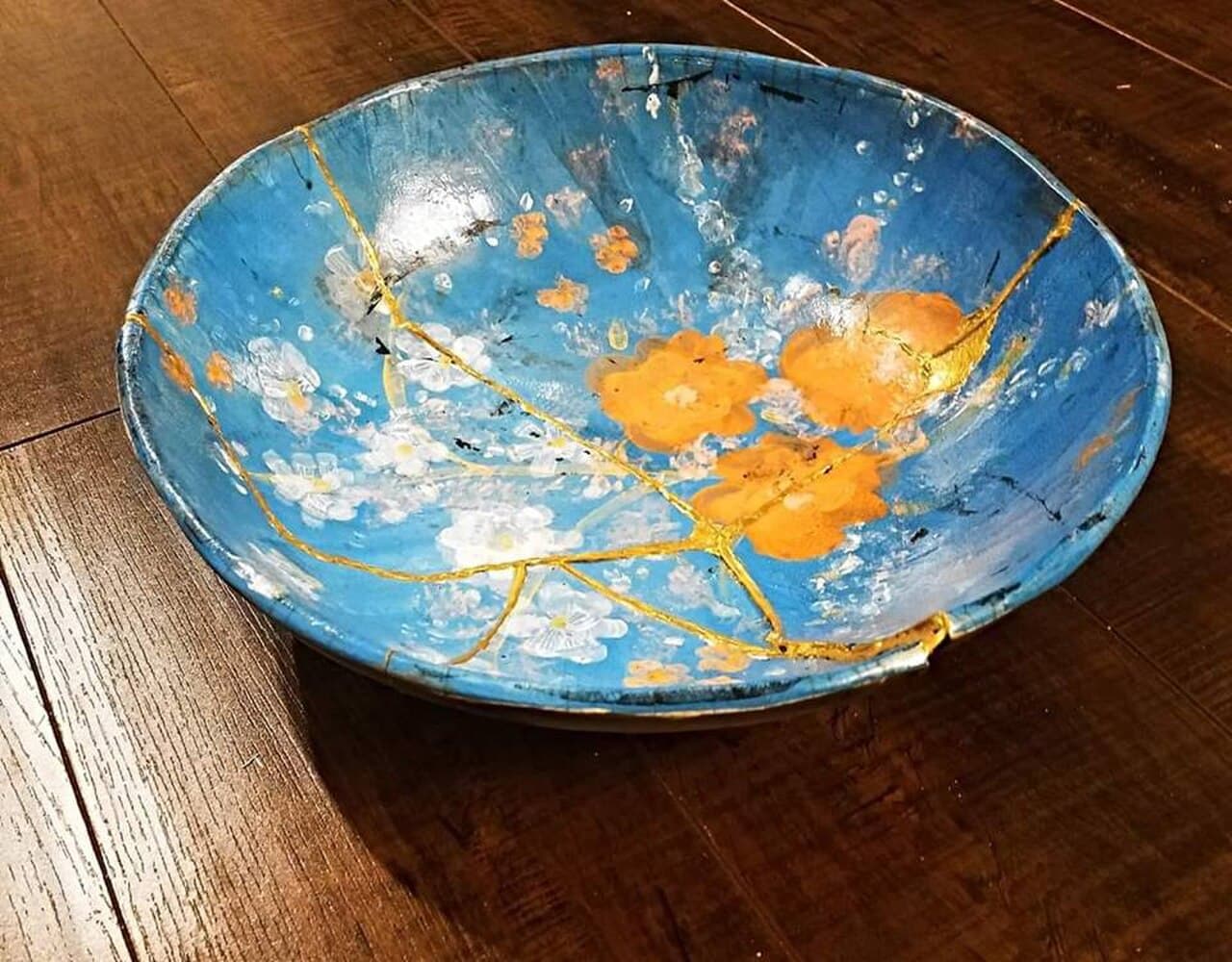
Where can you take a kintsugi workshop in Osaka? — English options, prices & how to book
Kintsugi workshops in Osaka, English-guided, from about $85-130/person (1.5-3 hrs). Compare 2 verified operators and book direct.