
Temple Etiquette in Japan: The One Rule That Differs From Shrines (Don't Clap)
At a Buddhist temple in Japan you do not clap your hands. You bow, put your palms together in front of your chest, and pray in silence. Clapping is Shinto shrine practice — doing it at a temple is the single most common mistake foreign visitors make, and it is the one difference worth memorising before you walk through the gate.
The Japan National Tourism Organization states it plainly for temples: "There is no need to clap your hands." The Nara City Tourist Association is more direct still — "Avoid clapping hands in prayer at temples (this is a worship style at Shinto shrines)."
Information as of 2026-08-18. Individual temples set their own rules; where a posted sign differs from anything below, the sign wins.
First, know which one you're standing in
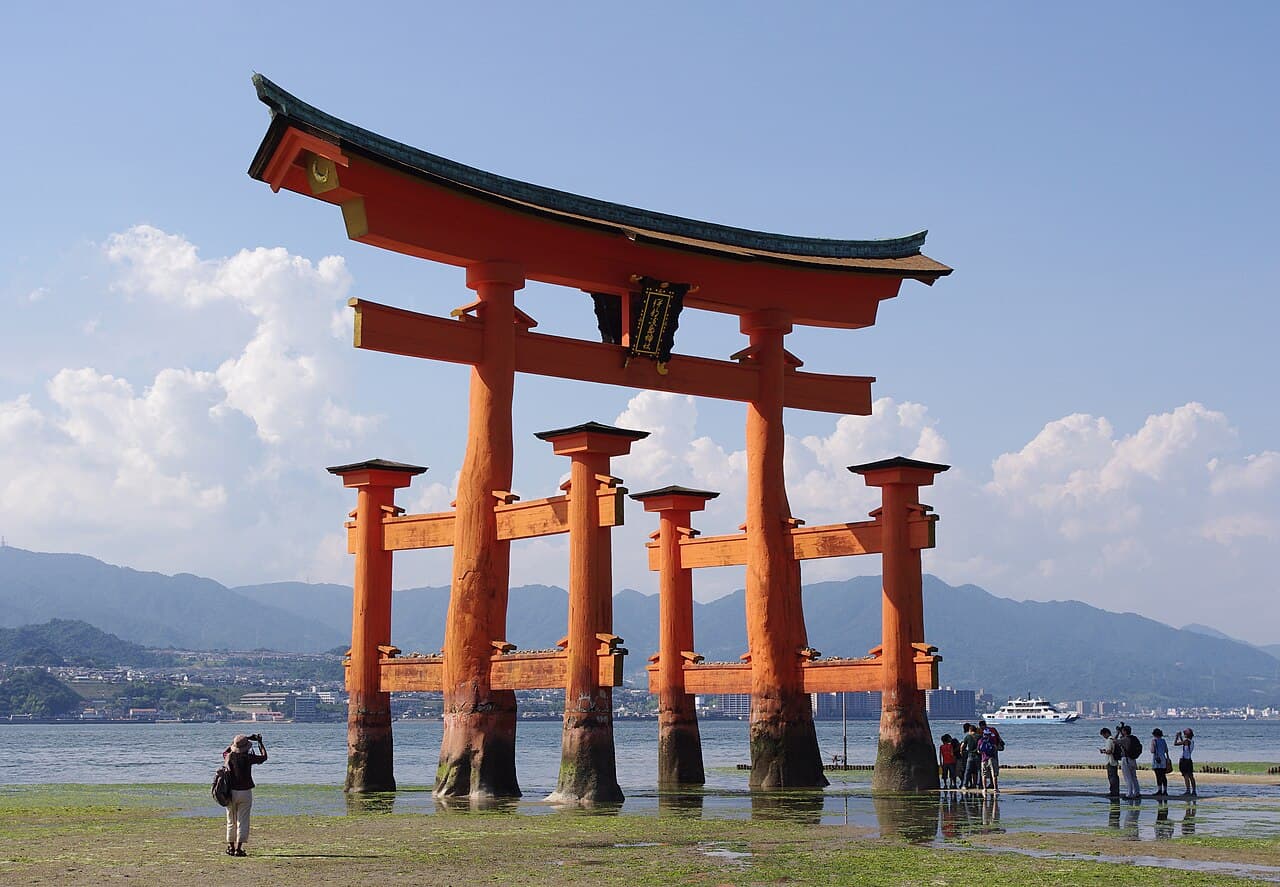
Temples (tera, 寺) are Buddhist. Shrines (jinja, 神社) are Shinto. The fastest tell is the entrance: a shrine is entered through a torii gate, a temple through a sanmon — a roofed wooden gate that often houses a pair of fierce guardian statues (niō). If you see a large incense burner, a pagoda, or a statue of the Buddha, you are at a temple. If you see a torii and shimenawa rope, you are at a shrine.
This matters because the prayer ritual genuinely differs, and the rest of this page assumes you have established that you are at a temple.
The sequence, step by step
1. Bow at the sanmon gate
Stop before passing through. Put your palms together in front of your chest (gasshō) and bow once. Then step through — and do not step on the raised wooden threshold at the bottom of the gate. Step over it. The Nara City Tourist Association calls out both points explicitly.
2. Purify at the temizuya, if there is one
Not every temple has a water pavilion, but many do. JNTO's instruction is that if a temple has a temizuya, you purify "in the same way you would at a shrine":
- Take the ladle in your right hand and pour water over your left hand.
- Switch — hold the ladle in your left hand and pour water over your right hand.
- Return the ladle to your right hand, pour a little water into your cupped left hand, and rinse your mouth from that hand — never directly from the ladle.
- Spit the water out quietly beside the basin, not back into it.
- Rinse your left hand once more.
One ladleful is meant to cover all of it. Do not drink the water, and do not wash your face or anything else in the basin.
3. Waft the incense smoke over yourself
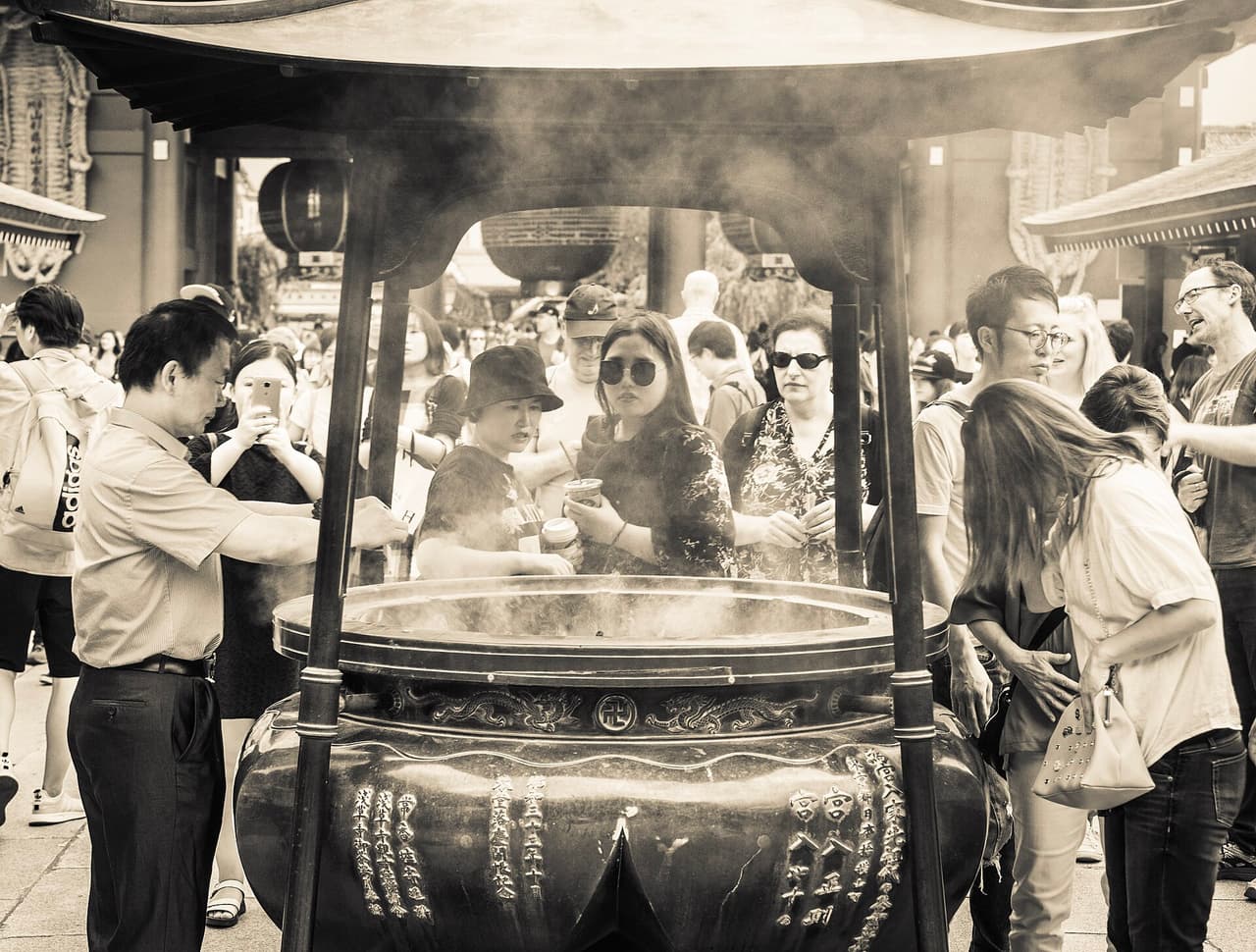
Larger temples have a big bronze incense burner (jōkōro) standing in front of the main hall — the one in the photo above is Senso-ji's, in Asakusa. Buy a bundle of incense sticks from the counter nearby, light them, and here is the part people get wrong: extinguish the flame by waving your hand or fanning it out, never by blowing on it with your mouth. JNTO specifies this. Breath is considered impure in this context.
Stand the sticks in the burner, then use your hand to draw the smoke toward yourself. Custom holds that you waft it over a part of the body you would like to see improve — many people direct it toward the head. It is optional, and it is fine to skip it entirely.
One widely observed courtesy: do not light your own incense from someone else's burning sticks. Use the provided flame.
4. At the main hall: coin, bow, palms together, silence
Approach the offering box (saisenbako). The Nara City Tourist Association's guidance is to "quietly put your osaisen (monetary offering) to express gratitude into the offering box" — and adds, reassuringly, that "even a tiny amount is meaningful." A five-yen coin is traditional because go-en (五円) is a homophone for 御縁, meaning a good connection or fate, but any coin is fine. Place it in; don't throw it hard.
If there is a bell or gong with a rope, you may sound it before praying.
Then: face the Buddhist statue, stand up straight, bow once, put your hands together in gasshō, and pray silently. Bow once more when you finish.
No clapping at any point. That's the whole difference.
What to wear
There is no formal dress code at ordinary Japanese temples, and shorts are not banned — this is a frequent worry that turns out not to be a real problem. Neat, unremarkable clothing is enough. The genuine constraints are practical:
- Shoes come off where you enter a wooden hall or interior. Wear socks, and wear shoes you can slip off without sitting down.
- Some temples with treasure halls or active meditation spaces do ask for covered shoulders and knees; a posted sign or a monk will tell you.
- Hats and sunglasses come off inside halls and when praying.
Photography and general conduct
JNTO's overall framing is worth keeping in mind: "Temples are not as strict as shrines in terms of prayer ritual. However, please behave in a calm and respectful manner."
In practice:
- Photography is usually fine in the grounds and usually not fine inside the main hall or of the principal image. Look for the crossed-out camera sign; it is used consistently.
- Never photograph people at prayer close-up without asking.
- Keep your voice down, don't eat while walking through the precinct, and don't sit on or lean against statues, railings or the gate.
- Many temples are also working monasteries and, in some cases, cemeteries. Behave as you would in either.
If you get it wrong
You will not be scolded. Japanese temples receive enormous numbers of visitors who don't know the sequence, and no one is auditing your bow. Clapping at a temple is a mild, common slip — the point of learning the difference is respect, not performance. Doing the simple version well (bow, coin, palms together, silence, bow) is better than an anxious attempt at the full ritual.
If you'd like to go deeper into the Buddhist side of what you're looking at, start with what Zen actually is. For the Shinto counterpart to this page, see shrine etiquette, and if you're still unsure which is which, temple vs shrine settles it.
Sources: Japan National Tourism Organization, "Shrine and Temple Traditions"; Nara City Tourist Association, "Etiquette at Shrines and Temples."
자주 묻는 질문
- Do you clap at a Japanese temple?
- No. At a Buddhist temple you bow, put your palms together in front of your chest, and pray in silence. Clapping (twice) is Shinto shrine practice. The Japan National Tourism Organization states for temples that "there is no need to clap your hands."
- What is the dress code for Japanese temples?
- Ordinary temples have no formal dress code and shorts are acceptable. Neat, modest clothing is enough. Be ready to remove your shoes to enter wooden halls, so wear socks and easily removable shoes. Some treasure halls and meditation spaces do ask for covered shoulders and knees.
- How do you purify yourself at a temple's water basin?
- With one ladleful: pour water over your left hand, then your right, then pour water into your cupped left hand to rinse your mouth, spit beside the basin rather than into it, and rinse your left hand once more. Never put the ladle to your lips or drink the water.
- Should you blow out the incense at a temple?
- No — extinguish the flame by waving or fanning it out with your hand. JNTO specifies not blowing it out with your mouth, as breath is considered impure in this context. Then stand the sticks in the burner and waft the smoke toward yourself.
- How much money should you put in the offering box?
- Any amount. The Nara City Tourist Association notes that "even a tiny amount is meaningful." A five-yen coin is traditional because go-en (五円) sounds like 御縁, a good connection. Place it in quietly rather than throwing it.
- Can you take photos inside a Japanese temple?
- Usually yes in the grounds and usually no inside the main hall or of the principal Buddhist image. Look for the crossed-out camera sign, which is used consistently. Never photograph people at prayer close-up without asking.
관련

일본 신사 참배 방법 — 도리이 인사부터 니레이니하쿠슈이치레이까지
일본 신사에서 올바르게 참배하는 법을 단계별로 안내합니다. 도리이 인사, 데미즈야 정화, 니레이니하쿠슈이치레이(2배 2박수 1배), 새전, 오마모리·오미쿠지 사용법까지.
Across Japan
일본의 절 vs 신사: 구분하는 법과 각각의 참배 방법
가장 빠른 구분법: **신사(신토)**에는 **토리이(鳥居) 문**이 있고 **두 번 절하고, 두 번 손뼉 치고, 한 번 절하는** 방식으로 참배합니다. **절(불교)**에는 커다란 **산몬(山門)**과 향, 그리고 흔히 탑(파고다)이 있으며 **손뼉을 치지 않고 두 손을 모아 조용히** 참배합니다.
What Is Zen? The Buddhist School Behind Japan's Tea Ceremony and Zen Gardens
Zen is a Mahayana Buddhist school born as Chan in China, rooted in Japan as Rinzai and Sōtō — it still shapes zazen, tea ceremony, and Zen gardens today.