
La cérémonie du thé japonaise : le guide complet (le chanoyu expliqué + où le vivre)
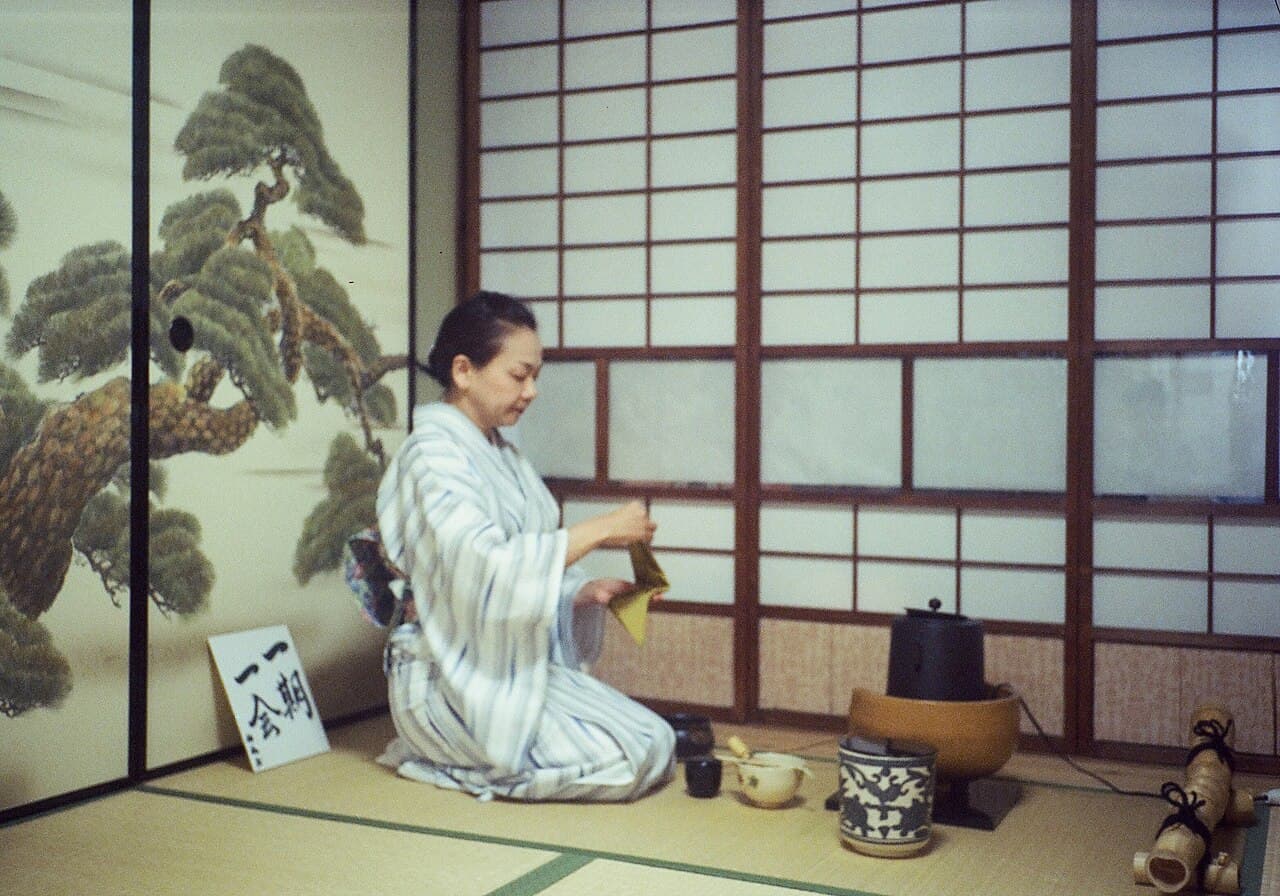
La cérémonie du thé japonaise — appelée _chanoyu_ (茶の湯) ou _chado/sado_ (茶道, « la voie du thé ») — est un rituel codifié de préparation, de service et de dégustation du matcha, le thé vert en poudre, structuré autour de quatre principes : harmonie, respect, pureté et tranquillité (_wa-kei-sei-jaku_). C'est bien plus que préparer une boisson chaude. Perfectionnée par le maître du XVIe siècle Sen no Rikyu et ancrée dans le bouddhisme zen, chaque geste — le pli d'un linge, la rotation d'un bol, la place d'une fleur — vise à créer un instant serein et pleinement présent, partagé entre l'hôte et l'invité.
Ceci est le guide pilier de tout le sujet : le sens du chanoyu, sa philosophie et son histoire, la différence entre thé épais et thé léger, un aperçu simple des étapes et — le plus utile pour le voyageur — précisément où et comment vivre une vraie cérémonie du thé au Japon, avec des liens vers nos guides par ville et pratiques.
Qu'est-ce qu'une cérémonie du thé ? Le sens du chanoyu
Quand on demande « qu'est-ce qu'une cérémonie du thé », la plupart imaginent quelqu'un fouettant un matcha vert vif dans une pièce calme en tatami. Ce n'est que la surface. Le sens plus profond du chanoyu est une discipline spirituelle et esthétique : l'hôte consacre des heures (parfois des jours) à tout préparer pour qu'un invité savoure un bol de thé dans un espace où rien n'est laissé au hasard et rien n'est gaspillé.
L'idée directrice est _ichigo ichie_ (一期一会) : « une fois, une rencontre ». Cette réunion précise, avec ces personnes, ce jour-là, ne se reproduira jamais ; elle mérite donc une attention totale. C'est pourquoi la cérémonie du thé est tenue pour un art à l'égal de la calligraphie, de l'art floral (_ikebana_) et de la conception de jardins.
Wa-kei-sei-jaku : les quatre principes
Sen no Rikyu a condensé l'esprit du thé en quatre caractères que toutes les écoles récitent encore. Comprendre le _wa kei sei jaku_ est le moyen le plus rapide de « saisir » la cérémonie.
| Principe | Kanji | Sens | Ce qu'on ressent dans la pièce |
|---|---|---|---|
| Wa | 和 | Harmonie | Hôte, invités, ustensiles et saison en équilibre |
| Kei | 敬 | Respect | Saluts, maniement soigné de chaque objet, humilité |
| Sei | 清 | Pureté | Propreté physique et esprit clair, sans hâte |
| Jaku | 寂 | Tranquillité | Le calme qui naît quand les trois premiers sont cultivés |
Ce ne sont pas des ornements : ce sont des consignes concrètes sur la manière de préparer, servir et recevoir le thé. Rikyu les a ancrées dans le zen et dans un refus assumé du luxe ostentatoire — l'esthétique du _wabi-cha_, qui prise la simplicité rustique, l'imperfection et le silence plutôt que l'ornement.
Histoire de la cérémonie du thé japonaise
L'histoire du thé au Japon est celle d'une boisson qui devient peu à peu une philosophie.
- 1191 — Le thé arrive avec le zen. Le moine zen Eisai rapporte des graines de thé et la méthode du thé fouetté en poudre depuis la Chine des Song. Son ouvrage _Kissa Yojoki_ (« Boire du thé pour la santé », 1211) vante le thé comme remède et est le premier texte japonais qui lui est consacré.
- XVe siècle — Naissance du wabi. Le moine Murata Juko (1423–1502) est considéré comme le père du _wabi-cha_. Il remplace les fêtes de thé fastueuses par de petites pièces humbles et de la céramique japonaise simple plutôt que de coûteuses importations chinoises.
- XVIe siècle — Rikyu le perfectionne. Sen no Rikyu (1522–1591) sert de maître de thé aux seigneurs de guerre Oda Nobunaga et Toyotomi Hideyoshi, affine le chanoyu jusqu'à sa forme actuelle et codifie le wa-kei-sei-jaku. Il est finalement contraint par Hideyoshi au suicide rituel (_seppuku_) en 1591, une fin dramatique qui scelle sa légende.
- Aujourd'hui — les trois écoles. La tradition de Rikyu passe par son petit-fils Sen Sotan à trois grandes écoles, les _san-senke_ : Urasenke, Omotesenke et Mushakojisenke. Urasenke est la plus grande et la plus active à l'international, si bien que presque toutes les cérémonies vécues par les visiteurs étrangers suivent son style.
Thé épais et thé léger : koicha et usucha
Presque toute cérémonie emploie l'une des deux préparations de matcha, ou les deux, et connaître la différence fait de vous un bien meilleur invité.
- Usucha (« thé léger »). Environ 1,5–2 g de matcha fouettés vivement avec ~70 ml d'eau chaude jusqu'à un bol léger et mousseux. C'est la forme quotidienne et accessible, celle que servent presque toutes les cérémonies pour touristes.
- Koicha (« thé épais »). Environ le double de matcha (~4 g) avec la moitié d'eau, malaxé lentement — jamais fouetté en mousse — jusqu'à une pâte brillante à la texture du miel tiède. Il utilise des feuilles de premier choix, est réservé au moment le plus formel et prestigieux d'une cérémonie complète et se partage souvent depuis un même bol.
Une séance informelle courte ne sert souvent que de l'usucha. Une réunion formelle complète (_chaji_) peut durer quatre heures et comprend un repas _kaiseki_, du koicha et de l'usucha. Pour le détail des durées, voir combien de temps dure une cérémonie du thé japonaise.
Les étapes, en mots simples
Le déroulé (_temae_) est précis, mais en tant qu'invité vous observez surtout et suivez l'hôte. En bref :
- Purification. L'hôte nettoie rituellement la cuillère, le bol et le fouet avec un linge de soie (_fukusa_), en gestes méditatifs.
- Une douceur d'abord. Vous mangez une petite pâtisserie de saison (_wagashi_) avant de boire : son sucre équilibre l'agréable amertume du matcha.
- Le fouettage. On prélève le matcha, on ajoute l'eau chaude et on fouette avec un _chasen_ en bambou.
- Recevoir le bol. Vous vous inclinez, tournez le bol dans le sens des aiguilles d'une montre environ deux fois pour ne pas boire par sa « face », buvez (un dernier trait aspiré bruyamment est poli), puis essuyez le bord.
- Admirer les ustensiles. Les invités examinent souvent le bol et les outils, en hommage au soin de l'hôte.
Pour un déroulé étape par étape, voir notre guide des étapes de la cérémonie du thé japonaise, et pour ce qui se fait et ne se fait pas, l'étiquette de la cérémonie du thé.
Approfondir et le vivre — le centre
Ce guide pilier renvoie à tous les guides pratiques de la grappe. Que vous vouliez réserver, budgéter, vous habiller ou simplement comprendre davantage, commencez ici.
Réserver par ville
- Kyoto — le foyer spirituel du thé. Voyez notre guide pour réserver une cérémonie du thé à Kyoto et comparez les lieux dans les meilleures cérémonies du thé de Kyoto.
- Tokyo — des options pratiques et anglophones dans toute la capitale, dans notre guide cérémonie du thé à Tokyo.
- Osaka — des séances accessibles pour qui séjourne dans la plus grande ville du Kansai : cérémonie du thé à Osaka.
Préparer les détails pratiques
- Étiquette — comment saluer, tenir et tourner le bol sans stress : étiquette de la cérémonie du thé.
- Combien de temps — des initiations de 45 minutes au _chaji_ de quatre heures : combien de temps dure une cérémonie du thé.
- Les étapes — le temae expliqué simplement : étapes de la cérémonie du thé japonaise.
- Le prix — ce que vous paierez, de l'économique au privé : prix de la cérémonie du thé.
- Comment s'habiller — kimono, chaussures et règles vestimentaires : que porter à une cérémonie du thé.
Aller plus loin dans la culture
- Associez votre cérémonie à un atelier pratique de confection des douceurs elles-mêmes : fabrication de wagashi à Kyoto.
Cela vaut-il la peine pour un voyageur ?
Oui : même une séance courte pour débutants est l'une des expériences culturelles les plus marquantes du Japon et, en 2026, les cérémonies d'initiation coûtent souvent bien moins qu'un bon dîner. Nul besoin de parler japonais, de porter un kimono ou de connaître l'étiquette à l'avance ; un bon hôte vous guide en tout. Venez curieux et sans hâte, et les quatre principes feront le reste.
FAQ
- Qu'est-ce qu'une cérémonie du thé japonaise ?
- La cérémonie du thé japonaise (chanoyu ou chado) est un rituel codifié de préparation et de service du matcha, le thé vert en poudre, autour de quatre principes : harmonie, respect, pureté et tranquillité. Perfectionnée par Sen no Rikyu au XVIe siècle et ancrée dans le zen, elle élève la préparation et le partage d'un bol de thé en un acte artistique et attentif, centré sur un instant unique entre l'hôte et l'invité.
- Que signifient wa, kei, sei et jaku ?
- Ce sont les quatre principes du thé, codifiés par Sen no Rikyu. Wa (和) est l'harmonie entre l'hôte, les invités et le cadre ; kei (敬) est le respect manifesté par un maniement soigné et l'humilité ; sei (清) est la pureté de l'espace et de l'esprit ; et jaku (寂) est la tranquillité qui naît lorsque les trois premiers sont cultivés. Toutes les écoles les récitent encore.
- Quelle est la différence entre matcha épais et léger ?
- L'usucha (« thé léger ») utilise environ 1,5–2 g de matcha fouettés avec ~70 ml d'eau jusqu'à un bol léger et mousseux ; c'est ce que servent presque toutes les cérémonies informelles. Le koicha (« thé épais ») emploie le double de matcha avec la moitié d'eau, malaxé en une pâte brillante comme le miel, avec des feuilles de premier choix, réservé au moment le plus formel d'une cérémonie complète.
- Combien de temps dure une cérémonie du thé japonaise ?
- Cela varie beaucoup. Une séance d'initiation pour touristes dure généralement de 45 minutes à 1 heure et ne sert que du thé léger (usucha). Une réunion formelle complète, le chaji, peut durer environ quatre heures et comprend un repas kaiseki, du thé épais (koicha) et du thé léger. Voyez notre guide dédié sur la durée pour le détail complet.
- Où vivre une cérémonie du thé au Japon ?
- Kyoto est le lieu le plus atmosphérique, avec de nombreux établissements anglophones ; Tokyo et Osaka proposent aussi des séances pratiques pour débutants. La plupart sont dirigées par l'école Urasenke et accueillent des visiteurs sans expérience. Utilisez nos guides de Kyoto, Tokyo et Osaka pour comparer et réserver, et lisez nos guides d'étiquette et de prix avant de partir.
- Dois-je connaître l'étiquette ou porter un kimono ?
- Non. Un bon hôte guide les débutants à chaque étape, et une tenue simple et sobre suffit dans la plupart des cérémonies pour touristes ; le kimono est facultatif et souvent proposé en location. Il est utile de connaître quelques bases, comme manger la douceur d'abord et tourner le bol avant de boire. Nos guides d'étiquette et de tenue couvrent toute la préparation.
Essayez vous-même
Tea ceremonyKyoto
Cérémonie du thé à Kyoto : les meilleures expériences en anglais (et comment réserver)
Où faire vraiment une cérémonie du thé à Kyoto, guidée en anglais, avec des prix honnêtes et les quelques règles qui comptent, plus un moyen de réserver directement.
Tea ceremonyTokyo
Tea ceremony in Tokyo — English-friendly tea rooms in Ginza, Shibuya & Asakusa (and how to book)
Where to experience a tea ceremony in Tokyo with English guidance — honest prices (from about ¥3,500), how long it takes, what actually happens, kimono options, and real booking links for Ginza, Shibuya and Asakusa.