
What Is Bunraku? Japan's Puppet Theatre, Explained
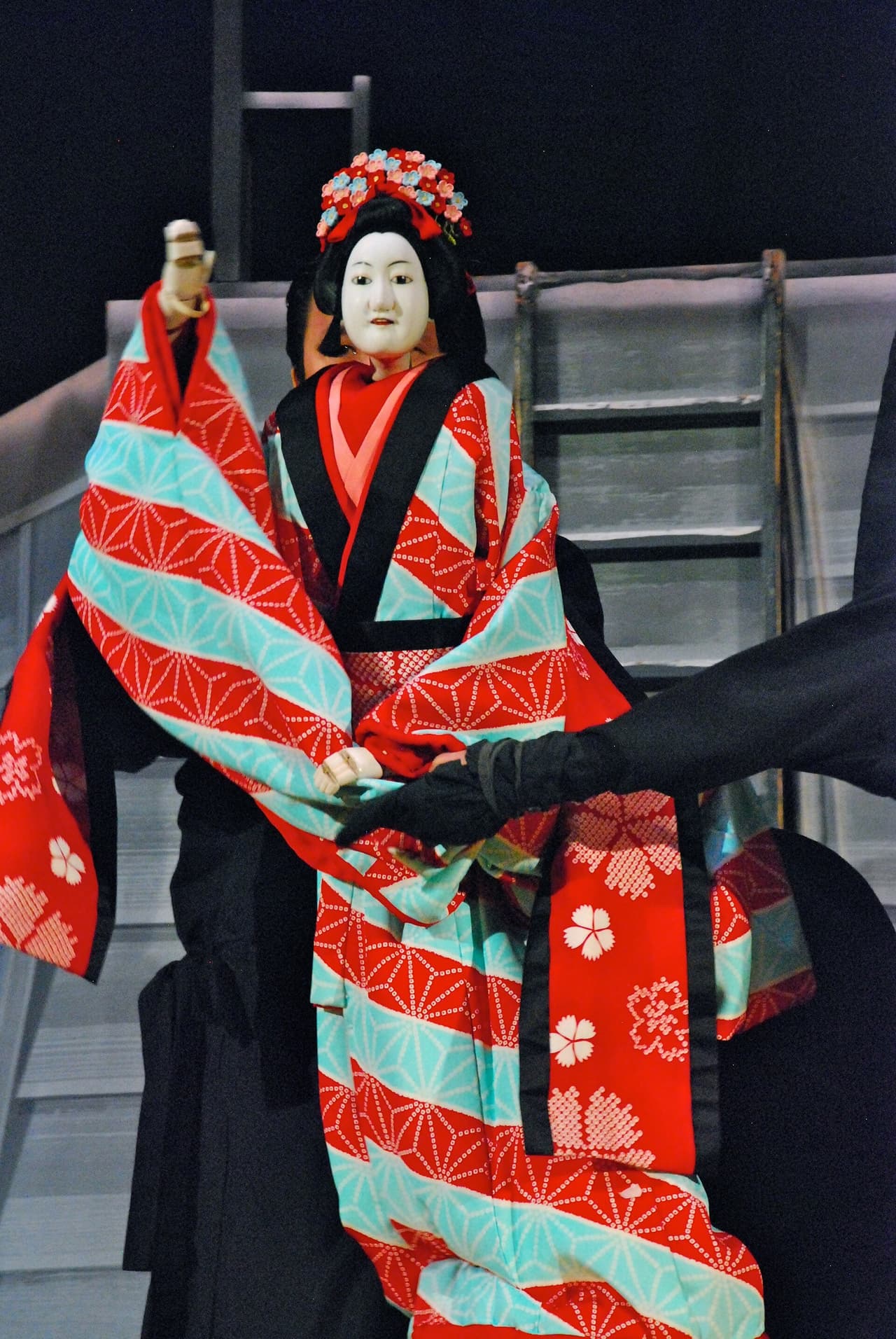
Bunraku is Japan's classical puppet theatre, in which a chanter, a shamisen player and three visible puppeteers together bring one half-life-size puppet to life. Its formal name is ningyo joruri, and UNESCO inscribed it on the Representative List of the Intangible Cultural Heritage of Humanity in 2008.
The Japan Arts Council, which runs the art's home theatre, defines it in one line: bunraku is "a collaborative art synchronizing narrative recitation, shamisen music, and puppetry in performance." Nothing in that sentence is decoration. Take any one of the three away and there is no bunraku.
The three jobs on stage
| Role | Japanese | What they do |
|---|---|---|
| Chanter | tayu | Narrates the story and speaks every character — young lover, old servant, villain — alone |
| Musician | shamisen player | Plays the three-stringed spike lute that sets pace and emotional temperature |
| Puppeteers | ningyotsukai | Three of them, in full view of the audience, work one puppet from behind a waist-high screen |
That last point is the one that surprises first-timers. In most of the world's puppetry the operator hides. In bunraku the three puppeteers stand right there in the light, and you are expected to look past them. Within about ten minutes, most people do — which is the whole trick of the form.
Where it came from
Bunraku emerged in the early Edo period, around 1600, when puppetry was coupled with joruri, a narrative-chanting genre that already had a century and a half behind it. It grew up in Osaka's merchant city rather than in a court or a shogun's castle, and its greatest plays are domestic tragedies about ordinary people — debt, duty, love that the social order will not permit.
Japan designated it an Important Intangible Cultural Property in 1955, more than fifty years before UNESCO did.
How it sits next to noh and kabuki
Japan has three classical stage forms, and all three are on the same UNESCO Representative List, all inscribed in 2008: nogaku (originally proclaimed 2001), kabuki (originally proclaimed 2005) and bunraku. They are not ranked; they are different instruments.
- Nogaku is slow, masked and ritual — see what noh actually is.
- Kabuki is broad, loud and star-driven — the noh vs kabuki comparison lays out that contrast.
- Bunraku is the storyteller's form. Because a puppet has no ego and no fatigue, it can hold an expression that would look absurd on a human face — and the chanter can push emotion further than a live actor could survive.
If you have seen kabuki and found it thrilling but hard to follow, bunraku is often the easier second step: one voice tells you exactly who is speaking.
Seeing it in Japan
The pre-eminent venue is the National Bunraku Theatre in Osaka (1-12-10 Nipponbashi, Chuo-ku, Osaka 542-0073), run by the Japan Arts Council. Programmes and booking are handled through the theatre's own online service.
Two honest cautions, as of 2026-08-19:
- Bunraku does not run continuously all year. It plays in seasons, so check the official schedule before you build a trip day around it.
- Check English support on the official page rather than trusting a blog. Language services and their fees are set per production, and second-hand figures go stale fast.
Osaka is the right city to pair it with — the rest of the city's cultural programme is in our Osaka cultural experiences guide. And if the Buddhist vocabulary in the plays is unfamiliar, what Zen is covers the ideas the Edo-period audience took for granted.
Bunraku's sibling art of solo comic storytelling has its own page: what rakugo is.
Preguntas frecuentes
- What is bunraku in simple terms?
- It is Japan's classical puppet theatre, formally called ningyo joruri, in which a chanter narrates and voices every character, a shamisen player provides the music, and three puppeteers visible to the audience operate a single puppet.
- Why can you see the puppeteers in bunraku?
- It is deliberate. The three puppeteers work in full view from behind a waist-high screen, and the audience is expected to look past them — most people stop noticing them within about ten minutes.
- How many people operate one bunraku puppet?
- Three, according to UNESCO's description of the art: they manipulate one large articulated puppet together, in view of the audience.
- Is bunraku a UNESCO heritage?
- Yes. Ningyo Johruri Bunraku puppet theatre was inscribed on UNESCO's Representative List of the Intangible Cultural Heritage of Humanity in 2008, and Japan had already designated it an Important Intangible Cultural Property in 1955.
- Where is the main bunraku theatre?
- The National Bunraku Theatre in Osaka (1-12-10 Nipponbashi, Chuo-ku), run by the Japan Arts Council, is the pre-eminent venue. It performs in seasons rather than year-round, so check the official schedule.
- What is the difference between bunraku, noh and kabuki?
- All three are UNESCO-inscribed Japanese classical theatre, but bunraku uses puppets and a single chanter, noh is masked and ritual, and kabuki is live-actor spectacle.
Relacionado
Tokyo
What Is Rakugo? Japan's One-Person Comic Storytelling
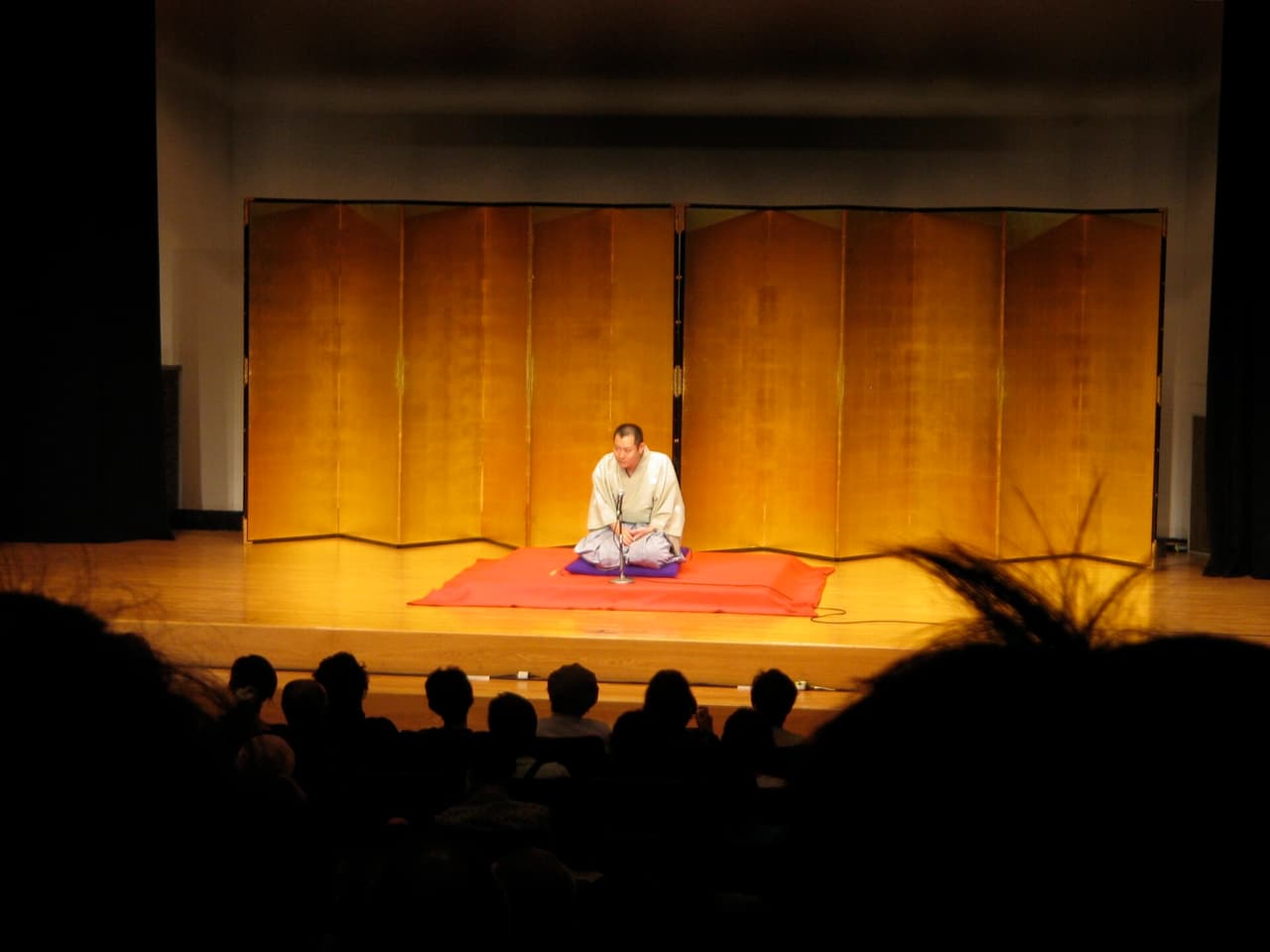
Rakugo is Japanese comic storytelling: one seated performer, a fan and a hand towel, every character, one punchline. What it is and where to see it — including in English.