
Omamori: what Japanese amulets mean, which to choose, and how to return them
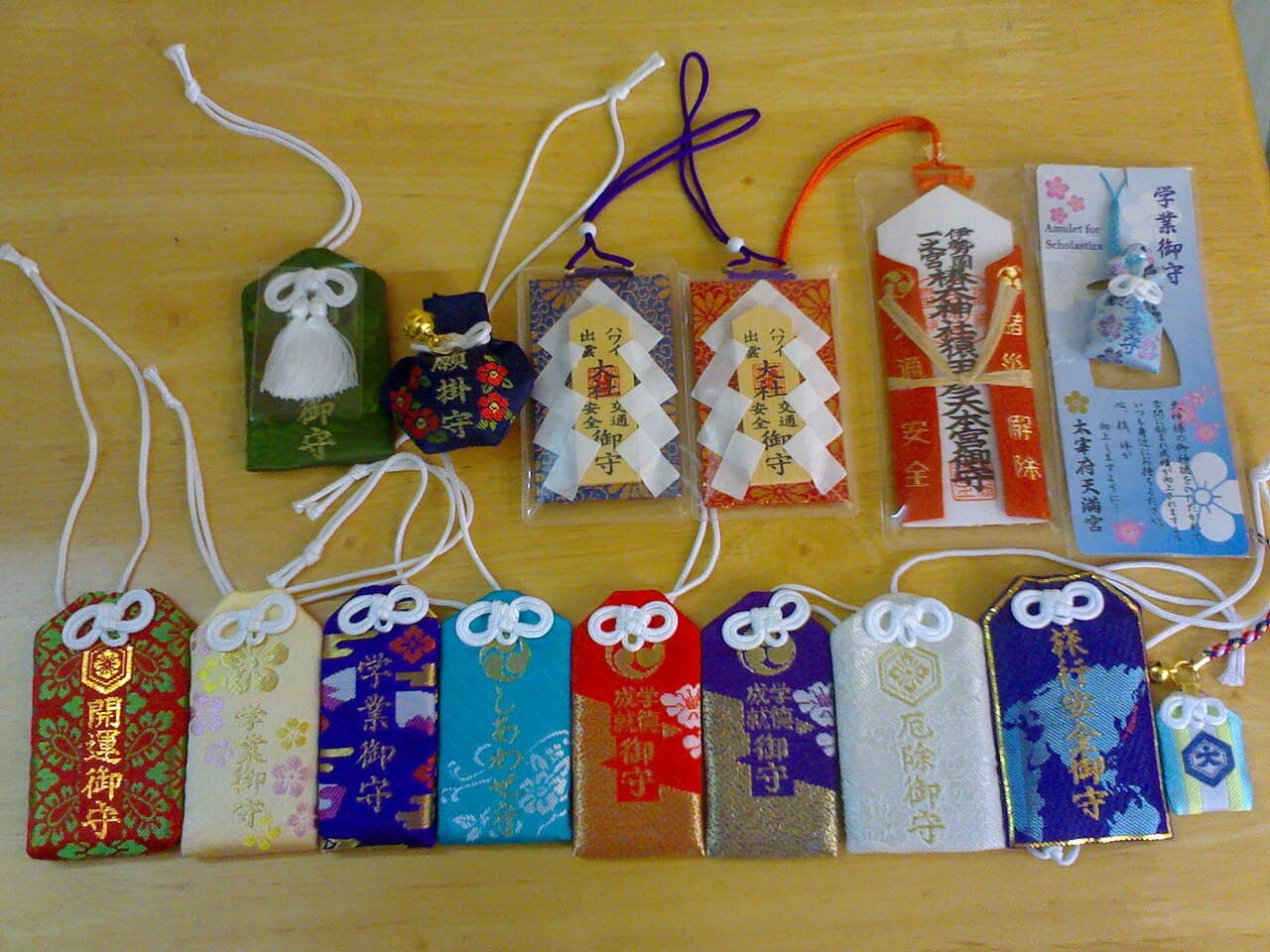
What you are actually holding
The word omamori (お守り) comes from mamoru, "to protect." What is inside the little brocade pouch is not a charm in the fairground sense — it is an inscribed slip, usually wood or paper, over which a priest has performed a blessing. The pouch is a container for a prayer that was made on your behalf.
That single fact generates the whole etiquette:
- You don't open it. Breaking the seal is understood to release the blessing.
- It lasts about a year. Then you bring it back.
- It is received, not bought. You will hear the verb ukeru (受ける, to receive) rather than kau (買う, to buy).
Choosing one
Omamori are specific, not general. Buying "a lucky charm" misses how they work; shrines and temples issue different ones for different needs, and the whole point is to match it to something real in your life.
| Type | For |
|---|---|
| Kōtsū-anzen (交通安全) | Traffic and travel safety — the most common one for cars and bikes |
| Gakugyō-jōju (学業成就) | Study and exam success — bought in enormous quantities before entrance exams |
| Shōbai-hanjō (商売繁盛) | Business prosperity |
| En-musubi (縁結び) | Relationships and connection — not only romantic |
| Anzan (安産) | Safe childbirth |
| Kenkō / byōki-heiyu (健康・病気平癒) | Health, or recovery from illness |
| Yaku-yoke (厄除け) | Warding off misfortune, especially in an unlucky year |
There are also shapes: the classic pouch to tie to a bag, a flat card type for a wallet, and very small body types meant to be carried in a pocket.
Choose the shrine as carefully as the type. Many shrines are known for one thing — the ones associated with learning, with seafaring, with matchmaking. An omamori from a place with an actual connection to your concern means more than one bought at whichever shrine you happened to pass.
Carrying it
Keep it with the thing it protects. A traffic-safety amulet belongs in the car or on the bike, not in a drawer. A study one goes in the pencil case or on the school bag. A health one stays close to the body. The convention is not superstition about placement so much as a reminder: the amulet is supposed to be present in the part of your life you asked about.
Don't stuff it in the bottom of a suitcase, and don't hang it somewhere it will be crushed or dirtied.
Can you have more than one? Yes. There is a persistent belief that amulets from different shrines "fight," but this is folk anxiety rather than doctrine, and most Japanese households carry several from several places.
Giving one as a gift
This is fine and common — an omamori for a friend sitting an exam, or a relative in hospital, is a normal and well-received gesture. Two caveats:
It is a religious object, not a souvenir multipack. Buying fifteen to hand out at the office reads differently from choosing one for a specific person with a specific need. If you want something for a group, omiyage is the correct category and has its own well-defined etiquette.
Match the type to the person. Handing someone a safe-childbirth amulet as a generic gift is a memorable mistake.
Returning it
This is the part almost every visitor misses, and it is the part that completes the object.
After about a year, take the omamori to a shrine or temple and put it in the furu-ofuda osame-sho — the box for old amulets and talismans, usually near the entrance or the office. It will be burned in an otakiage (お焚き上げ), a ritual fire that returns the blessing with thanks. Around New Year, many shrines run large-scale burnings and the boxes overflow; early January is when most of the country does this at once.
Return it where you received it if you can. If you can't — and if you took it home to another country, you probably can't — bringing it to a different shrine is widely accepted in practice. What you should not do is put it in household rubbish. If you are never coming back, keeping it respectfully is a better answer than binning it.
Two things travellers get wrong
Treating a torn omamori as broken. If the pouch frays or the cord snaps, tradition reads it as the amulet having absorbed something on your behalf. Return it and receive a new one; do not sew it up.
Buying before worshipping. As with a goshuin, the order matters. Go to the main hall first — shrine etiquette has the sequence — and visit the amulet counter afterwards. It takes an extra four minutes and it is the difference between participating and shopping.
For more of the beliefs these objects sit inside, see Japanese superstitions and what is a torii gate.
---
Prices, schedules and booking links on this page were verified as of 2026-08-09. Operators change them without notice — confirm on the booking page before you travel, and tell us if you find something out of date.
Preguntas frecuentes
- What does omamori mean?
- The word comes from mamoru, "to protect." An omamori is a small cloth or card amulet containing a blessing from a shrine or temple — in effect a prayer made on your behalf by the priests there, which you then carry with you.
- How much does an omamori cost?
- Usually ¥500–¥2,000, with around ¥1,000 the most common. As with a goshuin, the transaction is framed as an offering rather than a purchase, and you will often see the verb 'to receive' rather than 'to buy' used for it.
- Can you open an omamori?
- No. The blessing inside — often a slip of wood or paper inscribed by a priest — is sealed, and opening the pouch is understood to release or void it. This is the one rule that everybody agrees on. If it tears, treat it as spent and return it rather than repairing it.
- How long does an omamori last?
- By custom, about one year. The convention is to return it to a shrine or temple around the New Year and receive a new one, which is why shrines are busiest with returns in early January. Nothing bad happens if you keep it longer — but the tradition treats it as having absorbed a year of misfortune on your behalf.
- How do you return an omamori, and can it be a different shrine?
- Take it to the amulet-return box (osamefuda-osame or furuofuda-osame) at a shrine or temple, where it will be burned in an otakiage ceremony. Returning it where you received it is the ideal; returning it to another shrine is widely accepted in practice. Do not put it in household rubbish. If you have taken it abroad and cannot get back, most people keep it respectfully or return it on a later trip.
Relacionado
Across Japan
Goshuin: how to collect Japan's temple and shrine seals (etiquette, cost, and the mistake to avoid)
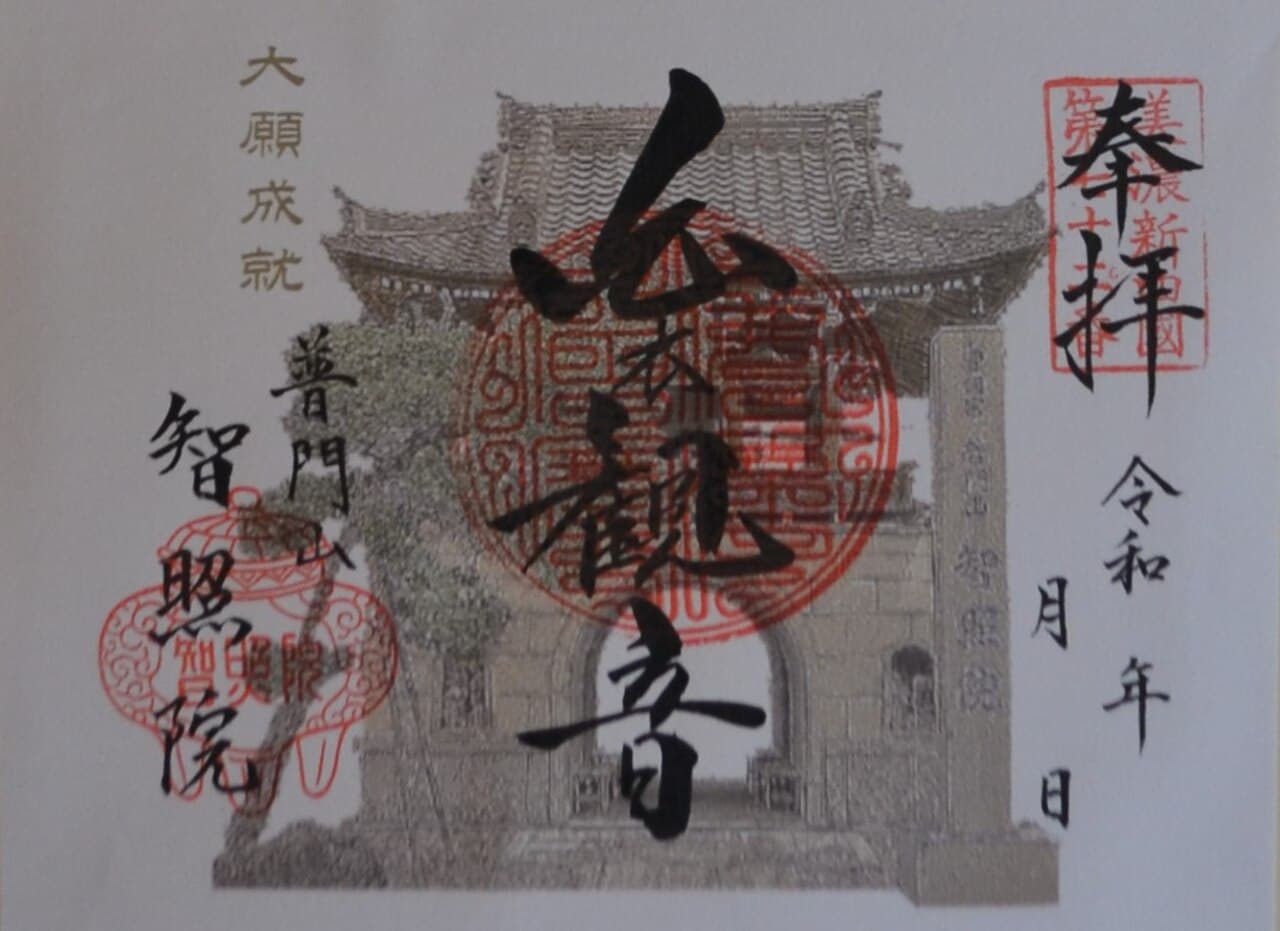
A goshuin is not a stamp-rally souvenir: it is calligraphy brushed by hand as proof that you personally worshipped, and the etiquette follows from that one fact. Buy the book (¥1,000–¥2,000), pray first, then ask. Here is the full sequence, what it costs, why some temples will refuse a book that has shrine seals in it, and the phrase to say at the counter.