Bonsai📍 Tokyo

Shunkaen Bonsai Museum — Hands-On Bonsai Class, Tokyo

Prune and wire your own miniature tree at a working bonsai garden in Edogawa — about ¥13,200 for the roughly 1-hour class (English available), or from ¥38,000 for a 100-minute private lesson with tea ceremony.

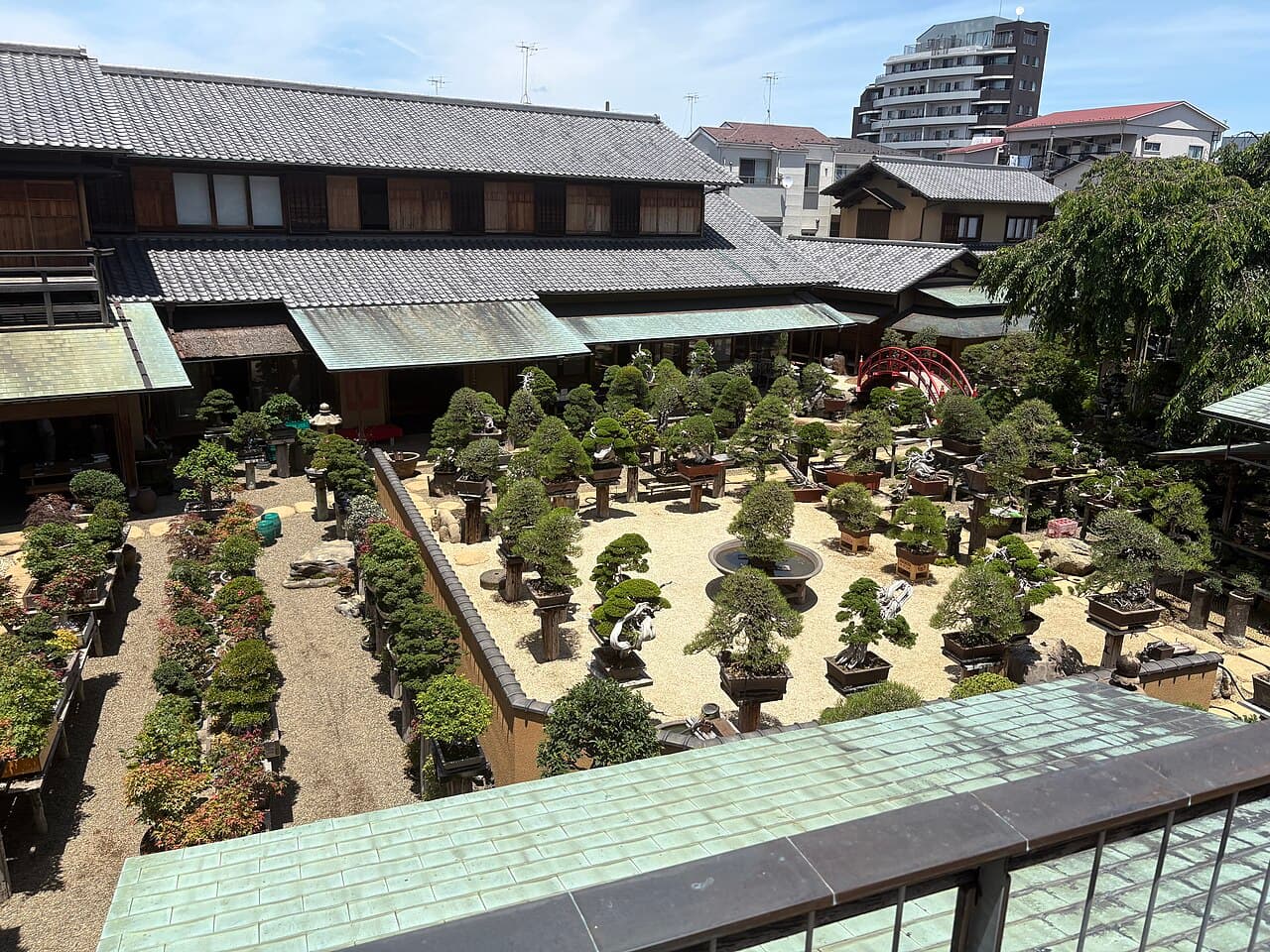
View over the grounds of Shunkaen Bonsai Museum in Tokyo, rows of cultivated bonsai trees on display
Cloud atlas / CC BY-SA 4.0, via Wikimedia Commons

De un vistazo

La info honesta para ir
Idioma
Apto en inglés — guiado o atendido en inglés
Duración
About 1 hour for the standard class (Tue/Thu/Sat, 10:00 and 14:00 slots); about 100 minutes for the private class with tea ceremony
Precio
¥13,200 (tax included; ¥12,000 + tax on the museum's own listing), including museum admission, for the ~1-hour class. From ¥38,000 per person for the 100-minute private class with tea ceremony (Wabunka).
Reserva
Reserva con antelación — sin garantía sin reserva
Estación más cercana
Koiwa Station (JR Sōbu Line) or Mizue Station (Toei Shinjuku Line), then Keisei Bus No. 76 to the Keiyo-guchi stop (about a 3-minute walk from there)
Qué llevar
Closed-toe shoes you can slip off easily (the lesson may move into a tatami-floored room), and clothes you don't mind getting soil on — aprons are provided, but sleeves and knees can still pick up dirt.
Ideal para
First-time bonsai enthusiasts who want to actually prune and wire a tree, not just view a collection, Travelers happy to spend half a day outside central Tokyo for a quieter, craft-focused afternoon, Couples or small groups wanting a private, English-guided session (the tea-ceremony version), Garden and photography lovers — the collection includes trees estimated at over 100 years old, Not ideal if you have under 2-3 hours free in your Tokyo itinerary, given the travel time out to Edogawa

El camino · 道

  1. LlegarKoiwa Station (JR Sōbu Line) or Mizue Station (Toei Shinjuku Line), then Keisei Bus No. 76 to the Keiyo-guchi stop (about a 3-minute walk from there)
  2. EtiquetaUnos modales tranquilos importan — lee la etiqueta
  3. HacerBonsai
  4. ReservarReserva tu plaza abajo

Most bonsai stops in Tokyo are look-don't-touch: a display collection, a gift shop, a photo of a tree you didn't make. Shunkaen Bonsai Museum, in a quiet residential corner of Edogawa Ward, is different — it's a working garden and teaching studio run by Kunio Kobayashi, a bonsai artist who has won Japan's Prime Minister's Award, and visitors are handed real tools, a real training tree, and real instruction rather than a scripted photo op.

What to expect

The standard class runs Tuesday, Thursday, and Saturday at 10:00 and 14:00, and lasts about an hour. After a short lecture on bonsai basics — what makes a tree's silhouette work, why certain branches get removed rather than trained — you prune, wire, and pot your own tree under an instructor's direction. Museum admission (normally ¥2,000 on its own) is included, so afterward you're free to wander the garden of more than 1,000 bonsai, some estimated at over a century old, and the 1,000-year-old Japanese black pine displayed at the heart of the courtyard. Classes are offered in English and Chinese as well as Japanese, so you don't need to add a private interpreter to the day.

For a longer, more ceremonial version, a separate private booking (through the luxury-experience platform Wabunka) runs about 100 minutes with an English-speaking host: a garden tour and history briefing, hands-on pruning and wiring, and then a formal tea ceremony where your just-finished bonsai is set as the tokonoma centerpiece while you're served matcha and seasonal wagashi. It's built for 1-12 people and can be booked privately, which matters if you want a quieter, unhurried pace rather than a shared class slot.

Standard class vs. private lesson — which to book

The ¥13,200 standard class (bookable directly with the museum or via Rakuten Travel Experiences) is the honest, no-frills version: same tools, same garden, same instructor-led technique, at roughly a third of the price of the premium option. It runs on a fixed schedule, so you're working alongside a small group rather than getting a fully private session. The ¥38,000+ Wabunka version adds privacy, a longer arc (garden history plus a full tea ceremony), and flexible scheduling — worth it if you're marking an occasion, traveling as a couple, or simply prefer not to share the instructor's attention. Neither is a rip-off; they're genuinely different products built around the same real craft.

Either way, don't expect to fly home with your tree the same day — bonsai need aftercare guidance before international travel, and the instructor will tell you what your specific tree needs. Bring nothing but yourself; tools, a training tree, and an apron are supplied. Because Shunkaen sits about 20 minutes by bus from Koiwa Station, budget half a day, not a quick stop between other Tokyo sights. If you're building this into a broader Tokyo culture day, pair it with other hands-on Tokyo studio crafts like ikebana or kintsugi, or read up on the aesthetic bonsai shares with wabi-sabi before you go — it explains why the instructor keeps telling you to cut less, not more. For more first-timer-friendly workshops around the city, see our roundup of Tokyo cultural experiences.

Destacados

  • Prune, wire, and pot your own miniature tree under real instruction, not a scripted photo session
  • Walk a working garden of over 1,000 bonsai, some more than a century old, inside the studio of Prime Minister's Award winner Kunio Kobayashi
  • English (and Chinese) instruction available without needing to book a separate private guide
  • Option to pair the lesson with a formal tea ceremony where your finished tree becomes the tokonoma centerpiece
  • Tools and a training tree are provided — you don't need to bring or already own anything

Bueno saber

Don't touch or lean over other bonsai in the collection without asking — some pieces represent decades of work and significant value. Follow the instructor's cuts closely at first; bonsai styling is about restraint and slow correction, not creative freedom, and a rushed cut can't be undone.

MICHI Editorial
  • Japanese-culture experience editor

Verified, English-friendly guides to experiencing Japanese culture.

Más experiencias en Tokyo

ExperienceTokyo

Soba making class in Tokyo — English options, real prices, and which one to book

Soba making is the most physical of Japan's food crafts — you knead buckwheat that does not want to hold together, roll it thin enough to read through, and cut it with a knife the size of a cleaver. Tokyo has two genuinely different ways to try it, at wildly different prices, and the right one depends entirely on how many of you there are.

English-OK · The Kappabashi group class runs a couple of hours. The English-language specialist runs 2.5 to 6.5 hours depending on the plan, typically starting around 11:30. · Kappabashi group class: about US$48.56 per person as listed on 2026-08-09, up to 15 participants. Tsukiji Soba Academy prices per group, not per head: ¥33,000 for up to three people on the "Just-For-Fun" and "Quick Hands-on" plans (+¥11,000 per extra person), ¥42,900 for the gluten-free plan (+¥14,300), and ¥66,000 for the professional half-day (+¥27,500).

Martial artsTokyo

Kendo experience in Tokyo — try the samurai art in armour, in English (price and how to book)

Most "samurai experiences" in Tokyo hand you a costume and a photo. Kendo is the opposite: it is the living martial art that the sword schools became, it is practised by roughly two million people worldwide, and a two-hour beginner session puts you in real armour taking real strikes. Here is what it costs, where it is, and how it differs from the sword-cutting experiences.

English-OK · About 2 hours, covering six stages: putting on the armour, the history behind it, striking practice, striking practice in full armour, an instructor demonstration, and a combat game. · About US$116.48 per person on Viator as of 2026-08-09 (the listing prices in US dollars, so the yen figure moves with the exchange rate). The same operator, SAMURAI TRIP, also lists on Klook and GetYourGuide and takes direct reservations; compare all four before booking, because per-channel pricing differs.

Zazen meditationTokyo

Zazen in Tokyo — where to sit Zen meditation in English, and what it actually costs

Tokyo is not Kyoto: there is no dense supply of English zazen on demand. But there is a small, honest answer — a Setagaya temple that sits twice a week for ¥400 in Japanese and English, monthly English beginners' sittings at two great Sōtō and Rinzai temples just outside the city, and paid private sessions if your dates are fixed. Here is the schedule, the cost, and what actually happens.

English-OK · Public sittings run about 2 hours including instruction and a short talk (Kōun-ji: Saturdays 19:00–21:00, Sundays 06:30–09:00). The monthly English beginners' sittings run 1–2 hours. Private English-guided sessions are typically 60–90 minutes. · From ¥400 at Kōun-ji in Setagaya. ¥500 for Sōji-ji's monthly English beginners' sitting in Tsurumi. ¥1,000 at Tōkōzen-ji in Yokohama, and ¥1,000 plus ¥500 temple admission at Kenchō-ji in Kamakura. Private English-guided sessions at temples that host them commercially cost substantially more — expect several times these figures.