
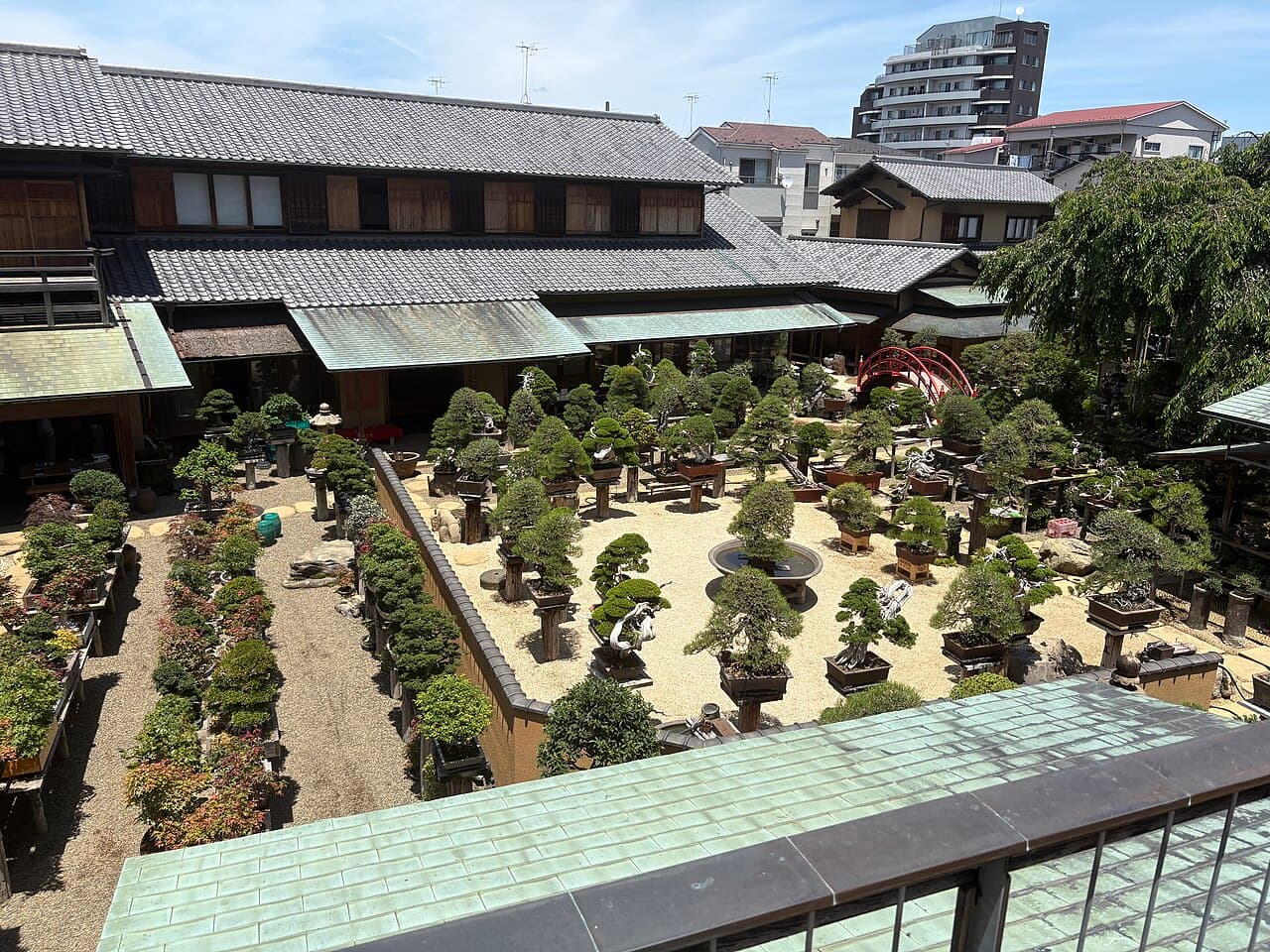
Most bonsai stops in Tokyo are look-don't-touch: a display collection, a gift shop, a photo of a tree you didn't make. Shunkaen Bonsai Museum, in a quiet residential corner of Edogawa Ward, is different — it's a working garden and teaching studio run by Kunio Kobayashi, a bonsai artist who has won Japan's Prime Minister's Award, and visitors are handed real tools, a real training tree, and real instruction rather than a scripted photo op.
What to expect
The standard class runs Tuesday, Thursday, and Saturday at 10:00 and 14:00, and lasts about an hour. After a short lecture on bonsai basics — what makes a tree's silhouette work, why certain branches get removed rather than trained — you prune, wire, and pot your own tree under an instructor's direction. Museum admission (normally ¥2,000 on its own) is included, so afterward you're free to wander the garden of more than 1,000 bonsai, some estimated at over a century old, and the 1,000-year-old Japanese black pine displayed at the heart of the courtyard. Classes are offered in English and Chinese as well as Japanese, so you don't need to add a private interpreter to the day.
For a longer, more ceremonial version, a separate private booking (through the luxury-experience platform Wabunka) runs about 100 minutes with an English-speaking host: a garden tour and history briefing, hands-on pruning and wiring, and then a formal tea ceremony where your just-finished bonsai is set as the tokonoma centerpiece while you're served matcha and seasonal wagashi. It's built for 1-12 people and can be booked privately, which matters if you want a quieter, unhurried pace rather than a shared class slot.
Standard class vs. private lesson — which to book
The ¥13,200 standard class (bookable directly with the museum or via Rakuten Travel Experiences) is the honest, no-frills version: same tools, same garden, same instructor-led technique, at roughly a third of the price of the premium option. It runs on a fixed schedule, so you're working alongside a small group rather than getting a fully private session. The ¥38,000+ Wabunka version adds privacy, a longer arc (garden history plus a full tea ceremony), and flexible scheduling — worth it if you're marking an occasion, traveling as a couple, or simply prefer not to share the instructor's attention. Neither is a rip-off; they're genuinely different products built around the same real craft.
Either way, don't expect to fly home with your tree the same day — bonsai need aftercare guidance before international travel, and the instructor will tell you what your specific tree needs. Bring nothing but yourself; tools, a training tree, and an apron are supplied. Because Shunkaen sits about 20 minutes by bus from Koiwa Station, budget half a day, not a quick stop between other Tokyo sights. If you're building this into a broader Tokyo culture day, pair it with other hands-on Tokyo studio crafts like ikebana or kintsugi, or read up on the aesthetic bonsai shares with wabi-sabi before you go — it explains why the instructor keeps telling you to cut less, not more. For more first-timer-friendly workshops around the city, see our roundup of Tokyo cultural experiences.
- Prune, wire, and pot your own miniature tree under real instruction, not a scripted photo session
- Walk a working garden of over 1,000 bonsai, some more than a century old, inside the studio of Prime Minister's Award winner Kunio Kobayashi
- English (and Chinese) instruction available without needing to book a separate private guide
- Option to pair the lesson with a formal tea ceremony where your finished tree becomes the tokonoma centerpiece
- Tools and a training tree are provided — you don't need to bring or already own anything
Don't touch or lean over other bonsai in the collection without asking — some pieces represent decades of work and significant value. Follow the instructor's cuts closely at first; bonsai styling is about restraint and slow correction, not creative freedom, and a rushed cut can't be undone.