
The short answer
Yes — you can join a real Japanese tea ceremony without leaving Tokyo, fully guided in English. Expect about ¥3,500–¥7,800 per person (as of July 2026) for a 45–60 minute session, or around 90 minutes if you add kimono wearing. Three long-running, English-friendly tea rooms cover the city: Chazen next to the Kabukiza theatre in Ginza, Tokyo Chaan five minutes from Shibuya Station, and MAIKOYA in Asakusa and Shinjuku. All three require advance reservation — book online a few days ahead, earlier in cherry-blossom and autumn-leaves season.
If your itinerary also includes the old capital, we keep a separate guide to tea ceremony in Kyoto. But you don't need Kyoto for this: the ceremony is the same art wherever the tea room is, and Tokyo's sessions are the easiest to slot into a packed first trip.
Tokyo or Kyoto — does it matter?
Honestly: for a first, one-hour taste of chanoyu (the way of tea), no. The etiquette, the sweets, the whisking, the quiet — all identical. Kyoto wins on atmosphere around the tea room (temple gardens, Gion's streets); Tokyo wins on convenience, price and availability, with venues a few minutes from the stations you're already using. If you'll be in both cities, do the tea ceremony wherever you have a calmer afternoon — and if you want to understand the tradition itself before you go, start with what a tea ceremony actually is.
What actually happens, step by step
A typical Tokyo session runs like this:
- Welcome and a short introduction. The host explains the history of the ceremony and the meaning of the room — the scroll, the flowers, why everything is placed where it is.
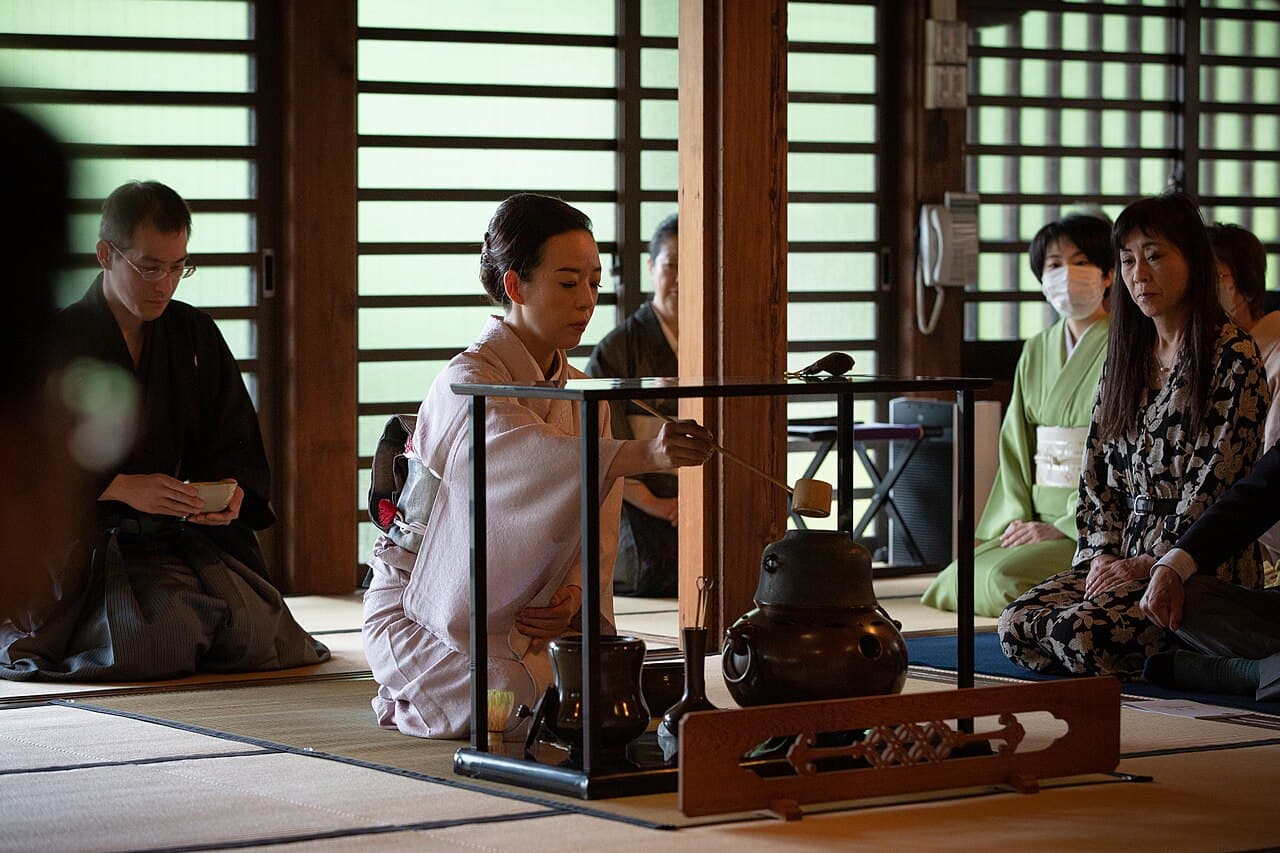
- The host performs a temae (tea-making demonstration). You watch matcha being prepared with the full sequence of practised movements. This is the heart of the ceremony; it's quieter than you expect, and shorter too.
- A seasonal sweet (wagashi). You eat it before the tea — its sweetness is designed to balance the matcha's pleasant bitterness.
- You drink, then you whisk your own. After receiving a bowl, most Tokyo venues have you prepare a second bowl yourself with the bamboo whisk (chasen). Getting a fine foam is harder than it looks and genuinely fun.
- Questions and photos. Tourist-facing tea rooms expect questions and allow photos at set moments — ask first rather than shooting throughout.
Nobody expects you to know any of the etiquette in advance; the host cues every step. If you'd like to walk in prepared anyway, our tea ceremony etiquette guide covers the details — how to turn the bowl, what to say, what to do with your hands.
Where to book — an honest comparison
| Tea room | Area | English | Price (as of July 2026) | Duration | Vibe |
|---|---|---|---|---|---|
| Chazen | Ginza — 1 min from Higashi-Ginza Stn | Yes (English sessions) | ¥3,500 shared / ¥5,000 private (2+) | 45 min | Formal tea room beside Kabukiza; the most "pure tea" option |
| Tokyo Chaan | Shibuya — 5 min from Shibuya Stn | Yes (full English guidance) | ¥3,900 shared / ¥7,800 private; children 5–11 ¥3,000 | 45–60 min | Small groups (max 8), relaxed, family-friendly |
| MAIKOYA | Asakusa & Shinjuku | Yes (English-speaking hosts) | Varies by plan (kimono included) | ~90 min with kimono | Kimono-first and photo-friendly, near Sensō-ji |
Chazen sits on the 5th floor of a building right next to the Kabukiza theatre in Ginza, a one-minute walk from Higashi-Ginza Station. Sessions run 45 minutes in Japanese or English, at ¥3,500 per person for a shared seat or ¥5,000 for a private session (two people or more). Reservation is through a form with advance payment, so book a few days out. If you want the ceremony itself, undiluted, this is the pick.
Tokyo Chaan is a small tea room on Dogenzaka, five minutes' walk from Shibuya Station. The shared plan (up to 8 guests) is ¥3,900 for adults and ¥3,000 for children aged 5–11; a private plan for just your group is ¥7,800 per adult. Guidance is fully in English, sessions last about 45–60 minutes, and cancellation is free up to 24 hours before — the most flexible option here, and the natural choice if you're staying around Shibuya or travelling with kids.
MAIKOYA runs cultural houses in Asakusa (6 minutes from Asakusa Station) and Shinjuku, with fluent English-speaking hosts. Its signature plan combines kimono dressing with the tea ceremony (about 90 minutes), and you can keep the kimono on afterwards to stroll the streets around Sensō-ji (confirm the return deadline when you book). Prices vary by plan and season, so check the current rate on the official page or its Viator listing. If the kimono is half the appeal, this is your venue — and pairs naturally with our guide to kimono rental in Asakusa.
Prices and schedules change; confirm on the operator's page before you pay.
Etiquette and what to wear
The short version: come clean, come curious, and let the host lead. Skip strong perfume (it competes with the aroma of the tea), wear socks without holes because shoes come off at the door, and take off rings or long necklaces that could knock against the tea bowl. Formal kneeling (seiza) is not forced on visitors — every tourist-facing tea room offers a comfortable alternative. Eat the sweet completely before drinking, turn the bowl a little before you sip, and you've covered ninety percent of it. The rest is in the etiquette guide.
Who it's good for — and who should skip it
Great for: first-time visitors who want one genuinely calm, cultural hour in a loud city; couples and families (Tokyo Chaan takes children from age 5); anyone whose itinerary skips Kyoto but who still wants the tea ceremony box ticked — properly, not at an airport pop-up.
Think twice if: you can't sit still for 45 minutes, or you're expecting a show. The ceremony is deliberately quiet and slow — that is the experience. If you want something more active in the same trip, a calligraphy class or a samurai experience scratches a different itch.
Plan the rest of your day
A tea ceremony takes an hour, which leaves the day open. In Asakusa, MAIKOYA's kimono plan flows straight into the Sensō-ji streets; in Ginza, Chazen sits beside the Kabukiza theatre if you fancy a kabuki single-act ticket afterwards. And if your dates line up with a festival or seasonal event, check Japan-Event for what's on while you're in town.
- Whisk and drink your own bowl of matcha with a seasonal sweet
- Real tea rooms in Ginza, Shibuya and Asakusa — no Kyoto trip needed
- Every step explained in English, questions welcome
- Optional kimono wearing at some venues (keep it on around Asakusa)
You don't need to know any rules in advance — the host guides every step. A few gestures matter: sit as comfortably as you can (formal seiza is not forced on visitors), turn the bowl slightly before drinking, and finish the sweet before the tea. Arrive 5–10 minutes early; silence isn't required, but phones on silent are.