
What Is Rakugo? Japan's One-Person Comic Storytelling
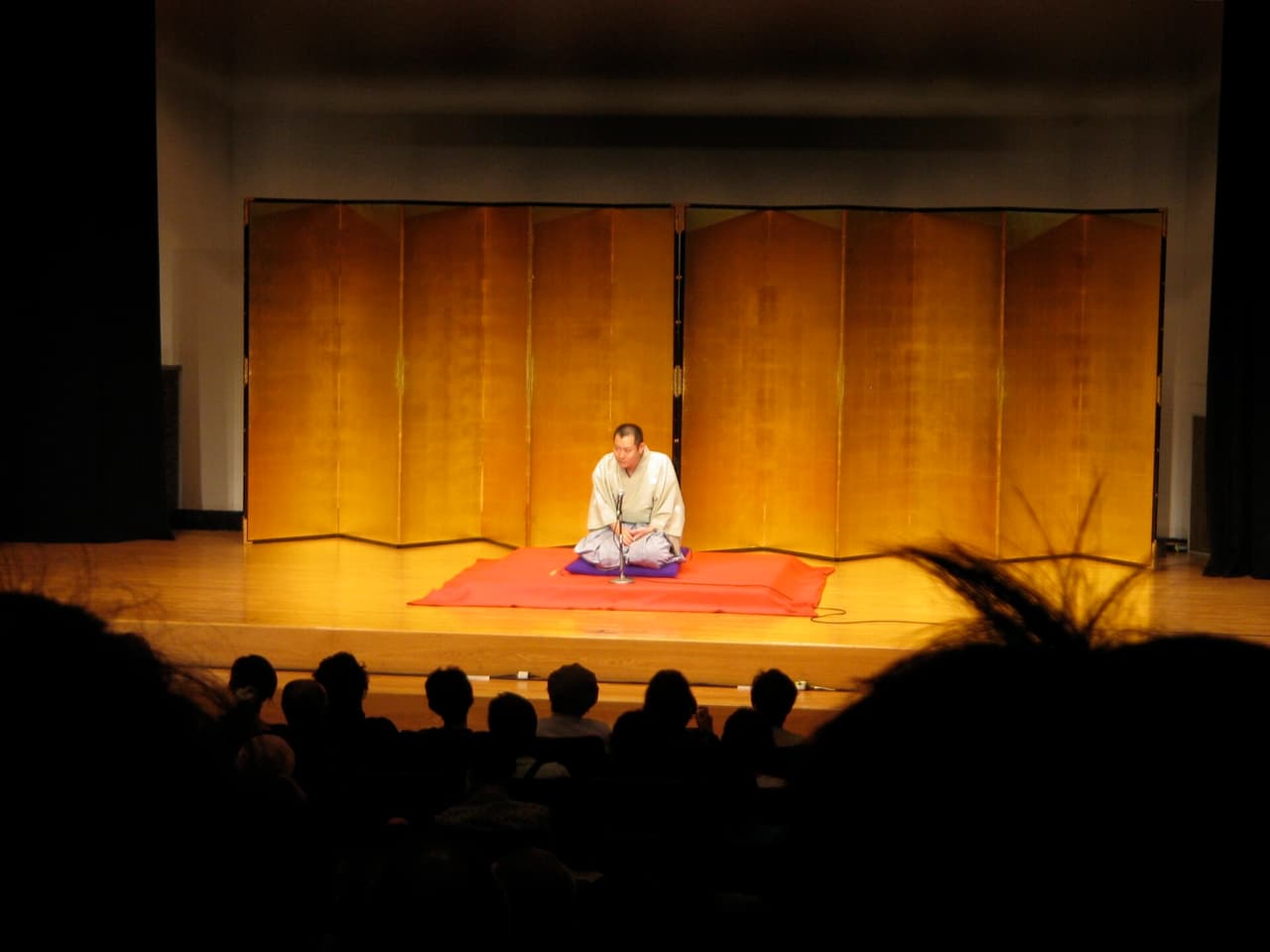
Rakugo is Japanese comic storytelling in which one performer, kneeling on a cushion and holding only a fan and a hand towel, plays every character in a story that ends with a punchline. The name means "fallen words" — after the ochi, the "drop" that closes each tale.
It is the least equipped and most demanding of Japan's stage arts. No set, no costume change, no fellow actor to lean on. A storyteller turns their head a few degrees to become someone else, and the audience follows.
The two props
A rakugo performer (rakugoka) sits on a zabuton cushion and never stands up. They carry exactly two objects:
- *The sensu*** — a folding paper fan. It becomes chopsticks, a pipe, a sword, a letter, an oar.
- *The tenugui*** — a cotton hand towel. It becomes a wallet, a book, a bowl of noodles.
That is the entire toolkit. Everything else is voice, timing and the direction the performer is facing.
Where it came from
Rakugo's roots are in Buddhist preaching. Early performers parodied sermon stories so that listeners could laugh at their own troubles rather than be lectured about them. The foundational text is the Seisuisho, compiled in 1628 by the monk Anrakuan Sakuden (1554–1642) — a collection of comic tales that storytellers mined for generations. Shikano Buzaemon (1649–1699) is among the first named professionals working in Edo.
Through the Edo period (1603–1867) the form settled into the urban variety theatres called yose, roughly the shape it still holds.
One thing surprises most people: the word "rakugo" is much younger than the art itself. It came into use only in the Meiji era and did not become the standard term until the twentieth century. For most of its life, this art was called something else.
Classical vs. newly written
- **Koten rakugo** — the traditional repertoire. In principle any storyteller may perform these, which is why you can hear the same tale from ten performers and never hear it twice.
- **Shinsaku rakugo** — new stories written by individual performers, who must grant permission before anyone else performs them.
Where to actually see it — and one thing to check first
*Tokyo has four traditional yose variety theatres*, in Ueno, Shinjuku, Asakusa and Ikebukuro, which run live rakugo almost every day.
🔴 Do not plan around the National Engei Hall. The Japan Arts Council's own variety-theatre venue "has been closed to undergo redevelopment, with its performances continually presented at alternative venues." Its productions are currently being staged at Sumida Triphony Hall (Small Hall), the Koto-City Fukagawa Edo Museum Small Theater and the Shibuya City Cultural Center Owada Tradition Hall. Several English-language guides still list the hall as though you can walk up to it. As of 2026-08-19, you cannot.
If you do not speak Japanese
Rakugo is language-dense — the ochi often turns on a pun — so a Japanese-language yose show is a hard first encounter. There is an English option: Katsura Sunshine's Rakugo at Mokubatei in Asakusa (2-7-5 Asakusa, Taito City, Tokyo 111-0032). The official site states plainly: "All shows in English." Dates are released in blocks rather than run daily, so check the official schedule before committing an evening.
Osaka has its own distinct Kamigata rakugo tradition, descended from Yonezawa Hikohachi's line; our Osaka cultural experiences guide covers what else to pair it with.
How it relates to Japan's other classical stages
Rakugo is the one you can enjoy without ceremony — no masks, no orchestra, no three-hour programme.
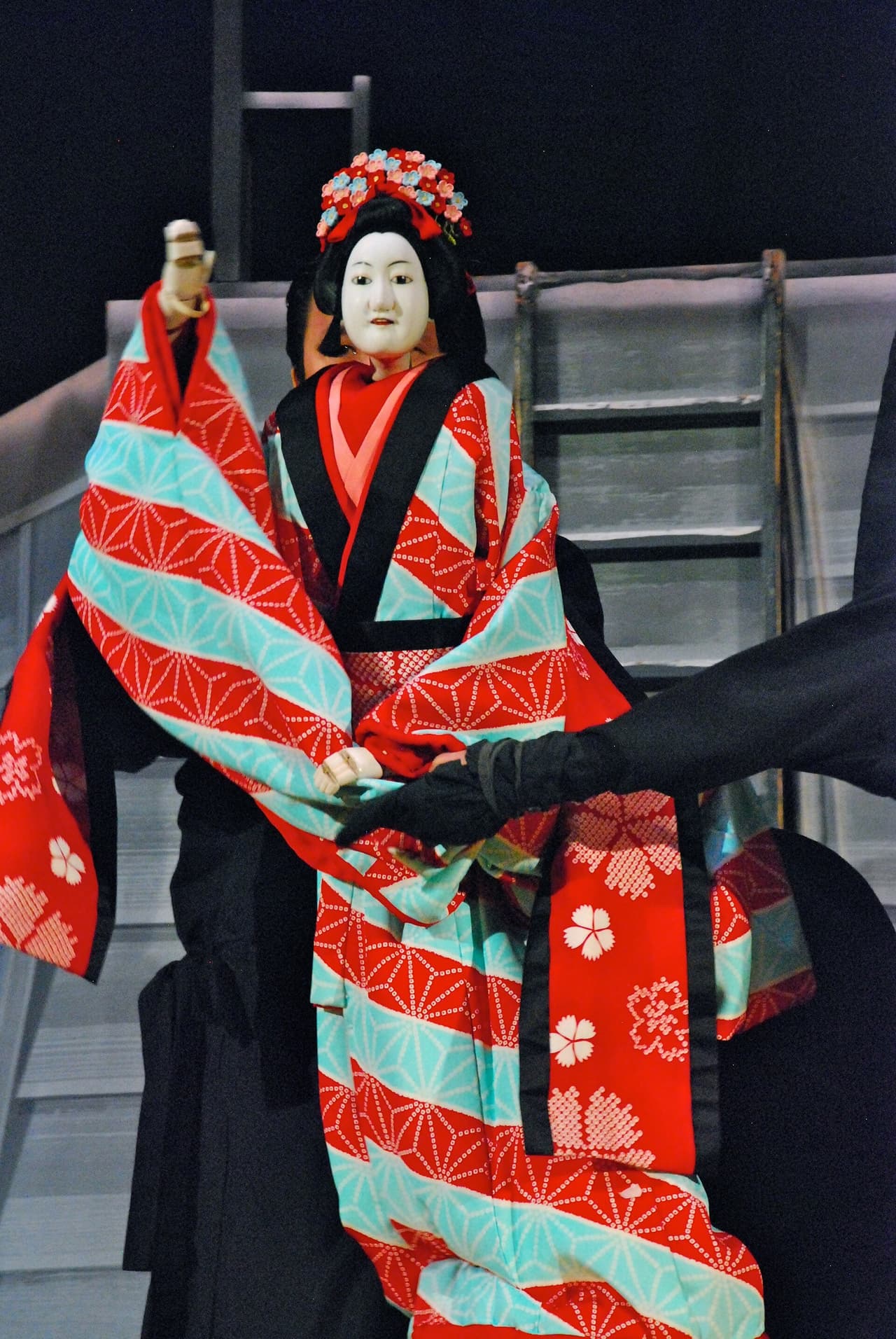
- Bunraku, the puppet theatre, shares rakugo's Osaka merchant roots and its love of ordinary people's troubles.
- Noh is its opposite in every way: masked, slow, sacred.
- The noh vs kabuki comparison is the fastest way to place all of these against each other.
常见问题
- What is rakugo?
- Rakugo is Japanese comic storytelling in which a single performer kneels on a cushion and plays every character in a story, using only a folding fan and a hand towel, ending with a punchline called the ochi.
- What props does a rakugo performer use?
- Exactly two: a sensu (folding paper fan) and a tenugui (cotton hand towel), which stand in for chopsticks, pipes, swords, letters, wallets and books.
- What does the word rakugo mean?
- It means 'fallen words', from the ochi — the 'drop' or punchline that ends each story. An alternative reading of ochi is raku, which gives the art its name.
- Where can I see rakugo in Tokyo?
- Tokyo has four traditional yose variety theatres — in Ueno, Shinjuku, Asakusa and Ikebukuro — running live rakugo almost daily. Note that the National Engei Hall is closed for redevelopment and its productions have moved to alternative venues.
- Is there rakugo in English?
- Yes. Katsura Sunshine's Rakugo performs at Mokubatei in Asakusa (2-7-5 Asakusa, Taito City), and the official site states that all shows are in English. Dates are scheduled in blocks, so check the official calendar.
- What is the difference between koten and shinsaku rakugo?
- Koten rakugo is the traditional repertoire that in principle any storyteller may perform, while shinsaku rakugo consists of new stories written by individual performers, who must give permission before others perform them.
相关
Osaka
What Is Bunraku? Japan's Puppet Theatre, Explained
Bunraku is Japan's classical puppet theatre — a chanter, a shamisen and three visible puppeteers on one puppet. What it is, where it came from, and where to see it.