
What is kyudo? Japanese archery explained — 28 metres, an asymmetric bow, and eight stages
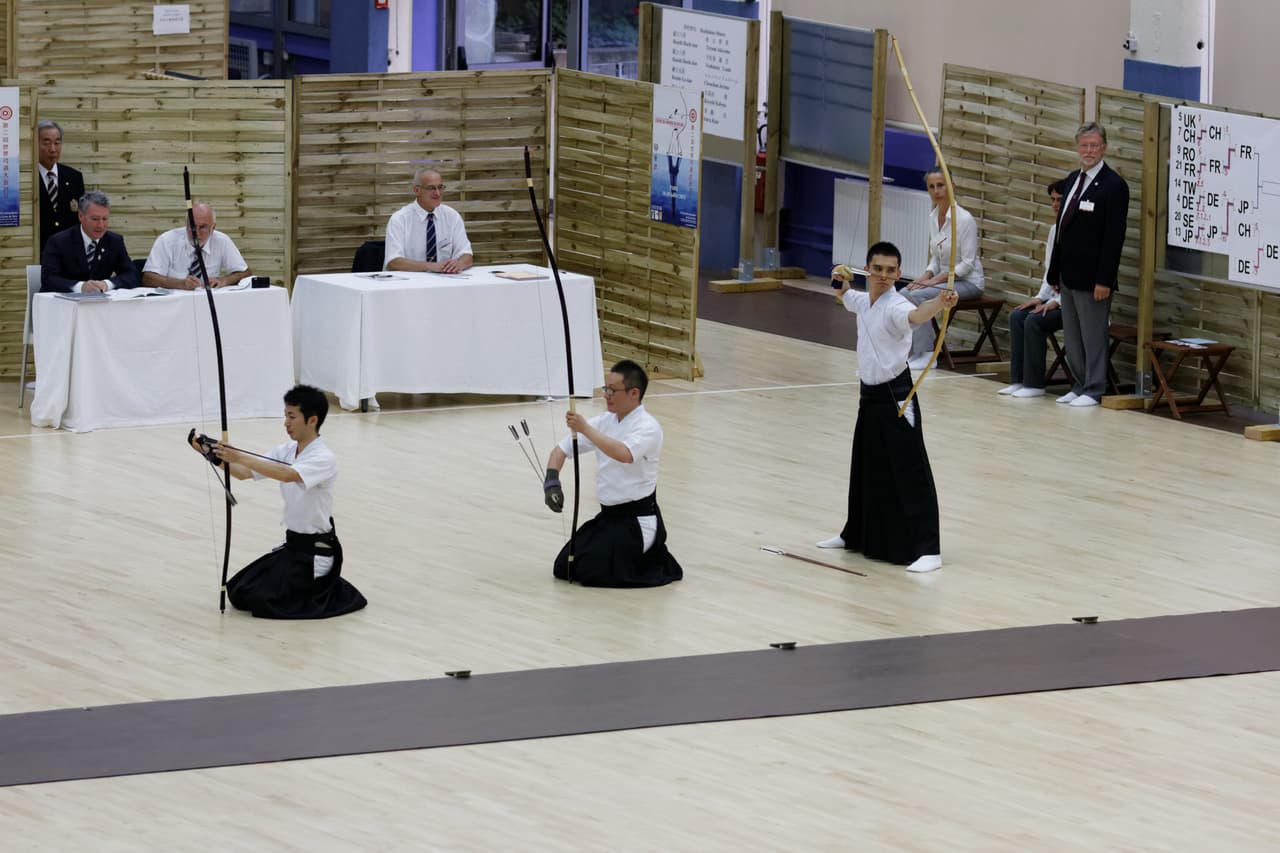
Kyudo is the Japanese martial art of the bow, shot standing at a target 28 metres away with a bow taller than the archer. The All Nippon Kyudo Federation defines the standard bow as 2.21 metres long and the standard target distance — kinteki — as exactly 28 metres. Everything else people find strange about kyudo follows from those two numbers.
It is not Japanese archery in the sense of "archery, but in Japan". The scoring, the equipment, the timing and the point of the whole exercise are different from Olympic archery, and the difference is not decorative.
Kyudo vs archery: the five real differences
1. The bow is asymmetric. A Western bow is gripped at its midpoint. A Japanese yumi is not — the grip sits well below centre, so the upper limb is roughly twice the length of the lower one. No other major bow in the world is built this way.
2. There is no sight, no stabiliser, no release aid. You aim with the whole body's alignment, not with a pin. The right hand wears a yugake, a deerskin glove, and the string is released from the thumb.
3. The arrow passes on the right. On a Western bow the arrow rests on the left side of the grip; on a yumi it sits on the right, and the bow rotates in the hand at the moment of release.
4. Six of the eight stages happen before the arrow leaves. The federation's canonical form, the shahō hassetsu, is: ashibumi (open the feet and build correct posture), dōzukuri (place the bow on the left knee, right hand at the right hip), yugamae (hook the right hand to the string, settle the left-hand grip, then look at the target), uchiokoshi (raise both fists quietly to the same height), hikiwake (draw evenly to left and right), kai (body and mind become one and you wait for the release to ripen), hanare (open the chest wide and let the arrow go), zanshin (hold the posture you released from). Only hanare and zanshin come after the shot.
5. Hitting is not the whole score. In competition the hit is what counts, but the tradition holds that a correct shot produces a hit as a by-product — which is why an instructor watching a beginner will correct the feet, not the aim.
The numbers, from the federation
| Standard bow length | 2.21 m (a nobiyumi is defined as any bow longer than this standard) |
| Kinteki — standard distance | 28 m |
| Kasumi-mato — the standard target face | White centre with three concentric rings |
| Hitote | Two arrows — the haya and the otoya, shot as a pair |
| Yugake | The deerskin glove worn on the right hand |
| Shai | The marked position the archer stands on to shoot |
| Makiwara | A tightly bound straw bundle used for practice at close range |
Why beginners in Japan shoot at straw for weeks
In a Japanese school or city club, a new member does not start at 28 metres. They start at the makiwara — a bundle of straw bound hard enough to stop an arrow, set at roughly arm's length. You cannot miss it, which is the point: with the target removed as a variable, there is nothing left to work on but the form.
Weeks of this is normal before a beginner is allowed onto the range at all.
Tourist experiences compress that into an hour, and there is nothing wrong with it — but it explains why a session that costs ¥2,500 and a session that costs ¥16,000 (both as of 21 August 2026) can both be honest. One sells you the sensation of the draw; the other sells you a compressed piece of the actual apprenticeship.
Where you can see kyudo done properly
The clearest public window into real kyudo is the Tōshiya at Sanjūsangen-dō in Kyoto — formally the Ōmato Zenkoku Taikai, the National Grand Target Tournament. Every January it fills the temple grounds with newly-adult archers shooting at a large target roughly 60 metres away, twice the standard distance.
- Next edition: Sunday 17 January 2027
- Sanjūsangen-dō, Higashiyama-ku, Kyoto — temple admission is free on the day
- To enter you must be a 20-year-old holding a dan grade or a formal title, applying through the Kyoto Prefectural Kyudo Federation
- Around 2,000 archers took part in the 2026 edition
Schedules are republished each year and can change, so confirm before planning a day around it.
Is kyudo a religion?
No — but the vocabulary borrows from Zen and the overlap is real rather than marketing. Kai, the stage where you hold at full draw, is officially described by the federation as the moment when "body and mind become one and you wait for the timing of the release to ripen". That is not a technical instruction about anchor points. It is a description of attention, and it is why kyudo and zazen tend to attract the same people.
The art itself is a martial one. The bow was a battlefield weapon long before it was a discipline, and kyūjutsu — the combat technique — is the older word. What changed was not the equipment but what the practice is for.
How to try it
- In Kyoto — from ¥2,500 (as of 21 August 2026) for a 20-arrow indoor session in Gion, up to a working dojo with a kyoshi 6th-grade teacher. See kyudo experiences in Kyoto.
- In Tokyo — from ¥16,000 (as of 21 August 2026) for a full 28-metre range session with English guiding, or a private half-bow dojo in Bunkyō from ¥29,900 per group. See kyudo experiences in Tokyo.
If you want the armoured, striking counterpart to the bow, that is kendo; if you want the sword-handling one, it is the samurai experience. Kyudo is the quiet one of the three.
常见问题
- What is the difference between kyudo and archery?
- Five things. The Japanese yumi is asymmetric — the grip sits well below centre, so the upper limb is about twice the lower. There is no sight, stabiliser or release aid; the string is released from the thumb inside a deerskin glove called a yugake. The arrow passes on the right of the grip rather than the left. The standard distance is exactly 28 metres. And six of the eight canonical stages of the shot happen before the arrow leaves.
- How far is the target in kyudo?
- The All Nippon Kyudo Federation defines kinteki, the standard form, as placing the target 28 metres away. The standard face, the kasumi-mato, has a white centre with three concentric rings. The Tōshiya tournament at Sanjūsangen-dō in Kyoto uses a much larger target at roughly 60 metres.
- How long is a Japanese bow?
- The federation's own terminology defines a nobiyumi as any bow longer than the standard 2.21 metres — so 2.21 m is the reference length. That is taller than almost every archer using it, which is why the grip sits below the centre rather than at it.
- What are the eight stages of kyudo?
- The shahō hassetsu: ashibumi (open the feet and build correct posture), dōzukuri (place the bow on the left knee, right hand at the right hip), yugamae (hook the right hand to the string, settle the left-hand grip, then look at the target), uchiokoshi (raise both fists quietly to the same height), hikiwake (draw evenly to both sides), kai (body and mind become one while the release ripens), hanare (open the chest wide and release), and zanshin (hold the posture after the arrow has gone).
- Is kyudo a form of Zen?
- No, kyudo is a martial art, but the overlap is real rather than marketing. The federation officially describes kai, the held full draw, as the moment when body and mind become one and you wait for the timing of the release to ripen — a description of attention, not of anchor points. The bow was a battlefield weapon first; kyūjutsu, the combat technique, is the older word.
- Can a beginner try kyudo in Japan?
- Yes. Sessions in Kyoto start from ¥2,500 for twenty arrows indoors in Gion, and Tokyo has full 28-metre range sessions from ¥16,000 per person with English guiding and equipment included, both checked 21 August 2026. In a Japanese club a beginner would first spend weeks shooting into a straw makiwara at arm's length before being allowed near a target.
Try it yourself

Martial artsKyoto
Kyudo experience in Kyoto — Japanese archery from ¥2,500, and the free one in January
Kyoto has a ¥2,500 twenty-arrow session in Gion and an hour in a working dojo with a kyoshi 6th-grade teacher for about US$64 — both equipment-included, both beginner-friendly. And every January the Tōshiya at Sanjūsangen-dō lets you watch 2,000 archers shoot at 60 metres for free. Prices and dates checked 21 August 2026.
Martial artsTokyo
Kyudo experience in Tokyo — the 28-metre range from ¥16,000, and the half-bow one that isn't kyudo
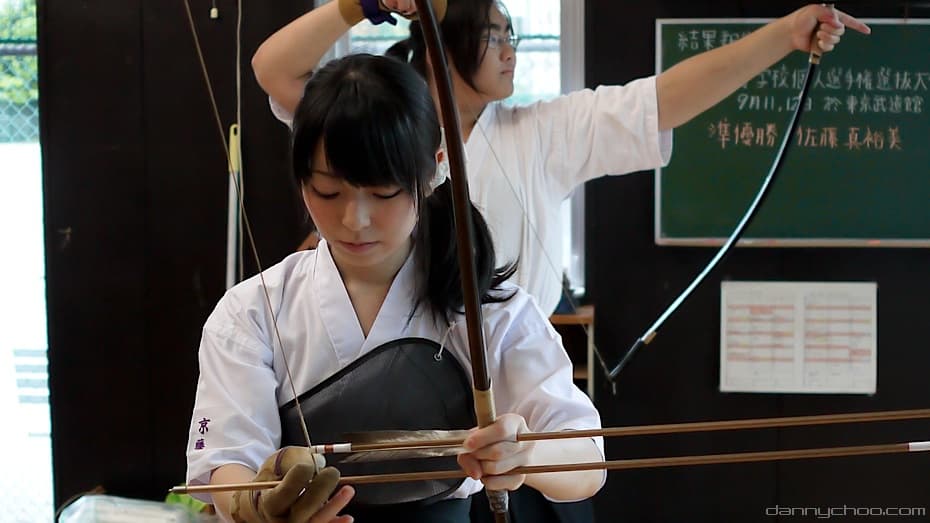
Tokyo has two ways to draw a Japanese bow and they are not the same sport. Full kyudo on a 28-metre competition range runs from ¥16,000 per person for about 2.5 hours with English guiding and all equipment; a private half-bow (hankyu) dojo in Bunkyō runs from ¥29,900 for a group of up to ten, 45 minutes, from age 4. Prices checked 21 August 2026.
Martial artsTokyo
Kendo experience in Tokyo — try the samurai art in armour, in English (price and how to book)
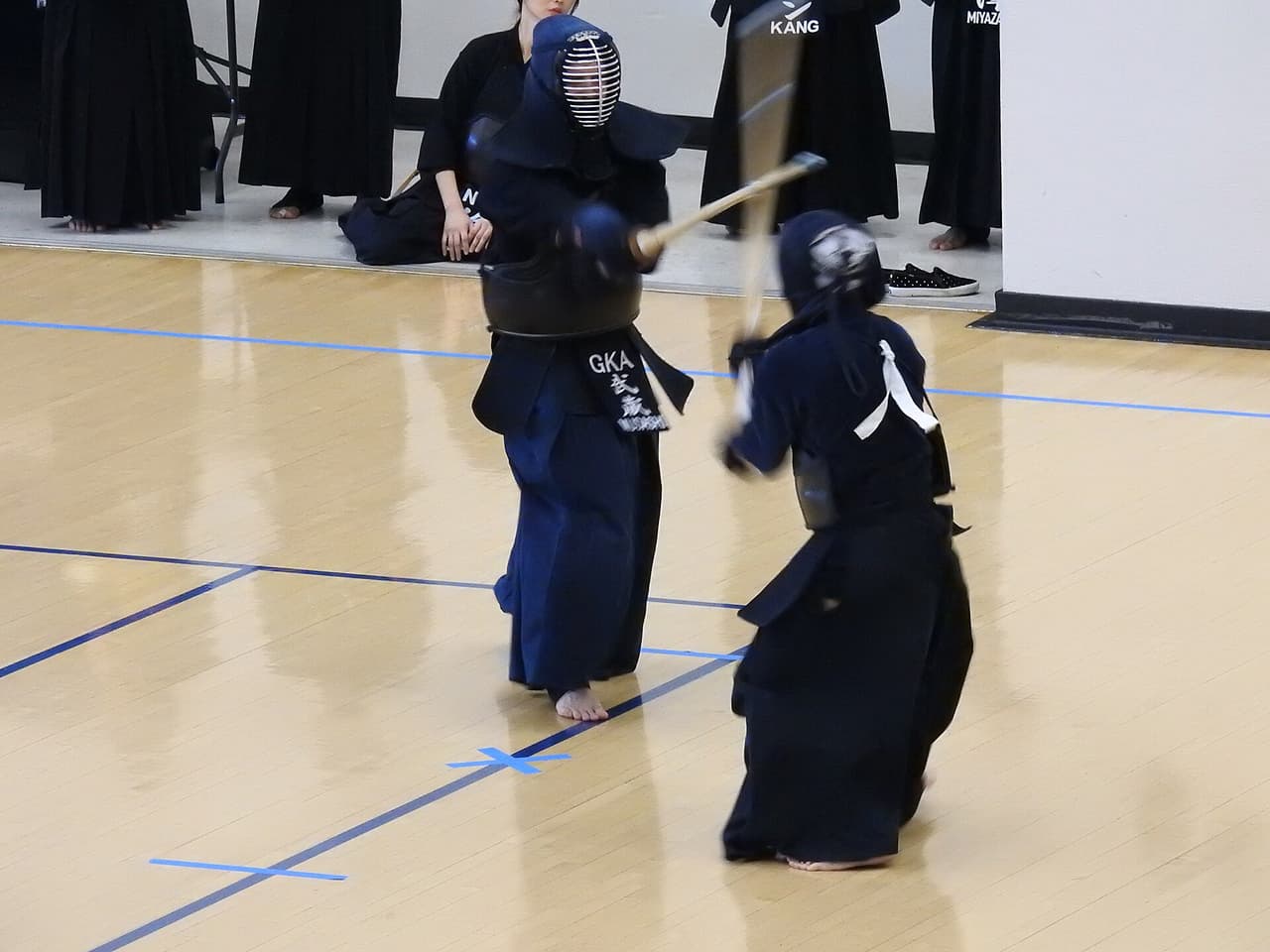
Most "samurai experiences" in Tokyo hand you a costume and a photo. Kendo is the opposite: it is the living martial art that the sword schools became, it is practised by roughly two million people worldwide, and a two-hour beginner session puts you in real armour taking real strikes. Here is what it costs, where it is, and how it differs from the sword-cutting experiences.
相关
What Is Zen? The Buddhist School Behind Japan's Tea Ceremony and Zen Gardens
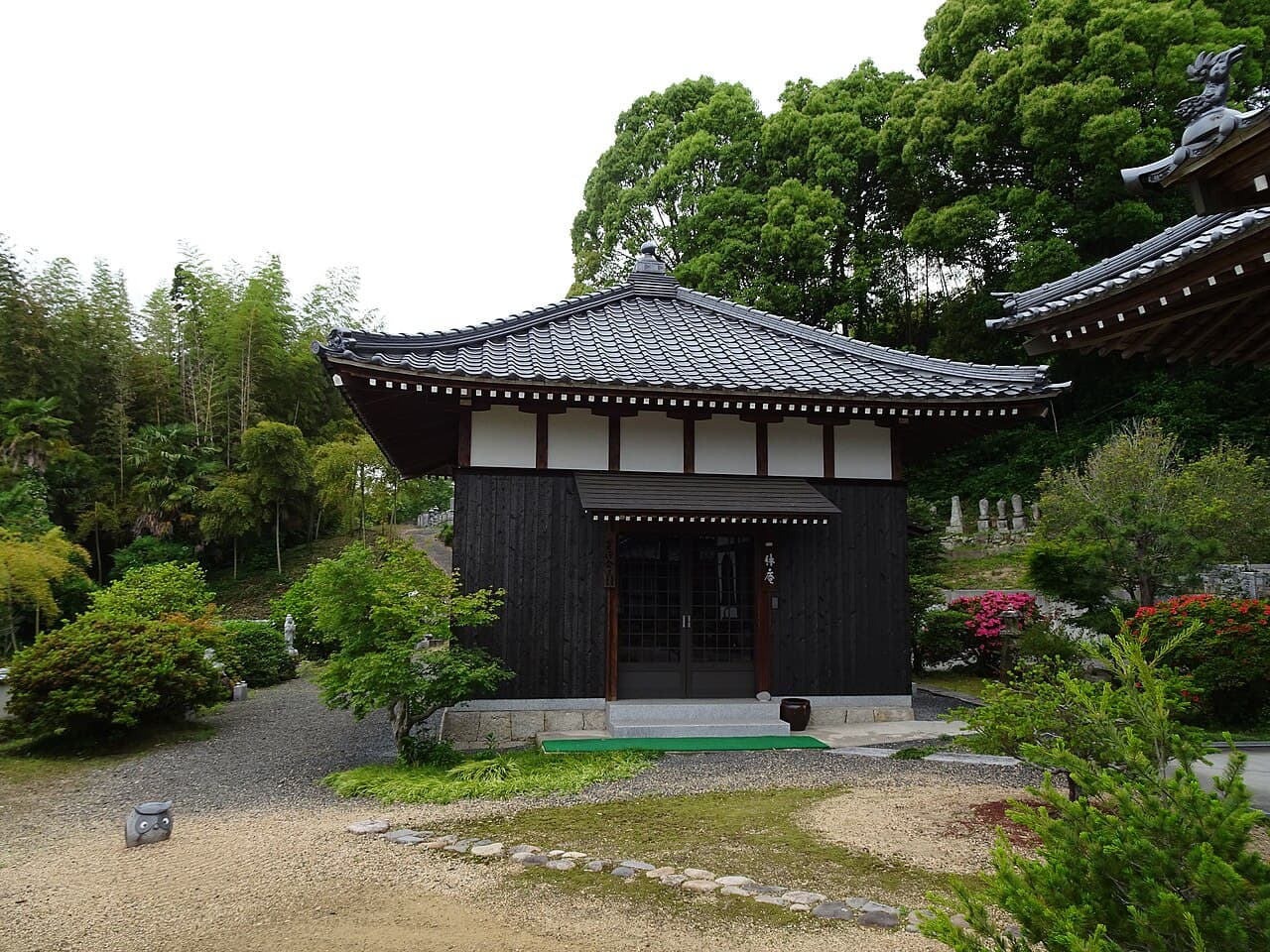
Zen is a Mahayana Buddhist school born as Chan in China, rooted in Japan as Rinzai and Sōtō — it still shapes zazen, tea ceremony, and Zen gardens today.
Across Japan
日本最佳文化体验(以及如何预订)
日本最好的传统文化体验是**茶道、坐禅冥想、和服穿着、武士与忍者训练、书道、陶艺、太鼓演奏、寿司制作,以及艺伎与清酒文化**——几乎全部以英语友好、1~2小时、无需经验的随到随学工作坊形式提供。京都偏精致传统,东京偏亲手体验。截至2026年。