
The short answer
A two-hour beginner kendo session in Tokyo costs about US$116.48 per person (Viator listing, checked 2026-08-09), includes full armour rental and an English-speaking instructor, and runs at a dojo about 10–12 minutes' walk from JR Uguisudani Station. Free cancellation up to 24 hours before.
If you have looked at Tokyo's "samurai experiences" and felt they were mostly costume, this is the corrective.
Kendo is not a samurai costume experience
This distinction is worth getting right before you book, because michi covers both and they attract the same searches.
- A samurai experience teaches sword forms, often in hakama or armour, and at some studios lets you cut a rolled tatami mat with a live blade (tameshigiri). The subject is the weapon and its handling. It is visually spectacular and photographs beautifully.
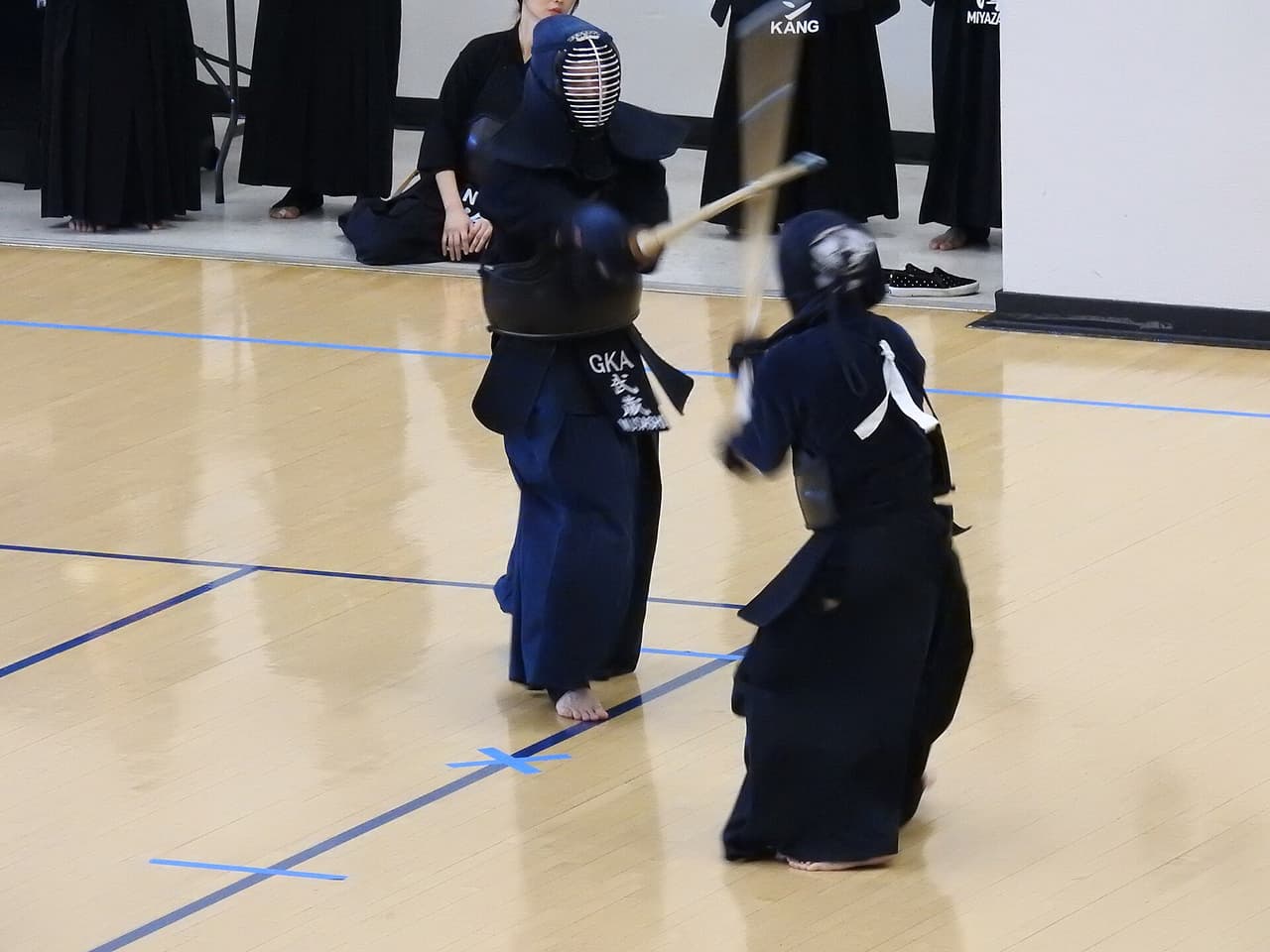
- Kendo (剣道, "the way of the sword") is what the old sword schools turned into: a modern competitive martial art with protective armour, a bamboo shinai, defined scoring targets and around two million practitioners worldwide. The subject is the practice, and you spend the session being hit and hitting back.
Neither is more "authentic" than the other — they answer different questions. Kendo answers what does this actually feel like.
What the two hours contain
The operator, SAMURAI TRIP, runs a six-part programme:
- Putting on the bōgu — men (helmet with face grille), kote (gauntlets), dō (chest plate), tare (waist guard). This is harder than it looks and takes longer than you expect; the men himo alone defeats most first-timers.
- The history — where kendo sits between the sword schools and the modern sport.
- Striking practice — the basic cuts, without armour.
- Striking practice in armour — the same cuts, now against a partner who is wearing protection.
- An instructor demonstration — what it looks like when someone can actually do it.
- A combat game — a tournament-style bout so the session ends in use, not drill.
Included: the instructor, armour and equipment rental, bottled water, and a Japanese hand towel to keep.
Where and how to book
Venue: the Seidōkan building, 4 Chome-7 Higashi-Nippori, Arakawa City, Tokyo 116-0014 — about 10–12 minutes on foot from the north exit of JR Uguisudani Station. The operator notes the venue can vary with the schedule, so confirm at booking.
Channels: the same session is sold on Viator, Klook and GetYourGuide, and directly by SAMURAI TRIP. Prices are set per channel and do not always match — check all of them, and read our guide to booking cultural experiences in Japan if you want to understand which platform to trust for what. SAMURAI TRIP also runs the format in Kyoto, Osaka, Kanazawa, Sapporo, Fukuoka and Okinawa, so it is worth checking whether your itinerary gives you a better date elsewhere.
Dojo etiquette in ninety seconds
A dojo is a room with rules, and the rules are the reason two strangers can hit each other with sticks and call it practice.
- Bow on stepping onto and off the floor, and to your opponent before and after a bout.
- Never step over a shinai lying on the ground. Pick it up or walk around it.
- Do not lean on your shinai. It represents a sword.
- Bare feet, no jewellery. A ring inside a kote hurts you; a watch can gouge someone else's armour.
- Say "onegaishimasu" before you begin and "arigatō gozaimashita" after. Nobody expects more Japanese than that.
Before you go
The ideas behind all of this — the code the sword schools built around themselves — are covered in what is bushidō, which is the single most-read explainer on this site and worth twenty minutes before your session. For a gentler counterweight the same week, zazen in Tokyo is the other half of the warrior curriculum, and it costs ¥400. The rest of the capital's options are in cultural experiences in Tokyo.
---
Prices, schedules and booking links on this page were verified as of 2026-08-09. Operators change them without notice — confirm on the booking page before you travel, and tell us if you find something out of date.
- You wear real bōgu — men (helmet and face grille), kote (gauntlets), dō (chest plate) and tare (waist guard) — not a costume version
- The programme includes putting on the armour properly, which is genuinely difficult the first time and is half the education
- Instruction is in English; the operator, SAMURAI TRIP, has run this format for international visitors across seven Japanese cities
- It ends with a tournament-style bout, so you actually use what you learned rather than only drilling
- Free cancellation up to 24 hours before the start time on the Viator listing
A dojo is not a gym. You bow on entering and leaving the floor, and you bow to your opponent before and after a bout — this is not decoration, it is the frame that makes hitting each other with sticks a practice rather than a fight. Never step over a shinai lying on the floor; pick it up or walk around. Do not lean on your shinai like a walking stick. Bare feet, and no jewellery: a ring inside a kote hurts you, and a watch can damage someone else's armour.
常见问题
- How much does a kendo experience in Tokyo cost?
- About US$116.48 per person on Viator as of 2026-08-09, for a two-hour session including armour rental, an English-speaking instructor, bottled water and a Japanese hand towel. The same operator lists on Klook and GetYourGuide and takes direct bookings, and prices differ by channel — compare before you book.
- Do you need kendo experience to join?
- No. The session is built for complete beginners: it starts with how to put the armour on and works up through basic strikes before any bout. Instructors correct posture and grip one-on-one.
- Where is the Tokyo kendo experience held?
- At the Seidōkan building, 4 Chome-7 Higashi-Nippori, Arakawa City, Tokyo 116-0014 — about a 10–12 minute walk from the north exit of JR Uguisudani Station. The operator notes that the venue can vary with the schedule, so confirm when you book.
- How is kendo different from a samurai sword experience?
- A samurai or tameshigiri experience teaches sword forms and often lets you cut a tatami mat with a live blade — it is about the weapon. Kendo is the modern competitive martial art descended from those schools: you wear protective armour, strike a training partner with a bamboo shinai, and score points at defined targets. One is closer to a demonstration, the other to a sport with a two-million-strong worldwide following.
- Is kendo physically demanding?
- Moderately. Full bōgu is hot and adds weight, and two hours of striking practice will leave you sweating, but the session is paced for beginners with breaks. If you have a shoulder, wrist or knee problem, mention it at booking.