
Snow Onsen Near Tokyo: Which Areas Actually Get Snow, and Which Baths Let You In for the Day
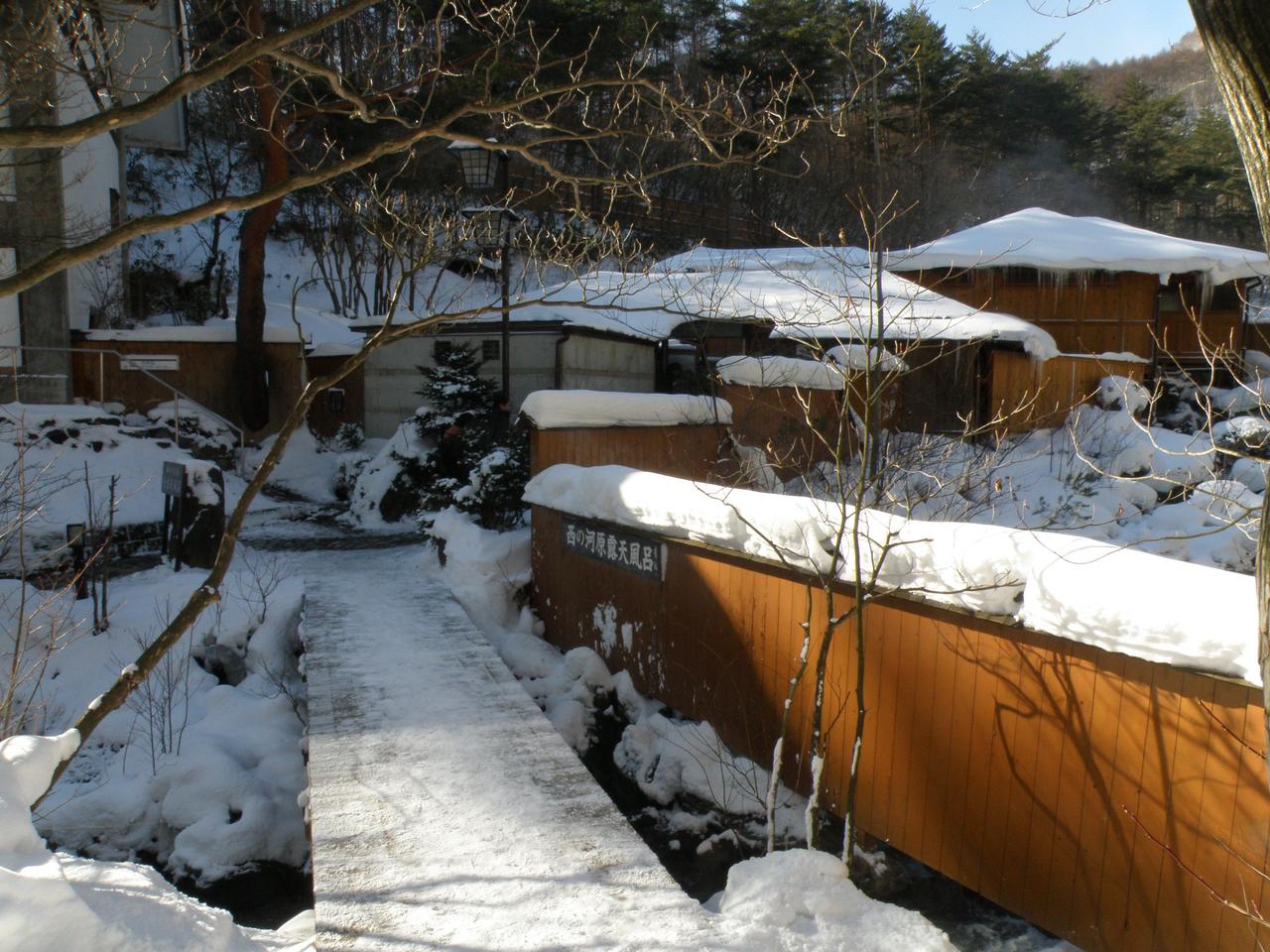
The snowiest place near Tokyo and the best snow bath near Tokyo are not the same place. Echigo-Yuzawa averages 377 cm of snowfall in January against Tokyo's 4 cm, but the only town-run bath there with an outdoor pool sits in Mitsumata, well outside the station town. Kusatsu gets under half Yuzawa's snow and is the easiest of the three to walk into — ¥800, open-air only, last entry 19:30 all winter.
Snow-bath lists keep recommending the same places without answering the two questions that decide the trip: does this area actually get snow, and can I bathe there without booking a room? Below, those are answered separately, because the answers point at different towns. Snow figures are Japan Meteorological Agency climate normals for 1991–2020 — thirty-year averages, not a forecast for this winter. Bath details come from each operator's own site (as of 2026-11-25; sources at the end).
Which areas actually get snow
| Area (JMA station) | January snowfall | Deepest January snow | January mean | vs Tokyo |
|---|---|---|---|---|
| Echigo-Yuzawa, Niigata (湯沢) | 377 cm | 173 cm | −0.4 °C | 94× |
| Minakami, Gunma (みなかみ) | 296 cm | 119 cm | −1.2 °C | 74× |
| Kusatsu, Gunma (草津) | 175 cm | 73 cm | −4.1 °C | 44× |
| Oku-Nikko, Tochigi (奥日光) | 63 cm | 31 cm | −3.9 °C | 16× |
| Hakone, Kanagawa (箱根) | no normal published | no normal published | no normal published | — |
| Tokyo (東京) | 4 cm | 3 cm | 5.4 °C | 1× |
Cold is not the same as snowy. Oku-Nikko is colder than Minakami in January — a mean of −3.9 °C against −1.2 °C — yet gets about a fifth of its snowfall, 63 cm against 296 cm. Yuzawa and Minakami sit on the Sea-of-Japan side of the mountains, where the winter monsoon arrives loaded; Oku-Nikko sits behind the divide, where the same air arrives dry. Choose by temperature and you can be very cold without ever seeing deep snow.
Hakone has no snow record to plan around. The Hakone AMeDAS station publishes a January precipitation normal of 127.7 mm and nothing else — temperature, snowfall and snow depth all read /// with a record length of zero years, because those elements are not observed there. That is not a claim that it never snows in Hakone; it means there is no published figure to plan a snow view around. Hakone is still an easy day-trip soak on its own merits, and our Hakone comparison has the walk-in prices and tattoo rules.
Three caveats on the table. Yuzawa, Kusatsu and Minakami are AMeDAS stations whose normals tables carry no "days with snow" column at all, so that figure does not exist for them. Oku-Nikko is a staffed station and does publish one — 24.7 days in January — but over 1997–2020, a different period from its other columns, so it is not comparable with the rest. And the "vs Tokyo" column is approximate: Tokyo's 4 cm is a rounded published figure, so a whole-number ratio implies more precision than the source carries.
Which of them will actually let you in for the day
| Bath | Open-air? | Hours (last entry) | Adult fare | The catch |
|---|---|---|---|---|
| Sainokawara Rotenburo, Kusatsu | Open-air only | 1 Dec – 31 Mar, 9:00–20:00 (19:30) | ¥800 | No washing area, no hairdryer, no re-entry |
| Takaragawa Onsen (Hōsenkaku), Minakami | Four large open-air baths | 10:00–16:30 (16:00) | ¥1,500 (junior-high and up) | No pick-up for day visitors; bathing wear is supplied and your own is not allowed |
| Kaidō-no-Yu, Mitsumata (Yuzawa town) | Indoor + open-air | 10:00–21:00 (20:30) | ¥850 | Closed Tuesdays; it is in Mitsumata, not central Yuzawa |
Read the three "catch" lines together and the day falls into shape.
Takaragawa has the most dramatic baths and the tightest clock. Its day-use reception closes at 16:00, and the operator advises arriving by about 15:00 for the four-hour admission. It also states plainly that day visitors are not collected — the free pick-up, which needs a reservation, is for overnight guests. That matters more than it first sounds, because the two halves of the operator's own guidance pull against each other: its access page sends local-bus users to a stop called Takaragawa-iriguchi and then tells them to take the inn's vehicle from there, which is the very service the day-use page says day visitors do not get. And there is no published alternative. The access page once advertised two direct runs a day from Minakami Station to the onsen at ¥1,250, but that whole block — the runs, their times and the fare — now sits inside an HTML comment in the page source and is shown to no one; the only timetable the live page links is JR East's. So the one route the operator actually publishes to a day visitor is the ordinary bus: about 30 minutes and ¥1,150 from Minakami Station to the Takaragawa-iriguchi stop, from where the page tells you to take the inn's vehicle. Ring the day-use line (0278-75-2614) and settle that last stretch before you build a day around it.
Kusatsu is the forgiving one. A 19:30 last entry through the whole winter season means a late start still works, and at ¥800 it is the cheapest of the three. The trade-off is that Sainokawara is a bathing pool and nothing else: the operator lists no washing area, no hairdryer, no rest space and no re-entry, so plan to wash elsewhere. Unusually, it is also the only one of the three whose operator publishes a tattoo policy, though the wording is non-refusal rather than welcome: the three Kusatsu public baths state they do not specifically turn away bathers with tattoos, and they add that they want everyone, overseas visitors included, to enjoy Kusatsu while observing bathing manners. Read it as "not turned away", not as a formal exemption.
Yuzawa is the snow, not the bath. The town's public baths are run as a set, and the operator identifies Kaidō-no-Yu as the only one of them with an open-air bath. It sits in Mitsumata rather than in the station town, and the official pages give driving times only — no bus operator or journey time from Echigo-Yuzawa Station is published, so confirm that leg before you commit to it.
Before you go
- Winter maintenance closures are already announced, and two of them collide. Sainokawara is shut all day 7–9 December; Ōtaki-no-Yu, another of the three baths under the same operator, closes 14–18 December, and Gozanoyu 10–11 December. Sainokawara also ends early at 17:00 (last entry 16:30) on the second Wednesday of each month, which the operator lists for this season as 11 November, 9 December, 13 January, 10 February and 10 March — but 9 December sits inside that three-day closure, and the closure notice is the newer of the two. For this winter, read the early closes as 13 January, 10 February and 10 March, and 9 December as shut outright. Takaragawa lists its baths as open year-round yet posts temporary closures of individual baths on the day-use page itself, with Kobodane-no-Yu out from 24 to 30 November for tree felling, so check which of the four are running. The Yuzawa town baths post closures too: Iwa-no-Yu is shut 25–27 November, and Shukuba-no-Yu loses three or four December days on a date the operator has not yet fixed.
- Tattoos: only the Kusatsu operator publishes a policy. Yuzawa's town baths, Takaragawa and Manza do not state one, so do not assume either way — our onsen tattoo guide explains how to ask.
- Manza Onsen is often recommended for winter, but its own page is too stale to plan from. It does offer day visitors an open-air bath — Gokuraku-no-Yu alongside the indoor Chōju-no-Yu, with only Manten-no-Yu and the private baths held back for overnight guests — at 10:00–17:00, last reception 16:00, ¥1,000. But directly under those hours sits a line saying that day-use bathing on 11 October 2026 has ended, phrasing that attaches to that single date rather than to the season, and in late November the page was still advertising a Silver Week timetable and a 23 September event in the future tense. Nothing on it establishes whether day-use is running this winter, so phone the inn (0279-97-3131) rather than trusting any list, this one included.
- Oku-Nikko appears in the snow table but not the bath table, and the reason is worth knowing. The ryokan association's day-use index names inns without hours or prices, but each inn's own page does publish them — Shiun-sō, for one, lists ¥875–2,500 depending on how many of you there are, closed Mondays and Thursdays, with unscheduled closures possible. Several of the windows are narrow midday slots and others are afternoon or evening only, and several pages say to telephone first. One listing is actively misleading: Yumori Kamaya still sits in the day-use index under its plain name, and its own page still carries a full day-use table — 15:00–18:00, ¥1,000, open-air bath — while that page's title records that it closed on 25 November 2024. Check any Oku-Nikko bath against that inn's own page before you travel.
- At the Yuzawa town baths the ¥850 adult fare already includes the ¥150 bathing tax; the Kusatsu and Takaragawa pages say nothing about bathing tax.
- First time in a public bath? Start with onsen etiquette. If you would rather not share a bath at all, private onsen in Tokyo for day use stays in the city. For the snow-monkey baths people often confuse with these, see Jigokudani in winter on our sister site.
Questions people ask
Which onsen area near Tokyo gets the most snow?
Echigo-Yuzawa in Niigata. Its January snowfall normal is 377 cm against Tokyo's 4 cm, with a deepest January snow cover of 173 cm. Minakami in Gunma follows at 296 cm and Kusatsu at 175 cm (Japan Meteorological Agency climate normals, 1991–2020; as of 2026-11-25). These are thirty-year averages, not a forecast for this winter.
Can I use a snow-view open-air onsen near Tokyo without staying overnight?
Yes, at all three of these. Sainokawara Rotenburo in Kusatsu is open-air only, ¥800 for adults, and runs 9:00–20:00 from 1 December to 31 March with last entry at 19:30. Takaragawa Onsen in Minakami admits day visitors 10:00–16:30 with last reception at 16:00 for ¥1,500. Kaidō-no-Yu in Mitsumata is ¥850 and opens 10:00–21:00, closed Tuesdays (operators' official pages, as of 2026-11-25).
Does Hakone get enough snow for a snow-view bath?
There is no published figure to answer that. The Hakone AMeDAS station reports a January precipitation normal of 127.7 mm, but its temperature, snowfall and snow-depth columns show no data with a record length of zero years, because those elements are not observed there. That is not evidence that it never snows — it means you cannot plan a snow view on Hakone data (Japan Meteorological Agency; as of 2026-11-25).
Are tattoos allowed at these baths?
Only the Kusatsu operator publishes a policy, and it is worded as non-refusal rather than welcome: the three Kusatsu public baths state that they do not specifically turn away people with tattoos, and say they want everyone, overseas visitors included, to enjoy Kusatsu while observing bathing manners. It is not a formal exemption. The Yuzawa town baths, Takaragawa Onsen and Manza Onsen publish no policy at all, so ask them directly rather than assuming (operators' official pages, as of 2026-11-25).
Sources
- 気象庁(Japan Meteorological Agency) — 湯沢(新潟県)平年値(年・月ごとの値)統計期間1991〜2020 — 1月: 日平均-0.4℃・日最低-3.2℃・降雪の深さ合計377cm・最深積雪173cm/2月: -0.1℃・-3.4℃・288cm・202cm(雪日数の欄なし) (read 2026-11-25)
- 気象庁(Japan Meteorological Agency) — みなかみ(群馬県)平年値 統計期間1991〜2020 — 1月: 日平均-1.2℃・日最低-4.4℃・降雪の深さ合計296cm・最深積雪119cm (read 2026-11-25)
- 気象庁(Japan Meteorological Agency) — 草津(群馬県)平年値 統計期間1991〜2020 — 1月: 日平均-4.1℃・日最低-7.8℃・降雪の深さ合計175cm・最深積雪73cm (read 2026-11-25)
- 気象庁(Japan Meteorological Agency) — 奥日光(日光)(栃木県)平年値 — 1月: 日平均-3.9℃・降雪の深さ合計63cm・最深積雪31cm(統計期間1991〜2020)/雪日数1月24.7日は統計期間1997〜2020で他項目と異なる (read 2026-11-25)
- 気象庁(Japan Meteorological Agency) — 箱根(神奈川県)平年値 — 降水量のみ統計期間1991〜2020(1月127.7mm・2月151.3mm)。気温・降雪の深さ合計・最深積雪は「///」・資料年数0=観測なしで平年値が存在しない (read 2026-11-25)
- 気象庁(Japan Meteorological Agency) — 東京(東京都)平年値 統計期間1991〜2020 — 1月: 日平均5.4℃・日最低1.2℃・降雪の深さ合計4cm・最深積雪3cm・雪日数2.8日 (read 2026-11-25)
- 草津温泉観光公社(草津三湯) — 西の河原露天風呂 ご利用案内 — 営業時間 4/1〜11/30 7:00〜20:00/12/1〜3/31 9:00〜20:00(最終入館19:30)、入場料 大人800円・子供400円、障がい者割引は半額 (read 2026-11-25)
- 草津温泉観光公社(草津三湯) — 西の河原露天風呂 よくある質問 — 「露天風呂のみとなります」、洗い場・ドライヤー・休憩所なし・再入場不可、「草津三湯では刺青(タトゥー)のある方の入館、入浴を特にお断りはしておりません」 (read 2026-11-25)
- 草津温泉観光公社(草津三湯) — 草津三湯 お知らせ — 西の河原露天風呂メンテナンス休館12月7日〜9日/大滝乃湯12月14日〜18日/毎月第二水曜日は浴槽清掃のため17:00終了(最終入館16:30)=11/11・12/9・1/13・2/10・3/10(告知 2026.07.26)。ただし12/9は西の河原の12月7日〜9日の終日休館(告知 2026.11.07)と重複/御座之湯12月10日〜11日も休館 (read 2026-11-25)
- 宝川温泉 汪泉閣 — 宝川温泉 日帰りのご案内 — 宝川山荘 10:00〜16:30(最終受付16:00・15:00頃までの入館を推奨・利用時間4時間)、大人1,500円/小学生1,000円/未就学児無料、宝川温泉専用湯浴み着付き・持参の湯浴み着は不可、「日帰りのお客様の送迎は行っておりません」、大人1,500円は中学生以上、「【子宝の湯 一時休業のお知らせ】枯れ木の伐採作業に伴う安全確保のため…休業期間:11月24日(火)〜11月30日(月)」 (read 2026-11-25)
- 宝川温泉 汪泉閣 — 宝川温泉 交通のご案内 — 画面に表示されるのは路線バスのみ=「上毛高原駅」→約20分・620円→「水上駅(終点)」、「水上駅」→約30分・運賃1,150円→湯の小屋行き「宝川入口」下車、「「宝川入口」からは、当館の送迎車をご利用ください」。一方「1日2便宝川温泉直行便」「水上駅発10:49/13:35」「経由料金1,250円」および時刻表フォームの案内はいずれもHTMLコメント内にあり表示されない(可視の時刻表リンクはJR東日本のサイトのみ)。日帰りページの「日帰りのお客様の送迎は行っておりません」と食い違う (read 2026-11-25)
- 一般財団法人 湯沢町総合管理公社(越後湯沢温泉 外湯めぐり) — 三俣共同浴場「街道の湯」 — 大人850円(入湯税150円含む)・こども350円、AM10:00〜PM9:00(最終受付PM8:30)、火曜定休、施設に露天風呂あり、障がい者250円、所在地 湯沢町三俣1021、「修繕、修繕調査のため臨時休業日のお知らせ」=土樽共同浴場 岩の湯 11月25日(水)〜27日(金)/二居共同浴場 宿場の湯 12月中の3〜4日間(浄化槽修繕工事の工期決定次第お知らせ) (read 2026-11-25)
- 一般財団法人 湯沢町総合管理公社(越後湯沢温泉 外湯めぐり) — 湯元共同浴場「山の湯」 — 大人850円(入湯税150円含む)、AM10:00〜PM9:00、火曜定休。施設欄に露天風呂の記載なし(町営施設で露天を備えるのは街道の湯) (read 2026-11-25)
- 万座温泉 日進舘 — 万座温泉 日進舘 日帰り入浴 — 「◆営業時間 10:00〜17:00(最終受付16:00 ご予約不要)」の直下に「2026年10月11日の日帰り入浴は終了しました」、「◆料金 大人様 1000円(税込)」、「◆お風呂 ②露天風呂「極楽湯」・③大浴場「長寿の湯」」「※「万天の湯」「貸切風呂」はご宿泊者様専用」=日帰りでも露天に入れる。なお「日帰り入浴では大浴場「長寿の湯」のみの営業となります」はHTMLコメント内にあり、7月13日〜15日の工事に紐づく記述。11月下旬時点で9月19日〜23日シルバーウィークの案内と「9月23日限定」日帰りイベントが未来形で残置=ページが更新されておらず、冬期の可否は公式文面から判断できない (read 2026-11-25)
- 奥日光湯元温泉旅館協同組合 — 奥日光湯元温泉 日帰り入浴 — 一覧ページ自体には営業時間・料金の掲載なし。ただし各宿の個別ページには受付時間・料金・備考が掲載されている。さらに一覧には湯守釜屋が宿名のまま(営業終了の注記なしで)残置されている (read 2026-11-25)
- 奥日光湯元温泉旅館協同組合 — 日帰り温泉 受付時間の記載あり、料金「人数によりお一人様 875円〜2,500円」、タオルレンタル100円、備考「月曜・木曜定休 臨時休業有」=一覧には無い時間・料金が個別ページには掲載されている (read 2026-11-25)
- 奥日光湯元温泉旅館協同組合 — ページ題名が「湯守釜屋(2024/11/25 営業終了)」でありながら、日帰り温泉の料金1,000円の表が残置されている (read 2026-11-25)
常见问题
- Which onsen area near Tokyo gets the most snow?
- Echigo-Yuzawa in Niigata. Its January snowfall normal is 377 cm against Tokyo's 4 cm, with a deepest January snow cover of 173 cm. Minakami in Gunma follows at 296 cm and Kusatsu at 175 cm (Japan Meteorological Agency climate normals, 1991–2020; as of 2026-11-25). These are thirty-year averages, not a forecast for this winter.
- Can I use a snow-view open-air onsen near Tokyo without staying overnight?
- Yes, at all three of these. Sainokawara Rotenburo in Kusatsu is open-air only, ¥800 for adults, and runs 9:00–20:00 from 1 December to 31 March with last entry at 19:30. Takaragawa Onsen in Minakami admits day visitors 10:00–16:30 with last reception at 16:00 for ¥1,500. Kaidō-no-Yu in Mitsumata is ¥850 and opens 10:00–21:00, closed Tuesdays (operators' official pages, as of 2026-11-25).
- Does Hakone get enough snow for a snow-view bath?
- There is no published figure to answer that. The Hakone AMeDAS station reports a January precipitation normal of 127.7 mm, but its temperature, snowfall and snow-depth columns show no data with a record length of zero years, because those elements are not observed there. That is not evidence that it never snows — it means you cannot plan a snow view on Hakone data (Japan Meteorological Agency; as of 2026-11-25).
- Are tattoos allowed at these baths?
- Only the Kusatsu operator publishes a policy, and it is worded as non-refusal rather than welcome: the three Kusatsu public baths state that they do not specifically turn away people with tattoos, and say they want everyone, overseas visitors included, to enjoy Kusatsu while observing bathing manners. It is not a formal exemption. The Yuzawa town baths, Takaragawa Onsen and Manza Onsen publish no policy at all, so ask them directly rather than assuming (operators' official pages, as of 2026-11-25).