What to expect
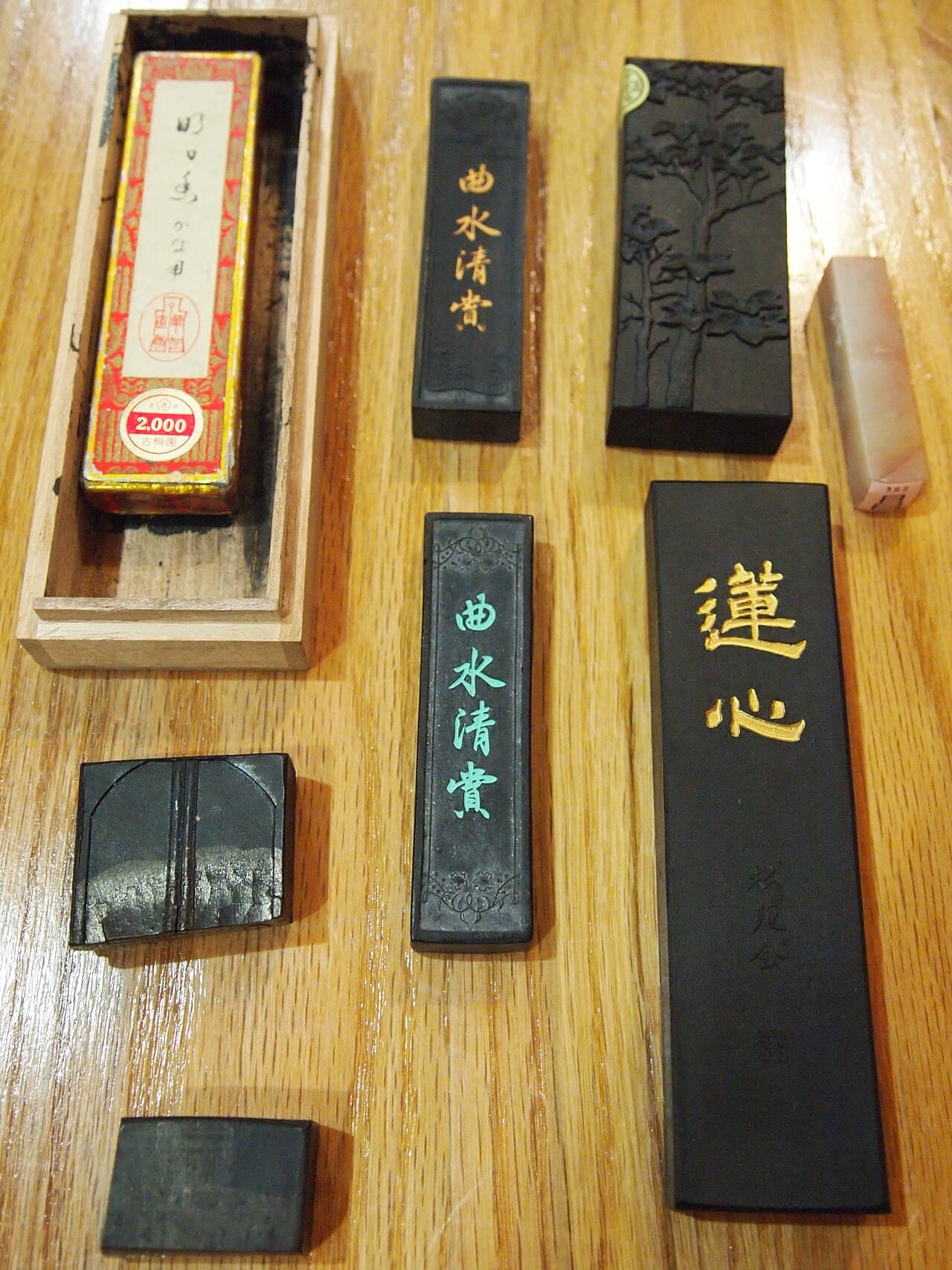
Nara has been Japan's center of sumi ink-making for over a thousand years, and the prefecture still produces roughly 95% of the country's solid ink today. Kinkoen (錦光園), a family workshop on Sanjo-dori — Nara's main shopping street, an easy 3-minute walk from JR Nara Station — has been shaping ink here for about 150 years, now under its seventh-generation owner. Their "nigiri-zumi" (hand-gripped ink) experience runs 30–40 minutes and costs ¥3,300 per adult (¥1,650 for high-school age and younger, tax included).
You'll start with a short, illustrated rundown of Nara ink's history, which stretches back to the Muromachi period. Then an artisan demonstrates how raw ink paste is shaped using wooden press molds — and hands you a portion of the same warm, soft, still-workable ink to knead and press into your own stick. It's genuinely hands-on: you feel the texture change as you shape it, and no two visitors' sticks come out identical. You take yours home in a paulownia-wood box, ready to air-dry and use, or just keep as a souvenir that no gift shop sells.
Booking direct vs. through a tour site
Kinkoen's own English-language site handles booking through a contact form (phone and email work too), and reservations must be made by 9 PM the day before your visit — they need the lead time to prepare the ink. If you'd rather book through a familiar aggregator, Sharing Kyoto Experiences and NaraExperience.com both list the same workshop; expect a small convenience premium over booking Kinkoen directly. English signage runs through the whole site, and the workshop is simple and visual enough (watch, then copy) that a language gap rarely gets in the way even when conversation defaults to Japanese.
Etiquette in brief
This isn't a "watch the craftsman" demo — you do the kneading and pressing yourself, with the artisan guiding your hands. The ink is soft and slightly sticky, and it carries a faint traditional scent (often a hint of clove or musk). Wear something you won't mind getting a small ink mark on, and don't rush the shaping; the whole point of "nigiri-zumi" is that the finished stick carries the impression of your own grip.
Getting there
Kinkoen sits on Sanjo-dori, the pedestrian shopping street that runs between Nara's two main stations toward Nara Park and Todaiji — 3 minutes on foot from JR Nara Station, or about 10 minutes from Kintetsu Nara Station. It slots naturally into a morning that also includes Todaiji's Great Buddha Hall or a stroll through Nara Park, and if you're curious about the writing side of the craft rather than just the ink itself, our calligraphy class in Tokyo guide covers where to try that. For more of Nara and beyond, see our best cultural experiences in Japan overview, or pair this with a kimono day — our kimono rental in Nara guide compares the two main shops, both an easy walk from here. Or sit for a bowl of matcha at Isuien Garden's Sanshu-tei teahouse, also on the way to Todaiji.
- A 150-year-old family ink workshop on Nara's main shopping street — Nara Prefecture still makes about 95% of Japan's solid sumi ink, and this is one of the few shops left that lets visitors help make it
- You knead and press the ink yourself, by hand, while it's still warm and soft from the mixing stage — not a hands-off demonstration
- Take it home in a paulownia-wood box, ready to dry and use, or simply display as a one-of-a-kind souvenir
- Add on a short calligraphy session to try out the ink you just shaped
This is hands-on, not hands-off: the ink is soft, slightly sticky, and lightly scented (traditionally with a hint of clove or musk), and you'll knead it directly. Let the artisan guide your grip rather than rushing the shaping — the point of "nigiri-zumi" (hand-gripped ink) is the shape your own hand leaves in it. Wear something you won't mind getting a small ink smudge on.