
Kimono vs Yukata: The Difference (Fabric, Obi, Season) and Which One to Rent
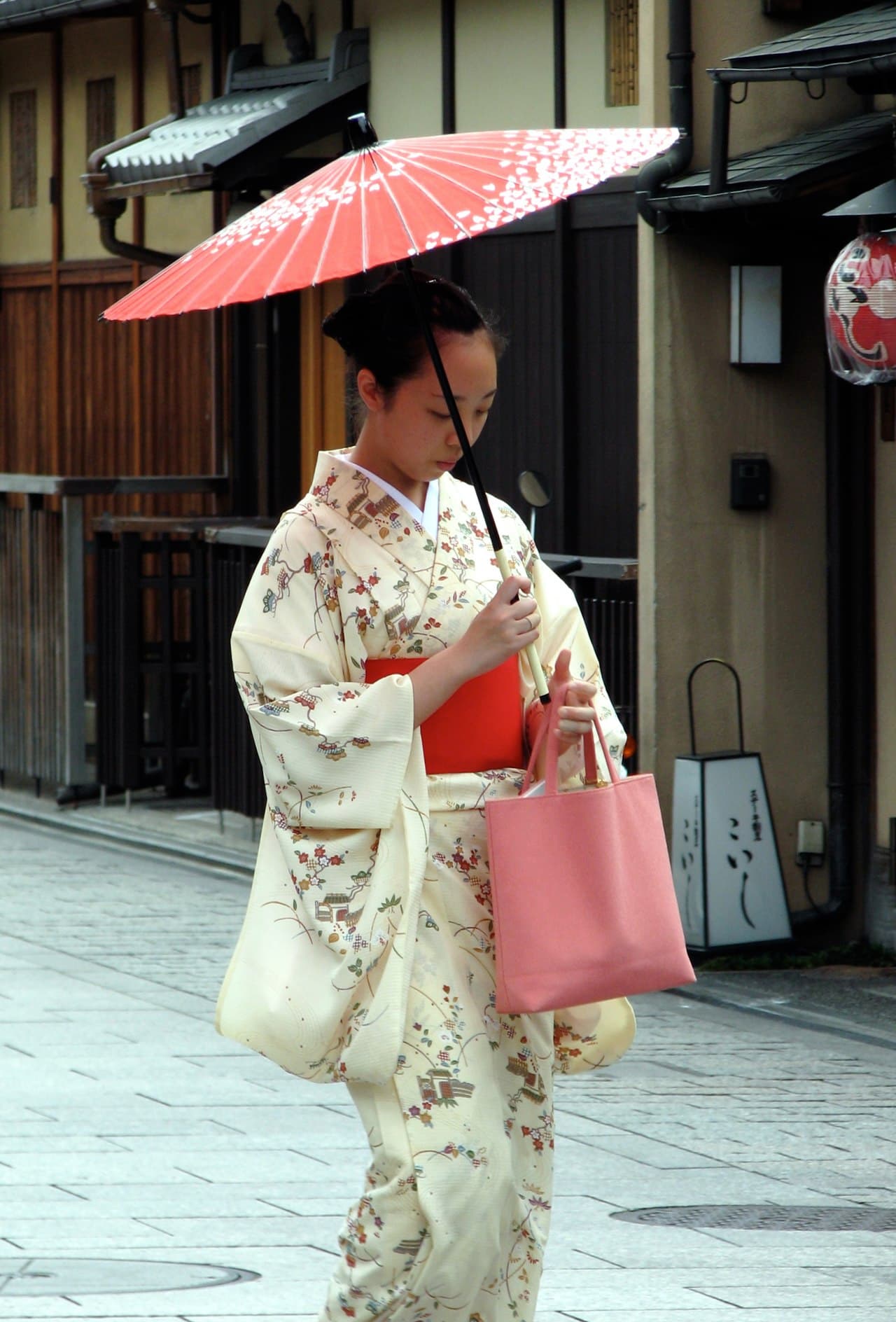
The difference in one table
| Yukata (浴衣) | Kimono (着物) | |
|---|---|---|
| Fabric | Unlined cotton | Silk or synthetic, lined in cooler months |
| Worn over | Bare skin, or light underwear | A juban under-robe |
| Obi | Narrow hanhaba half-width, simply tied | Wider, structured; often with cords and a bustle pad |
| Feet | Bare, with geta wooden sandals | Tabi split-toe socks with zori sandals |
| Season | Summer — July and August | Any, with fabric and motifs matched to the month |
| Formality | Informal. Festivals, fireworks, ryokan | Ranges from casual to extremely formal |
| Time to dress | 10–15 minutes | 30–45 minutes with help |
| Rental price | Lower | Higher |
That is genuinely the whole thing. A yukata is the informal, summer, cotton end of the same garment family — the name literally comes from yukatabira, a robe worn for bathing.
Which to rent
Rent a yukata if you are in Japan in July or August, you are going to a summer festival or fireworks, you want to be comfortable in the heat, or you are staying in a ryokan and want to keep wearing the one they gave you. It is cooler, cheaper and quicker.
Rent a kimono if it is any other month, you want the photographs, or you are going somewhere that deserves the weight — Gion in the evening, a tea ceremony, a shrine visit. A yukata in November in Kyoto reads exactly the way a beach shirt would in a European city in autumn: not offensive, just visibly out of season.
Our guides go deeper on the practical side: is kimono rental worth it runs the honest cost-benefit, kimono rental in Asakusa and in Osaka compare shops and prices, and kimono photoshoot in Kyoto covers the packages that include a professional photographer.
The one rule you cannot get wrong
Left over right. As you look down at yourself, your left panel goes on top.
Right over left (hidarimae) is how the deceased are dressed for burial. Every Japanese person notices it instantly, and nobody will say anything — they will simply feel it, which is worse.
This applies to a rented kimono, a summer yukata, and the yukata folded on your futon at a ryokan. Rental staff will dress you correctly; the mistake happens when you re-tie it yourself after lunch. A quick check: if you can slip your right hand into the front fold easily, you have it right.
How to wear a yukata has the full step-by-step, including how to fix it when it loosens.
Three things that will make you look like you know
Small steps. Both garments are cut narrow at the hem. A normal stride opens the front and undoes the line in about twenty metres. Halve your step and you will also stop the hem dragging.
Sleeves are not pockets, but they are useful. The hanging sleeve pouch (tamoto) will hold a phone. Hold your sleeve with your other hand when you reach for anything — food, a handrail, a train door — or it will trail across it.
Shoes. Geta and zori are worn with the thong between the toes and the heel slightly overhanging the back. It feels wrong and it is correct. Do not wear trainers. If your feet will not survive a day in zori, most shops will let you carry a spare pair of shoes in a bag, which is a better answer than ruining the outfit.
What not to add
Kimono is a system of signals, and a few elements mean something specific:
- All white with a white headpiece is bridal.
- Plain black with five crests is formal mourning.
- Furisode — the very long swinging sleeves — signals an unmarried young woman, which is why they dominate Coming-of-Age Day photographs. Wearing one as a visitor is completely fine; it is simply worth knowing what it says.
Rental shops will not put you in anything inappropriate. The risk comes from assembling your own from a vintage shop, which is a lovely thing to do and worth asking a question or two about first.
Where the garment came from
The kimono's straight-seam, flat-panel construction is the reason it can be taken apart, washed as flat cloth and resewn — and the reason a good one lasts generations rather than seasons. It is the same logic that runs through the rest of Japanese craft: wabi-sabi values the object that ages rather than the one that stays new, and kintsugi repairs rather than replaces.
If the textiles themselves are the interest, a dyeing workshop in Kyoto will show you where the patterns come from — the resist techniques on your rental kimono are the industrial descendants of exactly what you will be doing by hand.
---
Prices, schedules and booking links on this page were verified as of 2026-08-09. Operators change them without notice — confirm on the booking page before you travel, and tell us if you find something out of date.
FAQ
- What is the difference between a kimono and a yukata?
- A yukata is an unlined cotton robe worn directly against the skin, tied with a narrow half-width obi and worn with geta on bare feet. A kimono is lined or unlined silk or synthetic, worn over a juban under-robe, with tabi socks, zori sandals and a wider, more structured obi. A yukata is essentially the summer, informal end of the same garment family.
- Should I rent a kimono or a yukata?
- Season decides it. In July and August a yukata is cooler, cheaper, quicker to put on and correct for summer festivals and fireworks. The rest of the year a kimono is the right choice, and a yukata will look out of place outside a ryokan. If you want the photographs, kimono has more visual weight in every season.
- Which way do you wrap a kimono or yukata?
- Left side over right, always — meaning your left panel sits on top as you look down at yourself. Right over left is used only for dressing the dead. This is the single rule you must not get wrong, and it applies equally to kimono, yukata and the yukata provided at a ryokan.
- Can men wear yukata and kimono too?
- Yes. Men's versions are cut more simply, in more muted colours, with a narrower obi worn low on the hips rather than at the waist, and they are considerably faster to put on. Most rental shops in Asakusa and Kyoto offer men's and couples' plans.
- Is it disrespectful for foreigners to wear a kimono in Japan?
- No. Wearing kimono or yukata in Japan is welcomed and actively catered to — the rental industry exists largely for this. What matters is wearing it correctly and treating it as clothing rather than costume: left over right, no trainers, and no adding items that carry specific meaning you do not intend, such as bridal or mourning elements.
- Do you wear socks with a yukata?
- No. A yukata is worn with bare feet in geta wooden sandals. Tabi split-toe socks belong with a kimono and zori, so tabi with a summer yukata looks mismatched.
- Can you wear a yukata outside of summer?
- Indoors at a ryokan or onsen, yes — the yukata provided is loungewear in every season. Out on the street it is a July-and-August garment; in autumn or winter a kimono is the right choice and a yukata looks out of season.
- Was the yukata originally a bathrobe?
- Yes, in origin. The name comes from yukatabira, a single-layer robe worn in the steam baths of the Heian period. In the Edo period, as public bathhouses and cotton spread, it became something worn after bathing, and later everyday summer wear.
Essayez vous-même
Kimono rentalTokyo
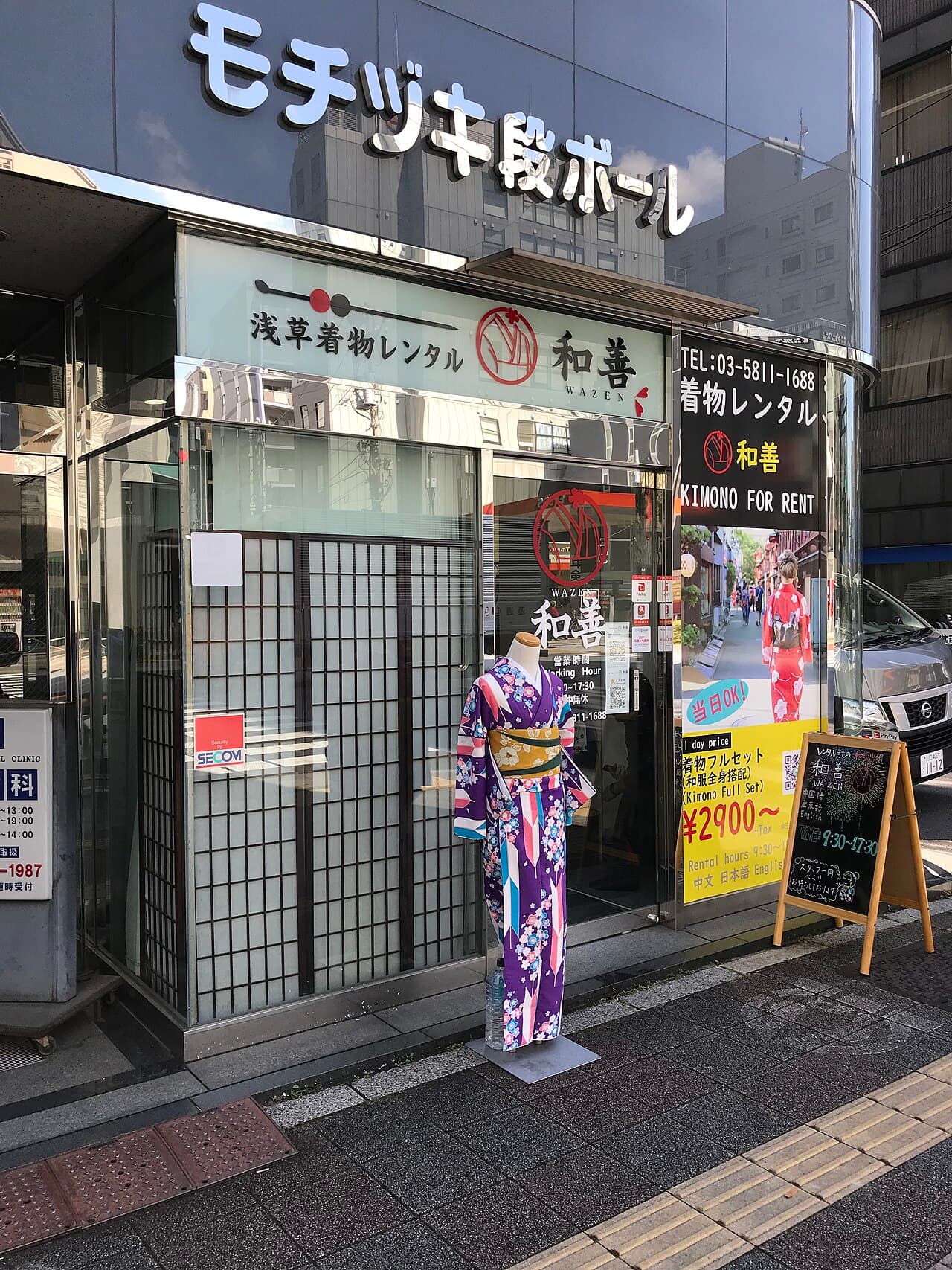
Location de kimono à Asakusa : prix, où réserver et comment ça marche
Où louer un kimono à Asakusa, en anglais, avec des prix honnêtes, ce qui est inclus, la seule règle à respecter pour le porter — et un lien direct pour réserver.
Kimono rentalKyoto
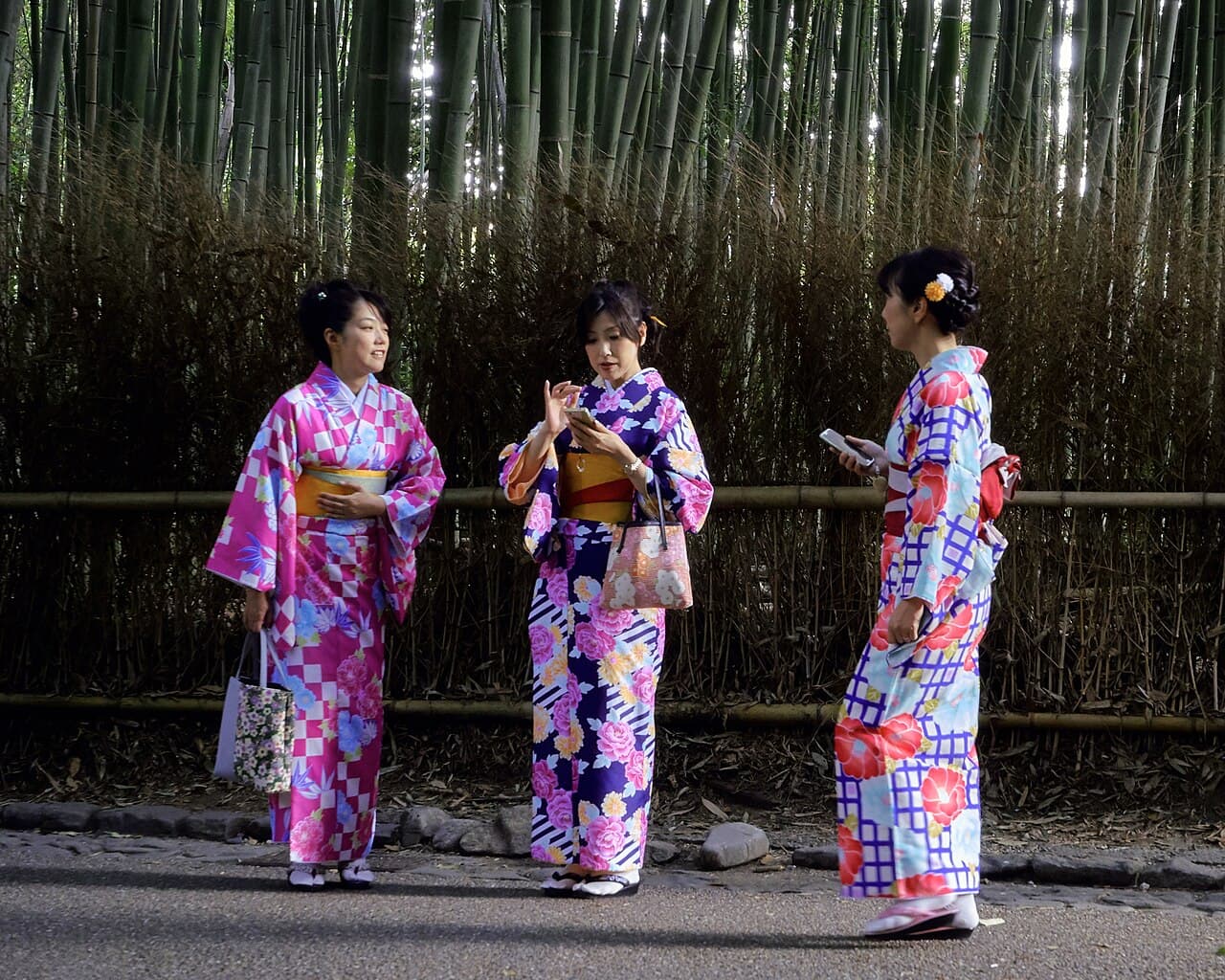
Kimono Photoshoot in Kyoto — The Best English-Friendly Experiences (and How to Book)
Compare Kyoto's best English-friendly kimono photoshoot packages, from ¥9,900 — real prices, what's included, and direct booking links.
Kimono rentalOsaka
Kimono Rental in Osaka — the best English-friendly experiences (and how to book)
Rent a kimono in Osaka's Shinsaibashi/Namba area — English-friendly shops from ¥3,300, dressing included, and direct links to book online today.
À voir aussi
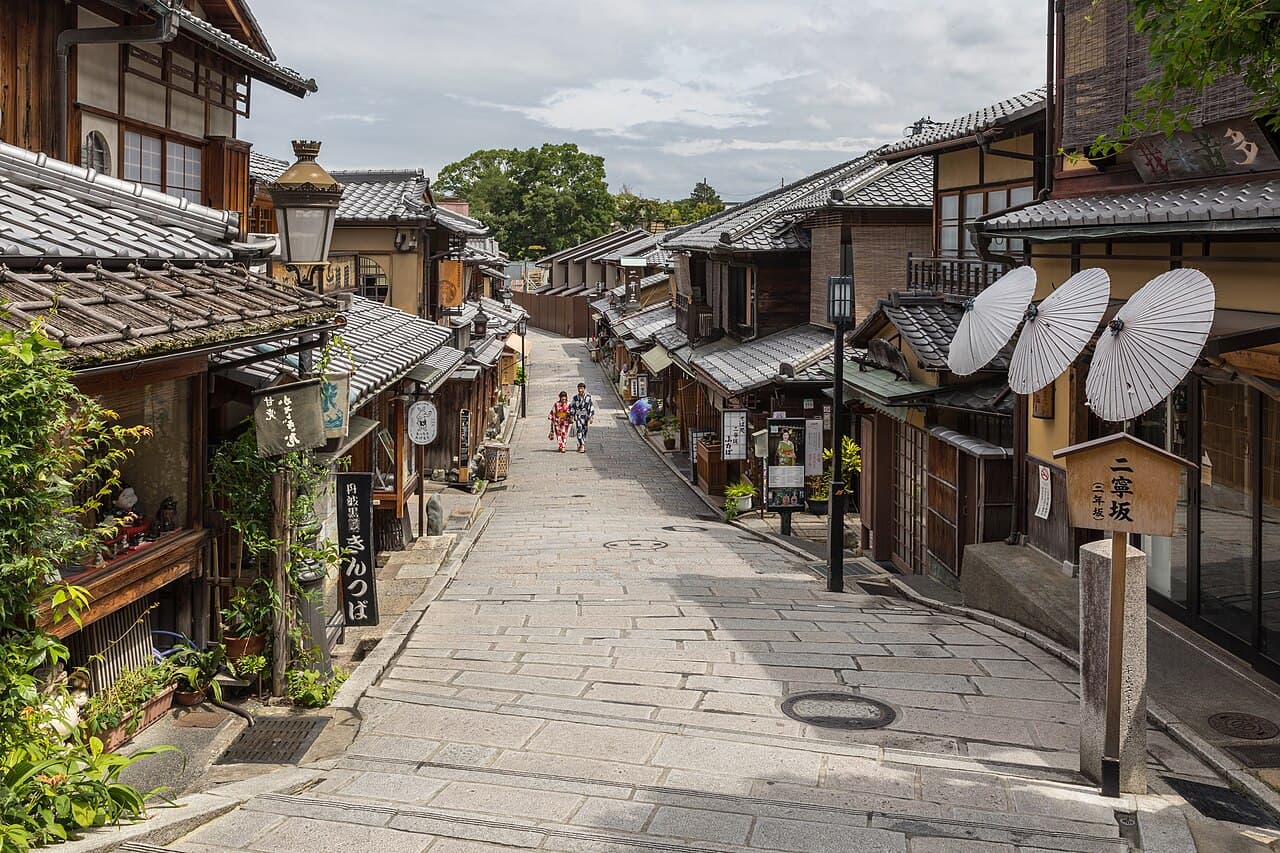
How to wear a yukata: a step-by-step guide (men & women)
A clear, step-by-step guide to putting on a yukata yourself — the correct left-over-right wrap, tying the obi, fixing a loose collar, and the one mistake to avoid.
Is a Kimono Rental Worth It? An Honest Guide for First-Timers
Yes for most first-timers: for the price of a couple of museum tickets you get a full kimono, professional dressing, and a few unforgettable hours photographing the old streets of Kyoto's Higashiyama or Tokyo's Asakusa. Here is the honest case for and against, what you really get for the money, who should skip it, and how to make sure it is worth every yen.