
The short answer
You can learn ikebana — Japanese flower arrangement — in English, in Tokyo, with zero experience, and unlike most tourist activities you can do it at the actual headquarters of the schools that shaped the art. The three easiest routes (verified July 2026):
- Sogetsu School HQ (Akasaka) — the famous avant-garde school runs an International Class in English every Monday except national holidays, 10:30–12:30. A one-time trial lesson is ¥6,000 including two bunches of seasonal material; the regular drop-in rate is ¥7,000. Book at least five business days ahead.
- Ohara School (Minami-Aoyama) — the school that invented the low, landscape-style moribana arrangement holds weekly classes in English at its Tokyo centre; a one-time trial is about ¥5,000 with materials included. Reserve before you go.
- Oraqua (Nihonbashi) — a private, English-friendly studio with flexible dates and family options: US$90 for a 90–105-minute workshop (children US$50), flowers, scissors and vases all provided, easy online booking.
Plan on about 1.5–2 hours, and expect to leave with your arrangement photographed and your flowers wrapped to take away. If you first want to understand what ikebana actually is — the philosophy, the schools, why the empty space matters as much as the flowers — start with what is ikebana. This page is about actually taking a class.
School headquarters or private studio? (decide this first)
Tokyo gives you a choice most cities can't:
The grand schools. Sogetsu and Ohara are two of Japan's three biggest ikebana schools, and both teach beginners in English at their own headquarters. This is the cheapest and most authentic route — you sit in a real classroom, sometimes alongside long-term students, and learn the school's actual curriculum. The trade-off is a fixed schedule: Sogetsu's English class is Monday mornings only, and both schools want advance reservations (Sogetsu by at least five business days, by email to kyoshitsu@sogetsu.or.jp; Ohara via its trial-lesson application form, a few business days ahead). The styles genuinely differ: Sogetsu is the avant-garde school — sculptural, free, famous for the idea that ikebana can be done "by anyone, anywhere, with any material" — while Ohara is the home of moribana, low landscape scenes built in a shallow dish.
Private studios and marketplace workshops. If your dates don't land on a Monday, a private studio is the practical answer. Oraqua, near Bakurocho in Nihonbashi, runs one-time lessons in English from midday to evening with everything provided, and takes children — rare for ikebana. Marketplace platforms also list small-group options; GetYourGuide's Tokyo ikebana workshop runs about 1.5 hours from around US$90. You pay roughly double the school price, but you get flexibility, smaller groups and more hand-holding.
If you can make a Monday morning work, the Sogetsu International Class is the standout: you arrange flowers inside Sogetsu Kaikan, the school's landmark headquarters in Akasaka, five minutes' walk from Aoyama-Itchome Station.
What actually happens in a lesson
A first ikebana lesson follows a surprisingly consistent arc:
- Materials. You're given seasonal flowers and branches — at Sogetsu, two bunches are included in the fee — plus a shallow vase, a kenzan (the spiked "frog" that holds stems upright) and ikebana scissors.
- Demonstration. The instructor arranges first, explaining the logic: the three main stems of different lengths, the angles, and why you cut away far more than you keep.
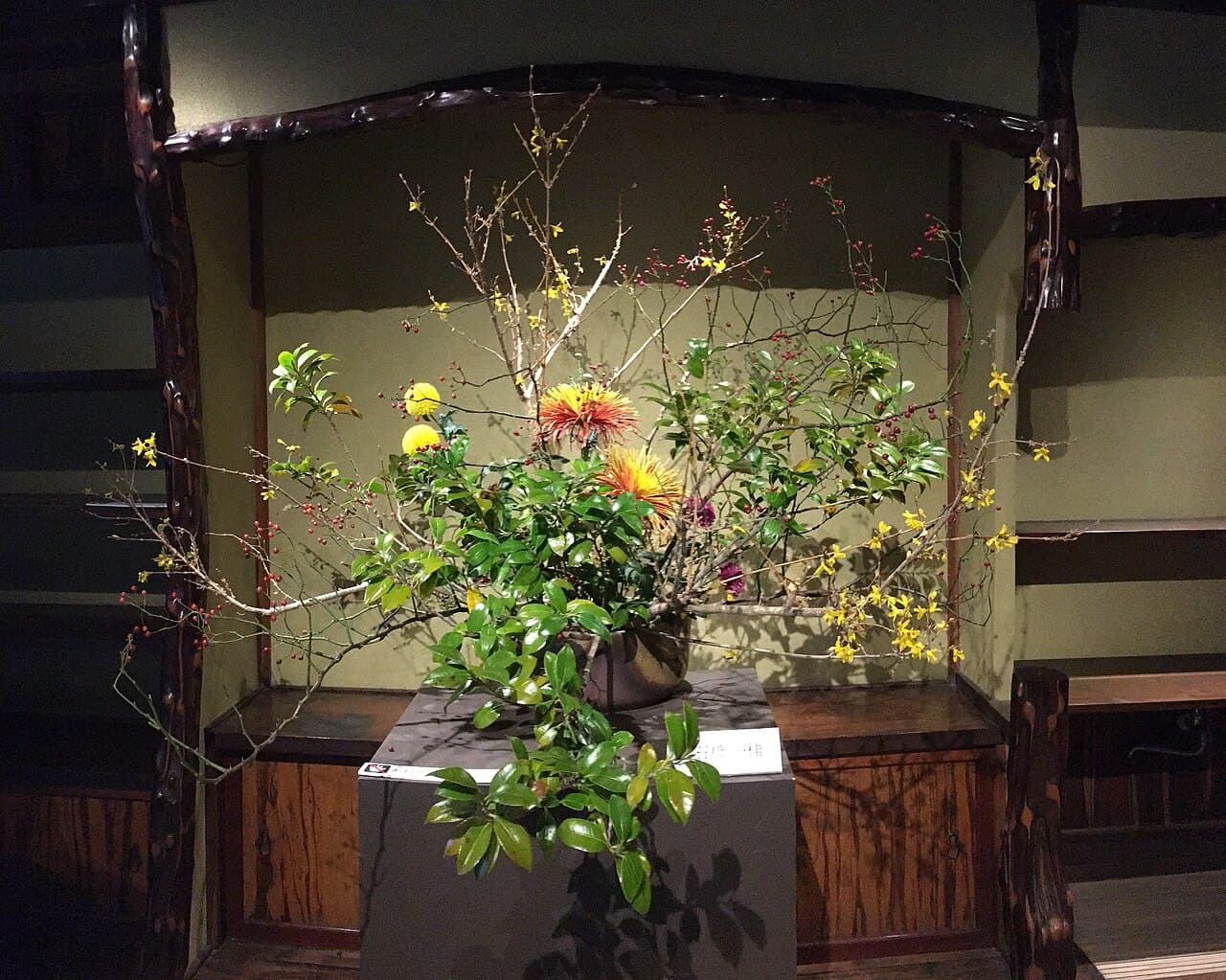
- You arrange. This is most of the session. You cut, place, step back, adjust. It is quieter and more absorbing than you expect — closer to meditation than to a craft class.
- Correction. The instructor reviews your work and usually reworks part of it in front of you. Watching two of your own stems move five centimetres and suddenly look right is the real lesson.
- Photograph and take home. You photograph your finished arrangement, then the flowers are unpicked and wrapped so you can re-arrange them in your hotel room — a genuinely nice souvenir that costs nothing extra.
A Sogetsu trial runs 90–120 minutes including the demonstration and individual advice.
Comparing the Tokyo options
| Provider | English | Price | Duration | Area / station | Vibe |
|---|---|---|---|---|---|
| Sogetsu HQ International Class | Entire class in English | Trial ¥6,000 (regular ¥7,000), materials incl. | ~2 h, Mon 10:30–12:30 | Akasaka — Aoyama-Itchome, 5-min walk | Real school HQ, mixed levels, avant-garde style |
| Ohara School Tokyo | English classes weekly | Trial about ¥5,000, materials incl. | ~2 h | Minami-Aoyama | Classic moribana, classroom feel |
| Oraqua studio | English supported | US$90 adult / US$50 child | 90–105 min | Nihonbashi — Bakurocho, 2-min walk | Private studio, flexible times, families welcome |
| GetYourGuide workshops | English | From about US$90 | ~1.5 h | Varies | Small group, easy cancellation |
Prices and schedules move — always confirm on the booking page before you pay.
Etiquette: how not to feel lost
There's no formal ritual to memorise — this is a class, not a ceremony — but a few habits mark you as a good guest. Flowers are treated as living material: don't discard stems carelessly or leave cuttings scattered. Work quietly; the concentration is part of the point. And when the instructor pulls your arrangement half apart, understand that correction is the teaching method, not a verdict on your talent. The aesthetic behind all of it — asymmetry, restraint, the beauty of the incomplete — is the same one explained in what is wabi-sabi.
What to wear and bring
Nothing special. Normal clothes are fine; just avoid billowing sleeves that catch branches, and remember you'll handle water and cut greenery. All tools and flowers are provided at every option above. Booking ahead is the only real requirement — none of the schools reliably take walk-ins.
Who it's for — and what to pair it with
Ikebana suits design-minded travellers, solo visitors (you don't need a partner, and Sogetsu's class is mostly individuals), jet-lagged mornings, and rainy-day plans, since everything happens indoors. Families should look at Oraqua, which prices children separately.
If slow, precise hand-work is your kind of travel, Tokyo pairs it well with a calligraphy class — the same brush-stroke economy in ink — or a kintsugi workshop from the same aesthetic family. And if your dates happen to line up with a seasonal festival, check japan-event.info — arranging flowers in the morning and watching a matsuri at night is about as complete as a Tokyo day gets.
- Learn inside Sogetsu Kaikan — the real headquarters of a grand school, taught in English
- Arrange seasonal flowers on a kenzan and take them home
- Trial lessons from about ¥5,000 — one of Tokyo's best-value culture experiences
- Quiet, hands-on 90–120 minutes that works in any weather
Ikebana rewards quiet attention: flowers are treated as living material, so avoid wasting stems and handle the scissors with care. Being corrected is the point — the instructor may rework your arrangement, and that reworking is the lesson, not criticism. Book ahead: Sogetsu's English class requires a reservation at least five business days out, and the Ohara School asks you to reserve before coming.