
The short answer
Tokyo is a fine place to try Japanese calligraphy (shodō / 書道), and you do not need to speak Japanese. Several studios across the city run short, English-guided sessions where a teacher shows you how to grind ink, hold the brush and shape a character — then you write a kanji of your own to take home. Expect 60–90 minutes and from ¥7,000 per person. Classes are small and the good slots fill up, so book ahead.
This page is the honest go-info: who teaches in English, what it costs, and how to reserve.
Where to book (English-friendly)
| Studio | Area | English | From | Duration |
|---|---|---|---|---|
| Shodocafe 7557 | Roppongi | Yes | ¥8,800 pp | 60–90 min |
| Wakalture Experience | Akihabara / Sotokanda | Yes | ¥7,000 pp (beginner) | 1.5 hr |
| Sip & Shodo TOKYO | Shinjuku | Yes | ¥30,000 pp | 2 hr |
- Shodocafe 7557 — an easy-going introduction three minutes from Roppongi Station; you write on a scroll or fan, and a drink and souvenir are included (¥8,800 per person, adults).
- Wakalture Experience — a licensed teacher with 20-plus years of practice, near Akihabara; beginner classes run 1.5 hours from ¥7,000 (about ¥10,000 one-to-one). Cash only.
- Sip & Shodo TOKYO — a premium two-hour session in Shinjuku that pairs calligraphy with Japanese sake and whiskey, with an English-speaking instructor (¥30,000 per person, reserve about a week ahead).
Prices move with season and group size, so treat the figures as a starting point and confirm on the operator’s page before you pay. Tokyo lessons also appear on OTAs such as Viator and GetYourGuide if you prefer to book through a platform.
What actually happens
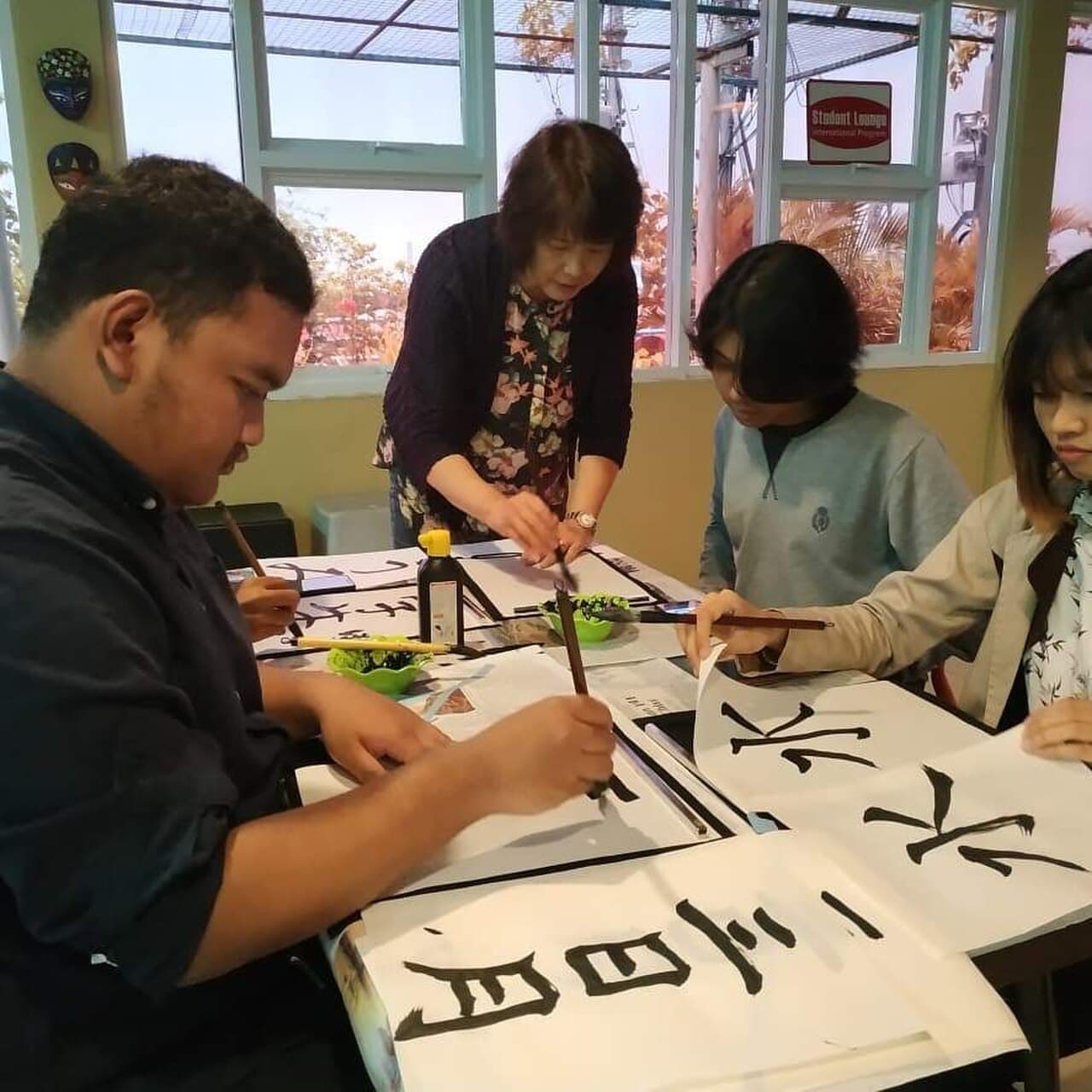
You’re shown the “four treasures” — the fude (brush), sumi ink, suzuri inkstone and paper. First you grind the ink, rubbing the sumi stick in a little water on the suzuri until it’s glossy black; it’s slow on purpose, a way to settle the mind. The teacher demonstrates the clean kaisho (block) style stroke by stroke, then guides your hand as you write a character — often a kanji you choose for its meaning. You finish on a shikishi card, fan or hanging scroll to carry home.
The manners that matter
You don’t need to memorise anything, but a few things make it go well: hold the brush upright, vertical to the paper and gripped lightly (not like a pen), and keep your wrist off the desk so the line comes from your whole arm. Sit or stand with a straight back — shodō is half breathing, half writing. Treat each finished sheet with respect: don’t lean on it, and let the ink dry before rolling it. The quiet of the room is part of the practice.
Make a day of it
A calligraphy class slots neatly beside Tokyo’s other hands-on traditions. Pair it with a samurai experience in Tokyo, or rent a kimono first over at kimono rental in Asakusa. If the restraint and imperfection of the brushwork draws you in, read what wabi-sabi means. Timing your trip around a festival? See the calendar at our sister site japan-event.info.
- English explanation of shodō — no Japanese needed
- Grind your own ink on a suzuri inkstone and write with a real fude brush
- Learn the clean kaisho (block) style and write a kanji of your choice
- Take home your finished work on a scroll, fan or shikishi card
Hold the fude brush upright — vertical to the paper, gripped lightly between thumb and fingers, not like a pen — and keep your wrist off the desk so the stroke comes from the whole arm. Sit (or stand) with a straight back; calligraphy is half breathing, half writing. Each finished sheet is treated with respect: don’t lean on it, and let the ink dry before you roll it. A calm, quiet room is part of the practice.
Preguntas frecuentes
- How do I book a calligraphy class in Tokyo?
- Book on the studio's own site. Shodocafe 7557 takes online bookings through its Book now page, with same-day enquiries by WhatsApp or email. Wakalture asks you to send three preferred dates, the number of people and the word you want to write. Sip & Shodo needs a reservation at least one week ahead, minimum two guests. As of 13 September 2026.
- Is it still ¥7,000 if I go alone or as a couple?
- No. At Wakalture ¥7,000 per person is the rate for four to six people; two or three people pay ¥8,000 each, and a one-to-one lesson is ¥10,000. Shodocafe 7557 is a flat ¥8,800 per adult. As of 13 September 2026.
- Can children join a calligraphy class?
- Yes. Shodocafe 7557 charges ¥6,600 for children aged 12 and under, and Wakalture charges ¥3,500 to ¥4,000 for children under seven depending on group size. Come in clothes you do not mind marking — sumi ink stains permanently. As of 13 September 2026.