
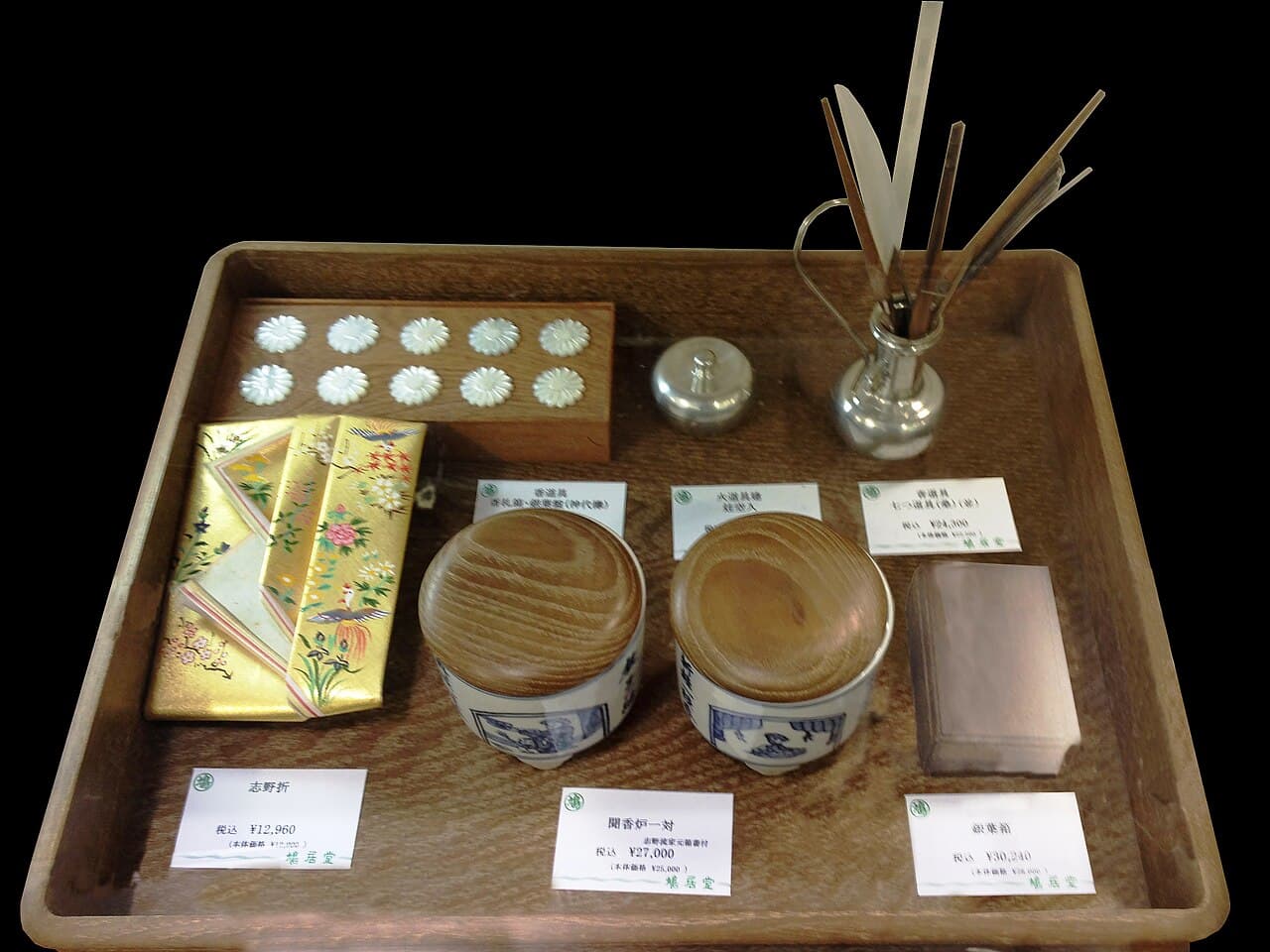
Kōdō — literally "the way of incense" — is one of Japan's three classical refinement arts alongside tea ceremony (sadō) and flower arranging (kadō), yet it's far harder to actually experience than either. Most "incense workshops" aimed at tourists are really about rolling your own incense sticks, which is fun but isn't kōdō. If you specifically want the real thing — burning slivers of fragrant wood on heated ash and "listening" to the scent as trained practitioners have done since the Muromachi period — Kyoto has one clearly verifiable, bookable option: a private session at Zikido Ichifune, held inside the garden grounds of Kōsei-in temple in Nakagyo Ward.
What to expect. The base 2-hour session starts with an introduction to the Mishina Ōeryū school of kōdō from an instructor, who walks you through preparing the ash mound, placing a chip of aromatic wood on a mica plate over the heated charcoal, and then practicing monko — cupping the burner and drawing the scent in over several slow breaths rather than sniffing it like a candle. You'll then move to a seasonal ikebana arrangement, guided by a theme tied to one of Japan's 24 solar terms, and keep the finished arrangement. The session closes with matcha whisked to order and a seasonal wagashi sweet from Yamamoto Jinjiro, a sixth-generation Uji tea maker, taken while looking out over Kōsei-in's garden — a modern Japanese landscape design normally closed to public visitors. Everything is private (1–8 guests) with an English-speaking guide throughout, and free cancellation up to 8 days before your date.
A longer 2.5-hour version of the same experience (from ¥48,300/person) adds a guided walk through the Kōsei-in garden itself and swaps in Genjiko, a scent-guessing game based on The Tale of Genji where guests try to identify which of several burned incenses match or differ — a nice way to actually test what you've just learned, if you have the extra time and budget.
Honest comparison. If ¥33,600–48,300 per person is more than you want to spend, or you'd rather make something to take home than practice appreciation, two other real Kyoto options exist. Tenkodo, a long-established incense maker near Katsura Imperial Villa, runs a roughly 90-minute hands-on workshop at its Arashiyama store where you blend your own zukō (powdered incense) with an English-speaking guide; pricing is listed in USD across booking platforms and lands somewhere in the $103–170 per person range depending on the site, so check the current figure before booking. Koju, a 440-year-old Kyoto incense house with a shop in the Ninenzaka lane near Kiyomizu-dera, offers an incense-blending session where you combine eleven ingredients into your own sachet; staff speak workable English but the experience leans more toward retail craft than formal kōdō instruction. Neither of those is kōdō in the traditional sense — they're incense-making, which is a different (and more affordable) way to spend an hour in Kyoto's incense world. If you want to actually sit with a teacher and learn to "listen" to incense the old way, Zikido Ichifune's Kōsei-in session is the clearest verified option in the city right now.
Combine this with a proper tea ceremony in Kyoto or fold it into a wider day of Kyoto cultural experiences — both sit within easy reach of central Kyoto and pair naturally with an afternoon built around slowing down and paying attention to one sense at a time.
- Genuine kōdō instruction in the Mishina Ōeryū tradition — burning small chips of aromatic wood on hot ash and "listening" (monko) to the scent, not lighting incense sticks
- Held inside Kōsei-in, a Kyoto City-designated Place of Scenic Beauty whose garden is normally closed to the public
- Includes a seasonal ikebana arrangement that you keep
- Finishes with Uji matcha and wagashi from a sixth-generation tea maker
- Small private group (1–8 people) with an English-speaking guide throughout
In kōdō you "listen" to incense (monko) rather than smell it casually — avoid wearing perfume, cologne, or strongly scented lotion beforehand so it doesn't interfere with your own or others' sense of smell. Receive and pass the incense burner (kōro) with both hands, following the host's lead.