
How Long Does a Japanese Tea Ceremony Last? (Minute-by-Minute Guide)
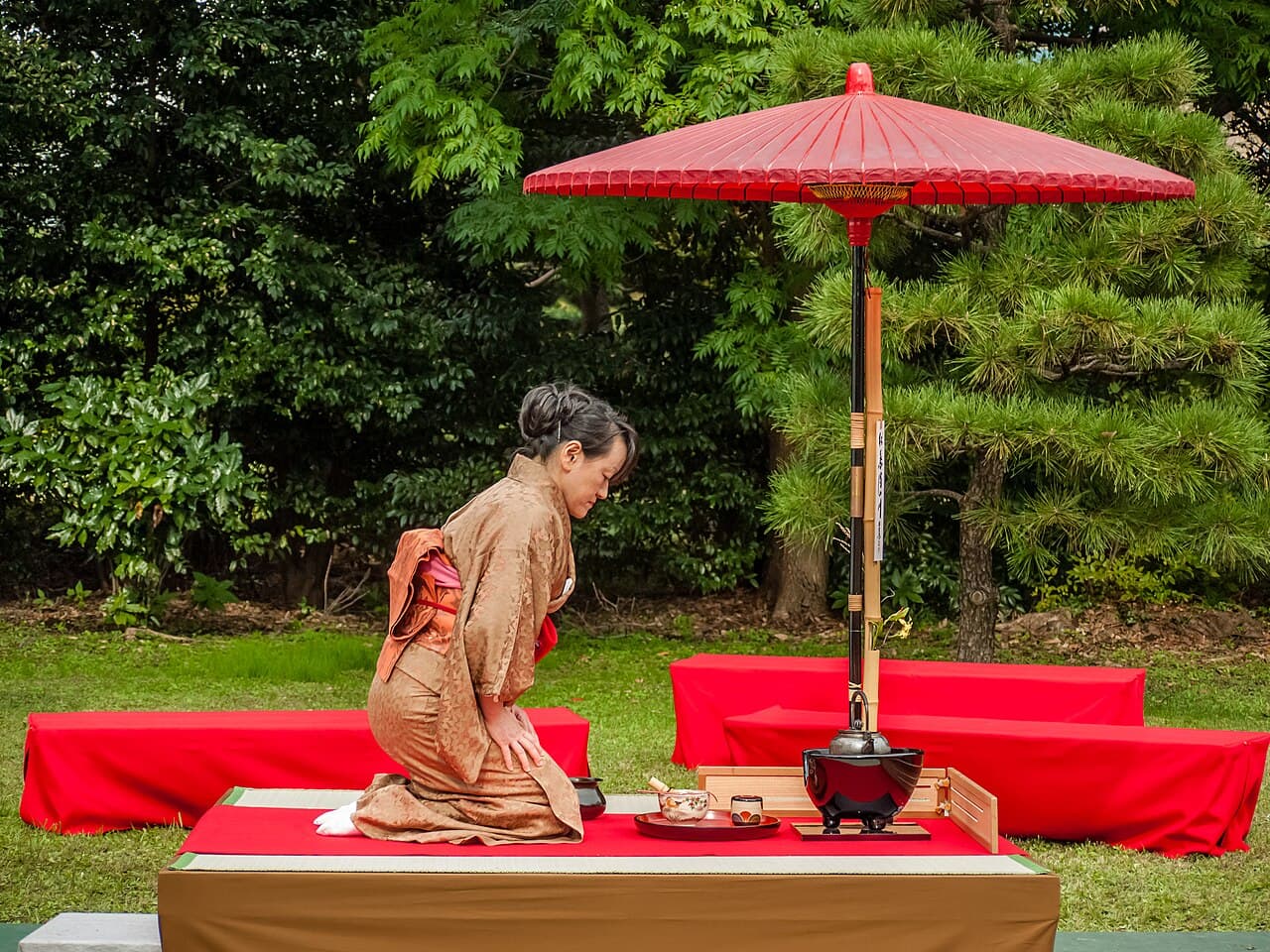
A tourist-friendly Japanese tea ceremony lasts about 45–60 minutes—add roughly 30 minutes if kimono dressing is included. Nearly every experience marketed to visitors is a short, welcoming format called chakai: you receive a sweet, watch (or help) whisk a bowl of matcha, drink it, admire the utensils, and say goodbye. A full formal chaji—the kind with a charcoal fire, a multi-course kaiseki meal, thick tea (koicha) and thin tea (usucha)—can run up to about four hours, but you'll rarely be offered one as a first-time guest.
How long each type takes
| Format | Typical length | What's included |
|---|---|---|
| Tourist demonstration (chakai) | 45–60 min | Sweet, thin tea (usucha), utensil viewing |
| + Kimono dressing (kitsuke) | add ~30 min | Dressing before and undressing after |
| Hands-on "whisk your own" | 60–90 min | You prepare your own matcha with guidance |
| Traditional formal chakai | ~45 min–1 hr | Thin-tea gathering in a proper tea room |
| Full formal chaji | up to ~4 hrs | Kaiseki meal + koicha + usucha |
If you only remember one number, remember 60 minutes: that's the sweet spot for a first-timer session in Kyoto or Tokyo that includes a sweet, a freshly whisked bowl of matcha, and time to ask questions. Sessions that promise you'll be done in 20–30 minutes are usually large group demos with little interaction.
Minute-by-minute: what to expect
Here is how a typical 50-minute tourist session flows. Exact timings vary, but the sequence is remarkably consistent.
0:00–0:08 — Welcome & purification. You remove your shoes, and if the venue has an outer garden and a stone basin (tsukubai), you rinse your hands and mouth to symbolically cleanse yourself before entering. The host greets you and you take your seat, usually on tatami.
0:08–0:15 — Settling in. The host quietly cleans each utensil in front of you. You may be invited to notice the hanging scroll and seasonal flowers in the alcove (tokonoma). This calm preparation is part of the ceremony, not dead time.
0:15–0:22 — Sweets first. A seasonal sweet (wagashi) is served and—this surprises many visitors—you eat it before the tea. The sweetness is meant to balance the slight bitterness of the matcha that follows.
0:22–0:35 — Whisking the tea (temae). The host measures matcha, adds hot water, and whisks it into a frothy bowl of thin tea. In a hands-on session, this is where you whisk your own with a bamboo whisk (chasen)—expect a few minutes of coaching.
0:35–0:45 — Drinking your matcha. You receive the bowl, rotate it clockwise a couple of times so you don't drink from its "front," and finish in a few sips. A short, audible last sip is polite, not rude.
0:45–0:50 — Viewing utensils & farewell. You may be invited to admire the tea bowl and tea caddy up close, ask questions, then bow and leave. Photos are usually welcome at the end.
What makes it longer—or shorter
- Kimono dressing (kitsuke): the single biggest add-on—budget an extra ~30 minutes for dressing and undressing.
- Group size: private and small-group sessions run longer and calmer; large drop-in demos are quicker but more rushed.
- Hands-on vs. watch-only: whisking your own tea adds 10–20 minutes.
- A meal: if kaiseki is included you've crossed into chaji territory—plan for two to four hours.
- Language & questions: English-guided sessions with Q&A naturally run to the top of the range.
How to pick the right session length
For most travelers, a 60-minute session is ideal: long enough to feel authentic, short enough for a busy Kyoto itinerary. Choose 90 minutes if you want to whisk your own tea or wear a kimono, and only seek out a full chaji if you're a serious enthusiast with a free afternoon.
Before you book, settle four things so the clock holds no surprises. First, ask the maximum group size per slot—a private or small-group booking of roughly two to six guests stays calm and runs the full length, while a large drop-in demo may pack in twenty people and end fast. Second, confirm whether it's private or drop-in: private rooms let you set the pace and linger over questions, whereas scheduled drop-ins start on a fixed clock whether you're ready or not. Third, check whether whisking your own bowl is offered, since that hands-on step is what pushes a session toward the 90-minute end. Fourth, if you want a kimono, ask whether dressing time is counted inside or outside the ceremony slot, so a 60-minute booking doesn't quietly eat 30 minutes of your matcha time. A short message to the venue before you arrive settles all four.
A handy phrase to show or say to staff: 「お点前はどのくらいかかりますか?」 (O-temae wa dono kurai kakarimasu ka? — "How long does the ceremony take?"). To check kimono time, ask 「着付けは含まれますか?」 (Kitsuke wa fukumaremasu ka? — "Is kimono dressing included?").
Ready to book? See our guide to a tea ceremony in Kyoto, compare the best tea ceremony experiences in Kyoto, and read up on tea ceremony etiquette so you arrive relaxed and ready.
More on the tea ceremony
Japanese tea ceremony (complete guide) · The steps, in order
FAQ
- How long does a Japanese tea ceremony last?
- For visitors, about 45–60 minutes. This short chakai format includes a seasonal sweet, a bowl of whisked matcha, viewing the utensils, and a farewell — add roughly 30 minutes if kimono dressing is included.
- How long is a full formal Japanese tea ceremony (chaji)?
- A full formal tea ceremony, called chaji, can last up to about four hours. It includes a charcoal fire, a multi-course kaiseki meal, thick tea (koicha) shared from one bowl, and individual bowls of thin tea (usucha). Travelers rarely attend a chaji; nearly all tourist experiences are the shorter 45–60 minute chakai format instead.
- Does kimono dressing add time to a tea ceremony?
- Yes. Kimono dressing (kitsuke) is the biggest time add-on for a tourist tea ceremony, adding roughly 30 minutes for dressing before and undressing after. A 60-minute ceremony with kimono realistically becomes about 90 minutes. If you're on a tight schedule, ask whether dressing time is counted inside or outside the ceremony slot when you book.
- Can you do a Japanese tea ceremony in 30 minutes?
- Yes, but with trade-offs. Some venues offer 20–30 minute demonstrations, usually for larger groups with limited interaction. You'll still get a sweet and a bowl of matcha, but less explanation and no hands-on whisking. For a first-timer who wants to understand what's happening and ask questions, a 45–60 minute session is a better balance of time and depth.
- What is the difference between chakai and chaji?
- Chakai is a short, informal tea gathering lasting about 30–60 minutes, usually just a sweet and thin tea—this is what tourists experience. Chaji is the full formal event, lasting up to about four hours, adding a kaiseki meal and both thick and thin tea. In short: chakai is the quick visitor version, chaji is the complete traditional ceremony.
Try it yourself
Tea ceremonyKyoto
Tea ceremony in Kyoto — the best English-friendly experiences (and how to book)
Book an English-guided tea ceremony in Kyoto from ¥4,000 per adult (Camellia, 45-minute shared session) or ¥5,000 with kimono (MAIKOYA, about 90 minutes), as of September 2026 — plus the few manners that matter.
Related
Kyoto
The Best Tea Ceremony in Kyoto: Where to Do It (Honest 2026 Guide)
For most visitors, the best tea ceremony in Kyoto is an English-guided session in a Higashiyama (Gion) machiya — from ¥4,000 per adult (as of September 2026), about 45 minutes, wagashi sweet included, reservation required. Here's how to choose, an honest short-list, and how to book.