
The short answer
Kanazawa produces about 99% of Japan's gold leaf, according to the city's own tourism board — the golden interiors of Kyoto's Kinkaku-ji and temples across the country are wrapped in leaf beaten here. The visitor version of that industry is a gold-leaf application workshop (kinpaku-bari), and it is one of the best-value hands-on experiences in the country: from about ¥1,760, in 20 to 70 minutes, you decorate a real object and take it home.
Almost every workshop requires a reservation. That is the one thing that catches people out.
What each workshop charges
| Workshop | Plans | Price | Time |
|---|---|---|---|
| Higashi Chaya district workshops | Decorate a small item | from ¥1,760 | 60 min |
| Hakuichi (Hakukōkan), Morito | Master Course: small plate / box / hand mirror | ¥2,000 | from 20 min |
| Master Course: lacquer tray or plate | ¥4,000 | from 20 min | |
| Wizard Course: chopsticks | ¥2,000 | from 30 min | |
| Wizard Course: plate / mirror / box | ¥2,500 | from 45 min | |
| Gold-leaf transfer | ¥2,000 | 10–20 min | |
| Hakuza, Moriyama | Light plan | ¥1,980 | 30 min |
| Standard plan | ¥6,600 | 60–70 min | |
| Master plan (with a master artisan) | ¥16,500 | 90–100 min |
Prices as listed by the workshops and VISIT KANAZAWA, checked 2026-08-09. Confirm at booking.
Which one to pick
If you want the cheap, satisfying souvenir: the Higashi Chaya district workshops or Hakuichi's ¥2,000 Master Course. You get a finished plate or mirror in well under an hour, in the prettiest part of the city, and you can walk straight out into the teahouse streets afterwards.
If you are travelling as a group: Hakuichi's Hakukōkan in Morito takes up to 70 people in one session — the only workshop in the city that comfortably absorbs a coach party. Sign-up runs 9:00–16:00.
If you care about the craft itself: Hakuza's Master plan (¥16,500, 90–100 minutes) puts you with a master artisan working the entsuke method — the traditional handmade process, which VISIT KANAZAWA describes as recognised intangible cultural heritage. This is the version where you understand why Kanazawa still matters, rather than just decorating a plate.
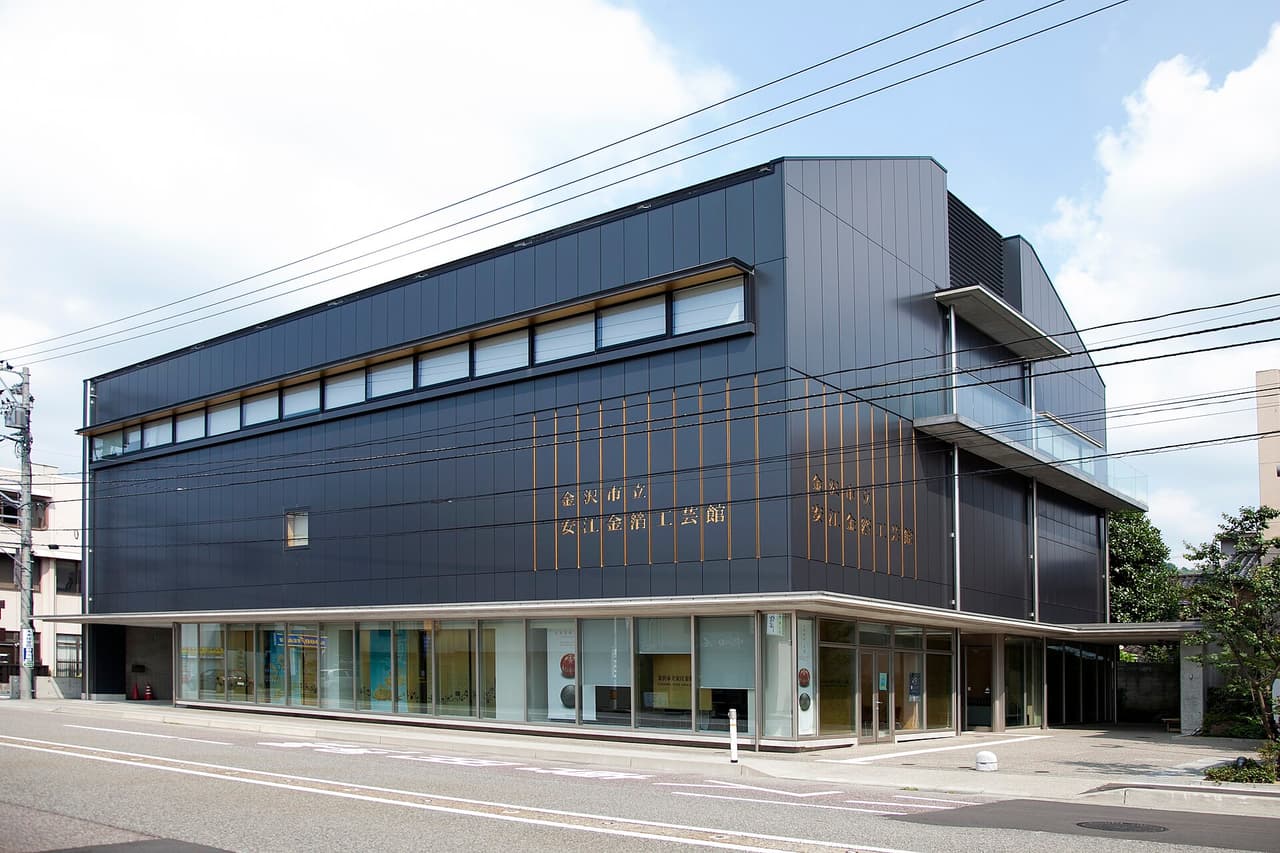
If you only want to understand it: the Kanazawa Yasue Gold-Leaf Museum covers the tools and the history without a workshop booking.
What actually happens
You pick your object and a stencil, or decide to work freehand. Then someone explains the material, and the explanation is the memorable part: the leaf is around one ten-thousandth of a millimetre thick — thin enough that it lifts and shreds in a breath. You are handed bamboo tools, told not to touch it with your fingers (skin oil destroys both the leaf and the finish), and told to stop talking over the tray. People assume that is theatre. It is not; the first sheet that dissolves at a sigh teaches the lesson permanently.
You lay the leaf, press it down, brush away the excess, and — depending on the plan — get a lacquer or coating pass to fix it. The offcuts stay with the workshop and are recycled, which is part of why a finished object costs less than lunch.
Fitting it into a Kanazawa day
A workshop slots naturally between Kenroku-en and the Higashi Chaya district, and most take under an hour. If you are building a full day, our Kanazawa cultural experiences hub sequences it with a tea ceremony and the geisha teahouse districts — the three fit comfortably into one day without rushing.
If gold leaf turns out to be your thing, the related craft to look for elsewhere is kintsugi, the gold-joinery repair of broken ceramics — see what is kintsugi for the idea, and the Tokyo or Osaka classes if you want to try it.
---
Prices, schedules and booking links on this page were verified as of 2026-08-09. Operators change them without notice — confirm on the booking page before you travel, and tell us if you find something out of date.
- Kanazawa accounts for about 99% of Japan's gold leaf production, per VISIT KANAZAWA — this is not a tourist craft invented for visitors but the city's actual industry
- Hakuza's main store in Moriyama teaches the entsuke method, the traditional handmade process that VISIT KANAZAWA describes as UNESCO-recognised intangible cultural heritage
- Hakuichi's Hakukōkan can take up to 70 people at once, which makes it the practical choice for groups; its Higashi Chaya branch is bookable through the main store
- The leaf is so thin it moves in your breath — instructors give you a bamboo tool and tell you to stop exhaling, and they mean it
- The Kanazawa Yasue Gold-Leaf Museum nearby covers the history and tooling if you want the context before or after the workshop
The gold leaf is roughly one ten-thousandth of a millimetre thick and will lift and tear on a breath, so instructors ask you not to talk over the tray and not to lean in. Use the bamboo tools rather than your fingers — skin oil ruins the leaf and the finish. Offcuts belong to the workshop, not to you: they are collected and reused, which is part of why the price is so low.
FAQ
- How much does a gold leaf experience in Kanazawa cost?
- From about ¥1,760 for a 60-minute workshop in the Higashi Chaya district. Hakuichi charges ¥2,000 for a small plate, box or hand mirror and ¥4,000 for a lacquer tray or plate. Hakuza runs ¥1,980 for a 30-minute Light plan, ¥6,600 for the 60–70 minute Standard, and ¥16,500 for the 90–100 minute Master plan with a master artisan.
- Do you need to book a Kanazawa gold leaf workshop in advance?
- Yes, essentially always. Hakuza takes online reservations and runs sessions only between 10:00 and 15:00. Hakuichi's Higashi Chaya branch is reservation-only through the main store. Sakuda accepts reservations until 16:00 the day before. Same-day walk-ins are possible at some larger workshops but should not be relied on.
- Can you do a gold leaf experience in English?
- The workshops list their experiences in English through Kanazawa's official tourism site and their own English pages, and the work itself is demonstrated rather than explained — you copy what the instructor does. Confirm live English instruction directly with the workshop if that matters to you, as availability varies by day and staff.
- What do you actually make?
- You apply gold leaf to a real object and take it home: a small plate, a lacquer tray, a hand mirror, a small box, chopsticks or an accessory case, depending on the workshop. Most places let you choose the item and use a stencil or free design.
- Is it suitable for children?
- Yes. Applying leaf to a small plate is one of the more child-friendly crafts in Japan — it is clean, quick and forgiving, and the finished piece is genuinely usable. The longer artisan-led plans are better suited to adults.