
The short answer
Tokyo has real, English-friendly origami classes for every budget — from a ¥1,100 drop-in mini lesson at a 160-year-old paper institute to a private 1.5-hour session with a local instructor. You do not need to speak Japanese, and the cheapest option needs no reservation at all. Expect 20 minutes to 1.5 hours and from ¥1,100 per person, depending on how deep you want to go.
This page is the honest go-info: who actually teaches origami in English in Tokyo, what it costs, and how to book — because generic "things to do" listicles for origami in Tokyo often turn out to be a single paragraph with no real address, price or current schedule.
Where to book (English-friendly)
| Studio | Area | English | From | Duration | Reservation |
|---|---|---|---|---|---|
| Origami Kaikan — mini lesson | Ochanomizu | Yes | ¥1,100 pp | 20–30 min | Not required (drop-in) |
| Nihonbashi Information Center | Nihonbashi (Coredo Muromachi) | Yes | ¥1,500–2,500 pp | 30–60 min | Recommended |
| GetYourGuide — origami with a local | Shinjuku | Yes | ~¥6,000–9,000 pp | 1.5 hr | Required |
| Taro's Origami Studio | Asakusa | Yes | ~¥4,200 pp | 30 min | Required |
- Origami Kaikan — a working washi (Japanese paper) institute in Ochanomizu that's been in the paper business since 1858, with a shop, a small gallery, and a school upstairs. A no-reservation "mini origami lesson" runs in English roughly 2–3 times a month (¥1,100, cash only, 20–30 min, one piece to fold and keep) — check the current dates on the school calendar before you go, since it isn't held every day. A longer, dated English class ("Let's Enjoy Origami in English," around ¥2,200 per person) also appears on the calendar from time to time — as of July 2026 the schedule listed a session on July 27.
- Nihonbashi Information Center — inside the Coredo Muromachi mall, part of a set of a dozen-plus traditional craft workshops (origami, mizuhiki knots, hanko name stamps and more) run with English-speaking concierge staff. Reserve through Edo Experience or call ahead (English support 11:00–19:00); same-day slots are sometimes available.
- GetYourGuide — origami with a local — a private, roughly 1.5-hour session meeting at a location in Shinjuku chosen by the instructor. You pick three to five models to fold, ranging from something simple like a samurai helmet up to a blooming lotus, and reviews consistently praise the instructor's patience with total beginners. Prices on the listing vary by date and group size — confirm the exact figure before you pay.
- Taro's Origami Studio — a small, kid-friendly studio a few minutes from Sensō-ji in Asakusa. In a 30-minute session you fold as many models as you like from dozens of paper colors; it's recommended from about age five. Closed Mondays, and space is limited, so call or email ahead rather than walking in.
Prices move with season, group size and paper choice, so treat the figures above as a starting point and confirm on each operator's own page before you pay.
What actually happens
Every version starts the same way: you sit at a table with a stack of square origami paper (sometimes patterned chiyogami or washi) and an instructor who folds one step at a time, in English, until you've made your own copy alongside them. Beginner sessions usually start with a crane or a simple animal before moving to something trickier. Nothing here is physically demanding — it's a seated, hands-on craft that works for almost any age or ability, and you keep everything you fold.
Is there an "etiquette" to worry about?
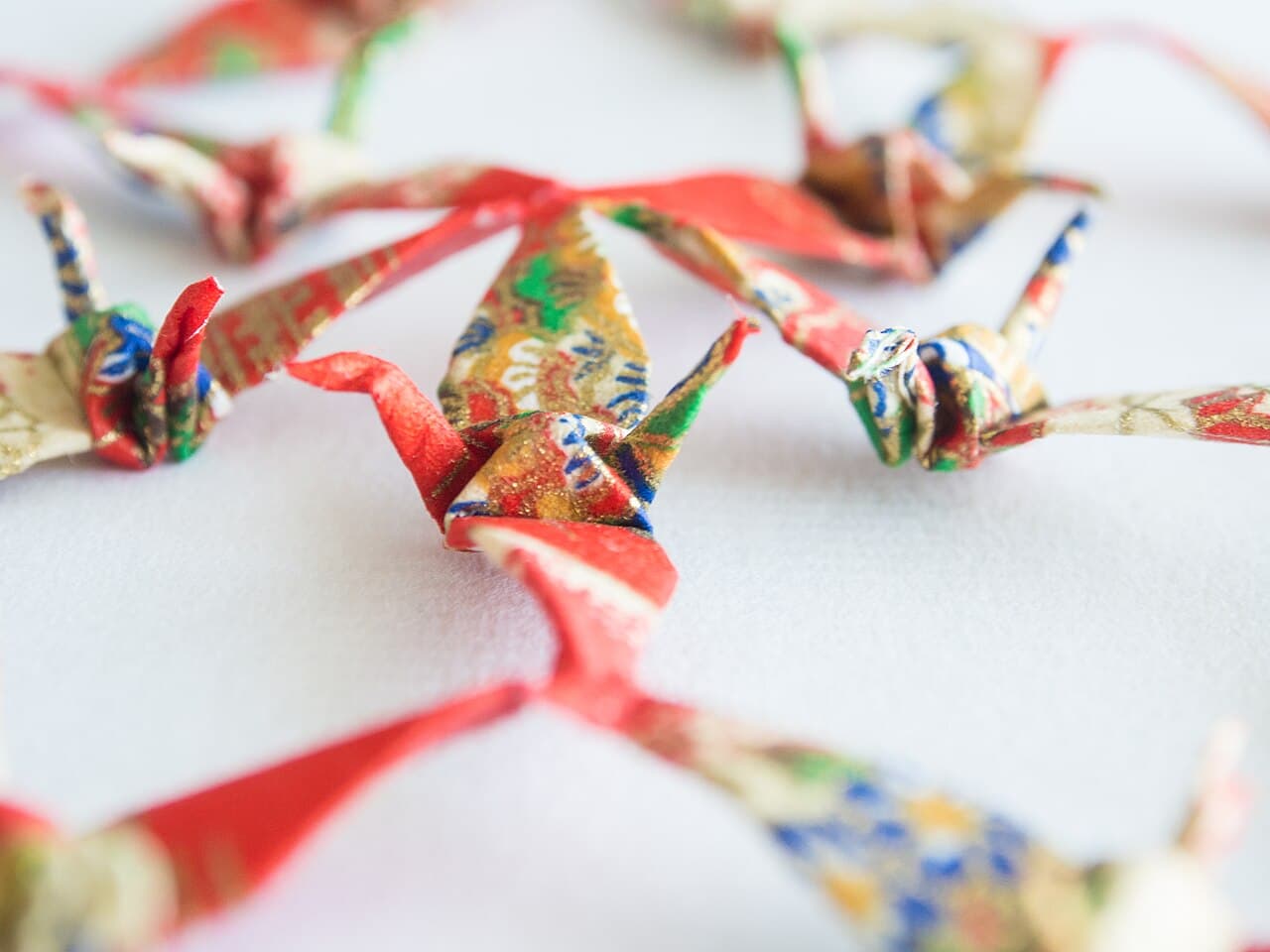
Not in the way a tea ceremony has strict manners — origami is casual, and instructors expect mistakes. The one thing that actually matters is crisp, accurate folds: origami rewards patience over speed, and a sloppy crease early on throws off every fold after it, so it's completely fine to ask your teacher to slow down. One bit of cultural context worth knowing before you start: strings of 1,000 folded cranes (senbazuru) are a traditional Japanese wish for health or peace, a tradition that became especially well known worldwide through the story of Sadako Sasaki in Hiroshima — so a paper crane folded here carries a little more meaning than just a craft souvenir.
Make a day of it
Taro's Origami Studio sits minutes from Sensō-ji, so it pairs naturally with a stop at kimono rental in Asakusa beforehand or afterward. If you'd rather try a different hands-on craft elsewhere in the city, our calligraphy class in Tokyo guide covers English-guided shodō sessions in Roppongi and Akihabara. For the full spread of what to book across the city, see the best cultural experiences in Tokyo. Planning your trip around a festival or seasonal event instead? Check the calendar at our sister site japan-event.info.
- English-guided drop-in mini lesson at Origami Kaikan, a working washi (Japanese paper) institute in business since 1858 (Ochanomizu) — no reservation needed
- Concierge-led workshop inside Nihonbashi's Coredo Muromachi mall, alongside a dozen other English-guided craft experiences
- A private 1.5-hour deep-dive with a local instructor in Shinjuku — fold 3 to 5 models, from a simple crane up to a blooming lotus
- A kid-friendly studio a few minutes from Sensō-ji in Asakusa, where you fold as many models as you like in 30 minutes
There's no strict manners code like a tea ceremony here — origami is casual, and instructors expect mistakes. The one thing that actually matters is folding crisply and accurately: origami rewards patience over speed, and a sloppy early crease throws off every fold after it, so don't be afraid to ask your teacher to slow down. Worth knowing: strings of 1,000 folded cranes (senbazuru) are a traditional Japanese wish for health or peace, a tradition especially well known worldwide through Sadako Sasaki's story in Hiroshima — so a crane you fold here carries a little more meaning than just a craft souvenir.
FAQ
- How much is an origami class in Tokyo?
- From ¥1,100 per person (as of July 2026) for the drop-in English mini lesson at Origami Kaikan in Ochanomizu — cash only, 20–30 minutes. The Nihonbashi Information Center workshop runs ¥1,500–¥2,500 per person for 30–60 minutes.
- Do I need a reservation for an origami class in Tokyo?
- Not for Origami Kaikan's drop-in mini lesson — but it is held only about 2–3 times a month, so check the school calendar for current dates before you go. The other options on this page are booked in advance.
- How long does an origami class take?
- From 20 minutes to 1.5 hours, depending on which option you pick.
- Is there an etiquette to worry about in an origami class?
- No strict code — origami is casual and instructors expect mistakes. What actually matters is folding crisply and accurately: a sloppy early crease throws off every fold after it, so don't be afraid to ask your teacher to slow down.