
The short answer
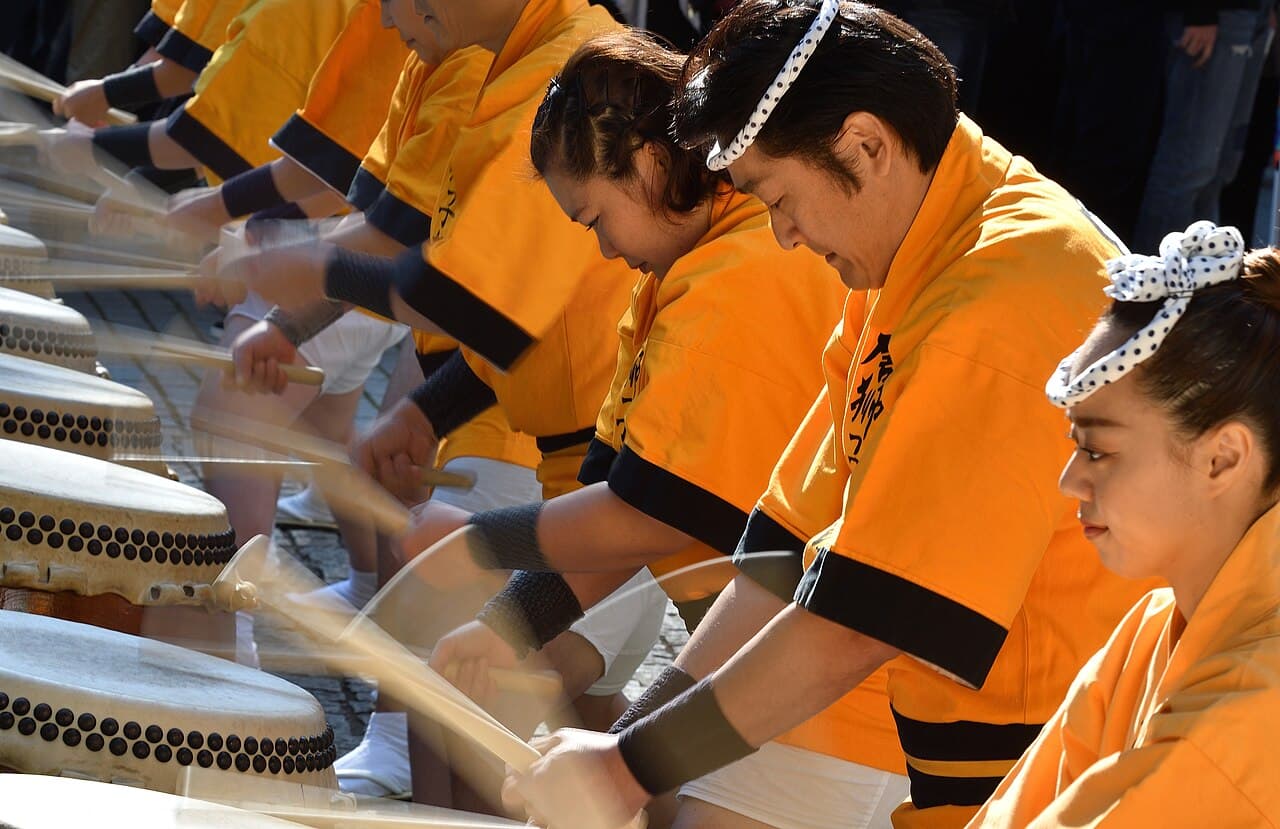
Taiko (和太鼓, wadaiko) is Japanese ensemble drumming — barrel-bodied drums, whole-body strokes, and a boom you feel in your chest before you hear it. In Tokyo you can join an English-friendly taiko drumming class with zero musical experience: TAIKO-LAB, run by Taiko Center (one of the biggest taiko school networks in Japan), offers 60-minute sessions for overseas visitors at its Aoyama and Akihabara studios from about ¥15,000 per person for groups of three or more (solo and duo cost more per head — confirm the exact current rate on TAIKO-LAB's own booking page), and an independent 90-minute bilingual workshop in Daikanyama runs a confirmed ¥16,500 per person (prices as of July 2026, from the operators' booking pages). Book online, wear clothes you can move in, and bring socks — more on that below, because at a taiko class what you wear genuinely matters.
What actually happens, step by step
A first-timer session follows roughly the same arc everywhere:
- Shoes off, short bow. Taiko studios are dojo-like spaces: shoes stay at the door (socks on) and the lesson opens with a quick greeting and bow.
- Stance before sound. Before you touch a drum you learn how to stand — feet wide, knees soft, weight low. The power comes from your legs and hips, not your wrists, and getting this right is what makes the next hour feel amazing instead of exhausting.
- Meet the bachi. You're handed a pair of thick wooden sticks and taught the full stroke: the arm swings from the shoulder, the stick rebounds off the drum head. Two basic sounds — a deep don in the centre of the skin, a sharp ka on the rim — are all you need.
- Rhythm, phrase by phrase. There's no sheet music. The teacher chants the pattern the traditional way (don don ka don…), you chant it back, then you play it — call and response, gradually speeding up.
- Play a piece together. In the last third of the class the phrases chain into a complete song, everyone on their own drum, with the teacher driving the tempo. This is the part people remember: fifteen drums in a soundproofed room is physically thrilling.
- The finish. A final full-speed run-through, a closing bow, jelly arms, and photos with the drums.
The honest surprise for most first-timers is how physical it is — closer to a dance class than a music lesson. An hour is genuinely enough; your forearms will tell you so.
Where to book (honest comparison)
| Provider | English | Price (July 2026) | Duration | Area / station | Vibe |
|---|---|---|---|---|---|
| TAIKO-LAB Aoyama (Taiko Center — official) | English-friendly; reservation site built for overseas visitors | From about ¥15,000 pp (3+); solo/duo cost more — confirm current rate on the booking page | 60 min | Aoyama, near Gaienmae Station | Japan's biggest taiko school; proper studios, sessions cap at 15 |
| TAIKO-LAB Akihabara (same school) | Same | Same session pricing | 60 min | 4-min walk from Akihabara Station | Same programme; easy to pair with an Akihabara day |
| Taiko Drumming Workshop, Daikanyama (taught by taiko artist Eva Kestner) | Fully bilingual EN/JA | ¥16,500 pp | 90 min | Daikanyama (Shibuya), about 8 min from Daikanyama Station | Small, artist-led; one traditional and one modern piece, plus a short performance by the teacher |
How to choose: travelling solo or as a pair, TAIKO-LAB's per-person rate rises steeply, so it's worth comparing against the Daikanyama workshop's flat ¥16,500; in a group of three or more, TAIKO-LAB's roughly ¥15,000-per-head rate tends to be the cheaper option and everyone gets a drum; if you want more depth, the 90-minute workshop covers both a traditional and a contemporary piece. Always check TAIKO-LAB's own booking page for the exact current price before you commit, since group-size pricing tiers can change.
A freshness warning: older blog posts still mention flat ¥5,000–6,000 taster lessons (2016–2018 pricing) and a TAIKO-LAB studio in Asakusa. As of July 2026 the official English reservation site lists Aoyama and Akihabara as the Tokyo venues (Asakusa is referenced only in past tense on Taiko Center's own site) — trust the live booking calendar, not old reviews, for both location and current price.
Booking notes: TAIKO-LAB's site takes credit card or PayPal, and its cancellation policy is free until 4 days before, 100% within 3 days of the session. All three options require advance reservation — walk-ins aren't a thing here.
What to wear (it matters more than you think)
Taiko is the one Tokyo culture experience where your outfit can ruin the fun, so:
- Trousers you can lunge in. The playing stance is wide and low, and your arms swing overhead. Stretchy or loose trousers beat jeans; skirts are a bad idea.
- Socks, not bare feet. Shoes come off at the studio, and TAIKO-LAB's booking form specifically asks participants to wear socks in class. Pack a fresh pair.
- Nothing that dangles. Rings, watches and bracelets come off — they can damage the drum head (taiko are handmade and expensive) and your knuckles.
- Hair up, towel and water. You will sweat; a small towel and a bottle of water are the difference between glowing and melting.
Etiquette: it's a dojo, not a karaoke box
Taiko schools keep a light version of martial-arts manners. Bow when the teacher bows; don't drum idly while they're explaining; never lean on a taiko or rest things on the drum head. Loud is good — shouts of encouragement (kiai) are part of the music, so don't hold back. And be punctual: sessions run back-to-back, and a 60-minute slot really is 60 minutes. If you're sensitive to noise (or bringing small children), it is genuinely loud — asking the studio about earplugs is completely normal.
Who it's for — and who should pick something else
Taiko is the best pick in Tokyo for groups, families with kids and anyone who fidgets through quiet culture — it's joyful, cooperative and a real workout, and no language ability or rhythm is needed. If your ideal Japan experience is silent and delicate instead, a calligraphy class or a kintsugi workshop is the opposite end of the spectrum. Building a physical, hands-on Tokyo itinerary? Taiko pairs perfectly with a samurai sword experience or a ninja trial class on the same trip.
And once you've played, you'll hear taiko everywhere: summer festival season is when drum troupes take over the streets — check what matsuri are on during your dates at Japan-Event.
- Play a real taiko — you feel the boom in your chest
- Learn a complete rhythm and play a piece together in one session
- English-friendly studios in Aoyama, Akihabara and Daikanyama
- A genuine full-body workout — you leave sweaty and grinning
Shoes come off at the studio door and lessons open and close with a short bow — just follow along. Treat the drums with care: no rings or watches near the drum head, and don't lean on a taiko between songs. Shouting kiai isn't rude — it's part of the music. Arrive a few minutes early; a 60-minute slot really is 60 minutes.