Knife-making📍 Tokyo

Japanese Knife Sharpening & Engraving Workshop, Asakusa

In a 90-minute, fully English workshop at BUB Activity Center in Asakusa (from ¥25,000), you sharpen a pre-forged Japanese kitchen knife on whetstones, fit a magnolia handle with a wooden mallet, and engrave your name to take home.

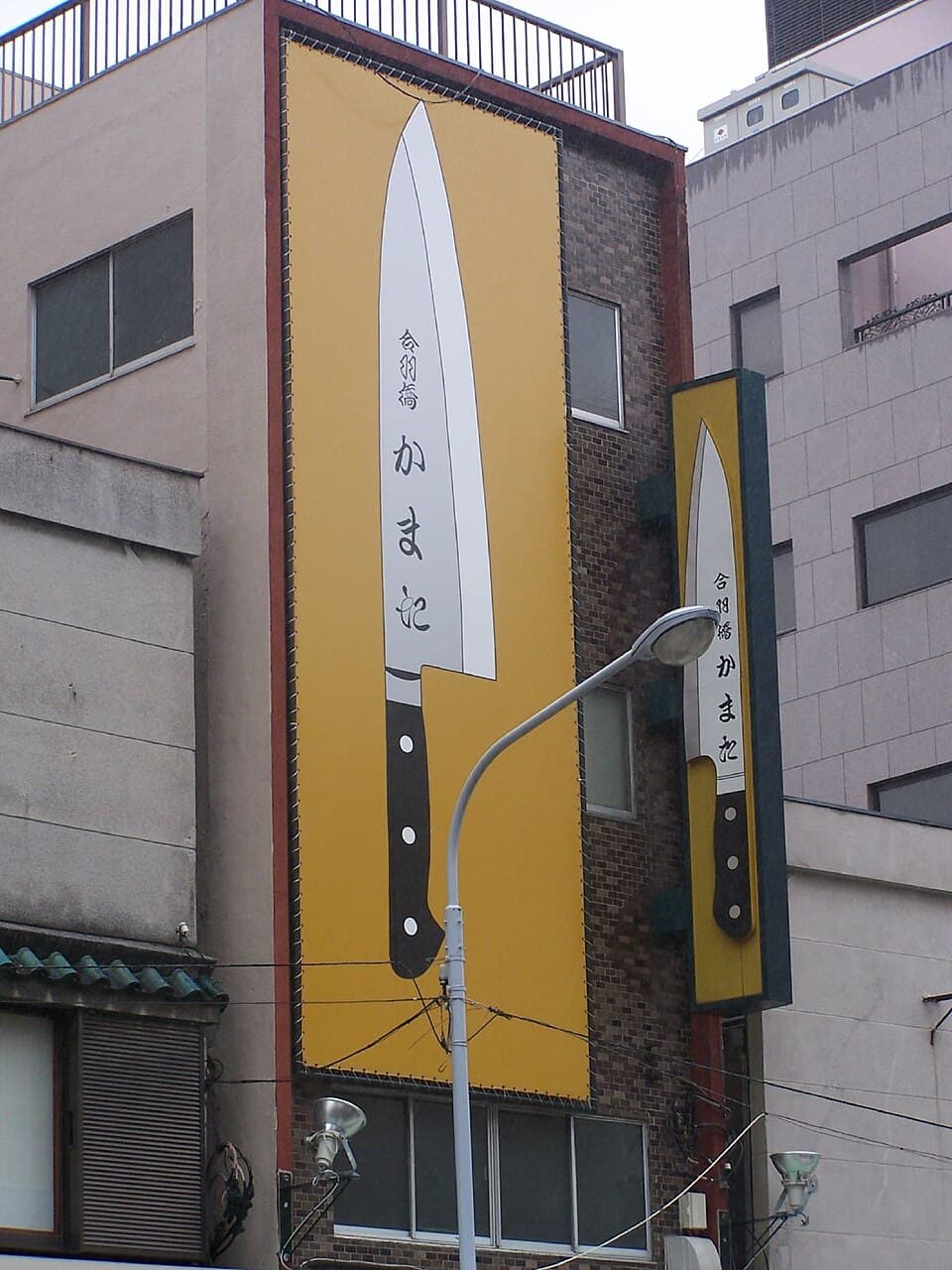
A traditional Japanese kitchen-knife shop on Kappabashi-dori in Tokyo's Taito ward, the kitchenware district adjoining Asakusa, with hand-forged blades displayed for sale
Photocapy (Flickr) / CC BY-SA 2.0, via Wikimedia Commons

En un coup d’œil

L’info honnête pour y aller
Langue
Accessible en anglais — guidé ou accueilli en anglais
Durée
1.5 hours (90 minutes)
Tarif
¥25,000 per person booking direct (about $163); Viator, GetYourGuide, and Rakuten Travel Experiences list the same 90-minute class from about $134–165 depending on promotions.
Réservation
Réservez à l’avance — sans réservation non garanti
Gare la plus proche
Asakusa Station (Tsukuba Express), 2-min walk; also about a 7-min walk from Tawaramachi Station (Ginza Line) and from the Asakusa Station complex (Ginza Line / Toei Asakusa Line / Tobu Skytree Line)
Tenue conseillée
Casual clothes and closed-toe shoes; a protective haori (jacket) is provided to keep your clothes stain-free. Skip loose, baggy sleeves that could catch on the whetstone or mallet.
Idéal pour
First-time visitors curious about Japanese blacksmithing and blade craft, Home cooks who want a genuine handmade kitchen knife to take home, Travelers seeking a hands-on souvenir instead of a shop-bought one, Solo travelers and small groups (English-speaking staff throughout)

Le chemin · 道

  1. ArriverAsakusa Station (Tsukuba Express), 2-min walk; also about a 7-min walk from Tawaramachi Station (Ginza Line) and from the Asakusa Station complex (Ginza Line / Toei Asakusa Line / Tobu Skytree Line)
  2. UsagesQuelques gestes discrets comptent — lisez les usages
  3. FaireKnife-making
  4. RéserverRéservez votre créneau ci-dessous

What to expect

Asakusa's Kappabashi-dori — Tokyo's "Kitchen Town" — is lined with wholesale shops selling every knife, wok, and plastic food sample a chef could want, but almost none of them let you actually make anything. BUB Activity Center, a two-minute walk from Tsukuba Express Asakusa Station, fills that gap with a 90-minute, fully English workshop where you finish a real, usable Japanese kitchen knife rather than just watch one being forged.

You start by picking your blade from up to five pre-forged, kurouchi (black-finish) knife shapes on offer that day. A staff member walks you through a two-stone sharpening sequence: a coarser stone to set the bevel, then a finer one to raise a true edge, checking your angle by hand at each step. Reviews on Tripadvisor and Viator consistently mention staff correcting grip and stone angle one-on-one, which matters — most first-timers push the blade at the wrong angle and end up polishing rather than sharpening until someone stops them. Once the edge is set, you fit a smooth magnolia (honoki) handle onto the tang and drive it home yourself with a wooden mallet, then engrave your name in Japanese script or a sakura-leaf motif into the wood. You leave with a knife that's genuinely sharp enough to cook with, not a souvenir blank.

Direct booking vs. OTA — which to use

The workshop is bookable four ways, and the prices land close together once you account for OTA card fees and promos, so it mostly comes down to cancellation policy. Booking directly through BUB's own site runs a flat ¥25,000 per person for the 90-minute slot, no markup. Viator lists the identical class as "Make Your Own Japanese Knife" from about $163.72 per adult — in line with the direct rate, and worth it if you want Viator's standard free-cancellation window and are already stacking other bookings there. GetYourGuide runs the same experience as "Tokyo: Knife Making Workshop (Sharpening, Engraving)" from around $134 on promotion (regular rate closer to $157) — occasionally cheaper than paying direct when a sale is live, though not dramatically so. Rakuten Travel Experiences carries it at the same ¥25,000 as the official site. None of the four differ on what you actually do in the room; the difference is purely refund policy and whatever discount is running that week.

Sessions run twice daily (11:00 and 14:30), and walk-up availability can be tight — booking a few days ahead, and ideally a week out if you want a private slot, is the safer play. Combine it with a stop at one of Asakusa's kimono rental shops beforehand or a samurai swordsmanship class the same afternoon for a full craft-and-costume day in the neighborhood. For more options in this vein, see our Tokyo cultural experiences roundup.

One practical note that trips up more travelers than you'd expect: this is a real, sharpened blade, not a blunted demo piece. If you're flying onward from Japan, it has to go in checked luggage — airport security will confiscate it from a carry-on.

À ne pas manquer

  • Sharpen a pre-forged kurouchi-finish blade on two whetstones under one-on-one staff guidance
  • Choose from up to 5 pre-forged kurouchi (black-finish) knife shapes
  • Fit a custom magnolia (honoki) handle yourself with a wooden mallet
  • Engrave your name in Japanese or a sakura-leaf motif into the handle
  • 2-minute walk from Tsukuba Express Asakusa Station, fully in English

Bon à savoir

This is a genuine sharpened blade, not a blunted demo piece — follow staff instructions on grip and stone angle exactly, and if you're flying onward from Japan, pack the finished knife only in checked luggage (it will be confiscated from carry-on).

MICHI Editorial
  • Japan-based editorial team
  • Primary sources, cited
  • Variable facts dated

The MICHI editorial desk. We work from primary sources and date every claim that can change.

Plus d’expériences à Tokyo

ShamisenTokyo

Shamisen Trial Lesson in Shinjuku, Tokyo

Pick up Japan's three-stringed lute for a real hands-on lesson, not a photo op: grip, plucking technique, and by the end a full verse of an actual song, taught in a small Shinjuku studio a short walk from Akebonobashi Station.

English-OK · 45 or 60 minutes (your choice) · ¥5,200 (45 min) or ¥6,950 (60 min) per person, booked direct with the school; OTA packages that bundle koto and Okinawa sanshin run roughly ¥8,700–¥10,300+ per instrument

BonsaiTokyo

Shunkaen Bonsai Museum — Hands-On Bonsai Class, Tokyo

At Shunkaen Bonsai Museum, a working garden run by Prime Minister's Award-winning artist Kunio Kobayashi, visitors get real tools and a real tree — not a souvenir photo op. English-language classes run about an hour for ¥13,200, with a longer private version that ends over matcha.

English-OK · About 1 hour for the standard class (Tue/Thu/Sat, 10:00 and 14:00 slots); about 100 minutes for the private class with tea ceremony · ¥13,200 (tax included; ¥12,000 + tax on the museum's own listing), including museum admission, for the ~1-hour class. From ¥38,000 per person for the 100-minute private class with tea ceremony (Wabunka).

Martial artsTokyo

Sumo Experience in Tokyo — the Best English-Friendly Shows & Stable Visits (and How to Book)

Where to actually see or try sumo in Tokyo — Ryogoku, Asakusa, Ginza and Shinjuku dinner/lunch shows plus a real stable visit — with honest prices, reviews and direct booking links.

English-OK · 90 minutes to about 2 hours for a show (including a meal at most venues); 2–3 hours for a private working-stable visit · From ¥11,000 per person for a lunch show (Ryogoku); ¥16,000–¥27,000+ for dinner shows with chanko nabe or kaiseki (Asakusa/Ginza); about $75 for a 90-minute Shinjuku show; private stable visits are quote-only (as of July 2026)