
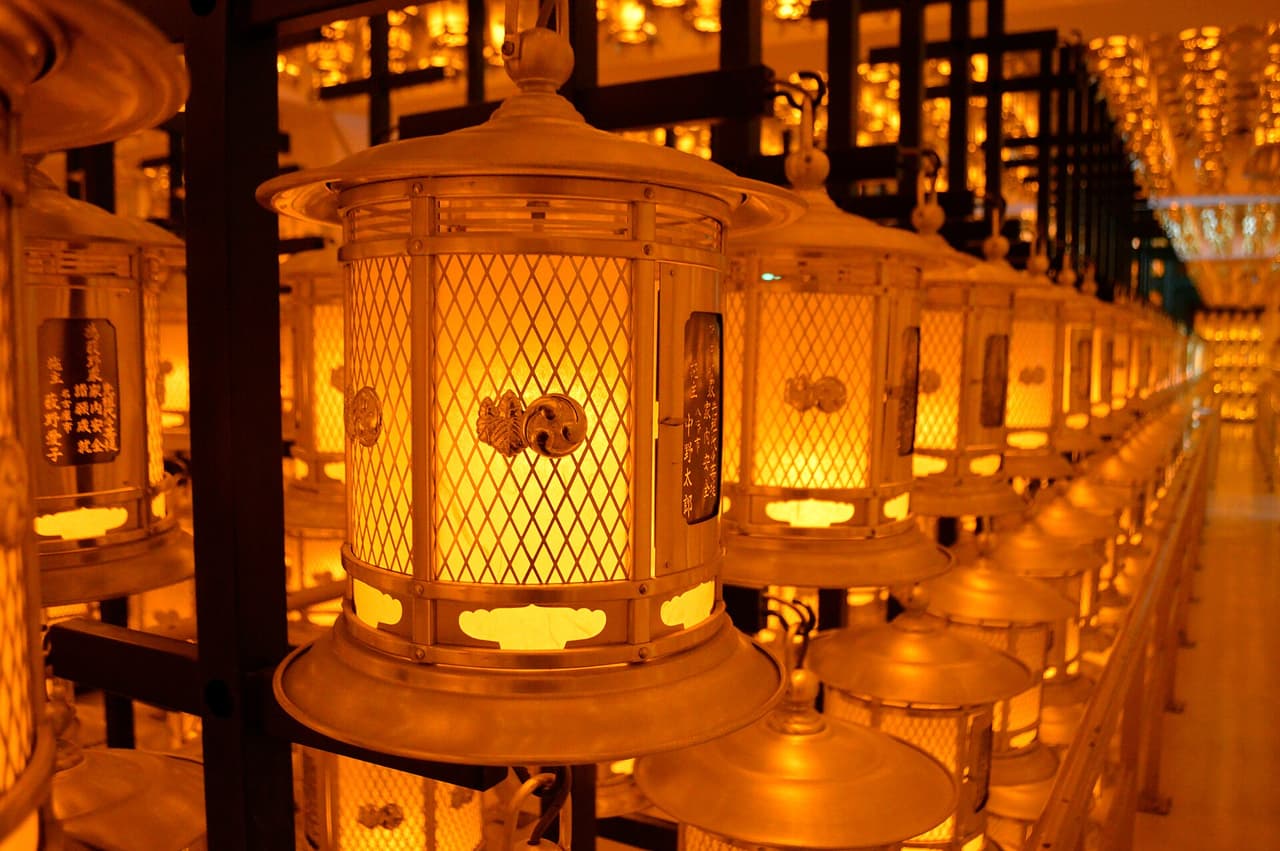
The short answer
A shukubo (宿坊) is lodging inside a working Buddhist temple. On Koyasan — the mountain monastery complex founded by Kūkai in 816 and the headquarters of Shingon Buddhism — more than fifty temples still take overnight guests. A night runs roughly ¥12,000–¥25,000 per person including dinner and breakfast, both of them shojin ryori (Buddhist vegetarian cuisine). You sleep on a futon on tatami, you are welcome at the 06:00 morning service, and the gates close around 21:00.
The honest framing: this is not a hotel with a temple theme. It is a monastery that rents rooms, and the day runs on the monks' clock.
What one night actually includes
| Check-in | From about 15:00. Later arrivals are awkward — dinner is early and staff are few. |
| Dinner | Shojin ryori, typically 17:30–18:00, often served in your room. Koyasan's goma-dofu (sesame tofu) is the local signature. |
| Bath | Communal, before dinner is easiest. Mostly shared; a handful of renovated rooms have private facilities. |
| Evening | Gates and quiet hours from about 21:00. Several temples run an Okunoin night tour before that. |
| Morning service | About 06:00, roughly 45 minutes: chanting in the main hall, incense, sometimes a goma fire ritual. Optional but the reason most people come. |
| Breakfast | About 07:00, also shojin ryori. |
Where to book, and which temples confirm instantly
The cleanest route is the Koyasan Shukubo Association, the temples' own booking platform, which runs in English. Six temples give instant confirmation — Eko-in, Fudo-in, Hojo-in, Kodai-in, Fugen-in and Daien-in — and all six are suitable for a first visit. Every other temple is booked through the association's request system, where a secretariat matches you to a lodging; expect a wait rather than an instant answer.
Eko-in is the one most international visitors end up at, and for good reason: it books up to eleven months ahead, its staff work comfortably in English, and it runs the fullest programme — the Okunoin night tour, goma fire ritual, sutra copying (shakyō) and ajikan meditation. You can reserve it directly. The trade-off is that it is the busiest temple on the mountain; if you want quiet, ask the association for something smaller.
One practical warning that catches people out: most temples are cash-only on site. Settle your extras in yen.
Getting there
From Osaka, take the Nankai Koya Line limited express Koya from Namba to Gokurakubashi (about 80 minutes), change to the cable car (about five minutes), then a local bus to your temple's stop. It is a genuine detour, not a half-day trip — which is exactly why an overnight beats a day trip here.
What surprises first-timers
- The cold. Koyasan sits around 800 m up. Rooms are heated; corridors and washrooms often are not. Pack layers even in summer.
- The early night. Gates close around 21:00 and there is very little open after dark. Bring a book, or take the night tour.
- Shared bathrooms. Standard at most temples. En-suite exists but is priced as a premium.
- The food is genuinely vegetarian. Shojin ryori excludes meat and fish, and traditionally the pungent alliums too; stock is usually kombu-based rather than bonito. If you have a strict requirement, confirm at booking — but this is one of the easiest vegetarian meals to find in Japan. (Our sister site VEGAN JAPAN covers plant-based eating across the country in more depth.)
- You are a guest in a place of practice. Shoes off, phone away during services, voices down after dark.
Okunoin, and why you should go at night
Okunoin is the approach to Kūkai's mausoleum, a two-kilometre path through cedar forest lined with more than 200,000 memorials — feudal lords, corporate founders, war dead, and a surprising number of company mascots. In daylight it is impressive. After dark, with the stone lanterns lit and the crowds gone, it is the single strongest memory most visitors take off the mountain. Several temples, Eko-in among them, run a guided night tour; booked separately it typically costs around ¥1,800.
Before you go
If the appeal here is the sitting rather than the sleeping, read our guide to zazen in Kyoto or zazen in Tokyo — Zen meditation is a different school and a different practice from Shingon, and the two are often confused. For the vocabulary, what is Zen untangles it. And if you plan to collect a temple seal while you are on the mountain, our goshuin guide explains the etiquette before you hand over the book.
---
Prices, schedules and booking links on this page were verified as of 2026-08-09. Operators change them without notice — confirm on the booking page before you travel, and tell us if you find something out of date.
- Shojin ryori served in your room or a communal hall — sesame tofu (goma-dofu) is Koyasan's signature and is worth the trip on its own
- The 06:00 morning service (gongyo): chanting in the main hall, incense, and at several temples a goma fire ritual where wooden prayer sticks are burned
- Okunoin after dark — several temples, Eko-in among them, run a guided night tour of the cemetery approach (typically around ¥1,800 if booked separately)
- Tatami rooms with futon laid out for you, paper screens, and a temple garden most guests get to themselves before breakfast
- Six temples take instant online bookings in English through the official association: Eko-in, Fudo-in, Hojo-in, Kodai-in, Fugen-in and Daien-in
Shoes come off at the entrance and stay off. Do not photograph during the morning service or inside halls where a sign says not to — ask first, and put the phone away entirely once chanting starts. If you sign up for gongyo, turn up: the monks hold the service whether or not you appear, but an empty seat you reserved is discourteous. Bathe before dinner if you can, keep your voice down after the gates close around 21:00, and remember you are a guest in someone's place of practice, not a customer in a hotel.
Preguntas frecuentes
- Do you have to be Buddhist to stay in a shukubo?
- No. Koyasan's temple lodgings have taken lay travellers, Japanese and foreign, for centuries, and no temple will ask about your beliefs. Participation in the morning service is welcome but optional — you are asked to be respectful, not to convert.
- How much does a night at a Koyasan shukubo cost?
- Roughly ¥12,000–¥25,000 per person per night including a shojin ryori dinner and breakfast, with premium rooms that have a private bath costing more. Bring cash: most temples do not take cards on site.
- Can you book a Koyasan temple stay in English?
- Yes. The official Koyasan Shukubo Association site runs in English, and six temples — Eko-in, Fudo-in, Hojo-in, Kodai-in, Fugen-in and Daien-in — confirm instantly online. Other temples are booked through the association's request system, which a secretariat answers.
- Is the food at a shukubo vegan?
- Shojin ryori is Buddhist temple cuisine: no meat, no fish, and traditionally no onion, garlic or other pungent alliums. Dashi made from kombu rather than bonito is the norm. It is one of the few meals in Japan that is plant-based by rule rather than by special request, but confirm when booking if you have a strict requirement.
- Do shukubo rooms have private bathrooms?
- Usually not. Most temples have shared bathrooms and a communal bath, though several have renovated some rooms with en-suite facilities and price them accordingly. Corridors and washrooms are often unheated, which matters more than you would expect at 800 m.