
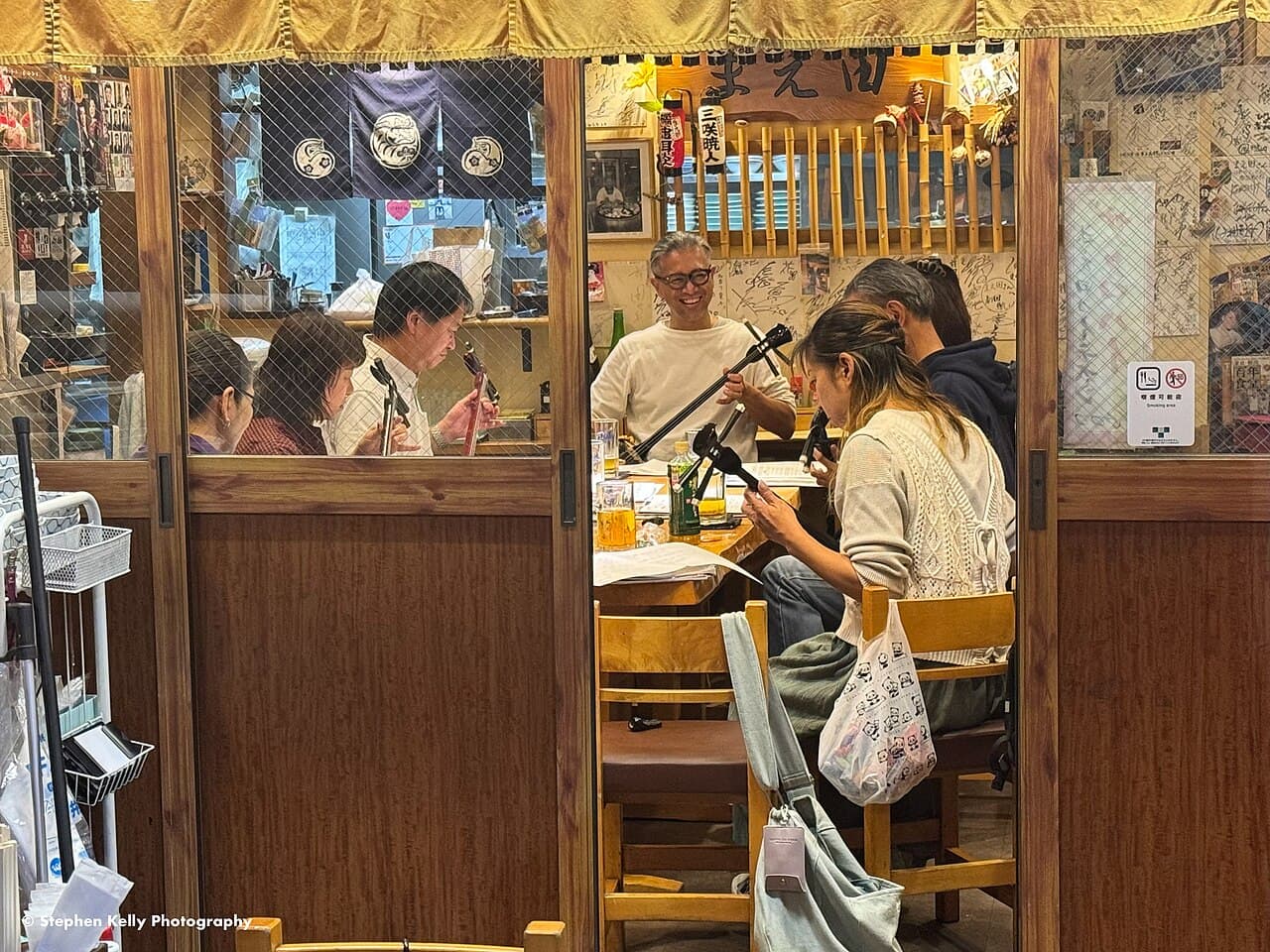
Most travelers only hear the shamisen — the twangy, percussive three-stringed lute behind geisha performances and folk ballads — from the audience. This lesson puts one in your hands. The Shinjuku Tsugaru Shamisen School (Akebonobashi branch), run under the Oyama school — the largest lineage of Tsugaru shamisen playing — offers English-language trial lessons built specifically for visitors with zero musical background. Your instructor, Kouzan Oyama, is TOEIC-875 certified and a two-time group champion at the Tsugaru Shamisen World Championship, so the English explanation and the playing itself are both the real thing, not a watered-down tourist version.
What to expect
Lessons run 45 minutes (¥5,200) or 60 minutes (¥6,950) per person, in groups of up to seven at that base rate. You'll start with how to hold the instrument and the bachi (plectrum) — shamisen posture is unlike a guitar's, so this takes a few minutes to feel natural — then move to basic plucking technique against the instrument's three strings. The instructor demonstrates first, then walks the group through a real piece: past students have learned a verse of "Sakura," "Senbonzakura," or even a shamisen arrangement of "Smoke on the Water." By the end of a 45-minute session, most first-timers can play a short passage cleanly enough to record on their phone. Kimono dressing is offered free if you want the full look for photos, and there's an optional samurai armor trial for ¥5,500 if you want to pair the lesson with a costume moment — a nice complement if you're also considering a samurai experience in Tokyo.
Official studio vs. OTA platforms — which to book
You can book this exact lesson, at the exact same Akebonobashi studio, through several channels, and the price varies more than you'd expect. Going direct with the school (phone, email, or LINE) is the cheapest route at ¥5,200–¥6,950 per person for the standard shamisen-only lesson. Viator and GetYourGuide list a bundled version — shamisen plus koto plus Okinawa sanshin, with the instructor performing on and teaching all three — aimed at travelers who've already loaded their trip into those apps and want one-tap confirmation and a familiar cancellation policy; expect to pay noticeably more for that convenience and instrument variety. Attractive Japan's booking platform lists the same three-instrument format at roughly ¥10,300 per instrument choice, and Rakuten Travel Experiences carries a separate listing around ¥8,688. If all you want is the shamisen and you're comfortable messaging a Japanese business in English, book direct and save money; if you want koto and sanshin thrown in, or you'd rather keep every booking inside one OTA account, the platform listings are a legitimate (if pricier) shortcut.
The studio is a good stand-alone stop or an easy add-on to a Shinjuku day — it sits between the government-building skyline and the quieter Yochomachi backstreets, nowhere near the tourist density of Asakusa. For a broader sense of what else counts as a genuine hands-on culture activity in the city, see our roundup of Tokyo cultural experiences, and if you're also weighing Kyoto for this kind of thing, our Tokyo vs. Kyoto comparison covers where each city pulls ahead.
- Instructor Kouzan Oyama — TOEIC-875 certified, two-time Tsugaru Shamisen World Championship group champion
- 45- or 60-minute trial lesson; by the end you'll play a real verse ("Sakura," "Senbonzakura," even "Smoke on the Water")
- Free kimono dressing for photos; optional ¥5,500 samurai armor trial add-on
- Zero music experience required, taught in English
- 7-minute walk from Akebonobashi Station — easy to pair with a Shinjuku day
Arrive 5-10 minutes early — shamisen grip and posture take a few minutes to set up correctly, and late arrivals cut into your lesson time. Trim long nails beforehand; they interfere with clean plucking and can damage the instrument's skin body.
Preguntas frecuentes
- How long is a shamisen trial lesson in Tokyo?
- At Shinjuku Tsugaru Shamisen School's Akebonobashi studio the English visitor lesson is 45 or 60 minutes, your choice. The school's Japanese-language page lists its free trial lesson as about 30 minutes (20 minutes of playing plus 10 minutes of explanation). As of 13 September 2026.
- How much does the shamisen lesson cost?
- ¥5,200 per person for 45 minutes or ¥6,950 for 60 minutes when booked direct, for groups of up to seven. Kimono dressing is free and the samurai armour trial is ¥5,500 extra. OTA packages that add koto and Okinawa sanshin cost more. As of 13 September 2026.
- Do I need my own shamisen, and is there a cancellation fee?
- No instrument is needed — the school lends everything, so you can come empty-handed. The school states that it charges no cancellation fee. Booking is by the online form, WhatsApp or LINE.