
What Is Shodo? Japanese Calligraphy Explained
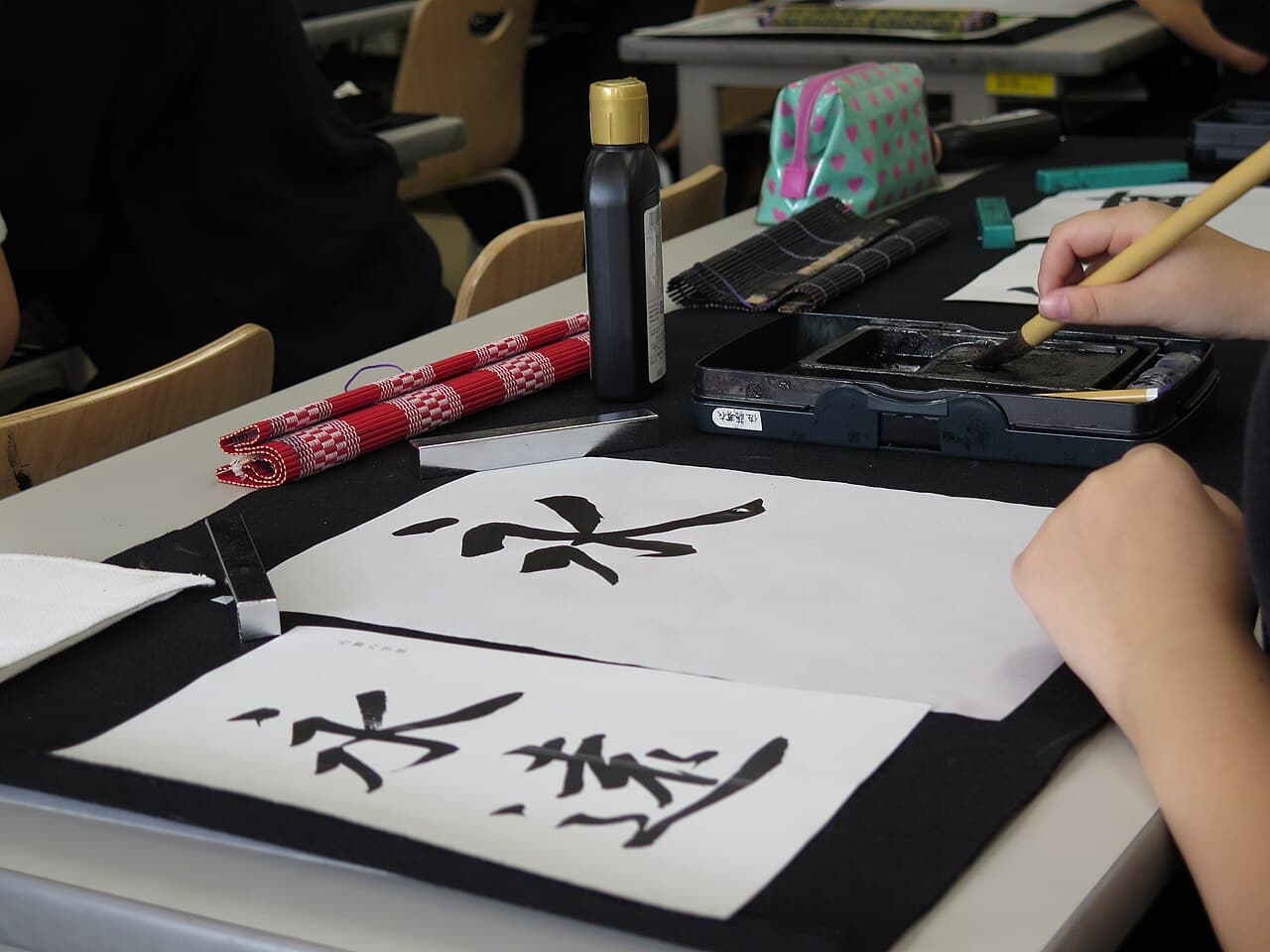
Quick answer: Shodo (書道, "the way of writing") is the traditional Japanese art of writing characters with a brush and ink. It arrived from China around the 6th century AD and was gradually reshaped into a distinctly Japanese style during the Heian period. Shodo is less about decoration and more about discipline: each brushstroke is committed in a single, unrepeatable motion, which is why it's practiced as much for mental focus as for the finished character.
Where the word comes from — and what it isn't
"Shodo" literally breaks down to sho (書, to write) and do (道, way or path) — the same "do" found in judo, kendo, and sado (tea ceremony). That suffix matters: it signals a discipline pursued for self-cultivation, not just a decorative skill. This is the first place Western assumptions tend to go wrong. Shodo is often flattened in translation to "Japanese calligraphy," which invites comparisons to Western pointed-pen or Copperplate calligraphy — ornamental scripts built around flourish and legibility. Shodo shares almost none of that logic. It's closer to a moving meditation captured in ink: the brush records pressure, speed, hesitation, and confidence in real time, and none of it can be edited afterward.
The Four Treasures of the Study
Shodo is practiced with four traditional tools, known in Japanese as bunbo shiho (文房四宝), the "Four Treasures of the Study":
- Fude (筆) — the brush, traditionally made from animal hair set in a bamboo handle. Subtle differences in hair type, length, and stiffness change how a line behaves.
- Sumi (墨) — the inkstick, traditionally made from pine soot and animal glue, ground by hand.
- Suzuri (硯) — the inkstone, a flat basin used both to hold water and to grind the inkstick into liquid ink.
- Washi (和紙) — traditional Japanese paper made from plant fibers such as kozo (paper mulberry), chosen for how readily it absorbs ink.
Many contemporary practitioners, including beginners in classroom settings, use pre-made liquid ink rather than grinding a stick by hand — grinding the ink is itself considered part of the meditative preparation, not just a practical step.
Five scripts, one skill that keeps evolving
Shodo recognizes five major script styles, usually presented in this order — from oldest and most formal to most cursive: tensho (seal script, the oldest and most pictographic-looking form), reisho (clerical script, defined by confident horizontal strokes), kaisho (regular/block script — the clean, separated strokes closest to printed kanji), gyōsho (semi-cursive, a fluid middle ground), and sōsho (cursive, the most abstracted and fastest to write, sometimes nearly illegible to non-specialists). That's a formality ordering, not a learning order, though: in practice most students learn kaisho first and gyōsho second, only circling back to the more historical tensho and reisho later. A single character can look dramatically different across these five styles, which is part of why shodo is treated as a lifelong craft rather than something "finished" after learning to write correctly.
Why there's no eraser — the Zen dimension
The philosophy behind shodo owes a real debt to Zen Buddhism. Because a stroke, once laid down, cannot be corrected, the practice asks for full commitment in the moment — a state calligraphers describe as mushin, or "no mind," where the brush moves without second-guessing. This connects to the broader Japanese idea of ichigo ichie (一期一会), "one time, one meeting": the same stroke, by the same hand, will never happen again. That's also why shodo has historically been paired with the tea ceremony — both are practices where the point isn't really the finished object, but the quality of attention brought to a single, non-repeatable moment.
A living school subject, not a museum piece
Unlike some traditional arts that survive mainly as spectacle, shodo is still an active part of Japanese education — most students practice it in school, and it remains a serious course of study at the university level for those training to teach it. That everyday familiarity is part of why it can be misread by outsiders as "just handwriting practice." In fact it sits closer to a martial art in structure: fixed forms, a strict order of learning, and years of practice before a calligrapher is considered to have found their own hand.
Reading about the four treasures and the five scripts only goes so far — shodo is a physical, sensory practice built around brush pressure and breath control that's genuinely hard to picture without holding the brush yourself. If you're in Tokyo and want to try it under real guidance rather than guessing at technique from a page, MICHI's calligraphy class in Tokyo walks through what an actual beginner session looks like — from grinding the ink to your first committed stroke.
FAQ
- Is shodo the same as Japanese calligraphy?
- Yes — "shodo" (書道) is the Japanese term usually translated as "Japanese calligraphy." But the English phrase can be misleading, since it invites comparison to Western decorative lettering styles. Shodo is closer to a meditative, disciplined practice than to ornamental font design.
- What are the Four Treasures of the Study in shodo?
- They are the brush (fude), inkstick (sumi), inkstone (suzuri), and paper (washi) — the four essential tools of traditional shodo, together known as bunbo shiho.
- How many styles of shodo script are there?
- Five main styles: tensho (seal script), reisho (clerical script), kaisho (regular script), gyōsho (semi-cursive), and sōsho (cursive). Most beginners start by learning kaisho.
- Why can't mistakes be corrected in shodo?
- Ink on absorbent washi paper cannot be erased or painted over cleanly, and traditional practice treats that irreversibility as central to the discipline — it forces full commitment to each stroke rather than allowing hesitation or revision.
- Do Japanese people still learn shodo today?
- Yes. Shodo is taught as part of standard schooling in Japan, and it continues as a formal course of study at the university level for those training to teach it.
Try it yourself
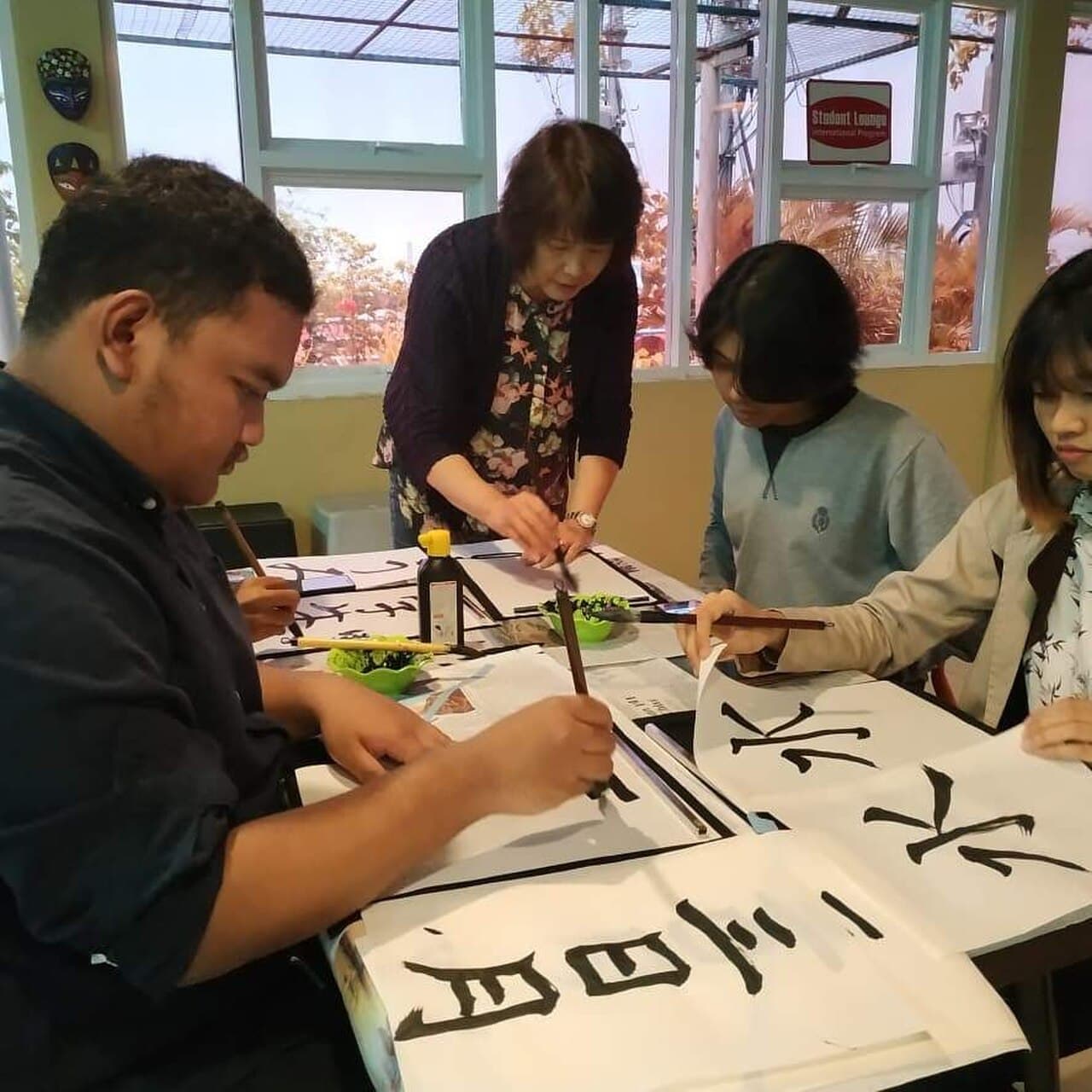
Calligraphy (shodō)Tokyo
Japanese Calligraphy Class in Tokyo: 3 English-Friendly Studios, Prices from ¥7,000 and How to Book
In Tokyo you book a calligraphy class directly on each studio's site: Shodocafe 7557 in Roppongi charges ¥8,800 per adult for 60 to 90 minutes, Wakalture starts at ¥7,000 per person for groups of four to six and takes cash only, and Sip & Shodo is ¥30,000 with booking a week ahead. As of 13 September 2026.