
Japanese Superstitions Every Visitor Should Know
Japanese superstitions are the small everyday taboos and lucky habits that grew out of Buddhist and Shinto belief, out of wordplay between similar-sounding words, and out of plain old folklore. Most Japanese people today treat them more as background habit or old-fashioned caution than as rules anyone strictly enforces, but they're still visible almost everywhere once you know to look for them, and a few will directly affect the numbers on a hotel floor button or the shape of a gift you bring.
The number 4 — and sometimes 9
The biggest one by far. The word for "four" (shi, 四) is a homophone of the word for "death" (死), so 4 is widely avoided — in gift quantities, in room and floor numbers, and in general. It's common for hospitals and hotels to skip a fourth floor or fourth room number altogether, the same way some Western buildings skip a 13th floor. 9 carries a lighter version of the same idea, since one reading of the number (ku) also means "suffering" or "agony" — which is also why combs (kushi) are sometimes avoided as gifts, since the word shares that same sound. If you're picking out a souvenir to bring home, it's worth keeping quantities away from four (and ideally nine) — our omiyage gift-giving guide covers the rest of what makes a gift land well.
Don't cut your nails at night
An old, widely repeated saying holds that cutting your nails after dark (yozume, 夜爪) means you won't be at your parents' side when they die — reinforced by wordplay, since "night nails" (夜爪, yozume) sounds identical to a phrase meaning "a shortened life" (世詰め, also yozume). There's also a practical layer underneath the folklore: before electric lighting, trimming nails with a blade by dim lamp or candlelight was a genuinely easy way to cut yourself, so the superstition likely doubled as a safety warning that outlived the original reason once electric light made it moot.
Don't whistle at night
Whistling (or playing music) after dark is said to summon snakes. One common explanation is that it's a folk memory of thieves and shady characters once using whistles to signal each other in the dark, which doubles as a very practical piece of advice: don't make noise at night that disturbs the neighbors.
Don't sleep with your head to the north
Called kita-makura, sleeping with your head pointing north is considered unlucky, because the deceased are traditionally laid out that way at a funeral. Many ryokan and hotel rooms are arranged with this in the back of the designer's mind, though nobody will bat an eye if your bed happens to face that way.
Chopsticks and funerals
A cluster of chopstick taboos — never stand chopsticks upright in a bowl of rice, never pass food chopstick-to-chopstick — trace back to the same funeral association: both gestures echo specific rites performed for the dead. It's one of the most consistently observed of all these superstitions at the actual dinner table, so we've given it its own deep dive in our chopstick etiquette guide.
The maneki-neko (beckoning cat)
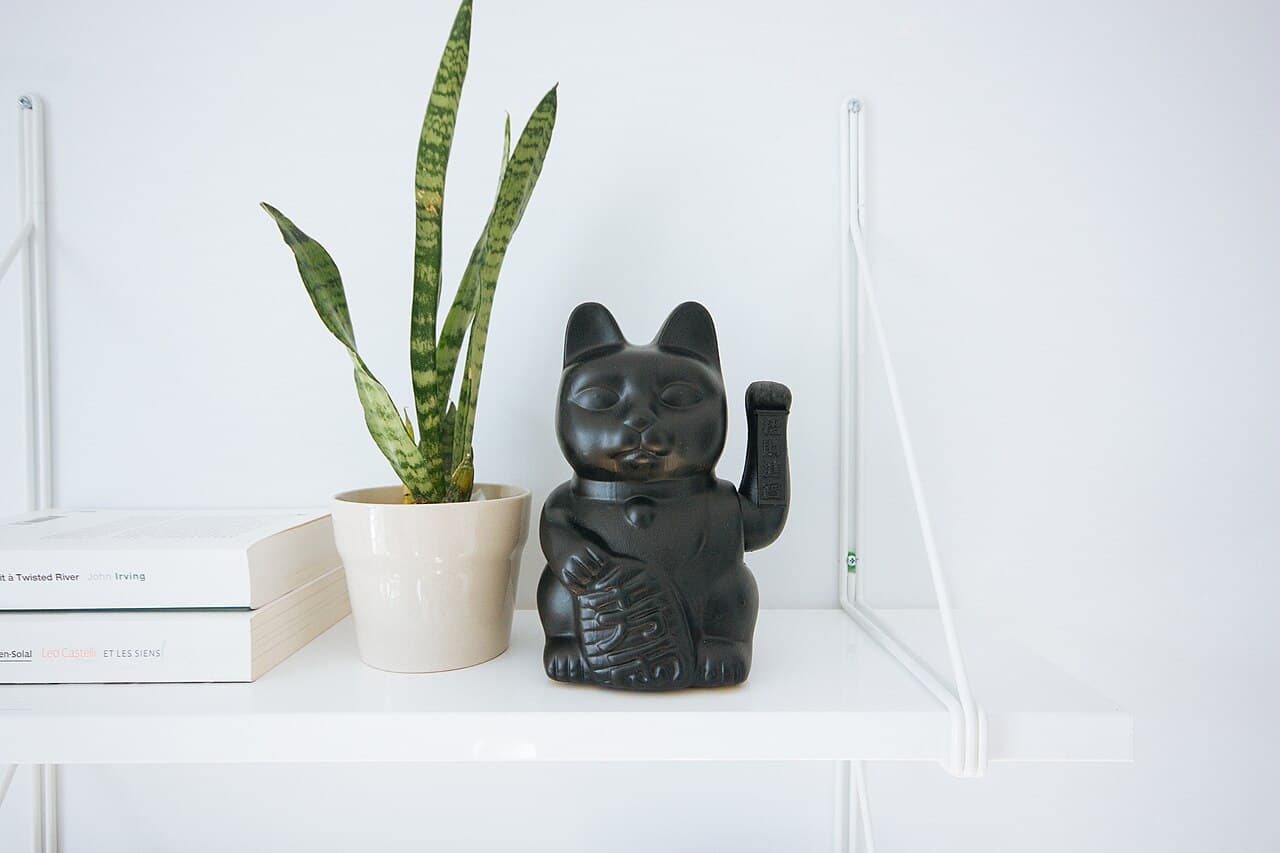
On a lighter note: the raised-paw ceramic cat you'll see sitting in shop windows, restaurant counters and cash registers all over Japan is a maneki-neko, believed to beckon in luck and money. A raised right paw is generally said to invite good fortune, a raised left paw to invite customers — though which paw does what varies by region and shopkeeper, so don't take the distinction too seriously.
Hide your thumbs from a hearse
A more specific, widely cited belief: if a funeral hearse passes by, hide your thumbs in your fist. The thumb is sometimes called the "parent finger" in Japanese, and the gesture is meant to protect your own parents from an early death.
How seriously should you take any of this?
Honestly, it varies a lot by person and generation — plenty of Japanese people happily ignore all of the above, and plenty of hotels still build around the number-4 avoidance out of simple habit or guest comfort rather than genuine belief. Treat this list as a way to notice Japan a little more closely, not as a set of hard rules you need to follow to avoid causing offense.
자주 묻는 질문
- Is it true some hospitals and hotels don't have a 4th floor?
- Yes, this does happen in some buildings, similar to buildings elsewhere skipping a 13th floor — though it's far from universal, and plenty of hospitals and hotels number their floors normally.
- Should I avoid giving gifts in sets of four?
- It's a reasonable precaution, especially for anything formal — a boxed set of four sweets or four items is the kind of detail an older or more traditional recipient might notice. Sets of odd numbers, or anything but four and nine, are the safer default.
- What's the deal with chopsticks standing up in rice?
- It directly mirrors a funeral offering ritual, so it's avoided at the table for the same reason as the other funeral-linked taboos here — see our [full chopstick etiquette guide](https://michi-japan.group/en/articles/chopsticks-etiquette) for the complete list of what matters and what's overstated.
- Do young people in Japan still believe these?
- Most treat them the way many people elsewhere treat walking under a ladder or opening an umbrella indoors — a passed-down habit more than a genuine fear, observed loosely rather than strictly.
관련

일본 젓가락 예절: 정말 중요한 금기와 과장된 규칙
일본 젓가락 예절을 솔직하게 정리했습니다. 장례와 관련된 진짜 금기 2가지, 과장된 규칙, 올바른 젓가락 쥐는 법까지.
Gift-Giving Etiquette in Japan: What to Bring, When to Give It, and What to Avoid
Bring a temiyage (not omiyage) when visiting a Japanese home, hand it over with both hands whenever feels natural during the visit, and skip sets of four or nine.
What Is Zen? The Buddhist School Behind Japan's Tea Ceremony and Zen Gardens
Zen is a Mahayana Buddhist school born as Chan in China, rooted in Japan as Rinzai and Sōtō — it still shapes zazen, tea ceremony, and Zen gardens today.