
Kyoto Autumn Temple Light-Ups 2026 — Kiyomizu-dera, Kōdai-ji & Eikan-dō at Night
The short answer
Kyoto's 2026 autumn light-up dates are confirmed: Kōdai-ji Oct 23–Dec 13 (lit from 5pm, last entry 9:30pm, ¥800), Eikan-dō Nov 20–Dec 6 (entry 5:30–8:30pm, ¥1,000) and Kiyomizu-dera Nov 21–30 (open until 9:30pm, last entry 9pm); Tōfuku-ji has no night illumination. The color itself usually peaks in the second half of November, and the nights when all three light-ups overlap are November 21–30. Four of the city's best-known autumn temples handle the evening differently: Kiyomizu-dera, Kōdai-ji and Eikan-dō (Zenrin-ji) hold special evening illuminations, while Tōfuku-ji — home of the famous Tsūtenkyō bridge — is daytime-only.
| Temple | 2026 night dates | Hours | Night admission | Reservation |
|---|---|---|---|---|
| Kōdai-ji | Oct 23–Dec 13 | lit from 5pm; last entry 9:30pm; gate closes 10pm | same as daytime: adults ¥800, junior/senior high ¥400 | not stated by the temple |
| Eikan-dō (Zenrin-ji) | Nov 20–Dec 6 | entry 5:30–8:30pm; gate closes 9pm | ¥1,000 (junior high and up) | not stated; format may change with crowds |
| Kiyomizu-dera | Nov 21–30 | open until 9:30pm (last entry 9pm) | check the temple's site | not required (official) |
| Tōfuku-ji | no night light-up | daytime only; Tsūtenkyō from 8:30am (last entry 4pm) Nov 14–Dec 6 | Tsūtenkyō & Kaisandō adults ¥1,000 (Nov 14–Dec 6) | — |
Dates, hours and prices as of September 18, 2026, from each temple's official site: kodaiji.com (saiji.html, haikan.html), eikando.or.jp/osirase.html (notice dated September 1, 2026), kiyomizudera.or.jp/event/yakan.php and tofukuji.jp/guide/.
All three temples have now posted their 2026 schedules, so you can plan around real dates instead of "usually". Kiyomizu-dera states that no reservation is needed; Kōdai-ji and Eikan-dō don't mention booking in their 2026 notices, and Eikan-dō says its operating format may change depending on crowding — check eikando.or.jp before you go. During its light-up period Eikan-dō also closes its grounds to private cars and tour buses (microbuses excepted), so come by public transport.
Which temple, and what to expect
- Kiyomizu-dera — the wooden stage and pagoda lit gold against the hillside, plus a blue laser beam symbolising Kannon's compassion. Nov 21–30, 2026 (confirmed): the temple stays open until 9:30pm (last entry 9pm) and says no reservation is needed; check the current admission on the official site. No tripods, monopods, selfie sticks or drones anywhere on the grounds, day or night — the paths and stage get crowded, and staff enforce this.
- Kōdai-ji — a quieter, more contemplative light-up: a bamboo grove and pond garden lit with projection and reflection effects. Oct 23–Dec 13, 2026 (confirmed): lit from 5pm, last entry 9:30pm, gate closes 10pm. Admission is the same day and night — adults ¥800, junior and senior high school students ¥400. There is no changeover between the day and night visits, so you can stay on after dark, but once you exit you can't re-enter on the same ticket.
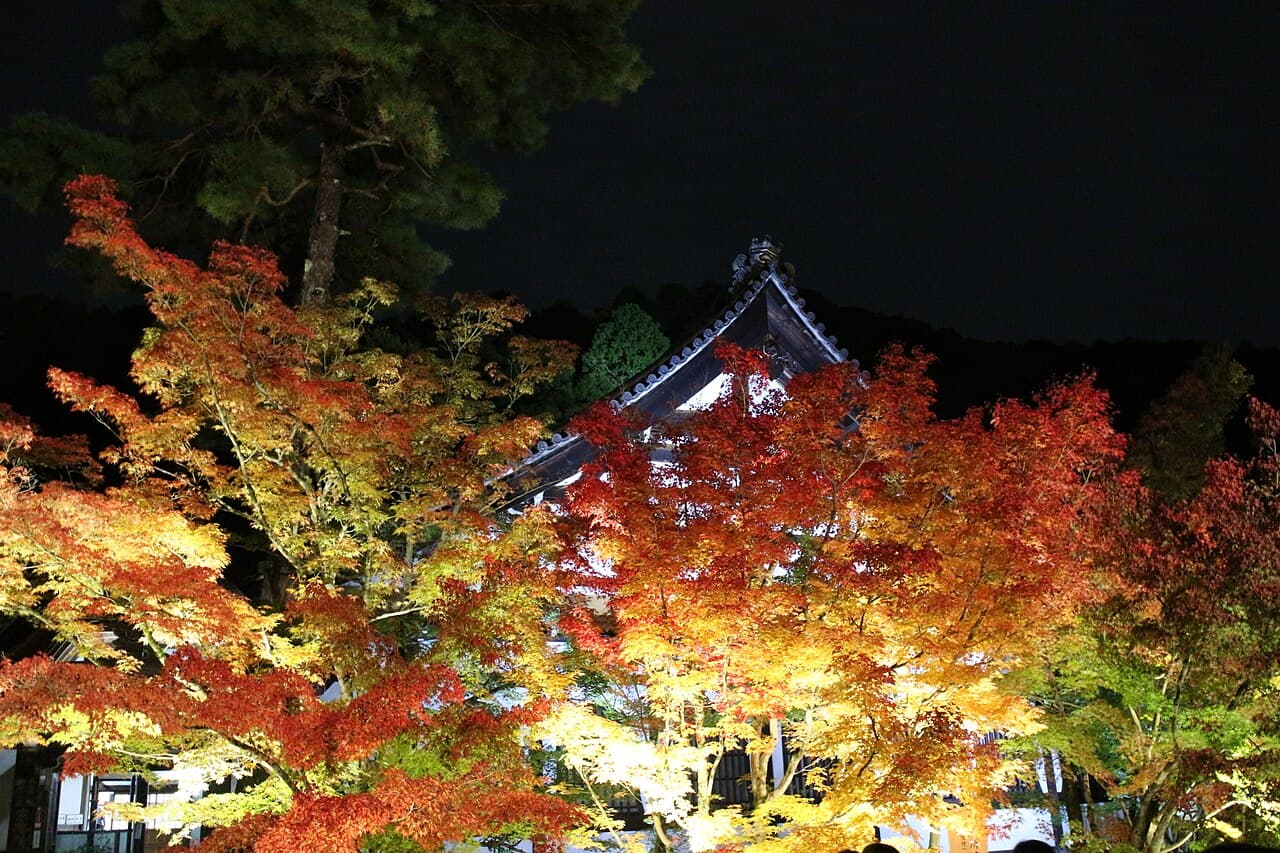
- Eikan-dō (Zenrin-ji) — arguably Kyoto's most photographed light-up, maple leaves reflected in the Hōjō pond. Nov 20–Dec 6, 2026 (confirmed): entry 5:30–8:30pm, gate closes 9pm, ¥1,000 for junior high school age and up. The daytime Autumn Treasure Exhibition (Nov 11–Dec 6, entry 9am–4pm, adults ¥1,500) is a separate ticket, and visitors are swapped out between the two — you can't stay on from the daytime visit into the light-up. Regular daytime admission has been ¥1,000 for adults since Eikan-dō's April 2026 fee revision.
- Tōfuku-ji — deliberately no night illumination. The view from Tsūtenkyō bridge over a valley of roughly 2,000 maples is a daytime-only spectacle, and arguably the single best foliage view in the city. During the 2026 autumn period (Nov 14–Dec 6) the Tsūtenkyō + Kaisandō ticket is ¥1,000 for adults, the bridge opens at 8:30am (last entry 4pm, gates close 4:30pm), and the combined ticket with the Hōjō garden isn't sold. Go right at opening on a weekday — by mid-morning on a weekend the covered walkway across the bridge is a slow shuffle.
Timed entry and crowd tips
Kiyomizu-dera says no reservation is needed, and none of the other three temples mention booking for 2026 — convenient, but it also means the popular nights (weekends, the Nov 23 holiday, and any evening after a clear-sky forecast) fill the approach paths solid. The reliable ways to beat it: go on a weekday, arrive at opening for Tōfuku-ji's daytime view, and arrive right when the gates open for the evening illuminations (Kiyomizu-dera's line moves fastest in the first 30 minutes). Because Kōdai-ji and Eikan-dō sit reasonably close together in Higashiyama, a single evening can realistically cover both — Kiyomizu-dera is a further 15–20 minute walk south and is worth treating as its own visit, ideally on a separate evening.
Etiquette that matters
Tripods, monopods, selfie sticks and drones are banned at Kiyomizu-dera at all times, and most other temples discourage or restrict them during the crowded illumination nights too — bring a camera you can hand-hold, brace your elbows on a railing, and expect to be asked to move on if you set up a rig. Stay on the marked paths; the moss and tree roots at Eikan-dō and Kōdai-ji are easily damaged. Photography is sometimes restricted on Tōfuku-ji's bridges specifically to keep the crowd moving — don't stop mid-span for a photo. Speak quietly; these are working temples, and the illumination is treated as closer to a devotional event than a festival.
Getting there
All four sit in or near Higashiyama, on Kyoto's eastern hills. Kiyomizu-dera and Kōdai-ji are a 10–15 minute uphill walk from Kyoto City Bus stops (bus 100 or 206 to Gojō-zaka or Kiyomizu-michi); Eikan-dō is near the start of the Philosopher's Path, reachable by bus 5 or a walk from Keage Station on the Tōzai subway line. Tōfuku-ji has its own station (JR Nara Line and Keihan Main Line), directly outside the temple gate.
For the festival calendar and what else is on around the same dates, see japan-event's autumn foliage 2026 planning guide — this page focuses on what it's actually like to be there after dark.
FAQ
- When are the Kyoto autumn light-ups in 2026?
- Kōdai-ji Oct 23–Dec 13, Eikan-dō Nov 20–Dec 6 and Kiyomizu-dera Nov 21–30, 2026.
- Do I need to book Kyoto temple light-ups in 2026?
- Kiyomizu-dera says no reservation is needed; Kōdai-ji and Eikan-dō do not mention booking on their 2026 notices, and Eikan-dō says its format may change with crowding — check eikando.or.jp before you go.
- How much is Eikan-dō's 2026 light-up?
- ¥1,000 for junior high school age and up, entry 5:30–8:30pm; the daytime Autumn Treasure Exhibition (Nov 11–Dec 6) is a separate ¥1,500 adult ticket and visitors are swapped out between the two.
- Does Tōfuku-ji have a night light-up?
- No — Tōfuku-ji's Tsūtenkyō bridge view is daytime-only.