
The short answer
Sakai, about 15 minutes by train from central Osaka, has forged Japan's professional kitchen knives for over 600 years — an estimated 90–98% of the knives used by Japan's professional chefs are still hand-forged here (Sakai Tourism & Convention Bureau, as of July 2026). You can watch the forge for 45 minutes for about ¥3,000, or spend 1.5–2.5 hours sharpening and fitting a handle to your own knife to take home for ¥17,000–¥32,000. English support ranges from full interpreters to none at all, so check each listing before you book.
This page is the honest go-info: four verified ways to do it, real prices, what actually happens at the anvil and the whetstone, and whether you can fly home with the knife you make.
Forge only, or make your own knife? (choose before you book)
Sakai's knife experiences split into two shapes:
- Watch the forge (30–45 min) — you stand a few feet from a working furnace and watch a craftsman heat, hammer and shape steel, sometimes trying the heat yourself. Cheapest and fastest, and easy to combine with other Sakai sightseeing (the Nintoku-tenno-ryo kofun, the Sakai City Traditional Crafts Museum) on the same day.
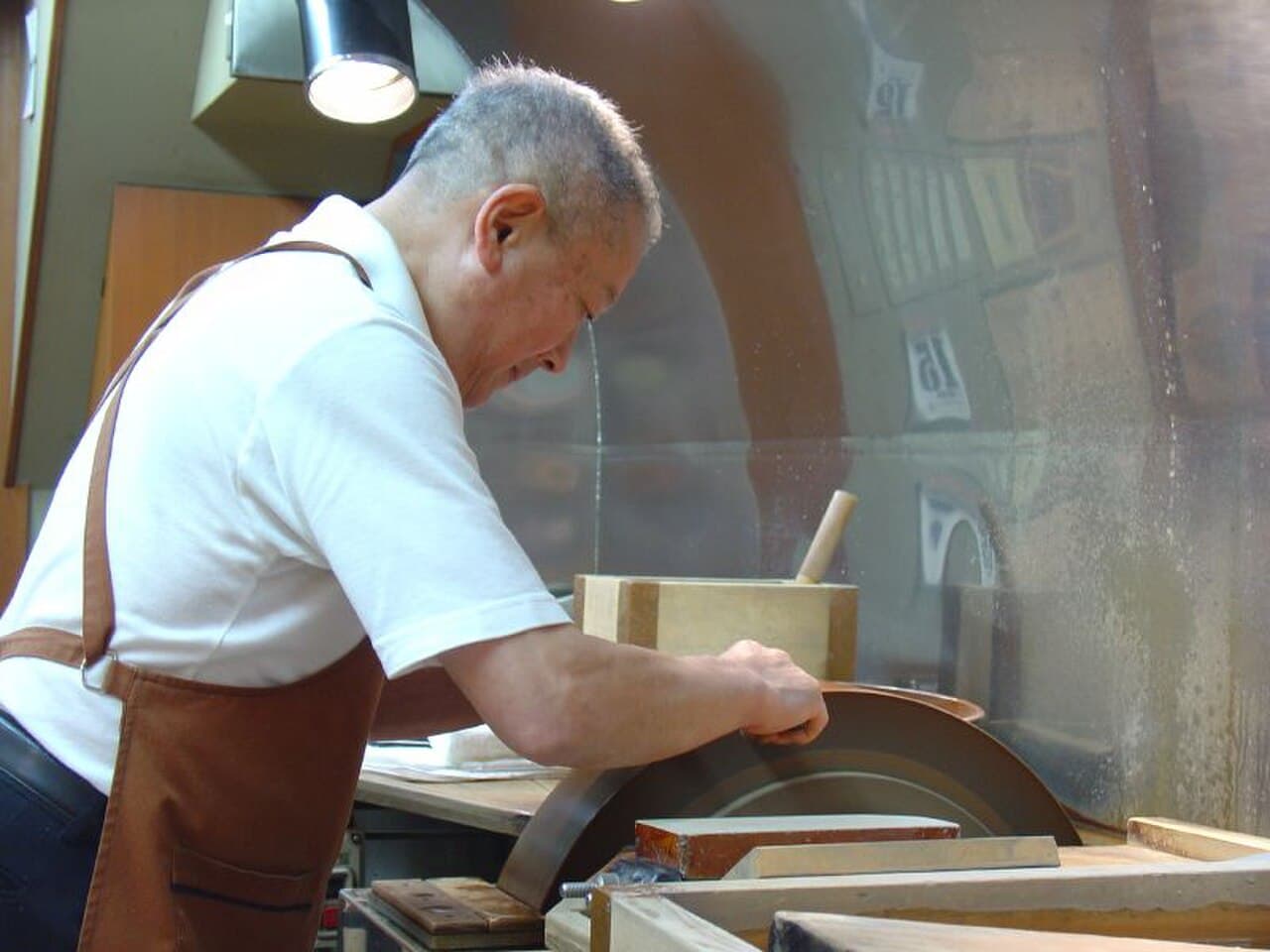
- Make your own knife (1.5–2.5 hours) — you don't forge a blade from raw steel (that takes years to learn), but you do sharpen a pre-forged blade on a whetstone and fit and fix your own wooden handle under a craftsman's hand, then take the finished knife home. Some shops add name engraving or a decorative burn stamp.
If you just want to see the 600-year-old craft in action, book the forge viewing. If you want a knife you actually helped make, to cook with for the next decade, book the hands-on class.
Where to book (verified, English-friendly)
- Wada Shouten (道具屋 和田) — the shop most tourist media point to, in Sakai's old blacksmith quarter, 2 minutes from the Hankai Tramway's Shinmeicho Station. Sharpen a whetstone edge and fit a handle to your choice of Santoku, Deba or Sashimi knife, then take it home. ¥18,000/person with instruction in Japanese, ¥32,000/person with the shop's own English interpreter (2–10 people; solo travellers by inquiry). Runs weekdays at 13:00/15:00 and weekends/holidays at 10:00/13:00/15:00; closed Sundays and the 3rd Tuesday of each month. Book by Google Form or email at least 5 days ahead; cash, credit card or PayPay accepted.
- Craft Your Own Knife in Sakai (GetYourGuide) — the easiest fully English option: a private class (up to 5 people) where an English-speaking host walks you through fitting a handle to a real knife, while a master craftsman engraves your name — in kanji or Latin letters — onto the blade in front of you. About 2.5 hours, listed from $259 (confirm on the listing whether that's per person or per group before you pay). See the listing. The same knife museum (Sakai Toji) also takes direct bookings through the Sakai Tourism Bureau for about ¥18,150/person, weekdays only — cheaper, but English support isn't stated on that page, so confirm first.
- Sakai Knife Factory and Craft Walking Tour (Viator / GetYourGuide) — no knife-making, but the best factory access: a bilingual (English/French) guide meets you at Nankai Sakai Station, East Exit, then takes you into knife-maker Yamawaki Hamono (Tuesdays/Thursdays) or a working blacksmith's forge (Wednesdays) for a sharpening lesson, with the option to custom-order a knife. About 3–3.5 hours, from roughly $63 per adult, one sweet included, free cancellation up to 24 hours ahead. Rated 4.9/5 and a Tripadvisor Travelers' Choice pick. Book on Tripadvisor/Viator or the same tour on GetYourGuide.
- Enomori Hamono forge viewing (official, budget) — run through the Sakai Tourism & Convention Bureau: a 45-minute look at a working forge — the furnace, the hammering, and, if you want, standing close enough to feel the heat yourself. ¥3,000/person to just watch, ¥6,000/person with a simple English explanation from staff (not a professional interpreter). Weekdays only, closed weekends, holidays and seasonal breaks. Book at least 3 days ahead via the Bureau's page or by phone (072-233-6601).
Honest comparison
| Experience | What you do | English | Price | Duration |
|---|---|---|---|---|
| Wada Shouten | Sharpen + fit a handle, take home a knife | Interpreter option (+¥14,000) | ¥18,000 (¥32,000 w/ interpreter) | 1.5–2 h |
| GetYourGuide — Craft Your Own Knife | Handle-fitting + name engraving | English-speaking host | From $259 (private, up to 5) | ~2.5 h |
| Sakai Knife Factory & Craft Walking Tour | Factory/forge visit + sharpening lesson, no knife made | Bilingual guide (EN/FR) | From ~$63/adult | 3–3.5 h |
| Enomori Hamono forge viewing | Watch forging up close | Simple explanation only | ¥3,000 (¥6,000 w/ English) | 45 min |
Prices move — confirm on the operator's page before you pay.
What actually happens, step by step
- Meet your craftsman. Most classes open with a short intro to Sakai's 600-year history and how a blade is actually built: layered steel, hand-forging, then sharpening on a series of whetstones.
- The whetstone. You draw the blade across a wet stone at a fixed angle, again and again, under close correction — get the angle wrong and you round the edge instead of sharpening it.
- The handle. A wooden handle (often magnolia or chestnut) is warmed slightly and fitted onto the tang, then trimmed and secured — this is the part most classes let you do almost entirely yourself.
- Personalize it. Depending on the shop, a craftsman engraves your name into the blade or adds a decorative burn-in stamp.
- Take it home — carefully. See below.
Etiquette — and can you actually take a knife home?
Follow the craftsman's instructions on sharpening angle and pressure exactly — a whetstone edge is unforgiving, and a moment's carelessness can cut you or ruin the blade you're finishing. Loose sleeves, dangling jewelry and open-toed shoes are discouraged near the forge or the sharpening bench for the same reason.
Yes, you can take the knife home — but it must go in checked luggage, never carry-on, exactly like any other blade at airport security. Most experiences will wrap or box the knife for travel. If you're flying onward to a third country, check that destination's customs rules on importing a bladed item before you go; requirements vary by country, and Japan-based shops generally can't guarantee foreign customs clearance.
What to wear
Closed-toe shoes and clothes you don't mind smelling faintly of woodsmoke — nothing flammable or with loose, hanging sleeves near an open forge. Tie back long hair. Most workshops provide an apron; nothing else is required.
Getting there from Osaka
Sakai is genuinely a half-day trip, not an expedition: the Nankai Main Line from Namba to Sakai Station takes about 11–16 minutes, or the JR Hanwa Line from Tennoji to Sakai-shi Station takes about 7 minutes on a rapid service. Each workshop above has its own nearest station listed on the operator's page — Wada Shouten, for instance, is a 2-minute walk from the Hankai Tramway's Shinmeicho stop, while the Viator/GetYourGuide walking tour meets right outside Nankai Sakai Station's East Exit.
Who it's for — and what to pair it with
Knife obsessives, home cooks, and anyone who wants a souvenir they'll actually use for decades rather than just display. It also makes an easy half-day add-on to an Osaka itinerary — pair it with a morning pottery class or kintsugi workshop back in the city, or see our best cultural experiences in Osaka guide for how to build the rest of the day. Once you've got the knife, our sister food guide UMAMI HUNT covers where to eat across Japan, if you'd rather watch a chef use one before you swing one yourself.
- Sakai has forged an estimated 90–98% of Japan's professional chef knives for over 600 years (Sakai Tourism & Convention Bureau, as of July 2026)
- Four verified booking options, from a ¥3,000 forge peek to a full hands-on class you take a real knife home from
- English-speaking host and interpreter options exist — but not every listing has one, and this page flags exactly which do
- An easy half-day trip: about 15 minutes by train from central Osaka
Follow the craftsman's instructions on sharpening angle and pressure exactly — a whetstone edge is unforgiving, and a moment's carelessness can cut you or ruin the blade. The knife you make must travel home in checked luggage, never carry-on, like any other blade at airport security. If you're continuing to a third country afterward, check that country's customs rules on importing a bladed item before you fly — Japan-based workshops cannot guarantee foreign customs clearance.
FAQ
- How much does a knife-making workshop in Sakai cost?
- From ¥3,000 per person for a 45-minute forge viewing, and ¥17,000–¥32,000 per person for a full hands-on knife-making or handle-fitting workshop. Wada Shouten charges ¥18,000 per person in Japanese, or ¥32,000 with the shop's English interpreter (2–10 people).
- How long does a Sakai knife workshop take?
- From 45 minutes if you only watch the forge, up to about 2.5 hours for the full hands-on knife-making class, depending on which workshop you book.
- Can I take the knife home on a plane?
- Yes, but it has to travel in checked luggage, never in carry-on, like any other blade at airport security. If you fly on to a third country afterwards, check that country's customs rules on importing a bladed item before you go — the workshops cannot guarantee foreign customs clearance.
- How do I get to Sakai from Osaka?
- About 15 minutes by train from central Osaka. Wada Shouten is a 2-minute walk from Shinmeicho Station on the Hankai tramway; Sakai Station (Nankai Main Line) and Sakai-Higashi Station (Nankai Koya Line) are about 15 minutes' walk.