
How to See Geisha in Kyoto — the Respectful Way (Geiko, Maiko & Where to Go)
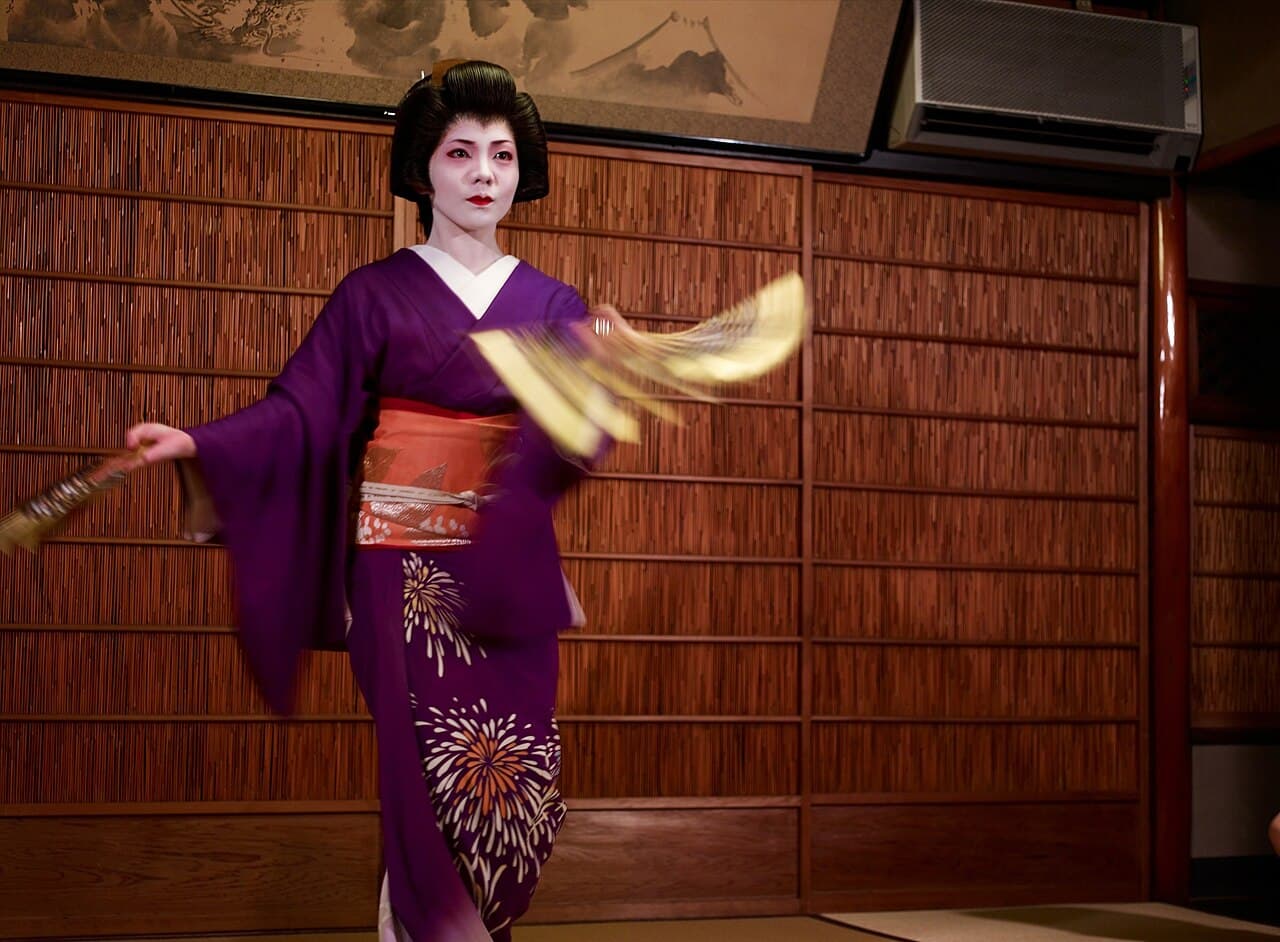
The honest answer: you do not "spot" a Kyoto geisha on the street — you book one, or you buy a ticket to see her perform. The three respectful ways are (1) a reserved tea-ceremony or dinner experience, (2) a public odori dance performance (usually spring, one in autumn), or (3) a maiko tea-and-dance show. Chasing or photographing them in the alleys is now banned and fined. This guide shows who each option is best for.
First, the words: geiko vs maiko
In Kyoto a geisha is called a geiko (芸妓); her teenage-to-early-twenties apprentice is a maiko (舞妓). Geisha (芸者) is the national term. Both are professional performing artists — dancers, musicians and hosts — not prostitutes, a myth worth killing before you visit. Every maiko is training to become a geiko. For the full at-a-glance distinction, the five districts and the definition intent, read the companion guide Geisha vs maiko: what's the difference.
The three respectful ways to see them
| Way | Cost level | English | What you get | Best for |
|---|---|---|---|---|
| Booked experience (tea ceremony / dinner ozashiki) | From about US$100pp (tea) up to several hundred for a private dinner-show | Yes — interpreter available | Close, seated time: tea, dance, conversation, Q&A, photos with permission | Anyone who actually wants to meet and talk with a geiko/maiko |
| *Public odori dance* | Ticketed, from a few thousand yen | Programme/subtitles vary | A full seasonal stage show of dance and music, seen from the audience | Culture lovers who want the art form, on a budget, in season |
| Maiko tea-and-dance show | Modest, from a few thousand yen | Often yes | A short, first-timer-friendly performance + tea, no street hunting | First-timers unsure where to start |
Prices move with demand — treat these as "from about", not fixed. For the vetted, bookable version of option 1 (Gion, English interpreter, tea ceremony from around US$100 per person, plus a henshin maiko-makeover option), see our Kyoto geisha & maiko experience page, which links straight to the operator (MAIKOYA) and a comparison listing. That is where all "how do I book / meet one" intent should go — we keep live prices there so this guide stays evergreen.
Option 1 — Book an experience (the surest meeting)
A reserved tea ceremony, lunch or evening ozashiki is the only way to sit with a geiko or maiko, watch a private dance, ask questions through an interpreter, and take photos because you were invited to. It is the respectful mirror image of chasing one down an alley. Book ahead — availability is limited. Details and booking links: geisha-experience-kyoto.
Option 2 — See a public odori dance (in season)
Each Kyoto kagai (geisha district) stages an annual public dance. Miyako Odori (Gion Kobu), Kyo Odori (Miyagawacho), Kitano Odori (Kamishichiken) and Kamogawa Odori (Pontocho) run in spring, while Gion Odori (Gion Higashi) is the one autumn performance. Exact dates shift every year, so we don't hard-code them here — check the current schedule and buy tickets via our sister events hub, japan-event.info, then plan your trip around it (typically: Kitano late March, Miyako through April, Kamogawa in May, Gion Odori early November — always confirm the year).
Option 3 — A maiko tea-and-dance show (easiest first)
If you just want to see a maiko dance up close without committing to a full dinner, a short maiko performance with tea is the gentlest entry point — modest cost, usually with English support, no etiquette minefield. It pairs well with a wider culture day; see Kyoto cultural experiences for how to build one.
Where the districts are
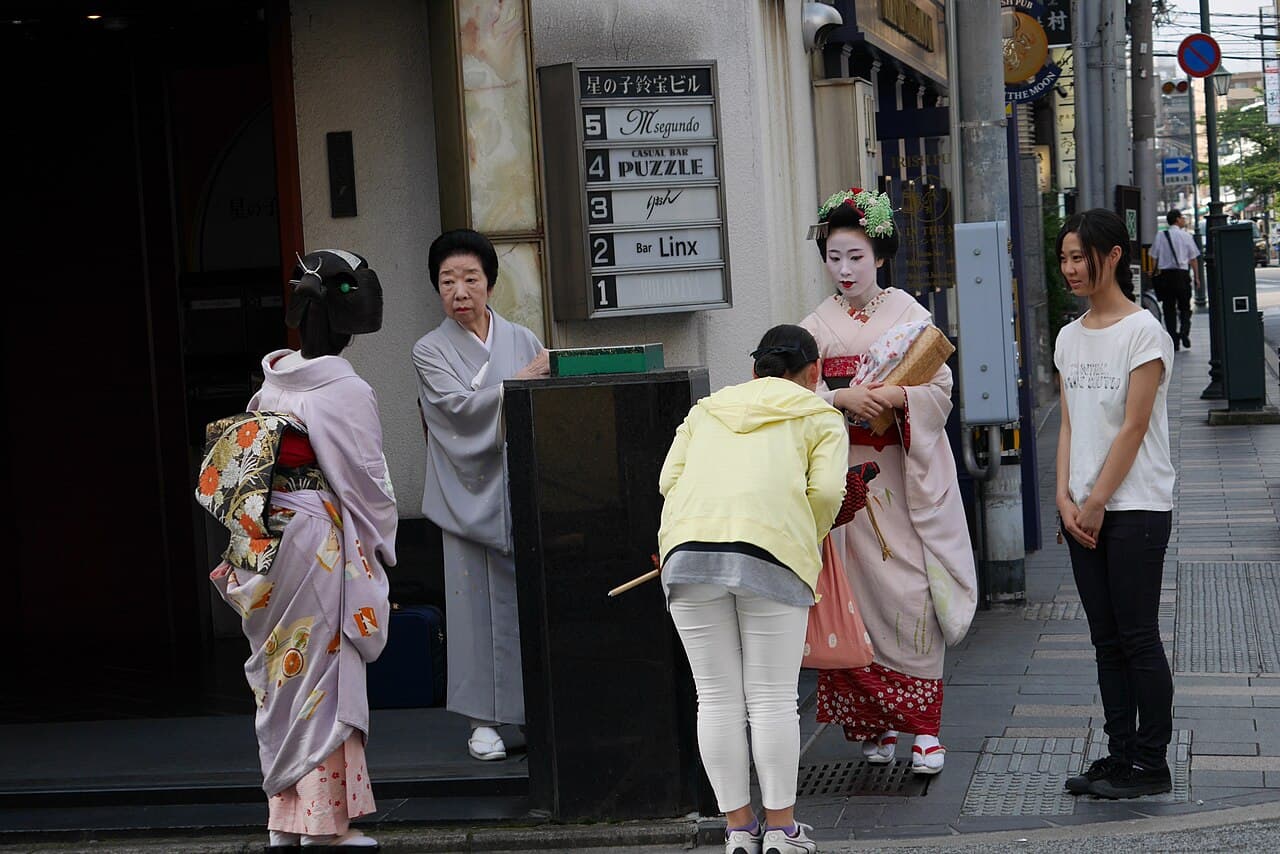
Kyoto has five kagai: Gion Kobu (the famous Hanamikoji stone lane), Gion Higashi, Pontocho (a narrow lantern-lit alley by the Kamo River), Miyagawacho and Kamishichiken (the oldest, near Kitano Tenmangu). You may see a geiko or maiko hurrying to an appointment around dusk in Gion or Pontocho — that is a working commute, not a photo op.
Gion etiquette — the rules that actually have teeth
This is the part thin listicles skip. Since October 2019, photography on Gion's private lanes has been banned, with fines up to ¥10,000, after geiko and maiko were harassed. As of April 2024 the local council went further: the small private side-streets were fully closed to tourists, with multilingual signs warning of the ¥10,000 penalty for entering. Photography is still allowed on the public streets — Hanamikoji's main street, Shirakawa-dori, Sannenzaka — but the norm is unchanged: ask permission before photographing a geiko or maiko, and never touch, block, chase or grab one. (As of 2026; check current Gion signage on arrival.)
Simple version: stay on public streets, don't enter posted private alleys, don't sit on the inuyarai bamboo screens, and if you want a real portrait, book Option 1 where photos are welcome.
After the geisha: make it a Kyoto day
Pair your visit with a hands-on Kyoto cultural experience — a tea ceremony fits naturally beside the geisha world and deepens the wabi-sabi aesthetic behind it. Hungry afterward? A geiko dinner is traditionally ozashiki, but for a kaiseki or sake night you can book yourself, our food sister site umami-hunt.info has vetted Kyoto picks.
FAQ
Can I just walk around Gion and see a geisha?
Sometimes you'll glimpse a maiko or geiko heading to work near dusk in Gion or Pontocho, but it's not reliable and it's not the point. The private alleys are closed to tourists and street-hunting is discouraged. Book an experience or see an odori instead.
Is it true you can be fined for photographing geisha?
Yes. Since 2019 photography on Gion's private lanes carries a fine of up to ¥10,000, and from April 2024 those private side-streets are closed to tourists entirely, with multilingual warning signs. Public streets are fine, but ask before photographing any geiko or maiko. (As of 2026 — check current signage.)
What's the difference between a geisha, a geiko and a maiko?
In Kyoto, a geisha is called a geiko; a maiko is her teenage apprentice; geisha is the national word. See our full geisha vs maiko breakdown.
How much does it cost to meet a geiko or maiko?
Roughly from about US$100 per person for a tea-ceremony experience, up to several hundred for a private dinner-show; a henshin maiko makeover runs about ¥10,000–25,000. Prices vary with demand — see our experience page for current rates and booking.
When can I see a public geisha dance?
Most odori are in spring (Miyako, Kyo, Kitano, Kamogawa), and Gion Odori is in autumn. Dates change yearly, so confirm the current schedule and tickets via japan-event.info.
Do geisha speak English?
On a booked experience an interpreter is usually available, so you can ask questions and hold a conversation. Odori performances and shows also commonly offer some English support.
Are geisha prostitutes?
No. Geiko and maiko are professional performing artists — dancers, musicians and hosts trained for years in traditional arts. It's a persistent myth; see geisha vs maiko.
Which district should I go to?
Gion Kobu (Hanamikoji) is the iconic one and easiest for shows and experiences; Pontocho is atmospheric by the river; Kamishichiken is the oldest and quietest. Any of the five can be paired with an experience.
One rule that now carries a price: on Gion's designated private streets, photographing a geiko or maiko without permission draws a ¥10,000 penalty, with signage and cameras in place. Photography etiquette in Japan sets out exactly where the line falls and which streets are still public.
FAQ
- Can I just walk around Gion and see a geisha?
- Sometimes you'll glimpse a maiko or geiko heading to work near dusk in Gion or Pontocho, but it's not reliable and it's not the point. The private alleys are closed to tourists and street-hunting is discouraged. Book an experience or see an odori instead.
- Is it true you can be fined for photographing geisha?
- Yes. Since 2019 photography on Gion's private lanes carries a fine of up to ¥10,000, and from April 2024 those private side-streets are closed to tourists entirely, with multilingual warning signs. Public streets are fine, but ask before photographing any geiko or maiko. (As of 2026 — check current signage.)
- What's the difference between a geisha, a geiko and a maiko?
- In Kyoto, a geisha is called a geiko; a maiko is her teenage apprentice; geisha is the national word. See our full geisha vs maiko breakdown.
- How much does it cost to meet a geiko or maiko?
- Roughly from about US$100 per person for a tea-ceremony experience, up to several hundred for a private dinner-show; a henshin maiko makeover runs about ¥10,000–25,000. Prices vary with demand — see our experience page for current rates and booking.
- When can I see a public geisha dance?
- Most odori are in spring (Miyako, Kyo, Kitano, Kamogawa), and Gion Odori is in autumn. Dates change yearly, so confirm the current schedule and tickets via japan-event.info.
- Do geisha speak English?
- On a booked experience an interpreter is usually available, so you can ask questions and hold a conversation. Odori performances and shows also commonly offer some English support.
- Are geisha prostitutes?
- No. Geiko and maiko are professional performing artists — dancers, musicians and hosts trained for years in traditional arts. It's a persistent myth; see geisha vs maiko.
- Which district should I go to?
- Gion Kobu (Hanamikoji) is the iconic one and easiest for shows and experiences; Pontocho is atmospheric by the river; Kamishichiken is the oldest and quietest. Any of the five can be paired with an experience.
Try it yourself
Geisha cultureKyoto
Geisha & maiko experience in Kyoto — meet one the right way (and how to book)
How to meet a real Kyoto geisha or maiko respectfully: English-friendly tea ceremonies and dinners in Gion, honest prices, the street etiquette that matters, and how to book.