
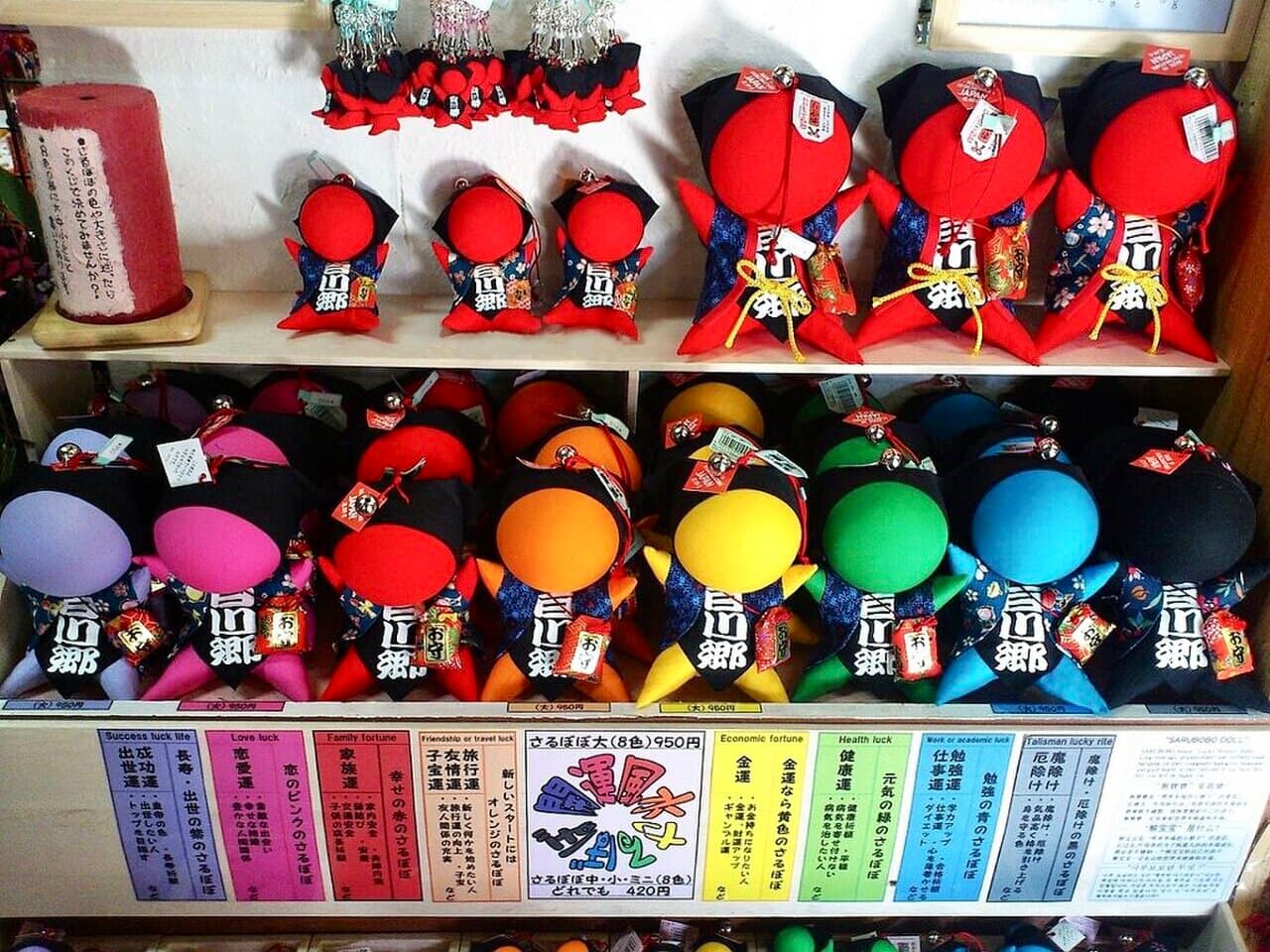
Sarubobo — literally "baby monkey" in the Hida dialect — is Takayama's most recognizable folk charm: a faceless, red, bean-shaped doll traditionally sewn by grandmothers for their grandchildren as a talisman for good relationships, safe childbirth, and general protection. You'll see sarubobo dangling from shop eaves and souvenir racks all over the Old Town, but making one yourself, rather than buying one ready-made, is a different kind of souvenir — a craft session that turns into something you actually stitched.
The workshop is run by the Hida Takayama Crafts Experience Center (called Omoide Taiken in Japanese, literally "Memories Experience Hall"), which operates two locations in Takayama: one near Hida no Sato (Hida Folk Village), the other at Yasugawa closer to the town center. Both branches are open 10:00 a.m.–4:00 p.m. (last entry 3:30 p.m.); Hida no Sato closes Thursdays and Yasugawa closes Tuesdays, both outside of busy seasons. Importantly for spontaneous travelers, no reservation is required for the standard workshop at either branch — you simply walk in during opening hours and join the next available spot at the crafting table.
What to expect: You'll be given pre-cut fabric pieces for the doll's round body and head. The core steps are filling the body with soft cotton stuffing and then hand-sewing the stuffed body and head together with a needle and thread, under a staff member's guidance. From there you decorate the doll and can write a personal message or kanji character on its bellyband before it's finished and yours to keep. The whole process runs about 40 minutes and costs ¥2,900 per person, per the operator's own current menu, at either branch. (An older ¥2,500/~30-minute figure appears on the hida.jp tourism site, but this seems to predate a menu update — the operator's own site is the more current source.) The same workshop can also be pre-booked through GetYourGuide from around $20 (roughly ¥2,900), with free cancellation up to 24 hours ahead — useful if you'd rather lock in a slot than rely on walk-in availability.
Why choose this one: Compared with Takayama's well-known cooking classes, sarubobo-making is short, inexpensive, and doesn't require any dietary planning — a good fit if you have a spare 40 minutes between the Old Town and Hida no Sato rather than a half-day slot. It's also one of the few Takayama crafts explicitly set up for walk-in, English-supported access, which matters if you're traveling without a fixed itinerary or with young kids who won't sit through a longer, reservation-only session. Unlike lacquerware, where the finished piece often needs to be shipped home because the lacquer takes weeks to cure, or one-log woodcarving, which typically requires more instruction time and a steadier hand, sarubobo-making is designed to be completed and taken home the same day.
Getting there: The Hida no Sato branch sits in the Kamiokamoto-machi area near Hida Folk Village, about a 10-minute drive from Takayama Station, or reachable by the local "Sarubobo Bus" loop that serves Hida no Sato. If you're coming from the Sanmachi Old Town without a car, budget time for the bus loop or a short taxi ride. The Yasugawa branch, by contrast, is within a roughly 15-minute walk of the station, so if walk-in timing or Thursday closures at Hida no Sato don't suit your schedule, it's worth checking whether Yasugawa (closed Tuesdays instead) has your slot open.
A practical note: Prices for the wider craft menu at these centers range from about ¥1,000 up to ¥8,000+ depending on the item, with the standard sarubobo workshop at ¥2,900 sitting among the studio's most popular, mid-range options. Cash is the safest bet for small walk-in studios like this; confirm current payment options and exact hours with the center directly before visiting, since holiday-season hours can shift.
- Take home a hand-sewn sarubobo the same day
- No advance booking needed at either the Hida no Sato or Yasugawa location
- English-language signage and support on-site
- Option to personalize the doll with a written message or kanji character on its bellyband
This is a casual, drop-in craft activity rather than a formal ceremony, so etiquette is relaxed. Staff provide hands-on guidance in simple English or by demonstration; it's fine to ask them to slow down or repeat a step. Children should be assisted by a parent with the needle-and-thread sewing step, per the venue's own guidance. As at any small local studio, keep voices moderate and be mindful of other visitors crafting at shared tables.